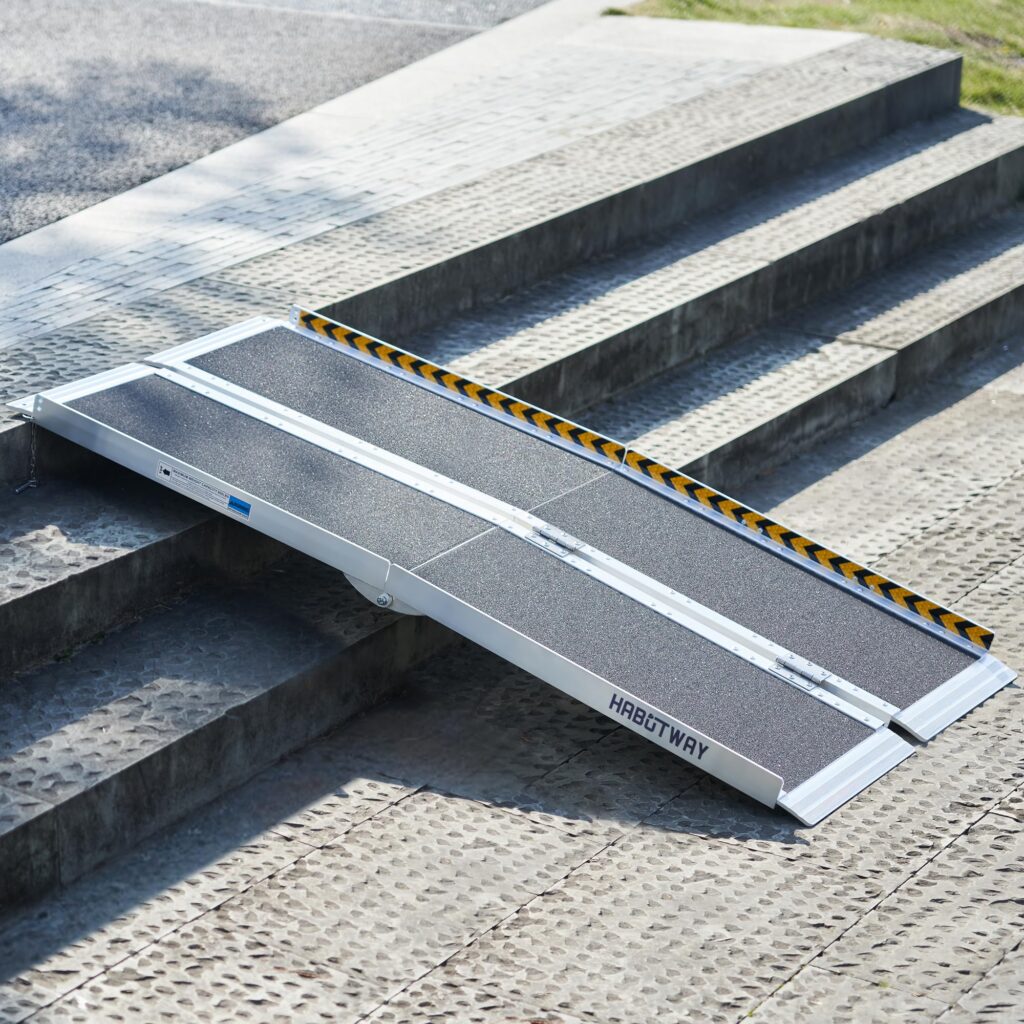
Making Stairs Accessible with Portable Wheelchair Ramps
Navigating stairs can be a significant challenge for wheelchair users, mobility scooter riders, and individuals with limited mobility. Portable wheelchair ramps for stairs offer an immediate, cost-effective solution that transforms previously inaccessible spaces into welcoming environments. Unlike permanent installations that require construction permits and substantial investment, these versatile mobility aids can be deployed within minutes and moved as needed.
Whether you’re assisting an elderly parent visiting your home, accommodating a guest with mobility challenges, or seeking temporary accessibility during recovery from surgery, portable ramps provide the independence and dignity that everyone deserves. The growing demand for accessible solutions extends beyond residential settings to businesses, community centers, and public spaces where compliance with accessibility standards is both a legal requirement and moral imperative.
The market for portable wheelchair ramps for stairs has expanded significantly, offering diverse options ranging from lightweight folding ramps to heavy-duty modular systems. Understanding the differences between these solutions, along with weight capacity requirements, surface materials, and safety features, ensures you select a ramp that provides secure passage while meeting your specific needs. This comprehensive guide explores everything from measuring your stairs correctly to understanding ADA compliance, maintenance requirements, and cost considerations that impact your purchasing decision.
Understanding Portable Wheelchair Ramps: Types and Applications
Portable wheelchair ramps for stairs come in several distinct categories, each designed for specific applications and environments. Folding ramps represent the most popular choice for residential use, featuring a bi-fold or tri-fold design that collapses into a compact, briefcase-style package. These ramps typically weigh between 15 to 50 pounds and handle weight capacities ranging from 600 to 800 pounds, making them ideal for manual wheelchairs and lightweight power chairs. The aluminum construction provides durability without excessive weight, while textured surfaces prevent slipping in wet conditions.
Telescoping ramps extend to various lengths, offering maximum versatility for different stair configurations. These ramps feature two channels that slide out to the required length and lock into position, with typical extensions ranging from 4 to 12 feet. The separated track design accommodates different wheelchair wheel widths and provides excellent stability for both wheelchairs and mobility scooters. Roll-up ramps utilize flexible materials that roll into a compact cylinder, making them the lightest option available and perfect for travel. However, their lower weight capacity typically limits use to manual wheelchairs and walkers rather than heavy power chairs.
Threshold ramps serve a different purpose, designed specifically for navigating single steps, doorways, and minor elevation changes up to 6 inches. While not traditionally considered stair ramps, they’re essential components of comprehensive accessibility solutions. Modular portable ramps represent the premium category, featuring interlocking sections that create customized configurations for complex stair arrangements. These systems support the highest weight capacities, often exceeding 1,000 pounds, and provide the stability approaching permanent installations while maintaining portability. Similar to how portable cabins offer flexible space solutions, portable ramps provide adaptable accessibility wherever needed.
Critical Specifications: Choosing the Right Ramp for Your Stairs
Selecting appropriate portable wheelchair ramps for stairs requires careful consideration of multiple specifications that directly impact safety and usability. The most fundamental measurement is ramp length, which must be calculated based on the total rise of your stairs and the recommended slope ratio. The Americans with Disabilities Act (ADA) recommends a 1:12 ratio, meaning one foot of ramp length for every inch of vertical rise. For a step measuring 24 inches high, you would need a ramp measuring at least 24 feet long to achieve the gentlest, safest slope. However, space constraints often necessitate steeper slopes, with 1:8 ratios representing the maximum steepness for assisted use and 1:6 ratios requiring significant upper body strength.
Weight capacity stands as the second critical specification, with most portable ramps rated between 600 and 1,200 pounds. Manual wheelchairs typically weigh 35 to 50 pounds, power wheelchairs range from 200 to 400 pounds, and mobility scooters can exceed 300 pounds. Adding the user’s weight to the mobility device weight determines the minimum capacity requirement, but selecting a ramp with capacity exceeding this combined weight by at least 200 pounds provides an essential safety margin. Materials significantly influence both weight and durability, with aircraft-grade aluminum offering the best strength-to-weight ratio, while fiberglass provides excellent corrosion resistance for coastal environments.
Surface width represents another crucial dimension, with standard wheelchair ramps measuring between 28 and 36 inches wide. Manual wheelchairs require minimum widths of 26 inches, power wheelchairs need at least 30 inches, and mobility scooters often demand 32 inches or more. Measuring your specific mobility device ensures adequate clearance, especially important for ramps with side rails that reduce usable width. Traction surfaces prevent dangerous slips, with options including raised buttons, diamond plate texturing, and applied grip tape. High-quality ramps feature traction patterns across the entire surface rather than just strips, providing consistent grip regardless of wheel placement.
Safety Features and Standards Compliance
Premium portable wheelchair ramps for stairs incorporate multiple safety features that prevent accidents and ensure confident passage. Side rails or curbs typically measuring 2 to 4 inches high prevent wheels from rolling off the edge, particularly important when ascending or descending at angles. These barriers must be continuous along the entire ramp length rather than just at the ends, providing protection even if the user veers slightly off center. Transition plates at both the top and bottom of the ramp eliminate gaps between the ramp surface and the stairs or landing, preventing wheels from catching and creating smooth entry and exit points.
Safety components also include non-slip surfaces designed to maintain traction in rain, snow, or icy conditions. Punched hole patterns allow water drainage while maintaining surface grip, while raised button textures provide mechanical traction independent of weather conditions. Some advanced ramps feature yellow safety strips along the edges, improving visibility for users with limited vision and clearly defining the safe travel path. Weight distribution systems incorporating reinforcement ribs prevent flexing under load, maintaining a stable surface that doesn’t bounce or wobble during use.
Compliance with ADA standards, while not legally required for residential use, provides assurance that the ramp meets professional accessibility requirements. ADA-compliant portable wheelchair ramps for stairs feature slopes no steeper than 1:12, handrails when the ramp exceeds 6 feet in length, and level landings every 30 feet for longer installations. The surface must be stable, firm, and slip-resistant with a minimum width of 36 inches for commercial applications. Understanding these standards helps residential buyers select ramps that provide similar safety and usability, even when legal compliance isn’t mandatory.
Suggested read: 12 Volt Portable Air Conditioner: Your Complete Buying Guide for Mobile Cooling Solutions
Installation and Deployment Best Practices
Properly deploying portable wheelchair ramps for stairs requires more than simply placing them against the steps. Begin by thoroughly cleaning both the stair surface where the ramp will rest and the landing area at the top, removing debris, ice, water, or any material that could prevent secure contact. Inspect the ramp for damage before each use, checking for cracks, bent sections, loose rivets, or compromised traction surfaces that could create safety hazards. Even minor damage can worsen under load, potentially causing catastrophic failure during use.
Position the ramp so the bottom edge sits firmly on level ground rather than soft soil, gravel, or uneven surfaces that could shift during use. If deploying on grass or loose surfaces, place a solid base plate or thick plywood sheet under the bottom edge to distribute weight and prevent sinking. The top of the ramp should rest securely on the landing or top stair, with transition plates making full contact to eliminate gaps. Never position a ramp against a single stair tread, as this creates an unstable fulcrum point that can cause the ramp to shift or tip.
Securing mechanisms vary by ramp type but typically include safety pins, strap systems, or clamp attachments that prevent movement during use. Always engage all provided securing systems rather than relying on the ramp’s weight alone to maintain position. For frequent use at the same location, consider semi-permanent securing methods like lag bolts into wooden stairs or expansion bolts into concrete, while maintaining the ability to remove the ramp when needed. Testing the ramp installation before actual use is essential – apply weight gradually and check for any movement, flexing, or instability that indicates improper positioning or inadequate securing.
Measuring Your Stairs: A Step-by-Step Guide
Accurate measurements ensure your portable wheelchair ramps for stairs will function safely and effectively. Begin by measuring the total rise, which represents the vertical distance from the bottom surface where the ramp will rest to the top landing surface. Use a level placed on the top landing and extend a measuring tape straight down to the lower surface, ensuring the tape remains perfectly vertical. Record this measurement in inches, as it determines the minimum ramp length required using the slope ratio formula.
Next, measure the total run or horizontal distance from the base of the stairs to the point directly below the top landing. This measurement indicates how much ground space the ramp will occupy when deployed at various slope angles. If your available space is limited, you may need to accept a steeper slope or consider an alternative ramp configuration like a switchback design. Measure the width of your stair system as well, ensuring the ramp width doesn’t exceed the stair width and creates awkward overhangs that could catch on railings or adjacent structures.
Consider landing space at both the top and bottom of the stairs, as you’ll need adequate room to maneuver the wheelchair before ascending and after descending. ADA standards recommend 5-foot by 5-foot landings, but practical constraints may limit available space. At minimum, ensure at least 3 feet of clear space at both ends for safe positioning and turning. Photograph your stairs from multiple angles and take these images when shopping for ramps, as knowledgeable suppliers can provide valuable guidance based on visual assessment of your specific situation. Document any unique features like curved stairs, intermediate landings, or obstacles near the stairway that might influence ramp selection and positioning.
Top Brands and Product Comparisons
The market for portable wheelchair ramps for stairs includes several manufacturers recognized for quality, durability, and innovation. EZ-ACCESS leads the industry with the SUITCASE Singlefold Ramp series, offering lengths from 2 to 12 feet with weight capacities up to 800 pounds. These ramps feature a self-supporting design that requires no additional tools or assembly, with applied traction tape providing grip in all weather conditions. Prices range from $170 for the 2-foot model to $850 for the 12-foot version, representing mid-range pricing with excellent reliability.
Prairie View Industries manufactures professional-grade ramps favored by healthcare facilities and commercial applications. Their Portable Multi-Fold Ramp series features a unique tri-fold design that creates an extra-wide 30-inch surface when deployed, with a hinge system allowing single-person setup despite lengths reaching 10 feet. Weight capacities reach 800 pounds for standard models, with heavy-duty versions supporting up to 1,500 pounds for bariatric applications. Pricing starts at $400 for 4-foot models and extends to $1,200 for the longest configurations with premium features.
Silver Spring offers budget-friendly options without sacrificing essential safety features, with their aluminum folding ramps starting at $130 for a 4-foot model. While less expensive, these ramps maintain 600-pound weight capacities and include side rails and non-slip surfaces. Roll-A-Ramp specializes in the flexible roll-up design category, with their signature products featuring an innovative approach where the ramp rolls into a compact bundle weighing just 20 to 35 pounds despite extending to 12 feet. These ramps excel for travel applications but cost significantly more, with prices ranging from $700 to $1,800 depending on length and width.
| Brand | Type | Length Range | Weight Capacity | Price Range | Best For |
|---|---|---|---|---|---|
| EZ-ACCESS | Folding | 2-12 ft | 600-800 lbs | $170-$850 | General residential use |
| Prairie View | Multi-fold | 4-10 ft | 800-1,500 lbs | $400-$1,200 | Heavy-duty applications |
| Silver Spring | Folding | 2-8 ft | 600 lbs | $130-$450 | Budget-conscious buyers |
| Roll-A-Ramp | Roll-up | 4-12 ft | 600-850 lbs | $700-$1,800 | Travel and transport |
| Rage Powersports | Telescoping | 5-10 ft | 600 lbs | $180-$500 | Variable-length needs |
Cost Analysis: Investment vs. Value
Understanding the complete cost picture for portable wheelchair ramps for stairs extends beyond the initial purchase price. Entry-level folding ramps suitable for occasional residential use start around $130 to $200 for 4 to 6-foot lengths, providing basic accessibility at minimal investment. Mid-range options from established manufacturers cost $300 to $700 and offer enhanced durability, better weight capacities, and additional safety features like higher side rails and superior traction surfaces. These ramps typically include warranties of 2 to 5 years and represent the best value for regular residential use.
Premium portable ramp systems command prices from $800 to $2,000 or more but deliver commercial-grade construction, modular configurations, and weight capacities exceeding 1,000 pounds. These investments make sense for businesses requiring ADA compliance, facilities serving multiple users with varying mobility devices, or residential applications where bariatric equipment demands exceptional strength. Rental options exist for temporary needs, with daily rates around $30 to $50 and monthly rates from $150 to $300, making short-term rental economical compared to purchasing for recovery periods lasting just a few weeks.
Additional costs to consider include protective carrying cases ranging from $30 to $100 for ramps without integrated handles, replacement traction tape or grip surfaces costing $20 to $50 every few years, and optional accessories like tie-down straps, anchor kits, or transition plates adding $15 to $75 per item. Insurance coverage sometimes reimburses portable ramp costs when prescribed by healthcare providers as durable medical equipment, though coverage varies significantly by policy. Medicare Part B covers permanent ramps but typically doesn’t cover portable models, while Medicaid coverage depends on state-specific regulations and individual circumstances.
Suggested read: GE Portable A/C: Your Complete 2025 Buying Guide for Cooling Any Space
Maintenance and Longevity Considerations
Proper care extends the functional lifespan of portable wheelchair ramps for stairs from the typical 5 to 7 years to a decade or more. Aluminum ramps resist rust but benefit from regular cleaning with mild soap and water to remove salt, dirt, and debris that can abrade the surface over time. Pressure washing works well for deep cleaning but should use low pressure to avoid damaging traction surfaces or bending thin aluminum sections. Dry the ramp thoroughly after washing or use in rain, as standing water in crevices can eventually cause oxidation even in aluminum alloys.
Inspect moving parts like hinges, pins, and latches monthly for signs of wear, looseness, or damage. Apply silicone-based lubricant to hinges and pivot points every few months to maintain smooth operation and prevent binding that can stress the metal during folding and unfolding. Check rivets and connection points for signs of loosening, indicated by wobbling or gaps between joined sections. Tighten loose hardware promptly, as even small amounts of play can rapidly worsen under repeated loading and create dangerous instability.
Storage practices significantly impact ramp longevity, with indoor storage in garages or sheds protecting against weather exposure that accelerates deterioration. If outdoor storage is necessary, use waterproof covers and position ramps off the ground on pallets or racks to prevent ground moisture contact. Never store folded ramps in wet conditions, as trapped moisture between folded surfaces can cause corrosion that’s invisible until the ramp is deployed. Seasonal users should thoroughly clean and dry ramps before extended storage periods, applying a thin coat of protective spray to metal surfaces for additional protection.
Replace worn traction surfaces promptly when they show signs of smoothing or damage, as compromised grip creates serious slip hazards. Most manufacturers sell replacement grip tape or surface panels that restore like-new traction at minimal cost. Document the date of purchase and create a simple maintenance log noting inspection dates, cleaning sessions, and any repairs performed. This record helps identify developing issues and provides valuable information if warranty claims become necessary.
Legal Considerations and ADA Compliance
While residential use of portable wheelchair ramps for stairs typically doesn’t trigger legal requirements, business owners and landlords face specific obligations under various accessibility laws. The Americans with Disabilities Act (ADA) requires commercial facilities to provide accessible entrances and routes, which may include ramp installation when stairs create barriers. However, the ADA includes provisions for “readily achievable” modifications, meaning businesses must make changes that don’t impose undue financial or logistical burdens. Portable ramps often satisfy ADA requirements as they provide accessibility without the expense and permanence of constructed ramps.
The Fair Housing Act (FHA) applies to rental properties and requires landlords to allow tenants with disabilities to make reasonable modifications at their own expense to ensure full enjoyment of the premises. Landlords cannot refuse permission for tenants to install portable ramps, though they may require professional installation and proof of insurance. When the tenant vacates, they must typically restore the property to its original condition, but portable ramps simply require removal without any restoration work. Some jurisdictions require landlords to provide reasonable accommodations at their expense, potentially including ramp provision.
Local building codes sometimes regulate even temporary ramp installations, particularly regarding slope ratios, side rail requirements, and landing specifications. Some municipalities require permits for ramps exceeding certain lengths or serving commercial purposes, even when the ramps remain portable and temporary. Contact your local building department before purchasing commercial-use ramps to understand applicable regulations. Liability concerns make compliance crucial, as accidents on non-compliant ramps can expose property owners to significant legal and financial consequences regardless of the ramp’s portable nature.
Real-World Case Studies and Success Stories
The Martinez family in suburban Phoenix transformed their split-level home’s accessibility when Rosa’s mother moved in following a stroke that left her wheelchair-dependent. Their three-step entrance previously required assisted lifting, creating safety risks and limiting independence. After researching portable wheelchair ramps for stairs, they selected an 8-foot EZ-ACCESS SUITCASE ramp with 800-pound capacity. The ramp’s bi-fold design allows quick deployment for daily use and easy storage during Arizona’s intense summer storms. Total investment of $480 eliminated the need for $8,000 in permanent concrete ramp construction, with the portable option preserving their home’s original architecture and property value.
Riverside Community Church in Ohio needed to accommodate elderly parishioners using wheelchairs, walkers, and mobility scooters for their weekly services held in a historic building with four entrance steps. Building codes prohibited permanent exterior modifications to the designated historic structure, but portable solutions remained acceptable. They invested in a 10-foot Prairie View multi-fold ramp with 1,500-pound capacity, storing it inside when not needed and deploying it before services. The $950 investment solved their accessibility challenge while respecting historic preservation requirements and providing a solution that can relocate if the congregation moves facilities.
Janet, a power wheelchair user from Seattle, struggled with visiting family and friends in homes with step entrances. She purchased a 6-foot Roll-A-Ramp model weighing just 28 pounds that fits in her vehicle’s trunk. Despite the $1,200 price tag, the investment restored her social life by enabling independent access to previously inaccessible homes. The roll-up design deploys in under a minute without assistance, and the all-weather surface performs reliably in Seattle’s frequent rain. After two years of regular use, the ramp shows minimal wear and has accompanied her on trips throughout the Pacific Northwest, demonstrating how portable ramps enhance independence beyond just home accessibility.
Alternative Solutions and Complementary Products
While portable wheelchair ramps for stairs solve many accessibility challenges, understanding alternative and complementary solutions helps create comprehensive accessibility. Threshold ramps address the common problem of door thresholds, typically raising 1 to 3 inches and creating tripping hazards or wheelchair obstacles. These small ramps cost $30 to $100 and install semi-permanently or remain completely portable, with rubber models featuring beveled edges that provide smooth transitions without fasteners. Every accessible home should include threshold ramps at key doorways, working in conjunction with portable stair ramps to eliminate all significant barriers.
Vertical platform lifts represent permanent solutions for situations where ramp length requirements exceed available space or physical constraints prevent ramp use. These mechanical lifts raise wheelchairs vertically up to 12 feet, accommodating rises that would require impractically long ramps. Platform lifts cost $5,000 to $15,000 installed and require electrical connections and ongoing maintenance, but they provide accessibility in otherwise impossible situations. Portable platform lifts exist but cost $3,000 to $8,000 and require two people for deployment, making them practical only for institutional settings.
Stair climbing wheelchairs utilize tracked systems similar to military tanks, ascending and descending stairs independently without ramps. These specialized wheelchairs cost $15,000 to $40,000 and require user training but provide ultimate flexibility for navigating varied environments. For most users, the extreme cost makes stair-climbing wheelchairs impractical compared to portable ramps at a fraction of the price. Transfer boards and pivot discs assist caregivers with moving mobility-impaired individuals between wheelchairs and vehicles or furniture, complementing ramps by addressing situations where the wheelchair itself cannot go.
Suggested read: Your Complete Buyer's Guide to Used Portable Band Sawmills for Sale: Smart Investment Strategies for 2026
Shopping Tips and Where to Buy
Purchasing portable wheelchair ramps for stairs requires careful vendor selection to ensure product quality, fair pricing, and reliable customer support. Specialized medical equipment suppliers like Spinlife, Mobility Scooters Direct, and Discount Ramps focus exclusively on accessibility products and employ knowledgeable staff who understand technical specifications and can recommend appropriate solutions. These vendors typically offer 30 to 60-day return policies specifically for ramps, allowing in-home testing to verify proper fit and function. Their prices may run 10% to 20% higher than general retailers, but the expertise and return flexibility justify the premium.
Online marketplaces like Amazon provide convenient shopping with competitive pricing and user reviews offering real-world insights. However, the sheer volume of options can overwhelm buyers, and some listings feature misleading specifications or low-quality imports. Focus on products sold by reputable manufacturers rather than unknown brands, and read reviews carefully for mentions of actual weight capacity testing, durability issues, and customer service experiences. Prime shipping often includes free returns for ramps, though handling large, heavy products can prove challenging.
Home improvement stores including Home Depot and Lowe’s stock limited ramp selections focused on popular lengths and styles. While convenient for immediate purchase, in-store inventory rarely includes the full range of available options. Store associates may lack specialized accessibility knowledge, making online research essential before shopping. Prices at big-box retailers generally fall in the mid-range, neither the cheapest nor most expensive options. Local medical equipment stores provide personalized service and the ability to physically examine ramps before purchase, valuable for first-time buyers uncertain about specifications.
Consider buying certified refurbished ramps from manufacturer outlets or specialty retailers, offering 30% to 50% savings compared to new products while including warranties of 90 days to one year. Refurbished ramps have been inspected, repaired if necessary, and certified safe for use. Avoid used ramps from classified ads or auction sites unless you can thoroughly inspect them in person, as hidden damage to critical structural components can create dangerous failures. The modest savings rarely justify the safety risks when buying equipment designed to prevent falls and injuries.
Frequently Asked Questions About Portable Wheelchair Ramps for Stairs
What length portable wheelchair ramp do I need for my stairs?
Calculate ramp length by multiplying the total rise (height) in inches by the slope ratio you choose. For the safest ADA-recommended 1:12 slope, multiply the rise by 12 and divide by 12 to convert to feet. A 24-inch rise requires a 24-foot ramp at 1:12 slope. Steeper slopes like 1:8 (multiply rise by 8) or 1:6 (multiply rise by 6) create shorter ramps but require more strength to navigate safely.
Can I use a portable wheelchair ramp in rain or snow?
Quality portable wheelchair ramps for stairs feature slip-resistant surfaces designed specifically for wet conditions, including textured aluminum, raised buttons, or applied grip tape. However, ice accumulation creates hazards that traction surfaces cannot completely eliminate. Clear ice and snow before use, apply ice melt products safe for aluminum, and consider temporary covers during extended winter weather. Some users apply automotive tire traction spray to ramp surfaces in extreme conditions.
How much weight can portable wheelchair ramps support?
Most residential portable wheelchair ramps for stairs support 600 to 800 pounds, adequate for manual wheelchairs, most power wheelchairs, and users combined. Heavy-duty models support 1,000 to 1,500 pounds for bariatric equipment and heavier power chairs. Always add your weight plus the mobility device weight and select a ramp rated at least 200 pounds above this combined total for a safety margin. Never exceed stated weight capacities, as structural failure can cause serious injuries.
Do portable wheelchair ramps require assembly?
Folding and roll-up ramps require no assembly and deploy ready to use immediately. Telescoping ramps require extending and locking the channels but involve no tools or parts assembly. Modular portable ramps require connecting sections together, typically using pins or clamps, taking 15 to 30 minutes for initial setup. Once assembled, modular systems deploy quickly for subsequent uses. Some ramps include optional accessories like handrails or side extensions that require simple attachment.
Suggested read: Premium Luxury Portable Restrooms for Sale: Your Complete Buyer's Investment Guide
Can I leave a portable wheelchair ramp outside permanently?
While called “portable,” many users deploy these ramps semi-permanently at frequently used locations. Aluminum construction resists weather deterioration, but permanent outdoor exposure accelerates wear compared to protected storage. If leaving a ramp deployed long-term, use securing hardware to prevent theft and movement, regularly inspect for developing issues, and plan to replace the ramp after 5 to 7 years rather than the 10+ year lifespan possible with protected storage.
Are portable wheelchair ramps covered by insurance or Medicare?
Medicare Part B covers permanent ramps installed at a beneficiary’s home when medically necessary and prescribed by a doctor, but typically excludes portable ramps. Private insurance policies vary significantly, with some covering portable ramps as durable medical equipment (DME) while others exclude them. Medicaid coverage depends on state-specific rules. Contact your insurance provider with specific product information to determine coverage before purchasing. Health Savings Accounts (HSA) and Flexible Spending Accounts (FSA) can generally be used for portable ramps.
How do I secure a portable wheelchair ramp to prevent movement?
Most portable wheelchair ramps for stairs include securing mechanisms like safety pins that insert through holes in the ramp and into the ground, strap systems that wrap around posts or railings, or clamp attachments that grip the top landing. For semi-permanent installations, use lag bolts into wood surfaces or expansion bolts into concrete. Never rely solely on the ramp’s weight, as use creates forces that can shift even heavy ramps. Always engage all provided securing systems before use.
What is the difference between single-fold and multi-fold portable ramps?
Single-fold (bi-fold) ramps feature one center hinge, folding in half like a briefcase with a carrying handle. These work well for ramps up to 8 feet long, beyond which the folded ramp becomes too long to handle comfortably. Multi-fold (tri-fold) ramps include two hinges creating three sections that fold into a more compact, squared package. This design works better for longer ramps of 8 to 12 feet, creating a package easier to store and transport despite the longer deployed length.
Finding Your Perfect Portable Wheelchair Ramp Solution
Selecting and purchasing the right portable wheelchair ramps for stairs transforms accessibility from a frustrating barrier into a manageable solution. Begin by accurately measuring your stairs using the step-by-step guide provided earlier, calculating both the vertical rise and available horizontal space. Determine your weight capacity requirements by adding your mobility device weight plus your body weight, then adding a 200-pound safety margin. Consider how frequently you’ll use the ramp and whether portability for travel matters versus semi-permanent deployment at a single location.
Research specific models from reputable manufacturers, focusing on products with extensive user reviews and established track records. Contact suppliers directly with questions about specifications, return policies, and warranty coverage before making your purchase decision. Many vendors offer telephone consultation services with accessibility specialists who can recommend appropriate solutions based on your specific circumstances. Request product literature, installation videos, and any available user guides to thoroughly understand what you’re purchasing before committing.
Start your search for premium portable wheelchair ramps for stairs by exploring options at specialized accessibility retailers like Spinlife, Discount Ramps, and National Ramp. These industry leaders provide comprehensive product selection, expert guidance, and customer support that ensures your investment delivers safe, reliable accessibility for years to come. Compare multiple options, read user reviews carefully, and don’t hesitate to order product samples if available. The right portable wheelchair ramp doesn’t just provide physical access—it restores independence, dignity, and the freedom to navigate your world without barriers.
Ready to enhance accessibility today? Invest in quality portable wheelchair ramps for stairs that provide safe, reliable access to any space. Browse our recommended suppliers, compare top-rated models, and find the perfect ramp solution that matches your specific needs and budget. Don’t let stairs limit independence—take the first step toward complete accessibility right now.