Why Buying Used Portable Toilets Makes Smart Business Sense
If you’re in the events business, construction industry, or starting a portable sanitation company, purchasing used portable toilets for sale can save you thousands while delivering the same functionality as new units. Smart buyers recognize that pre-owned portable restrooms offer exceptional value, especially when you understand what to look for and where to buy. The portable sanitation industry generates over $3.2 billion annually in North America, with the used equipment market representing a rapidly growing segment.
Used portable toilets for sale typically cost 40-70% less than new units, making them an attractive option for startups, budget-conscious contractors, and seasonal businesses. A standard new portable toilet retails for $800-1,500, while comparable used units sell for $350-700. For companies needing 10-20 units to launch operations, this price difference translates to $5,000-15,000 in immediate savings—capital that can fuel other business needs.
The quality of used portable toilets has improved dramatically as manufacturers build more durable units designed for decade-long lifecycles. Modern portable restrooms constructed from polyethylene plastic withstand years of heavy use without significant degradation. When properly maintained and refurbished, used units perform identically to new ones while costing a fraction of the price. This makes the used market increasingly attractive for savvy business owners.
Understanding the Used Portable Toilet Market
The market for used portable toilets for sale has matured significantly over the past decade. Major manufacturers like PolyJohn, Satellite Industries, and ARMAL produce durable units that maintain value and functionality for 10-15 years with proper maintenance. This longevity creates a robust secondary market where quality pre-owned units circulate regularly.
Supply sources for used portable toilets include rental companies upgrading fleets, construction companies downsizing operations, events businesses liquidating inventory, and portable sanitation startups that failed. Each source offers different advantages—rental company units often receive regular maintenance but show more wear, while construction company units may have lighter use but less consistent servicing.
Pricing in the used market varies based on age, condition, brand, features, and geographic location. Standard units 3-5 years old typically sell for $450-650, while older units (6-10 years) command $300-500. Premium features like hand sanitizer dispensers, ventilation systems, or ADA compliance increase values by $100-300. Regional demand affects pricing too—units sell for 15-25% more in high-demand markets like Florida, Texas, and California.
Market Demand and Seasonal Pricing
The used portable toilets for sale market experiences seasonal fluctuations. Spring (March-May) sees peak demand as construction season ramps up and events businesses prepare for summer festivals and outdoor weddings. Prices typically increase 10-20% during this peak period. Fall and winter offer better deals as demand softens and sellers want to move inventory before year-end.
Geographic patterns significantly influence availability and pricing. States with robust construction activity and large events industries—Texas, Florida, California, Arizona, and Nevada—maintain active used markets with regular inventory turnover. Rural areas typically have fewer listings but sometimes offer bargains when sellers need quick sales with limited local buyer pools.
Online marketplaces have revolutionized used portable toilet trading. Platforms like EquipmentTrader, UsedPortableToilets.com, Craigslist, Facebook Marketplace, and specialized sanitation equipment dealers provide nationwide access to inventory. This expanded reach benefits buyers by increasing selection while helping sellers find qualified buyers faster. However, buying remotely requires extra diligence regarding condition verification and shipping logistics.
Types of Used Portable Toilets Available
Standard Portable Restrooms
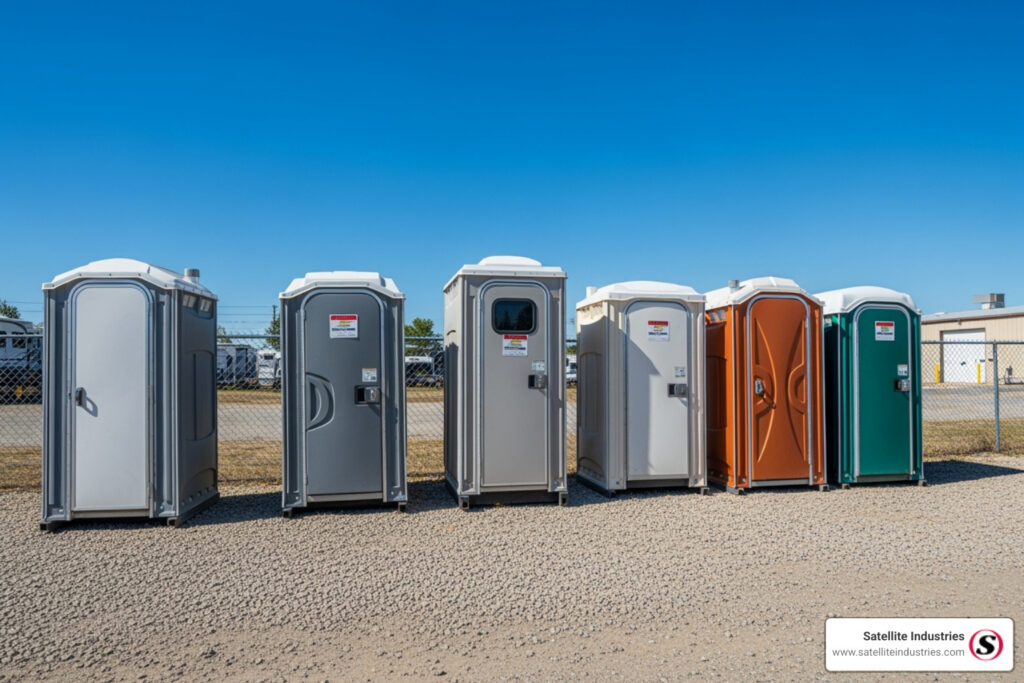
Standard used portable toilets for sale represent the most common and affordable option. These basic units include a toilet seat, urinal, toilet paper holder, and ventilation vent. They measure approximately 44 inches wide, 48 inches deep, and 91 inches tall—dimensions standardized across most manufacturers for transportation and storage efficiency.
Construction quality varies by brand and age. Units from premium manufacturers like Satellite Industries and PolyJohn feature thicker polyethylene walls (3/16 inch versus 1/8 inch), reinforced door hinges, and UV-resistant plastic that resists fading and cracking. These quality differences become apparent in used units—premium brands maintain structural integrity and appearance better than budget alternatives.
Pricing for standard used portable toilets ranges from $300-650 depending on age and condition. Units under 5 years old from reputable brands command top dollar ($500-650), while older units or lesser-known brands sell for $300-450. Inspect for cracks, door alignment, latch functionality, and overall structural soundness. Cosmetic imperfections matter less than structural integrity for functional use.
ADA-Compliant Portable Restrooms
ADA-compliant used portable toilets for sale provide wheelchair accessibility required at many construction sites, public events, and commercial locations. These larger units (approximately 60 inches wide and 92 inches deep) include handrails, lower toilet seats, wider doors, and adequate turning radius for wheelchairs. Federal regulations often mandate ADA units at certain ratios—typically 1 ADA unit per 20 standard units.
The used market for ADA units is smaller but offers significant savings versus new alternatives. New ADA portable toilets retail for $1,500-2,500, while used portable toilets with ADA compliance sell for $700-1,200. The price premium over standard units reflects larger size, additional features, and lower production volumes creating limited supply.
When evaluating used ADA units, verify all accessibility features function properly. Check handrail security, door width (minimum 32 inches), latch operation from inside and outside, and ramp attachment points if applicable. Some buyers convert damaged ADA units into storage sheds or equipment shelters when repairs exceed reasonable costs—factor potential alternative uses when considering heavily discounted damaged units.
Luxury and VIP Restroom Trailers
High-end used portable toilets for sale include luxury restroom trailers and VIP units targeting upscale events, weddings, corporate functions, and executive construction sites. These premium units feature amenities like flushing toilets, running water, climate control, interior lighting, mirrors, and elegant finishes. Multi-stall trailers can accommodate 8-16+ users simultaneously.
The used luxury portable restroom market offers exceptional value for buyers. New restroom trailers cost $15,000-75,000+ depending on size and appointments, while used portable toilets in the luxury category sell for $8,000-40,000—savings of 30-50%. These units maintain higher residual values than standard portable toilets due to specialized features and limited competition.
Mechanical systems in luxury units require more thorough inspection than basic portable toilets. Evaluate water pumps, freshwater and waste tanks, climate control systems, generators or electrical connections, plumbing fixtures, and interior finishes. Many luxury units require professional servicing—factor ongoing maintenance costs into purchase decisions. Despite higher complexity, these units command premium rental rates ($200-500+ per event) justifying their investment for businesses targeting high-end clientele.
Portable Toilet Sinks and Hand Washing Stations
Standalone hand washing stations complement portable toilets and sell actively in the used market. These units provide running water, soap dispensers, and paper towel holders—essential for construction sites, events, and locations requiring proper hygiene facilities. Used portable toilets for sale often bundle with matching hand wash stations at package discounts.
Used hand washing stations typically sell for $200-500 depending on capacity and features. Basic two-station units cost $200-350, while four-station or larger units command $350-500. Premium features like foot pumps (no-touch operation), hot water capabilities, or built-in sanitizer dispensers add $50-150 to values.
Inspect used hand wash stations for tank integrity, pump functionality, and mounting hardware condition. Cracks in freshwater or waste tanks are deal-breakers requiring expensive repairs. Verify all dispensers operate smoothly and spouts don’t leak. Consider compatibility with your portable toilet brand for consistent aesthetics when renting matched sets to customers.
Where to Find Quality Used Portable Toilets For Sale
Online Marketplaces and Classifieds
Used portable toilets for sale appear regularly on general online marketplaces like Craigslist, Facebook Marketplace, and OfferUp. These platforms offer local inventory with potential for in-person inspection before purchase. Prices often undercut specialized dealers since sellers avoid dealer margins and listing fees. However, buyer protection is minimal—you assume all risk regarding condition and functionality.
Search strategies maximize results on general marketplaces. Use multiple search terms: “used portable toilets,” “porta potty,” “portable restrooms,” “construction toilets,” and “event restrooms.” Set up saved searches with email alerts for new listings. Check daily during peak buying seasons when inventory moves quickly. Be prepared to act fast on quality units priced fairly—good deals disappear within hours or days.
Suggested read: Your Complete Buyer's Guide to Used Portable Band Sawmills for Sale: Smart Investment Strategies for 2026
When buying through classifieds, prioritize local sellers allowing in-person inspection. Request detailed photos showing all sides, interior, door operation, and any damage. Ask about age, manufacturer, maintenance history, and reason for selling. Arrange inspection during daylight to properly assess condition. Bring a helper and truck for immediate pickup—sellers appreciate quick, hassle-free transactions and may discount accordingly.
Specialized Equipment Dealers
Specialized portable sanitation equipment dealers maintain curated inventory of used portable toilets for sale with warranties, refurbishment services, and expertise. Dealers like UsedPortableToilets.com, National Construction Rentals, and regional sanitation equipment suppliers stock vetted units from known manufacturers. Prices run 10-25% higher than private party sales but include value-added services.
Dealer advantages include professional cleaning and refurbishment, warranty options (30-90 days typical), delivery services, and financing availability. Reputable dealers inspect units thoroughly, replace worn components, and certify functionality before sale. This reduces buyer risk substantially compared to private party purchases. Established dealers also offer trade-in services when you upgrade later.
Build relationships with dealers even when buying privately. Dealers provide valuable market intelligence about fair pricing, desirable brands, and upcoming inventory. They may alert you to exceptional deals or off-market opportunities. Many dealers buy inventory from private sellers—if your inspection reveals problems with a private party unit, the dealer might purchase it for refurbishment and resale, saving you wasted time.
Auctions and Liquidation Sales
Equipment auctions and business liquidations occasionally feature used portable toilets for sale in bulk lots. Construction companies closing, rental businesses downsizing, or bankruptcy liquidations create opportunities for buyers needing multiple units. Auction prices often fall 20-40% below typical market rates, though condition varies widely and inspection opportunities are limited.
Major auction platforms like Ritchie Bros, IronPlanet, GovDeals (for government surplus), and local auctioneers regularly feature portable sanitation equipment. Online bidding expands access beyond local buyers, though shipping logistics become your responsibility. Factor freight costs ($150-300 per unit for long-distance transport) into bid limits to avoid overpaying.
Auction buying requires discipline and research. Set maximum bids based on fair market value minus refurbishment costs and transportation. Resist bidding fever—losing an auction is better than overpaying. Arrive early for preview days allowing hands-on inspection when possible. Bring tools to open doors, check interiors, and assess structural integrity. Request condition reports from auctioneers and study all available photos thoroughly before bidding remotely.
Direct from Rental Companies
Large portable toilet rental companies periodically sell older fleet units to make room for new inventory. Buying direct from rental operators provides used portable toilets for sale with documented maintenance histories and known operating conditions. Rental companies often sell units at 5-8 years old when they’ve depreciated substantially but still have 5-7 years of useful life remaining.
Establish relationships with regional rental companies by introducing yourself and expressing interest in used equipment. Many companies maintain lists of interested buyers they contact when selling inventory. Ask about bulk purchase discounts—rental companies prefer selling multiple units in single transactions rather than dealing with many small buyers.
Rental company units show more wear than units from construction companies due to frequent transport, setup, and servicing. However, regular professional maintenance often means mechanical components are in better condition than neglected units from other sources. Request maintenance records documenting cleaning schedules, chemical treatments, and any repairs or part replacements. Well-maintained rental units often outperform poorly maintained units half their age.
Inspecting Used Portable Toilets Before Purchase
Structural Integrity Assessment
Thorough inspection of used portable toilets for sale begins with structural evaluation. Examine all plastic surfaces for cracks, especially around stress points—door hinges, tank mounting areas, base corners, and roof-to-wall joints. Minor surface scratches are cosmetic, but cracks compromise structural integrity and allow leaks. Spider-web crack patterns indicate stress failure requiring professional repair or unit rejection.
Check the base and floor for warping, soft spots, or damage. Stand inside and rock back and forth—the floor should feel solid without excessive flex. Inspect the underside if possible, looking for cracks in the waste tank area. Tank damage is expensive to repair and may render the unit unusable. Apply pressure to walls checking for adequate rigidity—excessive flex indicates worn or damaged plastic.
Examine the roof for cracks, missing vents, and proper ventilation system function. Roof damage allows water intrusion causing interior deterioration and odor problems. Vent caps should be present and properly seated—missing vent caps allow insects and rain entry. Test door operation multiple times—it should open and close smoothly without binding or requiring excessive force. Hinges should be secure without excessive play or stripped mounting holes.
Door and Latch Functionality
Door systems on used portable toilets receive heavy use and wear faster than other components. Test the latch mechanism thoroughly from both inside and outside. The latch should engage positively with clear tactile feedback. Users should never be trapped inside due to latch failure—this creates liability for rental operations. Replace unreliable latches immediately or negotiate significant price reductions.
Check door alignment and seal quality. Close the door and observe gaps around the perimeter. Excessive gaps allow light, temperature, and odor transfer degrading user experience. The door should fit flush against the frame seal. Inspect seals for tears, compression damage, or missing sections. Seal replacement is inexpensive ($15-30) but factor into negotiation if needed.
Evaluate hinges for wear, play, and secure mounting. Door hinges should operate smoothly through full range of motion without squeaking or binding. Lift up and down on the open door—excessive play indicates worn hinge pins or mounting holes. While hinges can be replaced ($25-50 per set plus labor), hinge mounting holes that have enlarged or torn are more serious problems potentially requiring plastic welding repairs.
Tank and Plumbing Verification
Waste holding tanks in used portable toilets for sale must be completely intact without cracks or leaks. Inspect the tank exterior thoroughly, especially around the drain fitting and any service openings. Ask when the unit was last emptied and cleaned—full tanks are heavier but allow functional testing. Fill the tank partially with water and check for leaks after 30 minutes.
Examine the toilet seat and bowl assembly for cracks and secure mounting. The seat should be firmly attached without excessive movement. Bowl cracks can be repaired but indicate hard use or abuse. Check the bowl drain opening—it should be clear without obstruction. Verify the toilet paper holder is present and securely mounted. Missing or damaged fixtures reduce value but are inexpensive to replace.
For units with urinals (standard in many models), verify the urinal is intact, properly mounted, and drains into the holding tank. Urinals sometimes crack from freezing or impact damage. Test flush mechanisms if present—they should operate smoothly and draw water from the fresh tank. Inspect fresh water tanks on luxury units for cracks and verify pump operation. Plumbing leaks in premium units can be expensive to repair.
Ventilation and Odor Control
Proper ventilation is critical for acceptable portable toilet performance. Inspect the roof vent cap—it should be present, undamaged, and properly installed. Vent stacks allow air circulation reducing odor buildup. Missing vent caps are inexpensive to replace ($8-15) but indicate neglected maintenance. Look inside the vent stack with a flashlight checking for obstruction, wasp nests, or damage.
Some used portable toilets for sale include enhanced ventilation systems with solar-powered fans or passive wind-driven vents. Verify these systems operate if present—they add value and user comfort. Solar panels should be intact without cracks. Test fans if possible (they operate in daylight). Wind turbine vents should spin freely without binding.
Smell test is subjective but informative. Even empty, well-maintained units should have minimal odor. Strong persistent odors indicate plastic absorption from inadequate cleaning or chemical treatment. While odors can be reduced through professional cleaning and deodorizing, heavily saturated plastic may never be completely odor-free. Factor this into pricing negotiations—heavily used rental units sometimes have odor issues that owner-used construction units avoid.
Pricing Guide for Used Portable Toilets
Standard Unit Pricing by Age and Condition
Used portable toilets for sale in standard configuration show predictable depreciation curves. Units 1-3 years old from premium brands (Satellite Industries, PolyJohn, ARMAL) in excellent condition command $600-750—approximately 50-60% of new retail. These nearly-new units often come from rental companies upgrading fleets or contractors who overestimated needs.
Suggested read: General Electric Air Conditioner Portable: Your Ultimate Buying Guide for 2025
Units 4-6 years old represent the sweet spot for value buyers. These used portable toilets sell for $450-600 depending on brand and condition. Structural integrity remains excellent while depreciation has reduced prices significantly. This age range offers the best balance between remaining useful life (6-8 years) and affordability for startup businesses or contractors establishing permanent site facilities.
Older units (7-10 years) price at $300-450. These budget options work well for temporary needs, backup inventory, or buyers planning extensive use where unit appearance is secondary to functionality. While older used portable toilets show more wear cosmetically, well-maintained units from quality manufacturers still provide years of serviceable life. Units over 10 years old rarely exceed $300 unless they’re premium brands in exceptional condition.
Premium and Specialty Unit Pricing
ADA-compliant used portable toilets for sale command premium pricing due to larger size and specialized features. Used ADA units typically sell for $700-1,200 depending on age and condition. New ADA units retail for $1,500-2,500, making used options attractive while still requiring substantial investment. The limited used supply keeps prices relatively high compared to standard unit depreciation.
Luxury restroom trailers represent the high end of used portable toilets market. Single-stall luxury units start around $8,000-15,000, while multi-stall trailers range from $15,000-40,000+ depending on size, amenities, and condition. These units depreciate more slowly than standard portable toilets—5-year-old luxury trailers retain 50-60% of original value versus 35-45% for standard units. The limited production volumes and specialized buyer market maintain prices.
Specialty units like construction site offices, shower trailers, and combination restroom/office units each have distinct pricing. Construction offices typically sell for $1,200-3,500 depending on size and appointments. Portable shower trailers command $5,000-15,000. Combination units fall somewhere between based on configuration. These specialized used portable toilets for sale serve niche markets with steady demand supporting values.
Regional Price Variations
Geographic location significantly affects used portable toilets pricing. High-demand markets in states with robust construction industries—Texas, Florida, California, Arizona, Nevada—see prices 15-25% above national averages. Strong demand from growing populations and continuous construction activity keeps markets tight with limited inventory.
Conversely, rural areas and regions with declining construction activity offer better deals. Sellers in these markets face smaller buyer pools and often price aggressively for quick sales. Savvy buyers can find units 20-30% below typical pricing by expanding searches to include less populated areas. Factor transportation costs—$150-300 per unit for long-distance shipping—when evaluating distant bargains.
Seasonal factors affect pricing too. Spring (March-May) brings peak demand as construction ramps up and events businesses prepare for busy seasons. Expect prices 10-20% above winter levels during this period. Late fall and winter (November-February) offer best deals as demand softens and sellers want to move inventory before year-end. Patient buyers shopping off-season can negotiate significant discounts.
Negotiation Strategies and Payment Terms
Effective negotiation on used portable toilets for sale starts with thorough market research. Know fair market value for the specific model, age, and condition you’re evaluating. Use online listings, completed auction results, and dealer quotes to establish a reasonable price range. Start offers 15-25% below asking price on private party sales—most sellers expect negotiation.
Identify deficiencies during inspection and quantify repair or refurbishment costs. Present these findings professionally when negotiating. If a unit needs $150 in repairs (new latch, door seal, vent cap), use this to justify $150-200 price reduction. Sellers often prefer reducing price over making repairs themselves. Be reasonable—don’t nickel-and-dime over minor cosmetic issues on fairly-priced units.
Bulk purchases provide leverage for significant discounts. Sellers strongly prefer dealing with one buyer taking multiple units versus managing many small transactions. On 10+ unit purchases, negotiate 15-25% discounts off per-unit pricing. Offer cash payment or immediate bank transfer—sellers value certainty and quick payment. Some dealers offer financing, though interest costs should be factored against paying cash. For businesses, equipment financing or lines of credit may offer better terms than dealer financing.
Refurbishing and Maintaining Used Portable Toilets
Cleaning and Sanitization Process
Proper cleaning transforms used portable toilets for sale from serviceable to like-new condition. Begin with complete tank evacuation and pumping—never attempt to transport units with waste. Specialized portable toilet service trucks perform this efficiently, or manually pump units using appropriate equipment and disposal methods following local regulations.
Pressure washing interior and exterior surfaces removes accumulated grime, stains, and odors. Use pressure washers rated 2000-3000 PSI with hot water if available. Apply commercial portable toilet cleaning solutions formulated to break down waste residue and neutralize odors. Pay special attention to toilet bowl, urinal, corners, door tracks, and ventilation areas where buildup concentrates.
Sanitization follows cleaning using EPA-registered disinfectants approved for portable toilet use. Spray or wipe all interior surfaces including walls, toilet seat, bowl, door, and floor. Allow proper dwell time per product instructions (typically 10 minutes) before rinsing if required. Some sanitizers leave protective coatings reducing future bacterial growth and odor. This professional-grade cleaning should be performed annually minimum for rental units, or immediately upon acquiring used portable toilets before placing into service.
Component Replacement and Repairs
Evaluate all used portable toilets for components needing replacement. Common wear items include door latches ($15-35), door seals ($20-40), hinges ($25-50 per set), toilet seats ($20-40), toilet paper holders ($10-25), and vent caps ($8-15). Replacing worn components immediately prevents user complaints and extends unit life significantly. Budget $75-150 per unit for comprehensive component refresh.
Crack repairs require expertise but are often economical. Small cracks in non-structural areas can be repaired using plastic welding techniques or two-part epoxy designed for polyethylene. Professional plastic repair services charge $100-250 depending on crack size and location. Large cracks or structural damage often exceed economical repair costs—factor this into purchase offers on damaged units.
Cosmetic improvements enhance rental appeal. Light sanding removes surface scratches and oxidation. Apply plastic restorer products to fade areas restoring color and shine. For heavily faded units, consider professional repainting with products specifically designed for polyethylene plastics. While cosmetic upgrades don’t affect functionality, they do increase rental rates customers will accept—fresh-looking used portable toilets rent for 20-30% more than worn-appearing units with identical functionality.
Preventive Maintenance Schedules
Implementing preventive maintenance protects used portable toilets investment and maximizes useful life. Inspect units quarterly checking for developing cracks, loose components, door alignment, ventilation function, and general condition. Address minor issues immediately before they become major problems. Quarterly inspection takes just 10-15 minutes per unit but prevents expensive repairs and downtime.
Lubricate all moving parts semi-annually. Apply silicone spray to door hinges, latches, and vent cap moving parts. Lubrication prevents corrosion, reduces wear, and ensures smooth operation. Check all fasteners (screws, bolts) for tightness—vibration from transport loosens hardware over time. Tighten loose fasteners and replace missing ones immediately.
Annual comprehensive maintenance should include professional deep cleaning, component inspection, and any necessary repairs. This thorough servicing costs $75-150 per unit but extends lifespan substantially. Well-maintained used portable toilets for sale often outlast neglected units by 5-7 years. For rental operations, maintenance costs are business expenses offsetting revenue—plan for annual maintenance budgets of 8-12% of unit replacement value.
Winterization for Cold Climates
Proper winterization protects used portable toilets in freezing climates. Water remaining in tanks, plumbing, and fixtures expands when frozen, causing catastrophic crack damage. Before first freeze, completely drain all water from holding tanks, flush systems, and plumbing. Use compressed air to blow out residual water from lines and fittings.
Add RV antifreeze (propylene glycol type, not toxic ethylene glycol) to tanks and pour into toilet bowls and urinals. Antifreeze protects against freezing damage if small amounts of water remain in the system. Use antifreeze rated to -50°F for maximum protection. This costs $5-10 per unit but prevents hundreds in crack repair costs.
Store units under cover if possible during winter months. Indoor storage protects plastic from UV degradation and extreme temperature cycling. If outdoor storage is necessary, position units to prevent snow accumulation on roofs and ensure ventilation to prevent condensation buildup. Cover or seal doors and vents to keep out snow, ice, and animals. Spring startup involves flushing antifreeze, inspecting for winter damage, and restocking supplies before placing used portable toilets back into service.
Suggested read: GE Portable A/C: Your Complete 2025 Buying Guide for Cooling Any Space
Business Applications for Used Portable Toilets
Starting a Portable Toilet Rental Business
Launching a portable toilet rental business with used portable toilets for sale dramatically reduces startup capital requirements. New fleet startup costs $12,000-25,000 for 10-15 units plus service truck and equipment. Buying used units cuts equipment costs 40-60%, lowering barriers to entry. Many successful rental operations started with used equipment before expanding into new units as revenue grew.
Market research identifies local demand and competition. Construction activity, outdoor events (festivals, concerts, fairs), and special occasions (weddings, parties) drive rental demand. Contact local contractors, event planners, and venue operators introducing your services. Competitive pricing initially builds client base—match or slightly undercut established competitors. As reputation grows, prices can increase to market rates.
Service excellence differentiates rental businesses. Regular cleaning, prompt delivery and pickup, well-maintained equipment, and responsive customer service build reputation and generate referrals. Many customers prioritize reliability over lowest price—they need toilets delivered on schedule and serviced as promised. Invest in quality used portable toilets, maintain them meticulously, and deliver exceptional service creating competitive advantage despite being a new market entrant.
Construction Site Applications
Construction companies often purchase used portable toilets for sale for permanent site facilities rather than renting. For projects lasting 6+ months, ownership beats rental economics. Typical monthly rental rates of $75-125 per unit mean a $500 used portable toilet pays for itself in 4-7 months. For multi-year projects or companies managing multiple concurrent sites, ownership saves thousands annually.
OSHA regulations require adequate toilet facilities at construction sites—generally one toilet per 20 workers. Larger projects need multiple units creating substantial rental expenses. Buying used units and relocating them between projects as needed provides flexibility and cost savings. When projects complete, units move to new sites or sell to recover most of the investment.
Site security improves with company-owned used portable toilets versus rentals. Worker familiarity with consistent equipment, elimination of rental company service schedules, and ability to relocate units as site layouts change provide operational advantages. Company-owned units also allow custom branding displaying company names and contact information—subtle but effective marketing at active job sites.
Event and Festival Services
Events businesses rent used portable toilets to festivals, concerts, fairs, outdoor weddings, and sporting events. The seasonal nature of events industry makes used equipment especially attractive—units sit idle during off-season, making lower acquisition costs important for profitability. Event rentals command premium rates ($150-300+ per event) compared to construction rentals, improving return on investment.
Luxury restroom trailers serve high-end events like weddings, corporate functions, and VIP areas at large festivals. These premium used portable toilets for sale cost more but rent for $300-1,500+ per event depending on size and amenities. One luxury trailer renting 20-30 times annually generates $6,000-30,000 revenue against acquisition costs of $10,000-25,000 used—attractive economics for the premium market segment.
Successful events businesses maintain mixed fleets. Standard units serve general festival areas and budget-conscious clients. ADA units meet accessibility requirements. Luxury trailers target premium customers and high-end events. Starting with used portable toilets across all categories allows fleet diversification without prohibitive capital requirements. As the business grows, selectively add new units in categories with highest demand and rental rates.
Emergency and Disaster Relief
Government agencies, disaster relief organizations, and emergency management teams maintain portable toilet inventories for rapid deployment during disasters, emergencies, and temporary situations. Used portable toilets for sale provide economical solutions for these organizations needing significant capacity for infrequent but critical use.
Emergency portable toilets sit in storage most of the time, making used units particularly cost-effective. A municipal emergency management department might maintain 20-50 units for deployment during hurricanes, floods, power outages, or other disasters. Buying used saves 50-70% versus new while delivering identical functionality when needed. The units may only deploy once every few years, so latest models aren’t necessary.
Volunteer fire departments, community organizations, and schools also purchase used portable toilets for event support. These organizations typically operate on limited budgets where used equipment makes programs financially feasible. A volunteer fire department might own 5-10 units to rent locally at modest rates, generating revenue supporting fire department operations while providing community service. Used units allow these organizations to participate in markets otherwise financially inaccessible.
Transportation and Logistics
Moving and Hauling Used Portable Toilets
Transporting used portable toilets for sale requires proper equipment and technique. Standard units weigh 150-250 pounds empty, while luxury trailers can weigh thousands of pounds. Pickup trucks with 6-8 foot beds accommodate 2-4 standard units depending on arrangement. Larger purchases require box trucks or flatbed trailers. Most portable toilet suppliers rent specialized transport trucks if you need to move many units.
Secure units properly during transport preventing damage. Strap units to prevent shifting—portable toilets have high centers of gravity and tip easily. Place cardboard or blankets between units preventing scratching during transport. Stack carefully if height allows—standard units can stack 2-3 high with proper bracing, though single-layer transport is safer. Never transport units containing waste—always empty completely before moving.
Long-distance transport adds significant costs to used portable toilets purchases. Freight companies charge $150-300+ per unit for cross-country shipping. For bulk purchases (10+ units), negotiate discounted freight rates or arrange full truckload shipping reducing per-unit costs. Sometimes exceptional deals in distant markets justify freight expenses, but always calculate total delivered cost before committing. Local purchases avoid these costs while allowing personal inspection before buying.
Storage Requirements and Solutions
Proper storage protects used portable toilets for sale between uses and extends lifespan. Units stored outdoors face UV degradation, weather damage, and potential theft or vandalism. Indoor storage is ideal but requires significant space—standard units need approximately 4 feet × 4 feet of floor space each, while height requirements are 8-9 feet. A 20-unit indoor storage facility needs 400-500 square feet minimum.
Outdoor storage works acceptably with proper precautions. Position units on level, well-drained ground preventing water accumulation. Space units 6-12 inches apart for ventilation and access. Secure doors and vents to prevent animals nesting inside. Consider fencing or securing the storage area deterring theft. Portable toilets resell easily, making them targets for thieves. GPS trackers ($50-100 each) provide theft recovery capability for valuable fleets.
Rental businesses maintain organized storage facilitating efficient inventory management. Number units clearly with waterproof labels or paint. Maintain spreadsheets tracking each unit’s age, maintenance history, and rental status. Group units by type—standard, ADA, luxury—simplifying order fulfillment. Position frequently rented units near storage area entrance minimizing handling time. Efficient logistics reduce labor costs while improving customer service through faster delivery and pickup.
Delivery and Setup Services
Rental businesses using used portable toilets must provide reliable delivery and setup services. Standard delivery includes transporting units to customer locations, positioning per customer instructions, and staking or weighing down units for stability. Charge delivery fees separately ($50-100 per location typical) or include in rental rates. Prompt, professional delivery builds reputation and encourages repeat business.
Delivery equipment needs scale with business size. Starting operations may use personal pickup trucks, while established businesses invest in specialized trucks with hydraulic lifts. Portable toilet service trucks with integrated crane systems allow one person to load, transport, deliver, and position units efficiently. Used service trucks sell for $15,000-40,000—significant investment but dramatically improving operational efficiency.
Luxury restroom trailers require more complex setup including leveling, utilities connection, and sometimes steps or ramps. Many used portable toilets for sale in the luxury category need electrical hookups for lighting and climate control, fresh water supply, and waste tank connections. Offer full-service packages including delivery, setup, servicing during events, and pickup. Premium clients paying $500-1,500+ for luxury trailers expect white-glove service—meeting these expectations builds business reputation justifying premium pricing.
Legal and Regulatory Considerations
Health and Safety Regulations
Operating used portable toilets businesses requires compliance with health department regulations. Requirements vary by state and locality but generally include proper waste disposal at approved facilities, regular sanitation and cleaning schedules, and adequate toilet paper and hand sanitizer supplies. Contact local health departments before starting operations understanding specific requirements in your area.
OSHA (Occupational Safety and Health Administration) mandates toilet facilities at construction sites and workplaces. Regulations typically require one toilet per 20 workers, toilets positioned within 5 minutes walking distance, toilet paper and hand washing facilities available. **Used portable toilets for sale** must meet these requirements—verify units you purchase comply with applicable standards. Non-compliant units create liability for rental companies and customers.
Suggested read: Premium Luxury Portable Restrooms for Sale: Your Complete Buyer's Investment Guide
ADA (Americans with Disabilities Act) requires accessible toilet facilities at public accommodations, commercial facilities, and government buildings. Events, construction sites, and temporary facilities with certain numbers of toilets must include ADA-compliant units. Understanding and meeting ADA requirements protects your rental business from discrimination complaints while opening markets requiring compliant equipment. Maintain adequate ADA unit inventory serving this regulated market segment.
Business Licensing and Permits
Starting a portable toilet rental business requires various licenses and permits. Business licenses from city and county governments authorize commercial operations in your jurisdiction. Requirements and costs vary—research specific requirements where you’ll operate. Some localities require specific portable sanitation business licenses beyond general business licenses. Complete all licensing before advertising or accepting customers to avoid penalties.
Waste hauler permits authorize transporting and disposing of human waste. States and localities regulate waste hauling due to health and environmental concerns. Permit requirements typically include demonstrating proper equipment, waste disposal plans at approved facilities, and sometimes insurance requirements. Application processes take weeks or months—start early in your business planning. Operating without required waste permits risks substantial fines and business shutdown.
Vehicle registrations and commercial driver’s license (CDL) requirements depend on equipment. Service trucks under 26,000 pounds GVWR generally don’t require CDLs, though states vary. Larger trucks need CDLs and drivers must meet medical certification requirements. Register all vehicles properly including appropriate commercial plates. Insurance requirements for commercial vehicles exceed personal auto insurance—consult insurance agents specializing in commercial trucking to ensure adequate coverage. Proper licensing, permitting, and insurance protect used portable toilets businesses from legal and financial liability.
Insurance Requirements
Comprehensive insurance protects portable toilet businesses from various risks. General liability insurance covers bodily injury and property damage claims if equipment causes accidents or injuries. Required coverage amounts vary but $1-2 million is typical. Customers, especially construction companies and event venues, often require certificate of insurance before contracting services. Without proper insurance, these lucrative markets remain inaccessible.
Commercial auto insurance covers service trucks and trailers. Standard personal auto policies exclude business use—using personal insurance for commercial operations voids coverage. Commercial auto policies cost more but provide essential protection when transporting used portable toilets and equipment. Include coverage for owned vehicles, hired/rented vehicles, and non-owned vehicles driven for business purposes.
Property insurance protects inventory value of used portable toilets for sale in storage or at customer locations. Theft, vandalism, fire, and weather damage can destroy units worth thousands. Insure equipment for replacement cost rather than depreciated value—you’ll need full replacement funds to continue operations after major losses. Consider business interruption insurance covering lost revenue if disasters prevent business operations. Insurance costs represent 3-5% of revenue typically but provide essential protection against catastrophic losses.
Frequently Asked Questions About Used Portable Toilets For Sale
Where can I find quality used portable toilets for sale?
Quality used portable toilets for sale appear on specialized equipment sites like UsedPortableToilets.com and EquipmentTrader.com, general marketplaces including Craigslist and Facebook Marketplace, equipment auctions through Ritchie Bros and IronPlanet, and directly from portable toilet rental companies upgrading fleets. Start with specialized dealers offering warranties and refurbished units for lowest risk purchases. Expand to general marketplaces and private sellers for better deals requiring more buyer diligence. Establish relationships with local rental companies who periodically sell units. Auction sites sometimes offer bulk lots at significant discounts for buyers needing multiple units.
How much do used portable toilets typically cost?
Standard used portable toilets typically cost $300-650 depending on age and condition. Units 3-5 years old from quality brands command $500-650, while older units (6-10 years) sell for $300-500. ADA-compliant units cost $700-1,200 used. Luxury restroom trailers range from $8,000-40,000+ depending on size and amenities. Hand washing stations sell for $200-500. Prices vary 15-25% by region—high-demand construction markets in Texas, Florida, and California see premium pricing. Off-season purchasing (late fall and winter) offers 10-20% savings versus peak spring demand. Bulk purchases of 10+ units justify 15-25% discounts from motivated sellers.
What should I inspect before buying used portable toilets?
Inspect used portable toilets for sale thoroughly checking structural integrity (cracks, warping, soft spots), door operation (smooth opening/closing, positive latch engagement, proper alignment), tank condition (no cracks or leaks in waste tanks), ventilation system (intact vent cap, clear stack), and all components (toilet seat, bowl, urinal if equipped, toilet paper holder). Test from inside verifying latch releases properly—users trapped inside create serious liability. Smell test indicates maintenance quality—persistent strong odors suggest inadequate cleaning or chemical treatment. Request maintenance records from rental companies documenting service history. Bring a helper and truck for same-day pickup after successful inspection. Walk away from units with cracked tanks or major structural damage unless priced extremely low.
Can used portable toilets be profitable for rental businesses?
Used portable toilets are highly profitable for rental businesses when managed well. Standard construction rentals generate $75-125 monthly revenue per unit. Used units costing $400-600 pay for themselves in 5-8 months. Annual revenue per unit averages $900-1,500 against initial costs of $400-600—excellent ROI. Luxury trailers renting for $300-1,500 per event generate $6,000-30,000 annually from 20-30 events. With proper maintenance, units provide 8-12 years of revenue. Success factors include reliable service, well-maintained equipment, competitive pricing, and strong customer relationships. Market research identifying underserved niches (events, remote construction sites, special occasions) improves profitability through premium pricing and reduced competition.
How long do used portable toilets last?
Quality used portable toilets from manufacturers like PolyJohn, Satellite Industries, and ARMAL last 12-18 years total with proper maintenance. If buying a 5-year-old unit, expect 7-13 additional years of serviceable life. Longevity depends on maintenance quality, usage intensity, and climate. Well-maintained units in temperate climates with moderate use reach upper lifespan ranges, while heavily used rental units in harsh climates may only last 10-12 years total. Premium manufacturers build more durable units than budget brands—this quality difference becomes apparent in used units. Proper winterization in freezing climates prevents crack damage extending life. Regular cleaning and component replacement maximizes longevity protecting your investment.
Do used portable toilets require special maintenance?
Used portable toilets require regular maintenance ensuring reliable operation and maximizing lifespan. Quarterly inspections checking for cracks, loose components, door operation, and general condition catch problems early. Semi-annual lubrication of hinges, latches, and moving parts prevents corrosion and wear. Annual professional deep cleaning costs $75-150 per unit but maintains rental quality and extends service life. Replace worn components (latches, seals, hinges, toilet seats) promptly—budget $75-150 annually per unit. Winterize units in freezing climates by draining all water and adding RV antifreeze preventing costly crack damage. Maintenance costs typically run 8-12% of unit replacement value annually—factor this into business planning. Well-maintained units provide years of trouble-free service and command higher resale values.
Can I finance used portable toilet purchases?
Some specialized dealers offer financing for used portable toilets for sale, though terms typically aren’t as favorable as new equipment financing. Equipment financing companies sometimes fund used portable sanitation equipment purchases for established businesses with good credit. Interest rates run 8-15% typically for used equipment versus 5-10% for new. Loan terms extend 3-5 years usually. Banks and credit unions may offer business loans or lines of credit providing more flexible financing options, especially for existing business customers. For startups or buyers with limited credit history, seller financing occasionally is available—negotiate payment plans directly with sellers accepting down payments and monthly installments. Cash purchases avoid interest costs and simplify transactions but require more upfront capital.
Are used portable toilets sanitary for rental use?
Properly cleaned and maintained used portable toilets are completely sanitary for rental use. Professional cleaning involves complete tank pumping, pressure washing interior and exterior surfaces, application of EPA-registered disinfectants, and component replacement as needed. This process removes all waste residue, bacteria, and odors. Many rental companies routinely service units that have been in fleets for 8-12 years—age doesn’t affect sanitary condition when proper servicing occurs. Buy from reputable sellers who properly clean units before sale, or budget for professional cleaning immediately upon acquisition. Regular servicing between rentals (weekly for construction sites, after each event rental) maintains sanitary conditions. Users can’t tell the difference between properly maintained new versus used units.
What brands of used portable toilets are most reliable?
Premium brands including Satellite Industries, PolyJohn, and ARMAL are most reliable for used portable toilets. These manufacturers use thicker polyethylene plastic (3/16 inch versus 1/8 inch), reinforced components, and UV-resistant materials maintaining structural integrity and appearance over many years. Used units from these brands command premium pricing but deliver superior longevity and lower maintenance costs. Mid-tier brands like Portable Solutions Group and Five Peaks also produce quality units at lower price points. When evaluating used portable toilets for sale, prioritize well-maintained units from known manufacturers over cheap units from unfamiliar brands—the quality difference becomes very apparent in used equipment. Check manufacturer’s plates inside units identifying brand and model for research before purchase.
Can I sell used portable toilets after purchasing them?
Used portable toilets maintain resale value allowing you to recover substantial investment when upgrading or exiting the business. Units maintained well and properly stored depreciate slowly after initial 5-6 year period. A unit purchased for $500 and used for 4-5 years might still sell for $300-400 with proper maintenance. List on same platforms where you purchased—specialized equipment sites, general marketplaces, or direct to rental companies seeking expansion inventory. Clean and repair units before listing—presentation dramatically affects resale prices. Include maintenance records demonstrating care. Price competitively based on current market conditions. Some sellers offer trade-ins toward new equipment purchases—convenient though you might accept slightly lower prices than direct sales. The active used market provides exit strategy protecting your investment.
Start Your Portable Sanitation Business Today
The opportunities in portable sanitation are substantial, and used portable toilets for sale provide the affordable entry point many entrepreneurs need. Whether you’re launching a full-scale rental operation, providing site facilities for your construction company, or serving special events in your community, used equipment dramatically reduces capital requirements while delivering the same functionality as new units.
Take action now by researching your local market, identifying potential customers, and exploring available inventory. Reach out to rental companies in your area introducing yourself as a potential buyer. Set up saved searches on equipment websites and marketplaces capturing new listings immediately. Create a business plan outlining startup costs, revenue projections, and growth strategies. The portable sanitation industry offers stable demand and recurring revenue—strong fundamentals for business success.
Start small and scale strategically. Many successful rental businesses began with 5-10 used portable toilets serving local construction sites or events. Reinvest early revenue into additional units and equipment, gradually building fleet size and service capabilities. Focus on service excellence and customer relationships rather than becoming the largest provider. Satisfied customers provide referrals generating organic growth. With determination, capital discipline, and commitment to quality service, your used portable toilet investment can grow into a substantial business. Like a quality portable deer stand that serves hunters for many seasons, well-chosen used portable toilets provide years of reliable service supporting your business growth.
Ready to find quality used portable toilets for your business? Visit National Construction Rentals to browse current inventory, compare prices from multiple sellers, and connect with reputable dealers offering warranties and delivery services. Start building your portable sanitation business with confidence today.
Sources and Citations:
- American Rental Association: “Portable Sanitation Industry Market Analysis 2024”
- Portable Sanitation Association International (PSAI): “Industry Standards and Best Practices”
- OSHA: “Sanitation Standards for Construction Sites 29 CFR 1926.51”
- U.S. Department of Justice: “ADA Standards for Accessible Design”
- Environmental Protection Agency: “Waste Management Guidelines for Portable Sanitation”
- Equipment World: “Used Equipment Market Trends and Pricing Data”
- National Construction Rentals: Used equipment pricing and availability data
- EquipmentTrader.com: Market analysis and sold listing data
- PolyJohn Corporation: Product specifications and maintenance guidelines
- Satellite Industries: Technical documentation and service recommendations
Article reflects market conditions and regulations current as of December 2025. Prices, regulations, and product availability may change. Always verify current information with sellers, manufacturers, and regulatory agencies before making purchasing decisions or starting business operations. Consult legal and business professionals for advice specific to your situation.