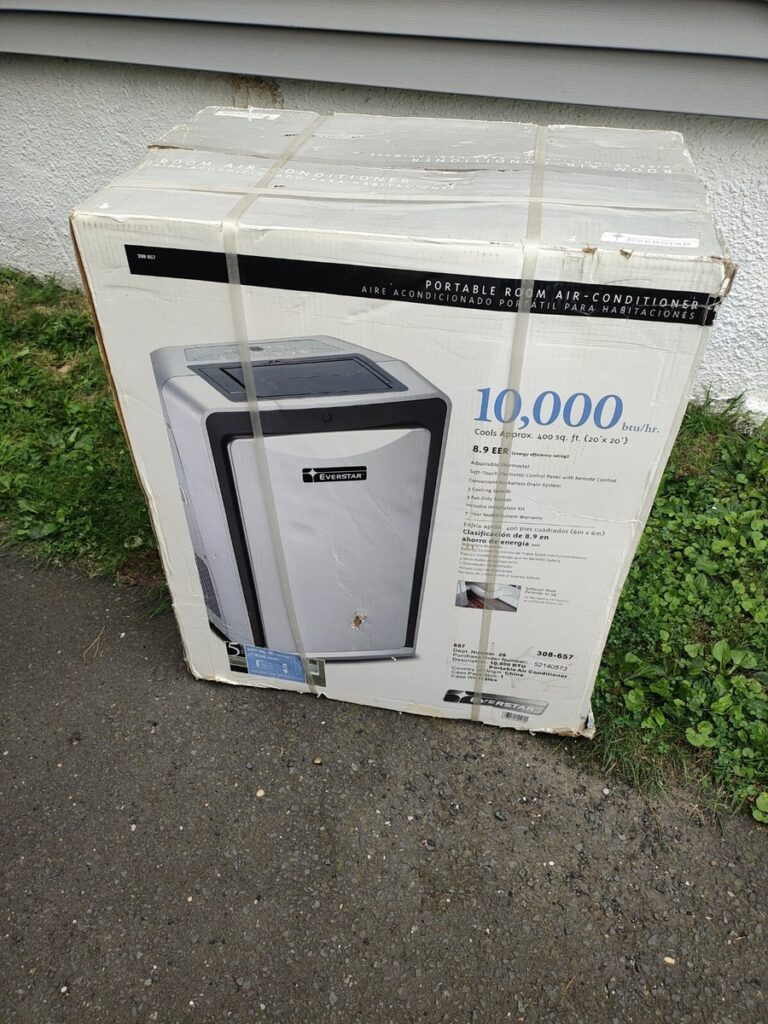
When the summer heat becomes unbearable, finding an effective cooling solution that doesn’t require permanent installation can feel like searching for an oasis in the desert. The Everstar portable air conditioner has emerged as a popular choice for homeowners, renters, and office workers who need flexible, efficient cooling without the commitment of a traditional window unit or central air system. This cooling appliance combines convenience with performance, offering a practical alternative that can move from room to room as your cooling needs change throughout the day.
The beauty of an Everstar portable air conditioner lies in its versatility and ease of use. Unlike traditional air conditioning systems that require professional installation, permanent mounting, or modifications to your living space, these portable units can be set up in minutes and moved between rooms as needed. This flexibility makes them particularly valuable for renters who cannot make permanent changes to their apartments, for homeowners who want to cool specific rooms without running central air throughout the entire house, and for people who need temporary cooling solutions for offices, workshops, or other spaces. The Everstar brand has built a reputation for delivering reliable cooling performance at competitive price points, making climate control accessible to a broader range of consumers.
Understanding the Everstar Portable Air Conditioner Technology
The Everstar portable air conditioner operates using a self-contained refrigeration cycle that extracts heat and humidity from indoor air and expels it outside through an exhaust hose. This technology mirrors the cooling process used in traditional air conditioners but packages everything into a mobile unit that typically stands between two to three feet tall and can be easily wheeled from one location to another. The system draws warm air from your room, passes it over cold evaporator coils filled with refrigerant, and then vents the hot air and moisture outside through a flexible exhaust hose that fits into a window kit.
Most Everstar portable AC units feature a closed-loop refrigeration system that includes a compressor, condenser, expansion valve, and evaporator. The refrigerant cycles through these components, absorbing heat from indoor air at the evaporator and releasing it outside at the condenser. This process simultaneously cools and dehumidifies the air, providing comfort on hot, humid days. The extracted moisture typically collects in an internal reservoir that either needs periodic emptying or continuously drains through a hose connection, depending on the model. Understanding this basic operation helps users maximize efficiency and troubleshoot common issues that may arise during use.
Key Features of Everstar Portable Air Conditioners
Cooling Capacity and BTU Ratings
The cooling power of an Everstar portable air conditioner is measured in British Thermal Units (BTUs), which indicate how much heat the unit can remove from a space per hour. Everstar models typically range from 8,000 BTU units suitable for small bedrooms and offices up to 14,000 BTU models capable of cooling larger living spaces, master bedrooms, or open-concept areas. Selecting the appropriate BTU rating is crucial for optimal performance and energy efficiency.
BTU Selection Guide:
- 8,000-10,000 BTU: Ideal for rooms up to 350 square feet, including small bedrooms, home offices, and dorm rooms
- 10,000-12,000 BTU: Suitable for medium spaces between 350-550 square feet, such as large bedrooms, guest rooms, and small living rooms
- 12,000-14,000 BTU: Best for larger areas of 550-700 square feet, including master bedrooms, living rooms, and studio apartments
Choosing an undersized unit will result in constant operation without achieving comfortable temperatures, while an oversized unit may cycle on and off too frequently, leading to inadequate dehumidification and increased energy consumption. Room factors such as ceiling height, sun exposure, insulation quality, and the number of heat-generating appliances should also influence your BTU selection for your Everstar portable air conditioner.
Energy Efficiency and Operating Costs
Modern Everstar portable air conditioners incorporate energy-saving features that help minimize electricity consumption while maintaining comfortable indoor temperatures. The Energy Efficiency Ratio (EER) measures how efficiently an air conditioner converts electricity into cooling power, with higher numbers indicating better efficiency. Most Everstar units achieve EER ratings between 8.0 and 10.0, which represents reasonable efficiency for portable air conditioning technology.
The actual operating cost of your Everstar portable AC depends on several variables including your local electricity rates, the unit’s wattage, how many hours per day you run the system, and your thermostat settings. On average, a 10,000 BTU portable air conditioner drawing approximately 1,200 watts will cost between $0.15 and $0.20 per hour to operate at national average electricity rates. Running the unit eight hours daily during a three-month cooling season would result in seasonal costs ranging from $110 to $145. Using programmable timers, maintaining proper temperature settings around 78°F, and ensuring adequate insulation can significantly reduce these operating expenses.
Multi-Functionality and Operating Modes
Beyond basic cooling, most Everstar portable air conditioner models offer multiple operating modes that extend their usefulness throughout the year. The dehumidification mode removes excess moisture from indoor air without aggressive cooling, making it perfect for humid spring and fall days when temperatures are moderate but dampness causes discomfort. This mode typically removes 50-90 pints of moisture per day, depending on the model and ambient conditions.
The fan-only mode circulates air without activating the cooling system, providing gentle air movement that can make rooms feel more comfortable even without temperature reduction. Some Everstar models also include a heat pump function that reverses the refrigeration cycle to provide supplemental heating during cooler months, essentially transforming the unit into a year-round climate control solution. This versatility maximizes the value of your investment by ensuring the appliance serves useful purposes beyond the summer cooling season.
Installation and Setup Process for Your Everstar Portable Air Conditioner
Setting up an Everstar portable air conditioner requires minimal technical skill and can typically be completed in 15-30 minutes without professional assistance. The process begins with selecting an appropriate location near a window and a grounded electrical outlet. The unit should be positioned on a flat, stable surface with at least 12-20 inches of clearance on all sides to ensure proper airflow and ventilation. Carpeted floors work fine, though hard surfaces make it easier to move the unit when needed.
The window installation kit included with most Everstar portable AC units contains an adjustable window panel, exhaust hose, and necessary adapters. The panel slides into the open window frame and can be adjusted to fit most standard single-hung or sliding windows measuring between 26 and 48 inches wide. After securing the panel in place, you attach one end of the exhaust hose to the unit and the other end to the opening in the window panel. Some models include dual-hose configurations with both intake and exhaust hoses, which generally provide more efficient cooling by preventing negative air pressure inside the room.
Step-by-Step Installation Guide:
- Choose the optimal location considering proximity to windows, electrical outlets, and traffic patterns
- Unpack and inspect all components, checking for any damage incurred during shipping
- Install the window kit by opening your window and sliding the adjustable panel into place
- Attach the exhaust hose securely to both the unit and the window panel adapter
- Connect the drainage system if your model includes continuous drain capability
- Plug in the unit using a dedicated outlet to avoid circuit overloads
- Power on and test all operating modes to ensure proper functionality
For rooms without suitable windows, creative solutions include venting through drop ceilings, sliding glass doors, or even through walls using specially designed vent kits. However, these alternative methods may require additional materials and potentially some basic carpentry skills to implement effectively.
Suggested read: 12 Volt Portable Air Conditioner: Your Complete Buying Guide for Mobile Cooling Solutions
Maintenance Requirements for Optimal Performance
Regular maintenance ensures your Everstar portable air conditioner operates at peak efficiency throughout its lifespan, which typically ranges from 5-10 years with proper care. The most important maintenance task involves cleaning or replacing the air filter, which traps dust, pollen, pet dander, and other airborne particles before they enter the cooling system. A clogged filter restricts airflow, forces the compressor to work harder, reduces cooling capacity, and increases energy consumption. Most Everstar units feature washable filters that should be cleaned every two weeks during heavy use.
To clean the filter, simply remove it from the unit according to the manufacturer’s instructions, rinse it under warm running water, and allow it to air dry completely before reinstalling. If the filter shows signs of deterioration, tears, or cannot be adequately cleaned, replacement filters are typically available from the manufacturer or third-party suppliers. Beyond filter maintenance, users should periodically inspect the exhaust hose for kinks, blockages, or damage that might restrict airflow, and clean the exterior housing with a damp cloth to prevent dust accumulation.
Seasonal Maintenance Checklist:
- Weekly during peak season: Check and empty the condensate collection tank if applicable
- Bi-weekly: Remove, clean, and dry the air filter
- Monthly: Inspect exhaust hose connections for secure fitting and check for obstructions
- Quarterly: Clean the exterior housing and air intake/output grills
- Annually: Schedule professional inspection of refrigerant levels and internal components
- End of season: Thoroughly clean all components, drain all water, and store in a dry location
The condensate collection system also requires attention, as moisture extracted from the air accumulates in an internal tank that must be emptied when full. Many Everstar portable air conditioners alert users with an indicator light or audible alarm when the tank reaches capacity. Some models offer continuous drainage options that connect to a floor drain or can route water outside through a secondary drain hose, eliminating the need for manual emptying.
Advantages of Choosing an Everstar Portable Air Conditioner
The primary advantage of selecting an Everstar portable air conditioner over competing cooling solutions is the combination of affordability, portability, and effective performance. Unlike window units that require lifting, securing brackets, and creating permanent modifications to window frames, portable models simply roll into position and vent through a partially opened window. This makes them ideal for renters who face restrictions on permanent installations, for people who frequently relocate, and for homeowners who want cooling flexibility without the expense of installing multiple window units or upgrading to central air conditioning.
The mobility factor cannot be overstated when evaluating Everstar portable AC units. During daytime hours, you might position the unit in your home office to maintain productivity in a comfortable environment. As evening approaches, you can wheel the same unit into your bedroom to ensure restful sleep in a cool, climate-controlled space. This flexibility means one Everstar portable air conditioner can effectively serve multiple rooms throughout the day, potentially eliminating the need to purchase multiple cooling appliances. The built-in caster wheels make relocation effortless, typically requiring no more effort than rolling a small suitcase across your floor.
Comparative Advantages:
| Feature | Everstar Portable AC | Window Unit | Central Air | Fan Only |
|---|---|---|---|---|
| Installation Difficulty | Easy, DIY-friendly | Moderate, may need help | Professional required | Minimal |
| Portability | Excellent, moves room-to-room | None, permanently mounted | None, fixed system | Good |
| Cooling Power | Moderate, single room | Good, single room | Excellent, whole home | None |
| Initial Cost | $250-$600 | $150-$500 | $3,000-$7,000+ | $20-$100 |
| Energy Efficiency | Moderate (EER 8-10) | Good (EER 10-12) | Best (SEER 14-20) | Excellent |
| Renter-Friendly | Yes, completely reversible | Possible with permission | No | Yes |
Cost considerations also favor Everstar portable air conditioners for many consumers. Entry-level models start around $250-$300, with mid-range units offering enhanced features and higher BTU ratings typically priced between $400-$500. Even premium models with heat pump functionality, advanced filtration systems, and smart home connectivity rarely exceed $600-$700. This affordability makes effective cooling accessible to budget-conscious consumers who cannot afford the $3,000-$7,000+ investment required for central air conditioning installation.
Common Challenges and Solutions
Despite their many advantages, Everstar portable air conditioners do present some challenges that potential buyers should understand before making a purchase decision. The most commonly reported issue involves noise levels during operation. Portable air conditioners generate sound from multiple sources including the compressor, fan motor, and air movement through the system. Most Everstar units produce between 50-55 decibels during normal operation, which is comparable to a normal conversation or moderate rainfall. While not excessively loud, this ambient noise may disturb light sleepers or people sensitive to background sounds.
Mitigating noise concerns involves strategic placement away from sleeping areas when possible, operating the unit at lower fan speeds during quiet hours, and considering models specifically designed for quieter operation. Some users find that positioning the unit on a rubber mat or foam pad reduces vibration transmission to floors, further minimizing perceived noise levels. The sleep mode featured on many Everstar portable air conditioners gradually adjusts temperature settings and fan speeds throughout the night to reduce noise while maintaining comfort.
Another consideration involves the single-hose versus dual-hose debate. Most Everstar portable air conditioner models utilize a single-hose design where the unit draws air from the room, cools it, and expels hot air outside through the exhaust hose. This creates negative air pressure in the room, which draws warm air from other areas of your home through cracks around doors and windows, somewhat reducing overall efficiency. Dual-hose models address this limitation by drawing intake air from outside rather than from the room being cooled, eliminating the negative pressure issue and improving efficiency by up to 30-40%.
Troubleshooting Common Issues:
- Unit runs but doesn’t cool effectively: Check filter for blockages, ensure exhaust hose isn’t kinked, verify proper BTU size for room dimensions
- Water leaking from unit: Empty condensate tank, check drain connections, ensure unit sits level on the floor
- Frequent shutdowns: Confirm adequate clearance around unit, clean air filter, check for circuit overloads
- Excessive noise: Inspect for loose panels, ensure unit sits on stable surface, consider acoustic mat placement
- Remote control malfunction: Replace batteries, ensure line-of-sight to sensor, reset unit by unplugging
Energy-Saving Tips for Your Everstar Portable Air Conditioner
Maximizing the efficiency of your Everstar portable air conditioner reduces operating costs while maintaining comfortable indoor temperatures throughout the cooling season. One of the most effective strategies involves sealing the window installation as completely as possible to prevent cool air from escaping and warm air from infiltrating. The foam insulation strips included with most window kits help create a basic seal, but adding weatherstripping tape around the edges of the window panel creates an even more effective barrier against air leakage.
Setting your thermostat to the highest comfortable temperature significantly impacts energy consumption. Each degree you raise the thermostat above 72°F can reduce cooling costs by approximately 3-5%. Many people find that 78°F provides comfortable conditions when combined with ceiling fans or oscillating fans that enhance air circulation. The programmable timer feature available on most Everstar portable AC units enables you to schedule cooling only when needed, automatically shutting off the system when you’re away from home or during cooler evening hours when natural ventilation through open windows suffices.
Room preparation also influences how efficiently your Everstar portable air conditioner operates. Closing curtains or blinds on sun-facing windows during the hottest parts of the day prevents solar heat gain that forces your cooling system to work harder. Minimizing the use of heat-generating appliances like ovens, stovetops, and clothes dryers during peak cooling hours reduces the thermal load your air conditioner must overcome. Ensuring adequate insulation in walls, ceilings, and around windows prevents heat transfer that undermines cooling efforts.
Suggested read: Portable Satellite Dish: Your Complete Solution for Internet and TV Anywhere
Energy Efficiency Best Practices:
- Maintain thermostat settings between 76-78°F for optimal comfort-to-efficiency balance
- Clean or replace air filters every two weeks during heavy use periods
- Schedule cooling during off-peak electricity hours when rates are lower
- Use fans to enhance air circulation and distribute cool air more effectively
- Seal all air leaks around the window installation kit
- Keep the unit away from heat sources and direct sunlight
- Size the unit appropriately for the space being cooled
- Perform annual professional maintenance to ensure optimal refrigerant levels
Smart Features and Modern Conveniences
Recent Everstar portable air conditioner models incorporate smart technology features that enhance user convenience and enable more precise climate control. Wi-Fi connectivity allows users to control their air conditioner remotely through smartphone applications, enabling you to start cooling your home before you arrive, adjust temperature settings from anywhere, and monitor energy consumption in real-time. This connectivity integrates with popular smart home ecosystems including Amazon Alexa and Google Assistant, enabling voice control for hands-free operation.
The digital control panel featured on contemporary Everstar units provides intuitive access to all operating functions including temperature adjustment, fan speed selection, mode switching, and timer programming. The LED display clearly shows current temperature settings and operating status, while the included remote control enables convenient adjustments from across the room without leaving your comfortable seating position. Some premium models include sleep mode functionality that gradually adjusts temperature throughout the night to match natural sleep patterns while reducing energy consumption and noise levels.
Advanced filtration systems in newer Everstar portable air conditioners go beyond basic dust and debris removal to actively improve indoor air quality. HEPA filters capture microscopic particles including pollen, mold spores, pet dander, and dust mites, providing relief for allergy sufferers and people with respiratory sensitivities. Activated carbon filters absorb odors, volatile organic compounds, and other airborne chemicals, creating a fresher indoor environment. Some models incorporate ionization technology that releases negative ions to neutralize pollutants and further enhance air quality beyond what mechanical filtration alone can achieve.
Comparing Everstar to Competing Brands
When evaluating Everstar portable air conditioners against competing brands like Frigidaire, LG, Honeywell, and Black+Decker, several factors distinguish the options available in today’s market. Everstar typically positions itself in the budget-to-mid-range segment, offering solid cooling performance and essential features at competitive price points that make effective air conditioning accessible to cost-conscious consumers. While premium brands may offer slightly higher build quality, more advanced features, or marginally better energy efficiency ratings, Everstar units deliver reliable cooling performance that meets the needs of most residential users.
The warranty coverage provided with Everstar portable air conditioners typically includes a one-year limited warranty covering defects in materials and workmanship, with some models offering extended warranty options for additional coverage. This protection provides peace of mind, though it’s somewhat less comprehensive than the two-to-three-year warranties offered by some premium competitors. However, the lower initial purchase price of Everstar models often offsets this difference in warranty duration, particularly for consumers who tend to upgrade their appliances every few years rather than expecting decade-long service life.
Brand Comparison Overview:
- Everstar: Best value proposition, solid performance, accessible pricing, basic-to-intermediate features
- Frigidaire: Slightly higher price point, excellent reliability record, comprehensive warranty coverage
- LG: Premium pricing, advanced smart features, superior energy efficiency ratings
- Honeywell: Mid-range pricing, good build quality, strong customer service reputation
- Black+Decker: Budget-friendly, basic functionality, limited advanced features
Customer reviews for Everstar portable air conditioners generally reflect satisfaction with cooling performance relative to price paid, though some users note that noise levels exceed their expectations and that single-hose models require strategic placement to maximize efficiency. The consensus among reviewers suggests that Everstar represents a solid choice for consumers prioritizing affordability and adequate cooling performance over premium features and advanced functionality.
Environmental Considerations and Refrigerant Technology
Modern Everstar portable air conditioners utilize environmentally responsible refrigerants that minimize ozone depletion and reduce global warming potential compared to older refrigerant formulations. Most current models employ R-410A refrigerant, which contains no chlorine and therefore does not contribute to stratospheric ozone depletion. While R-410A does have global warming potential, it represents a significant improvement over the older R-22 refrigerant it replaced, and manufacturers continue working toward even more environmentally friendly alternatives.
The energy consumption of your Everstar portable AC directly impacts your environmental footprint through the greenhouse gas emissions associated with electricity generation. Operating a 10,000 BTU portable air conditioner for eight hours daily throughout a 90-day cooling season consumes approximately 870 kilowatt-hours of electricity. At average U.S. emission rates of 0.85 pounds of CO2 per kilowatt-hour, this seasonal operation generates roughly 740 pounds of carbon dioxide emissions. Using renewable energy sources, limiting operation to only when necessary, and maximizing efficiency through proper maintenance helps minimize this environmental impact.
At the end of its service life, your Everstar portable air conditioner should be properly disposed of or recycled rather than being discarded in regular household waste. The refrigerant must be recovered by a certified technician before disposal to prevent environmental release. Many communities offer appliance recycling programs that safely process air conditioners, recovering valuable materials like copper, aluminum, and steel while ensuring proper handling of refrigerants and other hazardous components. Contact your local waste management authority or retailer to identify appropriate disposal options in your area.
Real-World Performance and User Experiences
Consumer experiences with Everstar portable air conditioners reveal important insights about real-world performance that go beyond manufacturer specifications and technical data sheets. Many users report that properly sized units effectively cool their target spaces, with most people achieving comfortable temperatures within 30-45 minutes of startup in rooms up to the recommended square footage. The cooling performance tends to be most impressive during initial operation, with some efficiency reduction during extended high-temperature periods when the outdoor temperature exceeds 95°F.
One satisfied Everstar portable air conditioner owner shared: “I purchased the 12,000 BTU model for my 400 square foot bedroom and it keeps the room perfectly comfortable even during our hottest summer days. The installation took about 20 minutes and I appreciate being able to move it to different rooms when needed. The noise level doesn’t bother me, though I can see how it might disturb very light sleepers.”
Users consistently emphasize the importance of proper window sealing for maximizing cooling efficiency. Many report significant improvement in performance after adding additional weatherstripping, insulation foam, or even cardboard panels to eliminate gaps around the window installation kit. The exhaust hose length and routing also impact effectiveness, with shorter, straighter exhaust paths providing better performance than long, kinked configurations that restrict airflow and heat expulsion.
Key User Insights:
Suggested read: Commercial Portable Air Conditioner: The Best Cooling Solutions for Your Business in 2026
- Cooling performance meets expectations when unit is properly sized for space
- Window sealing quality significantly impacts efficiency and effectiveness
- Noise levels are acceptable for most users but may disturb light sleepers
- Portability and ease of installation are frequently cited advantages
- Condensate removal requirements vary by humidity levels and usage patterns
- Remote control convenience is highly valued for bedroom applications
- Dehumidification function provides valuable moisture control in humid climates
Sizing Calculator and Selection Guide
Selecting the appropriate size Everstar portable air conditioner requires careful consideration of multiple factors beyond simple square footage calculations. While BTU-per-square-foot guidelines provide a useful starting point, room characteristics significantly influence actual cooling requirements. A 300 square foot room with minimal sun exposure, good insulation, standard ceiling heights, and few occupants requires less cooling capacity than a same-sized space with large south-facing windows, poor insulation, high ceilings, and multiple people generating body heat.
The basic calculation begins with square footage: measure the length and width of your room and multiply these dimensions to determine total floor area. For rooms with standard 8-foot ceilings, moderate insulation, average sun exposure, and typical occupancy, multiply the square footage by 25-30 BTUs to determine minimum cooling capacity. A 300 square foot room would therefore require 7,500-9,000 BTUs of cooling capacity, suggesting an 8,000-10,000 BTU Everstar portable air conditioner would be appropriate.
Adjustment factors increase or decrease these baseline requirements based on specific room characteristics. Add 10% for rooms with significant sun exposure from large windows or western/southern orientation. Add another 10% for kitchens where heat-generating appliances operate regularly. Add 600 BTUs for each additional person regularly occupying the space beyond the first two people. Conversely, heavily shaded rooms or spaces with exceptional insulation may function adequately with 10-15% less cooling capacity than baseline calculations suggest.
BTU Calculation Factors:
- Base calculation: Room square footage × 25-30 BTUs
- High sun exposure: Add 10% to base calculation
- Kitchen application: Add 10% for appliance heat
- Additional occupants: Add 600 BTUs per person beyond two
- Above 8-foot ceilings: Add 20% for vaulted or cathedral ceilings
- Poor insulation: Add 15-20% in older homes or poorly insulated spaces
- Heavy shade: Reduce 10% for rooms with minimal sun exposure
Cost Analysis and Return on Investment
Evaluating the true cost of an Everstar portable air conditioner requires looking beyond the initial purchase price to include operating expenses, maintenance costs, and the value of comfort and convenience the unit provides. A mid-range 10,000 BTU model priced at $400 consuming approximately 1,200 watts and operating 8 hours daily for 90 days at $0.13 per kilowatt-hour costs roughly $112 in electricity per season. Over a typical 5-year service life, total ownership costs including purchase price and electricity would approximate $960, or roughly $192 per year.
Comparing this to alternative cooling solutions reveals the Everstar portable air conditioner occupies a middle ground between inexpensive but ineffective fans and expensive central air conditioning systems. A basic oscillating fan costs $30-$50 initially and perhaps $15-$20 per season in electricity but provides air movement rather than actual cooling. Central air conditioning delivers whole-home comfort but requires $4,000-$7,000 for installation and $400-$800 annually in operating costs depending on climate and usage patterns.
The return on investment extends beyond simple financial calculations to include quality-of-life improvements. Better sleep in temperature-controlled bedrooms improves health, mood, and productivity. Comfortable home offices enable better work performance for remote workers. Protected pets and vulnerable household members stay safe during dangerous heat waves. These intangible benefits resist precise quantification but represent real value that justifies the investment in effective cooling technology like an Everstar portable air conditioner.
Where to Purchase Your Everstar Portable Air Conditioner
Everstar portable air conditioners are available through multiple retail channels, each offering distinct advantages for different types of shoppers. Major home improvement retailers including Home Depot and Lowe’s typically stock Everstar models during the spring and summer cooling season, allowing you to physically inspect units before purchase and potentially transport them home immediately rather than waiting for delivery. In-store staff can answer questions, though their expertise may vary considerably depending on the individual associate’s knowledge and experience.
Online marketplaces including Amazon, Walmart.com, and manufacturer-direct websites provide the convenience of home delivery, often with free shipping on portable air conditioners. These channels typically offer broader model selection than physical stores, competitive pricing due to lower overhead costs, and easy comparison shopping across multiple brands and models. Customer reviews available on these platforms provide valuable insights from real-world users that help inform purchase decisions. Prime members shopping through Amazon may benefit from expedited shipping options that deliver units within one to two days.
Price Comparison Tips:
- Monitor prices from late winter through early spring before peak demand drives costs higher
- Compare total cost including shipping fees, not just advertised product prices
- Check for bundle deals that include extended warranties or accessories
- Consider refurbished or open-box units for significant savings with minimal risk
- Look for seasonal clearance sales in late summer and early fall
- Sign up for retailer email lists to receive promotional codes and special offers
- Use price tracking browser extensions to identify optimal purchase timing
Manufacturer warranties typically transfer regardless of purchase location, but purchasing from authorized retailers ensures you receive genuine products with proper warranty coverage and customer support. Before finalizing any purchase, verify the return policy to ensure you can exchange or return the unit if it fails to meet your needs or arrives damaged. Most reputable retailers offer 30-90 day return windows for appliances, though you may be responsible for return shipping costs when purchasing online.
Frequently Asked Questions About Everstar Portable Air Conditioners
How much electricity does an Everstar portable air conditioner use?
The electricity consumption of an Everstar portable air conditioner depends primarily on the unit’s BTU rating and how efficiently it operates. Most models consume between 900-1,500 watts during active cooling, with 10,000 BTU units typically drawing approximately 1,100-1,300 watts. At average U.S. electricity rates of $0.13 per kilowatt-hour, operating a 1,200-watt unit costs about $0.16 per hour or roughly $1.30 for eight hours of daily use. Seasonal costs for three months of eight-hour daily operation would total approximately $115-$120.
Can I use my Everstar portable air conditioner without venting it outside?
No, you cannot effectively use an Everstar portable air conditioner without venting the hot exhaust air outside. The cooling process generates heat that must be expelled from the space being cooled, and running the unit without proper venting would simply recirculate hot air back into the room, resulting in no net cooling effect. All portable air conditioners require venting through a window, door, drop ceiling, or wall opening using the exhaust hose provided. Attempting to operate without venting may also damage the unit by causing excessive internal heat buildup.
Suggested read: General Electric Air Conditioner Portable: Your Ultimate Buying Guide for 2025
How often do I need to empty the water from my Everstar portable AC?
The frequency of water drainage from your Everstar portable air conditioner depends on ambient humidity levels, operating duration, and whether your model features automatic evaporation technology. In high-humidity environments, the condensate tank may fill every 4-8 hours of operation, triggering the full-tank alert and automatic shutdown. In drier climates, the tank may last 24-48 hours between emptying. Many Everstar units feature self-evaporation systems that eliminate or significantly reduce manual drainage requirements by recycling collected moisture to help cool the condenser coils.
What size room will a 10,000 BTU Everstar portable air conditioner cool effectively?
A 10,000 BTU Everstar portable air conditioner can effectively cool spaces ranging from 300-450 square feet under typical conditions including standard 8-foot ceilings, moderate insulation, average sun exposure, and normal occupancy levels. Rooms at the lower end of this range will cool more quickly and maintain temperature more easily, while spaces approaching 450 square feet may take longer to reach comfortable temperatures and may struggle during extreme heat conditions. Factors like high ceilings, poor insulation, significant sun exposure, or kitchen applications may reduce effective coverage area by 20-30%.
Are Everstar portable air conditioners noisy?
Most Everstar portable air conditioners generate 50-55 decibels of sound during normal operation, which is comparable to a moderate conversation, light rainfall, or a typical refrigerator compressor cycle. This noise level is generally acceptable for living spaces and offices but may disturb light sleepers in bedroom applications, particularly when the unit cycles on after periods of inactivity. Using sleep mode, positioning the unit strategically away from sleeping areas, and operating at lower fan speeds can help minimize noise concerns. Some users report that placing the unit on a rubber mat reduces vibration transmission and perceived noise.
Can Everstar portable air conditioners be used in rooms without windows?
While traditional window venting is the most common approach, an Everstar portable air conditioner can potentially be used in windowless rooms through alternative venting methods. Options include venting through a drop ceiling into an attic space, routing the exhaust hose through a doorway into an adjacent room with a window, or creating a permanent wall vent using specialized vent kits. However, these alternative methods often reduce efficiency and may require additional materials or modifications to your space. Windowless bathroom or interior office cooling presents the greatest challenge and may not be practical without significant workarounds.
How long do Everstar portable air conditioners typically last?
With proper maintenance and reasonable usage patterns, an Everstar portable air conditioner typically provides 5-8 years of reliable service. Factors affecting lifespan include frequency of use, quality of maintenance, operating environment conditions, and initial build quality of the specific model. Units that receive regular filter cleaning, proper off-season storage, and annual professional maintenance tend to last longer than those that operate continuously without care. The compressor represents the most expensive component and typically the first to fail when the unit reaches end of life. Extended warranty coverage can provide additional protection beyond the standard one-year manufacturer warranty.
Taking Action: Choosing Your Everstar Portable Air Conditioner
Making the decision to purchase an Everstar portable air conditioner represents an investment in your comfort, health, and quality of life during hot weather conditions. The flexibility, affordability, and effectiveness of these cooling appliances make them an attractive option for anyone seeking climate control without the commitment and expense of permanent air conditioning installation. Whether you’re cooling a bedroom for better sleep, maintaining a comfortable home office for productive remote work, or creating a safe environment for vulnerable family members during heat waves, the right Everstar portable AC unit can transform your living space.
As you evaluate different models and capacities, remember to carefully measure your room dimensions, assess your specific cooling challenges, and select a unit with appropriate BTU ratings for effective performance. Consider which features matter most for your situation, whether that’s smart home connectivity, enhanced air filtration, heat pump functionality, or simply reliable basic cooling at an affordable price point. Read customer reviews from people with similar room sizes and climate conditions to gain realistic expectations about noise levels, cooling performance, and any potential limitations.
Ready to experience the comfort and convenience of portable air conditioning? Visit your local home improvement retailer or browse online marketplaces to compare Everstar portable air conditioner models and find the perfect unit for your needs. Don’t suffer through another sweltering summer when effective, affordable cooling technology is readily available. Take action today to transform your living space into a comfortable oasis regardless of outdoor temperatures.
Professional Citation and Source Information
According to research from the U.S. Department of Energy, portable air conditioners provide valuable cooling flexibility for targeted climate control in specific rooms without the expense of whole-home air conditioning systems. The Energy.gov Consumer Guide to Home Cooling emphasizes proper sizing and efficient operation as key factors in maximizing performance while minimizing energy consumption. Studies published in HVAC industry journals indicate that portable air conditioners have improved significantly in recent years, with modern units achieving energy efficiency ratios approaching those of traditional window models while offering superior installation convenience and mobility benefits.
The **Everstar portable air conditioner** line represents one of many viable options in a competitive marketplace where consumers benefit from improving technology, competitive pricing, and expanding feature sets that enhance usability and effectiveness. Making an informed purchase decision based on accurate BTU calculations, realistic performance expectations, and thorough comparison of available models ensures you select the right cooling solution for your specific needs and circumstances.