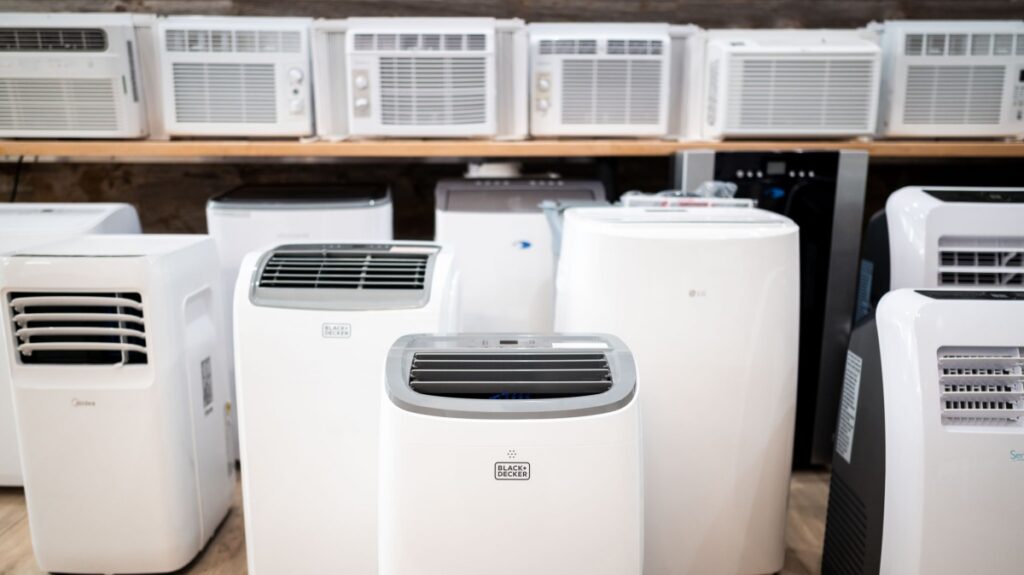
Are you struggling to keep your commercial space cool without breaking the bank on a permanent HVAC installation? A commercial portable air conditioner might be exactly what your business needs. Whether you’re managing a warehouse, a pop-up retail store, a server room, or a construction site, portable commercial AC units offer flexible, powerful, and cost-effective cooling — right where you need it most.
In this post, we break down everything you need to know before you buy: from BTU ratings and energy efficiency to top product comparisons, real-world case studies, and expert tips for maximizing performance. By the end, you’ll have all the information you need to choose the right commercial air portable air conditioner for your specific business environment.
What Is a Commercial Portable Air Conditioner?
A commercial portable air conditioner is a self-contained, freestanding cooling unit designed for heavy-duty use in commercial or industrial environments. Unlike residential portable ACs, commercial-grade units are engineered to handle larger square footage, higher ambient temperatures, higher duty cycles, and more demanding operating conditions.
These units typically operate on 115V or 230V power, deliver anywhere from 10,000 BTU to over 60,000 BTU of cooling capacity, and are equipped with industrial-strength compressors, reinforced casings, and advanced filtration systems. Many commercial portable air conditioners are also dual-hose systems, which means they draw outside air for cooling the condenser and exhaust heat outside — making them significantly more efficient than single-hose units.
The portability factor is a major selling point. Unlike split-system or central air conditioning, a commercial portable AC unit requires no permanent installation, no ductwork, and minimal setup time. You can move it from one area of your facility to another based on cooling needs — a flexibility that fixed systems simply cannot offer.
“Portable cooling units have become an essential tool in modern commercial facility management — they fill the gaps that permanent HVAC systems leave behind.”
— HVAC Industry Report, 2025
Why Businesses Are Investing in Commercial Portable Air Conditioners
The demand for commercial air portable air conditioners has grown significantly in recent years. Several key trends are driving this surge:
- Rising global temperatures are increasing the frequency and severity of heat events, making supplemental cooling a business necessity rather than a luxury.
- Remote and temporary workspaces — including construction trailers, event tents, and pop-up stores — need reliable cooling without permanent installations.
- Server rooms and data centers require precise temperature control that spot-cooling units can provide at a fraction of the cost of dedicated precision cooling systems.
- Supply chain disruptions have made it harder and more expensive to install centralized HVAC systems, pushing businesses toward portable alternatives.
- OSHA heat illness regulations are tightening, making adequate cooling a legal and compliance issue in many industrial workplaces.
According to a 2024 market research report by Grand View Research, the global portable air conditioner market was valued at over $1.6 billion and is projected to grow at a CAGR of 5.4% through 2030, with commercial applications accounting for the fastest-growing segment.
Types of Commercial Portable Air Conditioners
Not all commercial portable AC units are built the same. Understanding the different types will help you match the right product to your specific application.
1. Single-Hose Commercial Portable AC Units
Single-hose units use one hose to exhaust warm air outside. They are simpler in design and typically less expensive, but they create negative air pressure inside the room — which means warm unconditioned air is constantly being pulled in from gaps and doorways, reducing efficiency.
Best for: Small rooms, server closets, temporary offices.
2. Dual-Hose Commercial Portable Air Conditioners
Dual-hose models use one hose to pull outside air to cool the condenser and a second hose to exhaust heat. This design eliminates negative pressure, making these units significantly more energy-efficient and better for larger spaces.
Best for: Warehouses, manufacturing floors, data centers, event spaces.
3. Portable Evaporative Coolers (Swamp Coolers)
These units cool air through water evaporation rather than refrigerant-based compression. They are highly energy efficient but only effective in low-humidity environments. They are not true air conditioners.
Best for: Dry climates, open-air facilities, outdoor events.
Suggested read: 12 Volt Portable Air Conditioner: Your Complete Buying Guide for Mobile Cooling Solutions
4. Spot Coolers
Spot coolers are high-capacity portable AC units designed to cool a specific area or piece of equipment rather than an entire room. They are commonly used in data centers, electrical rooms, and industrial facilities.
Best for: Equipment cooling, server racks, targeted industrial cooling.
5. Portable Packaged Terminal Air Conditioners (PTACs)
PTACs are self-contained units that provide both heating and cooling. Some commercial portable versions are available for environments that need year-round climate control.
Best for: Offices, retail spaces, hotels, healthcare facilities.
Key Features to Look for in a Commercial Portable Air Conditioner
Choosing the right commercial air portable air conditioner involves evaluating several critical features. Here’s a breakdown of what to prioritize:
BTU Rating and Cooling Capacity
BTU (British Thermal Unit) is the most important number when evaluating a commercial portable AC. The higher the BTU, the more powerful the unit.
| Space Size (sq ft) | Recommended BTU |
|---|---|
| Up to 500 sq ft | 10,000 – 14,000 BTU |
| 500 – 1,000 sq ft | 14,000 – 18,000 BTU |
| 1,000 – 2,000 sq ft | 18,000 – 24,000 BTU |
| 2,000 – 5,000 sq ft | 24,000 – 36,000 BTU |
| 5,000+ sq ft | 36,000 – 60,000+ BTU |
Pro Tip: For warehouses or spaces with high ceilings (over 10 feet), multiply your square footage by 25% and add that to your base BTU calculation to account for the additional volume.
Energy Efficiency Ratio (EER)
The EER measures how efficiently an AC unit converts electricity into cooling power. A higher EER means lower operating costs. For commercial use, look for units with an EER of 10 or above. The best commercial portable air conditioners on the market today reach EER ratings of 11–12.
Voltage and Power Requirements
Commercial portable ACs come in two main voltage configurations:
- 115V / 15-amp: Standard outlets; suitable for smaller commercial units.
- 208–230V / 20-amp or 30-amp: Required for high-capacity industrial units. Ensure your facility has the correct outlet before purchasing.
Dehumidification Capacity
Many commercial environments — including warehouses, food processing facilities, and gyms — suffer from high humidity alongside heat. Look for a commercial portable air conditioner that offers a high pints-per-day dehumidification rate (ideally 100+ pints/day for large commercial spaces).
Noise Level (dBA)
Noise is a critical consideration, especially in office environments, retail spaces, or healthcare facilities. Commercial portable ACs typically range from 52 dBA to 65 dBA. Units below 55 dBA are considered quiet enough for office use.
Mobility and Durability
For true portability, look for:
- Heavy-duty caster wheels that can handle smooth and rough surfaces
- Reinforced steel or aluminum casing for durability
- Handles and tow bars for easy repositioning
- Stacking capability for storage
Smart Controls and Connectivity
Modern commercial air portable air conditioners increasingly offer:
- Digital thermostats with programmable schedules
- Remote controls or app-based control via Wi-Fi
- Auto-restart after power outages (critical for server rooms and 24/7 facilities)
- Alarm systems for filter cleaning reminders or refrigerant alerts
Top 7 Commercial Portable Air Conditioners in 2026
Here’s a detailed comparison of the best commercial portable air conditioner models on the market today:
| Model | BTU | EER | Voltage | Hose Type | Best For | Price Range |
|---|---|---|---|---|---|---|
| MovinCool Classic Plus 26 | 26,000 | 11.0 | 208–230V | Dual | Warehouses, events | $2,800 – $3,200 |
| Denso DPC2012 | 20,000 | 10.5 | 208–230V | Dual | Server rooms, offices | $2,200 – $2,600 |
| Portacool Cyclone 3000 | 36,000 | N/A (Evap) | 115V | N/A | Dry climates, outdoors | $1,400 – $1,800 |
| Friedrich P12SA | 12,000 | 10.0 | 115V | Single | Small offices, retail | $750 – $950 |
| Honeywell MN4CFSBB8 | 14,000 | 9.8 | 115V | Dual | Mid-size offices | $650 – $850 |
| Comfort Aire PACHT14 | 14,000 | 10.2 | 115V | Dual | Retail, restaurants | $700 – $900 |
| SPT WA-1420H | 14,000 | 9.5 | 115V | Single | Temporary workspaces | $500 – $700 |
Note: Prices are approximate and may vary by retailer and region. Always verify specifications with the manufacturer before purchasing.
Suggested read: Portable Electric Winch: The Best Buying Guide for Maximum Pulling Power in 2026
How to Calculate the Right BTU for Your Commercial Space
Getting the BTU calculation right is one of the most important steps in selecting a commercial air portable air conditioner. Here’s a step-by-step method used by HVAC professionals:
Step 1: Measure Your Space Calculate the square footage: Length × Width = Square Footage
Step 2: Apply the Base BTU Formula Square Footage × 20 BTU = Base BTU Requirement
Step 3: Adjust for Ceiling Height If ceilings exceed 8 feet: Base BTU × (Actual Height ÷ 8) = Adjusted BTU
Step 4: Account for Heat Sources
- Add 4,000 BTU if the space has significant sun exposure
- Add 600 BTU per person if more than 2 people occupy the space regularly
- Add 1,000 BTU per major heat-generating appliance (servers, ovens, industrial machines)
Step 5: Factor in Local Climate
- In climates with average summer temperatures exceeding 95°F, add another 10–15% to your final BTU figure
Example Calculation:
- Warehouse: 3,000 sq ft, 16-ft ceilings, 10 workers, located in Phoenix, AZ
- Base BTU: 3,000 × 20 = 60,000 BTU
- Ceiling adjustment: 60,000 × (16 ÷ 8) = 120,000 BTU
- Worker adjustment: 10 × 600 = 6,000 BTU
- Climate adjustment: +15%
- Total estimated BTU needed: ~145,000 BTU → Multiple units or a high-capacity industrial portable AC system required
Installation and Setup: What to Expect
One of the biggest advantages of a commercial portable air conditioner is how simple the setup process is compared to traditional HVAC systems. Here’s a general overview of what installation looks like:
What You’ll Need:
- A window, wall opening, drop ceiling, or roof access for exhaust hose routing
- Access to the appropriate electrical outlet (115V or 208–230V)
- A flat, stable surface with adequate clearance (typically 12–24 inches on all sides for airflow)
- A drain connection or condensate pump if your unit doesn’t have automatic evaporation
Step-by-Step Setup:
- Position the unit in the area that needs cooling, ensuring adequate airflow clearance.
- Route the exhaust hose(s) to the nearest window or wall opening using the included window kit or a custom duct adapter.
- Connect the power cord to the correct voltage outlet — never use extension cords with commercial AC units.
- Set up drainage — connect to a floor drain, bucket, or condensate pump as needed.
- Program the thermostat and run the unit on test mode before leaving it unattended.
Important: Always follow the manufacturer’s installation guidelines and consult a licensed electrician if your facility requires a new dedicated circuit.
Cost Analysis: Buying vs. Renting a Commercial Portable Air Conditioner
For many businesses, the decision comes down to whether to buy or rent a commercial air portable air conditioner. Here’s a detailed breakdown:
Buying a Commercial Portable Air Conditioner
Pros:
- Lower long-term cost if used frequently
- Asset ownership with depreciation tax benefits
- No rental contracts or availability concerns
- Full customization of settings and features
Cons:
- Higher upfront investment ($500 – $5,000+)
- Responsible for maintenance and repairs
- Storage requirements when not in use
Average Costs:
- Small commercial unit (10,000–14,000 BTU): $500 – $1,000
- Mid-range commercial unit (18,000–26,000 BTU): $1,500 – $3,500
- High-capacity industrial unit (36,000+ BTU): $3,500 – $8,000+
Renting a Commercial Portable Air Conditioner
Pros:
- No upfront capital outlay
- Maintenance typically included in rental agreement
- Flexibility for seasonal or event-based needs
- Try before you buy
Cons:
Suggested read: Everstar Portable Air Conditioner: Your Complete Solution for Staying Cool Anywhere
- Higher cost over time for long-term use
- Availability may be limited during peak summer months
- Less control over equipment condition
Average Rental Costs:
- Short-term (daily): $75 – $250/day
- Weekly rental: $300 – $900/week
- Monthly rental: $800 – $2,500/month
Bottom Line: If you need cooling for more than 3 months per year, buying is almost always the more cost-effective option. For seasonal events, emergency cooling, or one-time projects, renting makes more sense.
Case Studies: Real Businesses Using Commercial Portable Air Conditioners
Case Study 1: Tech Startup Server Room — Austin, Texas
A fast-growing SaaS startup in Austin needed emergency cooling for a server room after their central AC system failed during a critical deployment week. The team rented two MovinCool Classic Plus 26 units within 24 hours. The units maintained a stable 68°F server room temperature throughout the week, preventing equipment failure and an estimated $200,000+ in potential downtime costs.
After the emergency, the company purchased two spot coolers as a permanent redundancy measure — a decision that paid for itself within the first year by preventing a second outage.
Case Study 2: Pop-Up Retail Event — Miami, Florida
A national clothing brand set up a weekend pop-up shop in a non-climate-controlled warehouse space in Miami during July. They deployed four Honeywell MN4CFSBB8 commercial portable air conditioners, reducing the indoor temperature from 96°F to 74°F within 90 minutes of setup. Customer dwell time increased significantly compared to a similar event held without AC the previous year, and the brand reported a 34% higher per-visitor sales average.
Case Study 3: Pharmaceutical Warehouse — New Jersey
A mid-sized pharmaceutical distributor needed to maintain strict temperature compliance (below 77°F) in a storage zone that their central HVAC system couldn’t adequately cool during summer peaks. They installed three Denso DPC2012 commercial portable AC units on a permanent basis, bringing the zone consistently within compliance range. The solution cost $7,200 total — versus an estimated $45,000–$60,000 for a dedicated split-system expansion.
Energy Efficiency Tips for Commercial Portable Air Conditioners
Running a commercial air portable air conditioner efficiently can significantly reduce your operating costs. Here are proven strategies:
- Seal all leaks and gaps around windows and doors to prevent warm air infiltration
- Pre-cool the space during off-peak electricity hours if your utility offers time-of-use pricing
- Use ceiling fans in conjunction with the AC unit to distribute cooled air more evenly
- Clean or replace filters monthly — a dirty filter can reduce efficiency by up to 15%
- Keep the unit in the shade if possible; AC units working in direct sunlight must work harder
- Set your thermostat to 74–76°F — every degree below 72°F increases energy consumption by approximately 3–5%
- Use programmable timers to avoid running the unit when the space is unoccupied
- Insulate the exhaust hose — uninsulated exhaust hoses radiate heat back into the room, reducing efficiency
Maintenance Schedule for Commercial Portable AC Units
Proper maintenance extends the lifespan of your commercial portable air conditioner and keeps it running at peak efficiency. Here’s a recommended maintenance schedule:
| Frequency | Task |
|---|---|
| Weekly | Check and clean air filters |
| Monthly | Drain condensate tank (if not auto-evaporating) |
| Monthly | Inspect exhaust hose for kinks or damage |
| Quarterly | Clean condenser and evaporator coils |
| Quarterly | Check refrigerant levels (by a licensed technician) |
| Annually | Full professional service and inspection |
| As needed | Replace worn caster wheels or damaged components |
Pro Tip: Keep a maintenance log for each unit. This not only ensures consistent upkeep but also protects your warranty and provides documentation for insurance purposes.
Commercial Portable Air Conditioner vs. Other Cooling Solutions
How does a commercial portable air conditioner stack up against other commercial cooling options?
| Feature | Portable AC | Window AC | Mini-Split | Central HVAC | Evaporative Cooler |
|---|---|---|---|---|---|
| Installation required | ❌ None | ✅ Minor | ✅ Professional | ✅ Extensive | ❌ None |
| Portability | ✅ High | ❌ None | ❌ None | ❌ None | ✅ High |
| Cooling power | ✅ Medium–High | ✅ Low–Medium | ✅ High | ✅ Very High | ⚠️ Climate-dependent |
| Upfront cost | ✅ Medium | ✅ Low | ⚠️ Medium | ❌ High | ✅ Low–Medium |
| Energy efficiency | ⚠️ Moderate | ⚠️ Moderate | ✅ High | ✅ High (scaled) | ✅ High (dry climates) |
| Flexibility | ✅ Excellent | ❌ Poor | ❌ Poor | ❌ Poor | ✅ Good |
| Works without windows | ✅ Yes (with duct) | ❌ No | ✅ Yes | ✅ Yes | ✅ Yes |
Regulations and Compliance Considerations
Before purchasing or deploying a commercial air portable air conditioner, be aware of the following regulatory considerations:
OSHA Heat Stress Standards: OSHA’s heat illness prevention guidelines recommend maintaining indoor workplaces at or below 80°F for most industries. For heavy labor environments, even lower temperatures may be required.
EPA Section 608: Any commercial AC unit that uses refrigerants (such as R-410A or R-32) must be maintained and serviced by an EPA Section 608-certified technician. Improper refrigerant handling is a federal violation.
Energy Star Certification: Look for Energy Star-certified commercial portable AC units. These meet strict EPA efficiency standards and may qualify your business for utility rebates or tax incentives.
Local Building Codes: Some municipalities regulate how exhaust hoses can be routed through windows or walls. Always check local building and fire codes before installation.
Suggested read: The Ultimate Buyer's Guide to Choosing the Best Portable Gun Safe for Your Security Needs
UL Listing: Ensure any commercial portable air conditioner you purchase is UL Listed (or ETL Listed), confirming it has passed independent safety testing.
Where to Buy a Commercial Portable Air Conditioner
You can purchase a commercial air portable air conditioner from several reliable sources:
- Online commercial HVAC retailers: Sites like Sylvane, Global Industrial, and Grainger offer wide selections and commercial pricing.
- Big-box stores: Home Depot and Lowe’s carry some commercial-grade portable AC units, especially in summer months.
- Direct from manufacturers: Brands like MovinCool, Denso, and Portacool sell directly through their websites.
- B2B distributors: For bulk purchases or enterprise agreements, B2B distributors often offer volume discounts and extended warranties.
- Rental companies: Companies like ACME Equipment, Aggreko, and RSC Equipment Rental provide both short- and long-term commercial AC rental programs.
Frequently Asked Questions About Commercial Portable Air Conditioners
What is the difference between a commercial and residential portable air conditioner?
Commercial portable air conditioners are built for heavier use, larger spaces, and more demanding environments. They typically have higher BTU ratings, more durable construction, higher duty cycles, and more advanced drainage and filtration systems than residential units. They are also often designed to operate continuously (24/7) without overheating.
How many BTU do I need for a commercial space?
The general rule is 20 BTU per square foot, but commercial spaces often require more due to high ceilings, heat-generating equipment, and large numbers of occupants. Use the step-by-step BTU calculation method provided earlier in this article for a more accurate estimate.
Can a commercial portable air conditioner run 24/7?
Yes — most commercial-grade units are designed for continuous operation. However, regular maintenance (especially filter cleaning and coil maintenance) is essential to maintain performance and extend the unit’s lifespan when running continuously.
How much electricity does a commercial portable air conditioner use?
A typical commercial portable AC unit (24,000 BTU) running on 208–230V consumes approximately 2,000–2,800 watts per hour. At an average U.S. commercial electricity rate of $0.12/kWh, that translates to roughly $0.24–$0.34 per hour to operate.
Do commercial portable air conditioners need to be vented?
Yes — all refrigerant-based commercial portable air conditioners must be vented to exhaust the heat they remove from the air. This is typically done through a window, drop ceiling, or wall opening using the included exhaust hose and duct adapter.
How long do commercial portable air conditioners last?
With proper maintenance, a high-quality commercial air portable air conditioner can last 10–15 years or more. Budget-friendly models may have shorter lifespans of 5–8 years, especially under heavy commercial use.
Is a commercial portable air conditioner tax-deductible?
In most cases, yes. Commercial cooling equipment purchased for business use is typically tax-deductible as a business expense and may also qualify for Section 179 accelerated depreciation. Consult your tax professional for specific guidance.
What refrigerant do commercial portable air conditioners use?
Most modern commercial portable AC units use R-410A or the newer R-32 refrigerant, both of which are more environmentally friendly than older R-22 (Freon) systems. As of 2025, R-32 is increasingly common due to its lower global warming potential (GWP).
Ready to Cool Your Commercial Space? Shop Commercial Portable Air Conditioners Today
Whether you’re managing a warehouse, a pop-up shop, a data center, or a construction site, the right commercial portable air conditioner can transform your workspace into a more productive, safer, and more comfortable environment. Don’t let summer heat slow your business down.
👉 Shop Commercial Air Portable Air Conditioners Now and find the perfect unit for your commercial cooling needs. With free shipping on many models, expert support teams, and flexible financing options available, there’s never been a better time to invest in reliable commercial cooling.
Compare models, check BTU ratings, and get expert advice — all in one place. Your business deserves to stay cool.
Sources and Citations
- Grand View Research. (2024). Portable Air Conditioner Market Size, Share & Trends Analysis Report. grandviewresearch.com
- U.S. Department of Energy. Room Air Conditioners: Energy Saver Tips. energy.gov
- OSHA. Heat Illness Prevention. osha.gov/heat-exposure
- U.S. Environmental Protection Agency. Section 608 Technician Certification. epa.gov
- Energy Star. Certified Portable Air Conditioners. energystar.gov
- Sylvane. Commercial Portable Air Conditioners. sylvane.com/portable-air-conditioners/commercial.html
- ASHRAE. (2023). Standard 55: Thermal Environmental Conditions for Human Occupancy. ashrae.org
This article is for informational purposes only. Always consult with a licensed HVAC professional before making major cooling decisions for your commercial facility.