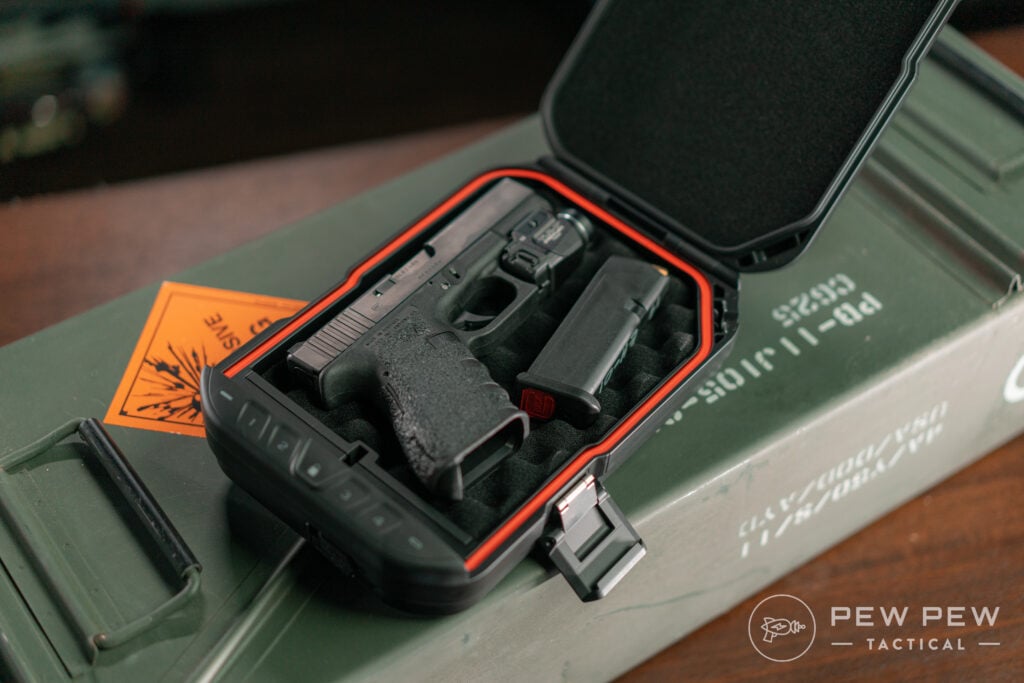
When it comes to firearm security, a portable gun safe offers the perfect balance between protection and mobility. Whether you’re traveling, heading to the range, or simply need flexible storage options, understanding how to select the right portable gun safe can make all the difference in keeping your firearms secure while maintaining quick access when needed.
The market for portable gun safes has exploded in recent years, with manufacturers offering everything from compact handgun vaults to larger multi-gun carriers. According to the National Shooting Sports Foundation, over 60% of gun owners now prioritize portability in their safe purchases, reflecting changing lifestyle needs and increased travel with firearms.
What Makes a Portable Gun Safe Different from Traditional Safes?
A portable gun safe distinguishes itself through several key characteristics that set it apart from stationary models. Unlike traditional gun safes that can weigh hundreds of pounds and require permanent installation, portable versions prioritize lightweight construction and easy transportation. These safes typically weigh between 5 to 50 pounds, making them manageable for one person to carry.
Key differentiating features include:
- Reduced weight through advanced materials like aircraft-grade aluminum
- Carrying handles or shoulder straps for easy transport
- Compact dimensions that fit in vehicles, luggage, or under beds
- Cable attachment systems for temporary securing to fixed objects
- Battery-powered locking mechanisms that don’t require hardwiring
The construction materials play a crucial role in achieving portability without sacrificing security. Many manufacturers use 16 to 14-gauge steel for the body, which provides solid protection while keeping weight reasonable. Some premium models incorporate composite materials that offer comparable strength at even lighter weights.
Types of Portable Gun Safes Available in the Market
Understanding the different categories of portable gun safes helps narrow your search based on specific needs. Each type serves distinct purposes and offers unique advantages depending on your storage requirements and usage patterns.
Handgun Vaults and Pistol Boxes
Handgun-specific portable safes represent the most compact option in the category. These units typically measure 10-14 inches in length and accommodate one to two pistols. They’re ideal for vehicle storage, nightstand use, or travel scenarios where you need to secure a single firearm quickly.
Popular handgun vault features include quick-access mechanisms like biometric scanners or mechanical push-button locks that open in seconds. Many models also feature interior foam padding to protect your firearm’s finish during transport. The portable gun safe market shows strong demand for these compact units, with sales growing 23% annually.
Long Gun Cases and Rifle Safes
For those transporting rifles or shotguns, specialized long gun portable safes offer extended dimensions and reinforced construction. These safes typically measure 36-52 inches in length to accommodate various rifle configurations, including those with scopes attached.
Long gun portable safe specifications:
- Interior length: 36-52 inches for full-size rifles
- Weight capacity: Supports firearms up to 15 pounds
- Padding options: Dense foam inserts to prevent movement
- Locking points: Multiple latches along the length for added security
- Weather resistance: Sealed edges to protect against moisture
Multi-Gun Portable Safes
Multi-gun portable safes bridge the gap between single-gun storage and full-size safe rooms. These units can accommodate 2-6 handguns or a combination of handguns and long guns, making them perfect for range trips or families with multiple firearms.
The interior organization systems in multi-gun safes often include adjustable dividers, magazine pouches, and accessory compartments. This versatility makes them function as mobile armories, keeping everything organized and accessible during transport.
Essential Security Features Every Portable Gun Safe Should Have
Security remains paramount regardless of portability requirements. A quality portable gun safe must incorporate multiple layers of protection to prevent unauthorized access while resisting common attack methods.
Locking Mechanisms and Access Systems
The locking system serves as your safe’s primary defense. Modern portable gun safes employ various access methods, each with distinct advantages. Biometric fingerprint scanners offer the fastest access, typically opening in under 2 seconds, while mechanical combination locks provide battery-free reliability.
Electronic keypads represent the most common option, balancing speed and affordability. Premium models feature anti-bounce technology that prevents manipulation attacks and automatic lockout systems after multiple failed attempts. The best portable gun safes include backup key access in case of electronic failure.
Steel Thickness and Construction Quality
Steel gauge determines puncture resistance and overall durability. Professional security experts recommend a minimum of 16-gauge steel for the safe body, with 12-gauge or thicker for maximum protection. The door should be even thicker, typically 10-gauge, as it represents the primary attack point.
Steel gauge comparison table:
| Gauge | Thickness | Security Level | Common Use |
|---|---|---|---|
| 20-gauge | 0.0359″ | Basic | Entry-level safes |
| 16-gauge | 0.0598″ | Standard | Mid-range portable safes |
| 14-gauge | 0.0747″ | Enhanced | Premium portable models |
| 12-gauge | 0.1046″ | Superior | High-security applications |
| 10-gauge | 0.1345″ | Maximum | Safe doors and critical points |
Pry-Resistant Design Elements
Quality portable gun safes incorporate design features that resist common break-in attempts. Concealed hinges prevent removal from the outside, while reinforced door edges resist prying tools. The best models include recessed doors that sit flush with the body when closed, eliminating leverage points.
Anti-drill plates protect locking mechanisms from drill attacks, while relockers automatically engage if someone attempts to force the primary lock. These features transform a simple metal box into a genuine security device worthy of protecting valuable firearms.
Size and Capacity Considerations for Different Firearms
Selecting the appropriate size portable gun safe requires careful consideration of your current firearms and potential future acquisitions. Buying too small limits functionality, while oversized safes sacrifice portability without adding value.
Interior Dimensions and Firearm Fit
Measure your firearms before purchasing any portable safe. Handguns require minimum interior dimensions of 10 inches length, 7 inches width, and 3 inches height. Add extra space for holsters, spare magazines, or accessories you plan to store alongside the weapon.
For rifles, measure from buttstock to muzzle, then add 2-3 inches for scope clearance and movement during transport. A standard AR-15 with collapsible stock requires approximately 32 inches, while bolt-action hunting rifles often need 44-48 inches depending on barrel length.
Capacity Planning for Multiple Weapons
Multi-gun storage requires strategic planning to maximize space efficiency. A portable safe rated for 4 handguns assumes optimal stacking and may feel cramped with larger frame pistols. Real-world capacity often runs 20-30% below manufacturer specifications when accounting for realistic storage patterns.
Realistic capacity guidelines:
- 2-gun rating: Comfortably fits 1-2 compact handguns
- 4-gun rating: Holds 2-3 full-size pistols with accessories
- 6-gun rating: Accommodates 3-4 handguns plus magazines
- Rifle capacity: Typically holds 1 long gun with limited accessory space
Consider adjustable interior configurations that adapt to changing needs. Removable dividers and modular foam inserts allow reconfiguration as your collection evolves, extending the useful life of your portable gun safe investment.
Weight Distribution and Portability Balance
Even “portable” safes become cumbersome when fully loaded. A 30-pound empty safe can exceed 45 pounds with multiple firearms and ammunition. Calculate total weight including contents to ensure realistic portability for your physical capabilities and intended use cases.
For vehicle storage, verify that loaded weight remains manageable for one-person handling. For air travel, TSA regulations limit checked baggage to 50 pounds per item, making this a critical threshold for travel-oriented portable gun safes.
Lock Types: Which Access Method Works Best for Your Needs?
The locking mechanism fundamentally impacts both security and convenience. Different portable gun safe access methods suit different priorities, from speed to reliability to cost considerations.
Biometric Fingerprint Scanners
Biometric technology represents the cutting edge of safe access systems. Modern fingerprint scanners achieve 99.9% recognition rates while opening in 1-2 seconds, making them ideal for defensive firearm storage where speed matters most. These systems can store 20-120 fingerprints depending on the model, allowing multiple authorized users.
Battery life concerns traditionally plagued biometric safes, but current models run 8-18 months on standard batteries with thousands of openings. Low battery warnings provide ample replacement time. Premium biometric portable gun safes include capacitive sensors that work with slightly damp or dirty fingers, unlike older optical sensors.
Electronic Keypad Systems
Electronic keypads offer excellent security at moderate price points. Users enter 4-8 digit codes on illuminated buttons, with better models featuring scrambled keypads that randomize button positions to prevent code detection through wear patterns. Response times average 3-5 seconds from code entry to opening.
Advantages of electronic keypad portable gun safes:
- No biological limitations like fingerprint recognition
- Easy code changes when security requires updates
- Multiple user codes for different access levels
- Audit trails on advanced models showing access history
- Tactile feedback allows code entry in complete darkness
Mechanical Combination Locks
Traditional mechanical locks require no batteries and essentially never fail, making them favorites among users prioritizing reliability. Quality combination locks use precision-machined components that resist manipulation and provide decades of service without maintenance.
The tradeoff comes in access speed, with mechanical combinations requiring 10-15 seconds to dial in properly. This makes them less suitable for defensive scenarios but excellent for long-term storage applications where reliability trumps speed.
Key Locks and Backup Access
Most electronic and biometric portable gun safes include backup key access for emergency situations. While convenient, keyed access introduces vulnerabilities, as lost keys or forced key locks compromise security. Store backup keys separately from the safe, ideally in a secure location away from your primary residence.
Some users prefer key-only safes for their simplicity and zero electronic failure risk. Modern tubular key locks offer excellent pick resistance and work well for travel scenarios where airport security requires demonstrable access capability.
Mounting Options and Securing Your Portable Gun Safe
Despite their portable nature, these safes benefit from temporary securing to prevent grab-and-go theft. A portable gun safe attached to a solid object requires tools and time to steal, dramatically increasing security.
Cable Attachment Systems
Most portable gun safes include steel security cables measuring 3-6 feet long and 3/16″ to 1/4″ thick. These cables loop through the safe and around fixed objects like bed frames, vehicle seat brackets, or furniture. While determined thieves with cutting tools can defeat cables, they prevent opportunistic theft effectively.
Cable security best practices:
- Wrap cables around thick, unmovable objects at least 3 inches in diameter
- Use the shortest cable length possible to limit leverage
- Route through multiple loops on the safe for redundancy
- Inspect regularly for fraying or damage
- Consider upgrading to thicker aftermarket cables for enhanced security
Bolt-Down Capabilities
Some portable gun safes feature pre-drilled mounting holes in the base or rear panel for semi-permanent installation. This contradicts pure portability but suits situations where the safe primarily stays in one location with occasional transport needs.
Mounting hardware typically includes lag bolts for wood surfaces or concrete anchors for masonry. Professional installation ensures proper anchoring depth and prevents safe removal without visible damage to the mounting surface. When traveling, simply unbolt the safe and go.
Vehicle-Specific Mounting Solutions
Vehicle storage presents unique challenges requiring specialized mounting approaches. Under-seat mounting brackets, console-specific designs, and trunk-mounted systems keep portable gun safes secure during normal driving while allowing quick removal when exiting the vehicle.
Consider vehicle-specific portable gun safes designed for popular truck and SUV models. These custom-fitted units maximize available space while providing OEM-quality mounting that survives rough roads and sudden stops without shifting or rattling.
Suggested read: The Ultimate Portable Stripper Pole Buyer's Guide for 2026
Material Construction: Steel vs. Composite Options
Material selection affects weight, security, cost, and durability. Understanding the tradeoffs between different construction materials helps optimize your portable gun safe choice for specific applications.
Steel Construction Benefits
Steel remains the gold standard for safe construction due to its proven strength and durability. Cold-rolled steel resists cutting, drilling, and prying better than any alternative material at comparable thicknesses. A quality steel portable gun safe constructed from 14-gauge material provides excellent protection while maintaining reasonable weight.
Powder-coated steel finishes resist scratches, rust, and chemical damage while providing a professional appearance. Multiple color options match different environments, from tactical black for vehicle storage to earth tones for home use. Steel construction also allows for precise machining of locking mechanisms and hinge assemblies.
Composite and Hybrid Materials
Recent innovations in composite materials challenge steel’s dominance in portable safe construction. Advanced polymer composites reinforced with aramid fibers or carbon fiber achieve strength-to-weight ratios exceeding steel while eliminating rust concerns. A composite portable gun safe might weigh 40% less than an equivalent steel model.
Composite material advantages:
- Superior weight reduction for improved portability
- Complete corrosion resistance in humid environments
- Better insulation properties for temperature stability
- Quieter operation with reduced metallic noise
- Lower manufacturing costs potentially reducing retail prices
However, composites haven’t matched steel’s proven long-term durability record. Most security professionals still recommend steel for maximum-security applications, relegating composites to secondary or travel-specific roles where weight savings justify slightly reduced protection levels.
Aluminum Alloy Options
Aircraft-grade aluminum offers an interesting middle ground between steel security and composite lightness. Aluminum portable gun safes weigh 25-35% less than steel equivalents while providing good resistance to common attacks. The material naturally resists corrosion and maintains structural integrity across wide temperature ranges.
Premium aluminum safes use heat-treated 6061 or 7075 alloys, which approach mild steel in strength while remaining significantly lighter. These safes particularly suit frequent travelers who value weight savings and don’t face extreme security threats.
Fireproofing and Environmental Protection Features
While fire resistance isn’t the primary consideration for portable safes, environmental protection matters significantly. A quality portable gun safe shields firearms from moisture, temperature extremes, and impact damage during transport and storage.
Moisture Barriers and Rust Prevention
Humidity represents firearms’ worst enemy, causing rust and corrosion that damages both function and value. Portable gun safes combat moisture through weatherproof gaskets that seal the door perimeter, creating a barrier against external humidity. Foam gaskets compress when closed, maintaining seal integrity even after thousands of open-close cycles.
Interior moisture control typically involves desiccant packets or rechargeable dehumidifiers. Silica gel packets absorb ambient moisture, requiring replacement every 2-3 months depending on environmental conditions. Rechargeable units use color-indicating crystals that change when saturated, then restore functionality after oven drying.
Foam Interior Padding
Protective foam serves dual purposes: preventing firearm movement during transport and protecting finishes from scratches. Quality portable gun safes feature egg-crate foam or custom-cut inserts that cradle firearms securely while allowing air circulation to prevent moisture buildup.
Foam material options include:
- Polyethylene foam: Affordable, water-resistant, medium density
- Polyurethane foam: Softer, better cushioning, moderate cost
- EVA foam: Excellent durability, easy to clean, premium pricing
- Kaizen foam: Customizable pluck-and-pull design for exact fit
Removable foam allows cleaning and replacement as materials compress over time. Some users replace factory foam with custom-cut options shaped precisely to their firearms, maximizing protection and organization.
Temperature Resistance
Extreme temperatures affect both safes and their contents. Quality portable gun safes maintain structural integrity from -20°F to 150°F, covering realistic environmental ranges including cold winters and hot vehicle interiors. Electronic components require special attention, with better models using temperature-hardened components rated for automotive environments.
Firearms themselves tolerate wide temperature ranges, but rapid temperature changes cause condensation that promotes rust. A well-sealed portable gun safe moderates temperature fluctuations, preventing condensation formation when moving between environments.
Top Features to Look for When Shopping
Beyond basic security and construction, specific features separate exceptional portable gun safes from adequate ones. Prioritizing these elements ensures your investment delivers maximum value and functionality over years of service.
Interior Lighting Systems
LED lighting transforms dark safe interiors into clearly visible spaces, critical for quick access situations or when operating in low-light conditions. Motion-activated LEDs illuminate automatically upon opening, requiring no switches or manual activation. Battery-powered systems run for years on coin cells, adding negligible operating costs.
Better implementations use cool-temperature LEDs that won’t damage sensitive materials during extended viewing sessions. Some premium portable gun safe models include brightness adjustment, allowing users to balance visibility against battery consumption.
Tamper Alerts and Security Monitoring
Advanced portable gun safes incorporate tamper detection that triggers alerts when unauthorized access attempts occur. Accelerometers detect movement or impacts, while door sensors identify opening events. Paired with smartphone connectivity, these systems notify owners immediately of potential security breaches.
Security monitoring capabilities:
- Real-time alerts to smartphone apps when safe opens
- Movement detection triggering alarms during transport
- Access logging recording all opening events with timestamps
- Low battery warnings preventing lockout situations
- Failed attempt tracking identifying repeated unauthorized access tries
These smart features particularly benefit users who store portable safes in vehicles or travel frequently, providing peace of mind through remote monitoring.
USB Charging Ports
Modern portable gun safes increasingly include USB charging ports, recognizing that users often store electronic devices alongside firearms. Integrated USB ports charge phones, flashlights, or other accessories using the safe’s internal battery, eliminating the need for separate charging infrastructure.
This feature proves particularly valuable for vehicle-mounted safes where dashboard USB ports might be inaccessible or insufficient. Premium implementations include both standard USB-A and modern USB-C ports supporting fast charging protocols.
Price Ranges and What You Get at Each Level
The portable gun safe market spans from $50 basic boxes to $500+ premium units. Understanding price-performance relationships helps identify sweet spots where quality meets value without paying for unnecessary features.
Budget Options ($50-$150)
Entry-level portable gun safes provide basic security for casual users with limited budgets. These units typically feature 20-gauge steel construction, simple key locks or basic electronic keypads, and minimal interior organization. They adequately protect firearms from children and deter casual theft but won’t stop determined thieves with tools.
Expect minimal warranty coverage, often just 1 year, and limited customer support. Interior foam tends toward basic polyethylene sheets rather than custom-cut configurations. Security cables, when included, measure 3/16″ diameter – adequate for deterrence but cuttable with standard bolt cutters.
Mid-Range Models ($150-$300)
This category represents the best value proposition for most users. Mid-range portable gun safes upgrade to 16-14 gauge steel, reliable biometric or electronic locks with backup keys, and thoughtful interior organization systems. Construction quality improves significantly, with better welds, reinforced corners, and pry-resistant door edges.
Mid-range feature expectations:
- 3-5 year warranties covering manufacturing defects
- Customer service with real human technical support
- Biometric scanners storing 20-40 fingerprints
- Thicker security cables (1/4″ diameter minimum)
- Better foam with customization options
- Automotive-grade electronic components
Manufacturers like Stack-On, Vaultek, and Fort Knox dominate this segment, offering proven reliability backed by years of customer reviews and testing.
Premium Options ($300-$500+)
Premium portable gun safes deliver maximum security, features, and build quality for users demanding the best. Expect 12-10 gauge steel, multiple biometric sensors with 100+ fingerprint capacity, smart connectivity, and extensive interior customization. These safes often include rechargeable lithium batteries, anti-impact latches, and premium finish options.
Warranty coverage extends to 5-10 years or even lifetime guarantees, reflecting manufacturers’ confidence in their products. Customer service includes installation support, replacement parts availability, and sometimes free shipping for warranty repairs. While expensive, premium portable gun safes justify costs through superior protection and durability.
Legal Requirements and Traveling with Portable Gun Safes
Firearm transportation laws vary dramatically across jurisdictions. A portable gun safe helps comply with legal requirements while protecting your rights during travel and storage.
Airline TSA Regulations
The Transportation Security Administration mandates hard-sided, lockable containers for transporting firearms in checked baggage. Portable gun safes specifically designed for air travel meet these requirements while providing superior security compared to basic hard cases. TSA regulations require that only the passenger retain keys or combination access – never check locks that TSA agents can open.
TSA-compliant portable gun safe requirements:
- Hard-sided construction that fully encloses the firearm
- Positive locking mechanism preventing easy opening
- Passenger-only access to locking mechanism
- Declared at check-in with proper paperwork
- Unloaded firearms stored separately from ammunition
Ammunition may travel in the same locked container if stored in manufacturer’s packaging or separate compartments. Check specific airline policies as requirements vary beyond basic TSA rules.
State and Local Storage Laws
Many jurisdictions impose safe storage requirements, particularly when children have access to residences. California’s Proposition 63, Massachusetts General Law Chapter 140, and Connecticut statutes mandate locked storage with criminal penalties for violations. A quality portable gun safe easily satisfies these requirements while maintaining portability.
Some states require specific locking mechanisms or construction standards. Research your jurisdiction’s exact requirements, as compliance protects against criminal liability if unauthorized access occurs despite reasonable security measures.
Vehicle Storage Considerations
Leaving firearms in vehicles presents unique legal challenges. Some states prohibit vehicle firearm storage entirely, while others require locked containers. A cable-secured portable gun safe bolted to vehicle structure typically satisfies legal requirements where permitted while maximizing security against smash-and-grab theft.
Always remove portable gun safes from visible areas. Conceal them in trunks, under seats, or in covered storage compartments. Visible safes advertise valuable contents, inviting break-ins even when properly secured.
Installation and Setup Best Practices
Proper installation maximizes your portable gun safe security and functionality. Following manufacturer guidelines and security best practices ensures optimal performance from day one.
Initial Configuration Steps
Upon receiving your portable gun safe, verify contents against the packing list before discarding packaging. Test all functions while you can still easily return defective units. Program biometric scanners with multiple fingers from each authorized user, including both index fingers and thumbs for redundancy if one hand becomes injured.
Electronic keypads should be programmed with memorable but non-obvious codes. Avoid birthdays, addresses, or simple patterns like 1-2-3-4. Consider creating codes that form patterns on the keypad rather than number sequences, as motor memory often proves more reliable under stress.
Optimal Placement Locations
Strategic placement balances accessibility against concealment. Bedroom nightstand locations provide quick defensive access but may be obvious to intruders. Under-bed mounting keeps safes accessible yet concealed, though retrieval requires kneeling or crawling. Closet shelf mounting offers good concealment but slower access.
Suggested read: Best Portable Deer Stands: Ultimate Buyer's Guide for Hunters in 2025
Location selection criteria:
- Access time from likely starting positions during emergencies
- Concealment level from casual observation
- Structural support for mounting or cable attachment
- Environmental conditions (humidity, temperature, light exposure)
- Legal compliance with any household access restrictions
For vehicle installation, prioritize locations that remain accessible while driving but hidden from external viewing. Center console and under-seat positions work best for most vehicles, though custom mounts for specific models may offer superior solutions.
Testing and Maintenance Procedures
Test your portable gun safe weekly for the first month to verify reliable operation and familiarize yourself with access procedures under various conditions. Practice opening with different fingers for biometric models or in complete darkness for keypad versions. Speed matters during emergencies, and practice builds critical muscle memory.
Quarterly maintenance includes inspecting hinges, gaskets, and locking mechanisms for wear or damage. Clean biometric sensors with alcohol wipes to remove skin oils affecting recognition. Replace batteries proactively rather than waiting for low-battery warnings – most safes run for months but Murphy’s Law guarantees failures at the worst possible moments.
Common Mistakes to Avoid When Buying
First-time portable gun safe buyers frequently make preventable errors that compromise security or waste money. Learning from others’ mistakes saves frustration and ensures a successful purchase.
Buying Based on Price Alone
The cheapest portable gun safe often proves most expensive when it fails to protect valuable firearms or requires early replacement. A $60 safe constructed from 22-gauge steel provides minimal security, essentially serving as a suggestion to criminals rather than a barrier. Invest appropriately based on the value you’re protecting.
Calculate total firearm value including the gun itself, optics, accessories, and sentimental value. Spending 10-15% of that total on quality storage makes financial sense and provides genuine protection rather than false security from inadequate safes.
Ignoring Interior Dimensions
Manufacturer specifications list exterior dimensions prominently while minimizing interior capacity. A safe measuring 12″ × 8″ × 4″ externally might provide only 10″ × 6″ × 2.5″ internally after accounting for steel thickness and locking mechanisms. Always verify interior dimensions before purchasing, especially for firearms with lights, lasers, or extended magazines.
Return policies exist for good reason – use them if your firearms don’t fit properly. Better to accept a restocking fee than force guns into inadequate spaces where they can’t be properly secured or easily retrieved.
Overlooking Battery Type and Availability
Electronic and biometric safes require power, and battery types vary dramatically in availability and cost. Models using common AA or 9V batteries offer easy, cheap replacement anywhere. Proprietary rechargeable batteries provide convenience but create dependency on manufacturer support that may evaporate as models age.
Battery selection priorities:
- Common battery types available at any convenience store
- Long run times measured in months rather than weeks
- Low battery warnings with adequate replacement time
- Emergency power options like external battery packs
- Battery life specifications confirmed by user reviews
Verify battery replacement procedures require no tools or special knowledge. Some safes require removing exterior panels or screws to access battery compartments, creating problems during low-battery situations.
Neglecting Backup Access Methods
Biometric scanners occasionally fail to recognize authorized fingerprints due to moisture, injuries, or sensor degradation. Electronic keypads experience button failures or electronic glitches. A portable gun safe without reliable backup access becomes a very secure paperweight when primary access fails.
Ensure your safe includes at least one backup access method, preferably mechanical. Store backup keys securely but accessibly, not inside the vehicle containing the safe or in obvious locations like desk drawers.
Brand Comparisons and Market Leaders
Several manufacturers dominate the portable gun safe market through consistent quality, innovation, and customer support. Understanding brand strengths helps narrow choices to proven performers.
Vaultek: Premium Smart Safes
Vaultek specializes in technology-forward portable gun safes integrating biometric access, smartphone connectivity, and rechargeable batteries. Their LifePod and VT series receive consistent praise for build quality and feature sets, though prices sit at the premium end. Vaultek safes particularly appeal to tech-savvy users who value remote monitoring and detailed access logging.
Two-year warranties and responsive customer service support Vaultek’s premium positioning. Real-world testing shows biometric sensors maintaining accuracy across thousands of cycles while battery life routinely exceeds specifications. The main criticism involves higher prices compared to competitors with similar security levels.
GunVault: Established Reliability
Operating since 1990, GunVault pioneered quick-access gun safes with their distinctive spring-loaded doors. Models like the SpeedVault and MicroVault balance security and accessibility at mid-range prices. GunVault’s mechanical reliability impresses long-term users, with many safes functioning properly after decades of daily use.
Construction typically uses 18-16 gauge steel with simple but effective no-eyes keypad systems. Users enter codes through tactile feedback without viewing buttons, enabling rapid access in complete darkness. While less feature-rich than newer competitors, GunVault delivers dependable performance at reasonable costs.
Fort Knox: Maximum Security Focus
Fort Knox portable gun safes prioritize security over advanced features, using 10-gauge steel construction and military-grade Simplex locks requiring no batteries or electronics. This traditional approach appeals to users valuing proven mechanical reliability over smart features. Fort Knox safes withstand serious attack attempts better than most competitors.
The tradeoff comes in weight, with Fort Knox units often 50-100% heavier than similar-capacity competitors. Access speed also lags biometric competitors, though the Simplex lock opens faster than traditional combinations once users develop muscle memory. Lifetime warranties reflect confidence in construction durability.
Stack-On: Budget-Friendly Options
Stack-On brings affordable gun storage to mass markets through big-box retailers. While not matching premium brands in features or construction refinement, Stack-On portable gun safes provide adequate security for budget-conscious buyers. Models range from basic key-lock boxes to mid-range electronic options.
Quality control sometimes falls short of premium competitors, with occasional reports of electronic failures or poor-fitting doors. However, Stack-On’s wide availability, low prices, and acceptable security for non-critical applications make them popular first-safe purchases. One-year warranties provide minimal coverage compared to competitors.
Real-World Case Studies and User Experiences
Understanding how actual users employ portable gun safes provides valuable perspective beyond manufacturer marketing. These scenarios illustrate practical applications and common use cases.
Case Study: Vehicle Carry Solution
John, a concealed carry permit holder in Texas, needed secure vehicle storage for his Glock 19 during workplace hours where firearms aren’t permitted. After researching options, he selected a Vaultek VT20i biometric safe cable-mounted to his truck’s rear seat bracket. The $279 investment provided quick biometric access, smartphone alerts, and sufficient capacity for his pistol plus spare magazines.
After six months of daily use, John reports consistent biometric recognition and appreciates alert notifications when his vehicle is accessed while parked. The only criticism involves cable installation difficulty in his specific truck model, requiring creative routing to reach suitable anchor points. Overall satisfaction remains high, with John recommending similar solutions to fellow permit holders.
Case Study: Air Travel Compliance
Sarah, a competitive shooter, travels to matches nationwide carrying multiple handguns and ammunition. TSA regulations require hard-sided locked containers, which Sarah satisfies using a Pelican Vault V200 modified with upgraded locks meeting TSA non-TSA-accessible requirements. The $150 case handles three handguns, tools, and ammunition while surviving baggage handling abuse.
Sarah’s air travel setup:
- Pelican Vault V200 hard case with foam customization
- Abloy Protec2 high-security locks replacing factory locks
- Printed declaration cards inside case confirming compliance
- Ammunition storage in manufacturer’s original packaging
- Tool kit for match-day maintenance needs
Over 30+ flights, Sarah experienced only one issue when a TSA agent questioned the Abloy locks before supervisory approval. She recommends arriving extra early for flights with firearms, budgeting 30-45 minutes beyond normal check-in processes.
Case Study: Home Nightstand Defense
Mike and Jennifer needed quick-access firearm storage meeting California’s safe storage laws with two young children in their household. They selected Fort Knox PB1 pistol boxes for both bedside tables, providing mechanical Simplex locks opening in 2-3 seconds without batteries or electronics.
The $245 per unit investment felt steep initially, but three years of flawless operation with minimal maintenance validated the choice. Mike particularly values the tactile keypad enabling reliable opening in darkness without fumbling for biometric sensors or viewing keypads. The couple programmed different access codes memorized through motor patterns rather than number sequences.
Comparing Portable Gun Safes vs. Other Storage Solutions
Understanding how portable gun safe options compare against alternatives helps determine whether portability truly matches your needs or if other solutions serve better.
Portable Safes vs. Traditional Gun Safes
Traditional gun safes offer superior security through massive weight, thicker steel, and concrete filling that portable models cannot match. A 500-pound traditional safe requires significant time and tools to defeat, while even quality portable safes can be removed entirely in minutes without attachment.
However, portability enables use cases impossible for traditional safes. You cannot take a 500-pound safe to the range, install it in your vehicle, or move it between residences easily. Portable models fill niches where traditional safes fail while providing adequate security for many applications.
Decision criteria:
- Primary location: Permanent home storage favors traditional; multiple locations favor portable
- Portability needs: Frequent transport requires portable; stationary storage suits traditional
- Security threats: High-crime areas justify traditional; moderate risk accepts portable
- Budget available: Traditional models cost more for equivalent capacity
- Future flexibility: Life changes favor portable; settled situations suit traditional
Many gun owners employ both types, using traditional safes for primary collection storage while portable units handle daily carry firearms, travel needs, and vehicle storage.
Portable Safes vs. Locking Hard Cases
Basic hard cases with padlocks cost significantly less than purpose-built portable gun safes while satisfying minimum legal requirements. However, they lack pry resistance, anti-drill protection, and quick-access mechanisms making them suitable only for transport compliance rather than genuine security.
Quality portable gun safes justify higher costs through features like biometric access, reinforced construction, and tamper resistance. When protecting $500+ firearms, spending $200-300 on proper storage makes financial sense compared to risking theft from a $40 hard case.
Portable Safes vs. Trigger Locks
Trigger locks prevent unauthorized firing but offer zero protection against theft. A firearm with trigger lock provides no security in vehicle or travel scenarios where portable gun safes excel. State storage laws increasingly require more than trigger locks, making portable safes necessary for legal compliance.
Combining trigger locks with portable safe storage provides layered security, though most users find this redundant. The portable safe’s locking mechanism provides all necessary security without additional trigger locks.
Maintenance and Long-Term Care Requirements
Proper maintenance extends your portable gun safe service life while ensuring reliable operation when security matters most. Establishing simple maintenance routines prevents failures and identifies problems before they compromise security.
Regular Cleaning Procedures
Exterior cleaning requires only damp cloth wiping every few months to remove dust and fingerprints. Avoid harsh chemicals or abrasive cleaners that damage powder coat finishes. Rust spots occasionally develop at weld points or scratches – address immediately with rust converter and touch-up paint before corrosion spreads.
Interior maintenance focuses on foam and locking mechanisms. Vacuum foam inserts quarterly to remove dust, lint, and debris that accumulate from firearm handling. Inspect foam for compression or tearing
Suggested read: The Ultimate Portable Typewriter Buyer's Guide: Finding Your Perfect Writing Companion
06.33
, replacing as needed to maintain adequate padding. Locking mechanisms benefit from occasional dry lubricant spray, avoiding oil-based products that attract dust.
Electronic Component Care
Biometric sensors require periodic cleaning with alcohol wipes to remove skin oils degrading recognition accuracy. Clean gently to avoid damaging sensor surfaces – excessive pressure or harsh chemicals cause permanent malfunction. Test sensor performance after cleaning to verify proper operation.
Battery contacts oxidize over time, particularly in humid environments. When replacing batteries, inspect contacts for corrosion or buildup. Clean gently with pencil eraser or contact cleaner, ensuring good electrical connection. Poor contact causes intermittent operation or premature battery depletion.
Long-Term Storage Considerations
Portable gun safes stored unused for extended periods require special preparation. Remove batteries from electronic components to prevent leakage damage. Apply rust inhibitor to steel surfaces if storing in humid environments. Crack the door slightly or remove gaskets to prevent moisture buildup from sealed environments.
Long-term storage preparation:
- Remove all batteries from electronic components
- Clean and lubricate locking mechanisms
- Apply rust inhibitor to steel surfaces
- Store in climate-controlled environments when possible
- Document combination codes in secure locations separate from safe
- Test operation quarterly even during storage periods
When returning safes to active duty, test all functions thoroughly before relying on them for security. Replace batteries, verify biometric calibration, and ensure mechanical components operate smoothly.
Technology Integration: Smart Features and Connectivity
Modern portable gun safe technology extends beyond basic mechanical security into smartphone integration, remote monitoring, and intelligent access control. These features appeal to tech-forward users while raising valid security questions about connected devices.
Bluetooth and Wi-Fi Connectivity
Bluetooth-enabled safes communicate with smartphone apps for status monitoring, access logging, and remote configuration. Users receive notifications when safes open, review access history, and modify biometric fingerprints without interacting directly with the safe. Bluetooth range limits connectivity to roughly 30 feet, providing reasonable security against remote hacking.
Wi-Fi connectivity extends capabilities to internet-based monitoring from anywhere globally. Users monitor vacation-home safes or receive alerts about vehicle break-ins in real-time regardless of physical location. The tradeoff involves potential cyber vulnerabilities – any internet-connected device faces hacking risks requiring manufacturer security commitment.
Mobile App Features
Companion apps transform smartphones into safe management centers. Quality implementations include access history with timestamps identifying who opened the safe and when. Some apps track frequency statistics helping identify usage patterns or potential security issues from unusual access times.
Advanced app capabilities include:
- Access scheduling restricting usage to specific timeframes
- Temporary access codes for guests or service personnel
- Low battery notifications preventing lockout situations
- Firmware updates delivering security patches and new features
- Multi-safe management controlling multiple units through one app
Battery optimization matters for mobile apps, as poorly coded software drains phone batteries through constant background monitoring. Read user reviews specifically addressing app performance before purchasing smart-enabled portable gun safes.
Voice Control Integration
Cutting-edge portable safes integrate with Alexa or Google Assistant for voice control, though security implications raise concerns. Voice-activated opening requires sophisticated authentication preventing unauthorized access through recorded commands or voice imitation. Most experts recommend disabling voice opening, limiting voice control to status queries and non-security functions.
Voice queries like “Is my gun safe locked?” or “What’s the battery level on my safe?” provide convenient status updates without compromising security. Users maintain traditional biometric or keypad access for actual opening, gaining information benefits without introducing voice authentication vulnerabilities.
Portable Gun Safe Regulations and Compliance
Understanding regulatory requirements ensures your portable gun safe purchase meets legal obligations while protecting your rights. Regulations vary dramatically across jurisdictions, requiring research specific to your location.
Federal Requirements and Guidelines
Federal law mandates minimal gun storage requirements, primarily focusing on dealer storage and interstate transport. The 2005 Protection of Lawful Commerce in Arms Act encourages safe storage through liability protections for manufacturers including locking devices with firearms. Federal law doesn’t mandate how private citizens store firearms in homes, leaving this to state and local jurisdictions.
Interstate transport falls under the Firearm Owners Protection Act (FOPA), requiring firearms be unloaded and locked in containers inaccessible from the passenger compartment. Quality portable gun safes easily satisfy FOPA requirements while providing superior security compared to minimum compliance.
State-Specific Storage Laws
Nine states impose safe storage requirements with criminal penalties for violations. Massachusetts and Connecticut mandate locked storage for all firearms. California requires locking devices when transferring firearms and prohibits negligent storage accessible to minors. Oregon mandates locked storage unless firearms are on the owner’s person.
State storage law summary:
- California: Locked storage required if minors present
- Connecticut: All firearms must be stored in locked containers
- Massachusetts: Trigger locks or locked storage mandatory
- New York: Safe storage required in homes with minors
- Oregon: Locked storage unless carried on person
Penalties range from misdemeanors to felonies depending on circumstances. A quality portable gun safe satisfies all state requirements while exceeding minimum standards.
Liability Considerations
Even without legal requirements, civil liability exists if unauthorized access causes harm. Homeowner’s insurance may deny claims for damage caused by unsecured firearms. Some insurers offer premium discounts for documented safe storage, potentially offsetting portable safe costs over time.
Documented safe storage demonstrates responsible ownership in civil proceedings. Retain purchase receipts, warranties, and photographs showing proper installation. This documentation protects against liability claims while potentially reducing insurance costs.
Finding the Best Deals on Quality Portable Gun Safes
Smart shopping maximizes value without compromising security. Understanding where and when to buy helps stretch budgets while ensuring quality portable gun safe purchases.
Where to Buy: Online vs. Retail
Online retailers typically offer broader selection and better prices than brick-and-mortar stores. Amazon, OpticsPlanet, and manufacturer direct websites feature comprehensive inventories with customer reviews guiding decisions. Shipping costs sometimes offset pricing advantages, particularly for heavy safes where freight charges add significantly to final costs.
Physical retailers like Cabela’s, Bass Pro Shops, and Academy Sports enable hands-on evaluation before purchase. Test locking mechanisms, assess build quality, and verify interior dimensions match your firearms. Many stores price-match online competitors, allowing in-person evaluation at online prices.
Purchasing channel comparison:
- Online: Wider selection, competitive pricing, customer reviews, shipping costs
- Retail: Hands-on evaluation, immediate availability, no shipping wait, potential price matching
- Manufacturer direct: Best warranty support, occasional exclusive models, full-price purchases
- Used market: Significant savings, uncertain history, limited warranty, higher risk
Timing Your Purchase for Sales
Black Friday, Memorial Day, and Independence Day sales offer the deepest portable gun safe discounts, often 20-40% off retail prices. Manufacturers clear inventory for new models in January and July, creating additional savings opportunities. Patience saves money – unless security needs are urgent, waiting for sales makes financial sense.
Sign up for manufacturer email lists receiving exclusive sale notifications and coupon codes. Some companies offer first-purchase discounts or veteran/first responder programs providing year-round savings. Stack manufacturer coupons with retailer sales for maximum discounts.
Evaluating True Value Beyond Price
The cheapest portable gun safe rarely represents the best value when accounting for lifespan, reliability, and actual security provided. Calculate cost-per-year by dividing purchase price by expected service life. A $300 safe lasting 10 years costs $30 annually, while a $100 safe requiring replacement after 3 years costs $33 annually while providing inferior security.
Factor warranty coverage, customer service quality, and replacement parts availability into value calculations. A safe with lifetime warranty and responsive support justifies higher initial costs through long-term ownership experience.
How to Properly Store Different Firearm Types
Different firearms present unique portable gun safe storage challenges requiring specific approaches for optimal security and protection.
Handgun Storage Techniques
Handguns fit most portable safes easily, though proper positioning prevents damage and maximizes capacity. Store pistols with muzzles facing the same direction to minimize wasted space. Remove magazines to reduce height requirements and allow separate storage of ammunition as many regulations require.
Optics and lights increase storage dimensions significantly. Measure equipped firearms rather than assuming stock dimensions fit. Some portable safes include dedicated accessory compartments for magazines, lights, and holsters – utilize these to maximize main compartment space.
Handgun storage best practices:
- Remove magazines for separate storage when regulations require
- Store muzzle-down to prevent oil migration into actions
- Use foam dividers preventing contact between multiple firearms
- Document serial numbers on safe exterior for insurance purposes
- Store ammunition separately in approved containers when required
Long Gun Storage Approaches
Rifles and shotguns require specialized portable safes with sufficient length and protection for delicate optics. Remove bolt-action bolts and store separately when possible, both for safety and space optimization. This also satisfies some jurisdictions’ requirements for separate component storage.
Padded dividers prevent scope damage when storing multiple long guns together. Consider removable scope covers or lens caps even within safes, as foam contact can scratch coatings over extended periods. Remove slings before storage to prevent pressure marks on stocks or finishes.
Ammunition Storage Considerations
Storing ammunition with firearms in portable safes remains controversial. While convenient for ready availability, combining guns and ammo increases risks if unauthorized access occurs. Many jurisdictions mandate separate storage, eliminating the debate.
When separate storage isn’t required, use original manufacturer packaging or plastic ammo boxes preventing loose rounds from rattling and potentially causing primer damage. Moisture-proof containers with desiccants prevent corrosion during long-term storage. Never exceed safe weight capacity when adding ammunition – heavy ammo loads stress hinges and locking mechanisms.
Customization Options for Enhanced Functionality
Aftermarket modifications and custom configurations transform basic portable gun safe units into optimized storage solutions matching specific needs.
Interior Organization Systems
Replace factory foam with custom-cut options precisely shaped to your firearms. Kaizen foam allows pluck-and-pull customization creating perfect-fit spaces for guns and accessories. This professional appearance also aids inventory management – empty spaces immediately identify missing items.
Modular organizer systems use adjustable dividers, magazine racks, and accessory pouches reconfiguring as needs change. MOLLE panels adapted for safe interiors accept tactical pouches and holsters, maximizing vertical space utilization. These systems cost $30-80 but dramatically improve functionality.
Security Enhancements
Upgrade security cables to thicker, more cut-resistant versions. Premium 5/16″ or 3/8″ aircraft cable requires specialized cutting tools beyond typical burglar capabilities. Some users install secondary locking mechanisms like padlocks through cable loops for redundant security.
Suggested read: Portable Electric Winch: The Best Buying Guide for Maximum Pulling Power in 2026
Alarm systems adapted for portable safes include magnetic sensors detecting door opening and accelerometers identifying movement. Battery-powered units sound 120-decibel alerts deterring theft while notifying owners of unauthorized access. These modifications cost $40-100 and significantly enhance security.
Aesthetic Modifications
Custom paint, hydro-dipping, or vinyl wraps personalize portable gun safe appearance matching vehicles or home décor. Professional coating services cost $75-150 but create unique looks while potentially improving corrosion resistance. DIY vinyl wraps offer economical customization requiring only basic application skills.
Popular customization themes include:
- Camouflage patterns for hunting vehicles
- Carbon fiber appearance for modern aesthetics
- American flag designs for patriotic owners
- Team logos (where licensing permits)
- Custom colors matching vehicle interiors
Some jurisdictions require firearm storage containers remain visible and identifiable – verify local laws before concealing safes with camouflage or decorative wraps.
Environmental Considerations and Sustainability
Responsible portable gun safe ownership extends to environmental consciousness during purchase, use, and eventual disposal.
Manufacturing Sustainability
Steel production creates significant environmental impact through mining, smelting, and manufacturing processes. Some manufacturers source recycled steel reducing environmental footprints by 60-70% compared to virgin steel production. Look for companies publicizing sustainability commitments and recycled material usage.
Powder coating finishes generally prove more environmentally friendly than traditional painting, producing fewer volatile organic compounds while delivering superior durability. Some premium manufacturers use water-based coatings further reducing environmental impact while maintaining protective qualities.
Energy Efficiency Features
Electronic and biometric safes consume minimal power, but rechargeable batteries prove more sustainable than disposables over product lifetimes. A safe using four AA batteries monthly generates 48 batteries annually versus rechargeable systems requiring replacement every 2-3 years. Calculate total lifecycle battery consumption when comparing models.
Solar charging panels adapted for portable gun safes eliminate battery requirements entirely for vehicle-mounted units. Small panels generating 5-10 watts maintain charge in safes with modest power consumption, providing sustainable operation indefinitely. These systems cost $50-100 but eliminate ongoing battery expenses and waste.
End-of-Life Disposal
Quality portable gun safes potentially last decades, but eventual disposal requires responsible approaches. Steel safes should be recycled through scrap metal facilities, not discarded in landfills. Remove electronic components separately as e-waste requiring specialized recycling.
Before disposal, verify all ammunition and firearms have been removed. Destroy locking mechanisms to prevent future misuse if donating or selling used safes. Some manufacturers offer trade-in programs accepting old safes for credit toward new purchases while ensuring proper recycling.
Preparing for Emergency Situations
Emergency preparedness planning should address portable gun safe access during natural disasters, civil unrest, or personal crises when normal procedures become impractical.
Power Outage Considerations
Electronic and biometric safes lose functionality during power outages if batteries fail simultaneously. Maintain fresh backup batteries stored separately from safes, ideally in waterproof containers within emergency supply kits. Test backup batteries quarterly to ensure viability.
Mechanical backup access becomes critical during emergencies. Store backup keys in locations accessible even during power outages – not electronically locked locations. Consider mechanical portable gun safes for critical defensive firearms, eliminating electronic dependencies entirely.
Natural Disaster Planning
Floods, fires, and earthquakes threaten portable gun safes despite their protective features. Most portable models lack waterproof or fireproof construction adequate for serious disasters. Emergency plans should address safe evacuation including portable gun safe transport or secure pre-disaster relocation.
Disaster preparation checklist:
- Document safe contents with photographs and serial numbers
- Store documentation in cloud services or off-site locations
- Plan evacuation routes accounting for safe weight and dimensions
- Identify alternative storage if evacuation becomes necessary
- Waterproof safe placement to prevent flood damage
- Fire-resistant bags for critical document storage with safes
Hurricane and tornado warnings provide time to secure portable gun safes in interior rooms or move them to vehicles for evacuation. Earthquake-prone areas require positive mounting preventing tip-over damage to safes and contents.
Civil Unrest Response
Civil disturbances or law enforcement contact may require demonstrating firearm storage security. Portable gun safes with intact locks and no signs of forced entry prove responsible storage. Document proper storage through photographs or videos defending against potential legal challenges.
Never transport loaded firearms in portable safes – transportation laws universally require unloaded firearms even in locked containers. During civil unrest requiring elevated defensive readiness, access speed matters more than usual, favoring biometric over mechanical access systems.
Call to Action: Find Your Perfect Portable Gun Safe Today
Protecting your firearms through quality storage shouldn’t be complicated. Whether you need vehicle security, travel compliance, or home storage flexibility, the right portable gun safe balances your specific security requirements with practical functionality.
Start by assessing your primary use case – daily vehicle carry differs from occasional air travel or home nightstand duty. Measure your largest firearm including accessories to establish minimum interior dimensions. Set a realistic budget accounting for the value you’re protecting rather than seeking the cheapest option.
Research models meeting your requirements through customer reviews, professional testing data, and manufacturer specifications. Don’t hesitate to purchase from retailers offering generous return policies, allowing hands-on evaluation before commitment. Your firearms represent significant investments deserving proper protection through quality portable gun safe storage solutions.
For additional portable solutions for your lifestyle needs, check out our selection of portable shower for elderly options and other innovative portable products.
Frequently Asked Questions About Portable Gun Safes
What size portable gun safe do I need for a full-size pistol?
A full-size pistol like a Glock 17 or 1911 requires minimum interior dimensions of 11 inches length, 8 inches width, and 3 inches height. Add extra space if you plan to store the firearm with mounted light, extended magazines, or in a holster. Most compact portable gun safe models accommodate standard full-size pistols, but measure your specific firearm before purchasing to ensure proper fit.
Can I take a portable gun safe on an airplane?
Yes, you can travel with a portable gun safe on commercial airlines as checked baggage. The safe must be hard-sided with locks that only you can access – never use TSA-approved locks for firearms. Declare your firearm at check-in, and ensure it’s unloaded with ammunition stored separately in original packaging. Check specific airline policies as requirements vary beyond basic TSA regulations.
How do I secure a portable gun safe in my vehicle?
Most portable gun safes include security cables that loop through the safe and around solid vehicle structures like seat brackets or tie-down points. Run the cable through multiple loops on the safe for redundancy and use the shortest cable length possible to prevent leverage. For enhanced security, consider bolt-down mounting brackets designed for specific vehicle models providing permanent installation while maintaining portability.
Are biometric portable gun safes reliable?
Modern biometric portable gun safes achieve 99%+ recognition rates under normal conditions and open in 1-2 seconds. Quality models from reputable manufacturers like Vaultek and GunVault perform reliably for years with minimal maintenance. Clean sensors quarterly with alcohol wipes and program multiple fingers from each authorized user for redundancy. Always choose models with backup mechanical access in case biometric systems fail.
What’s the difference between 14-gauge and 16-gauge steel?
Steel gauge indicates thickness, with lower numbers representing thicker steel. 14-gauge steel measures 0.0747 inches thick while 16-gauge measures 0.0598 inches – a 25% difference in material thickness. Thicker steel provides better resistance to prying, drilling, and cutting attacks. Quality portable gun safes use 16-14 gauge for body construction with 12-10 gauge for doors where security demands are highest.
Do I need a fireproof portable gun safe?
Most portable gun safes aren’t fireproof due to weight and cost constraints. If fire protection matters for your application, look for models specifically advertising fire ratings with testing certifications. However, firearms themselves tolerate heat better than documents or electronics. For critical fire protection, store important documents and electronics in dedicated fire safes while using standard portable gun safes for firearms.
How often should I replace batteries in my electronic portable gun safe?
Battery life varies by model and usage, typically ranging from 8-18 months. Replace batteries when low-battery warnings appear rather than waiting for complete failure. High-quality alkaline batteries outperform bargain brands and provide more predictable lifespans. Some premium portable gun safes use rechargeable lithium batteries lasting 2-3 years, reducing ongoing maintenance and environmental impact.
Can children break into portable gun safes?
Quality portable gun safes resist determined attack attempts from adults with tools, making them effectively child-proof when properly secured. However, portable safes sitting unsecured can be removed entirely by older children or teenagers who might defeat them elsewhere. Always cable-secure portable gun safes to prevent removal, and store backup keys separately from the safe where children cannot access them.
What’s the best locking mechanism for a portable gun safe?
The “best” locking mechanism depends on your priorities. Biometric scanners offer the fastest access (1-2 seconds) ideal for defensive scenarios. Electronic keypads balance speed (3-5 seconds) and reliability at moderate cost. Mechanical combinations provide battery-free operation lasting decades without maintenance. Consider your primary use case – defensive needs favor biometric while travel storage suits mechanical reliability.
How do I clean and maintain my portable gun safe?
Clean exterior surfaces quarterly with damp cloths avoiding harsh chemicals. Vacuum interior foam to remove debris and inspect for compression or damage. Clean biometric sensors with alcohol wipes every 2-3 months. Lubricate mechanical locks annually with dry lubricant spray. Test all functions monthly to ensure reliable operation and replace batteries proactively before low-battery warnings appear. Inspect hinges and gaskets for wear during routine cleaning.