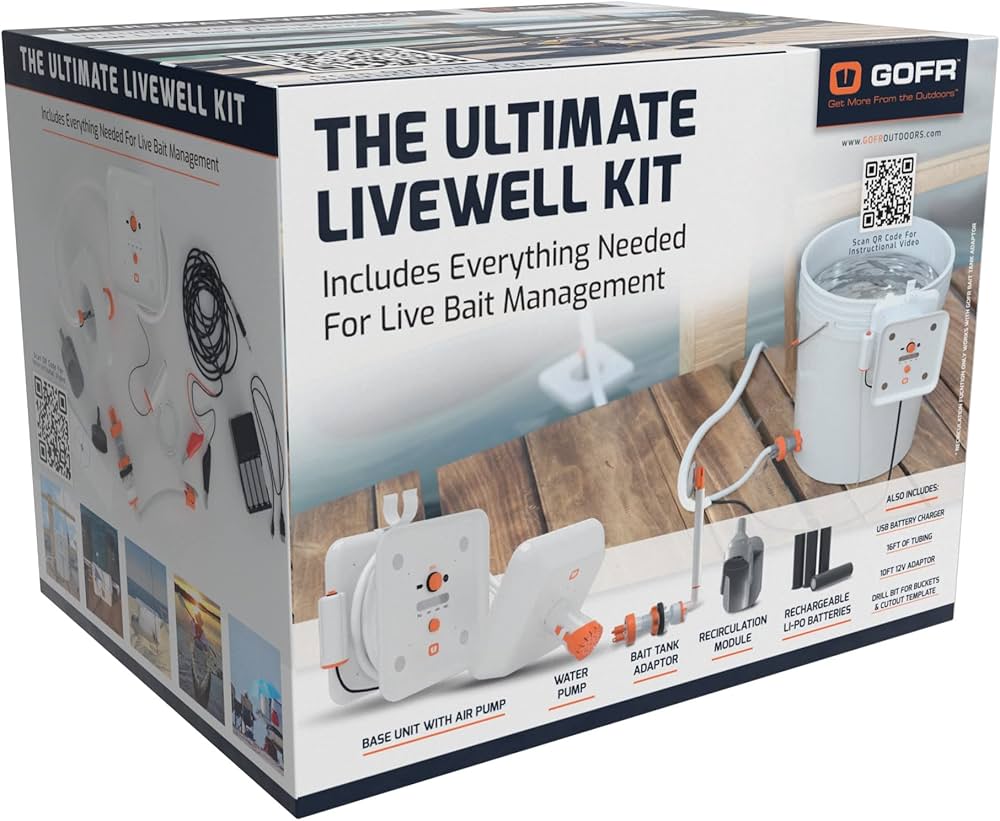
What is a Portable Livewell?
A portable livewell is a self-contained aquatic storage system designed to keep fish alive and healthy during fishing trips. Unlike built-in livewells found in bass boats, these mobile units offer anglers the flexibility to maintain live bait or catch regardless of their vessel type. The primary function involves circulating oxygenated water to create a healthy environment that mimics natural conditions.
These versatile systems range from simple insulated coolers with aeration pumps to sophisticated units featuring recirculation systems, temperature control, and battery-powered oxygen generators. Whether you’re fishing from a kayak, small aluminum boat, or shoreline, a portable livewell becomes an indispensable tool for tournament anglers and recreational fishermen alike. The technology has evolved significantly over the past decade, incorporating advanced materials and energy-efficient components.
Modern portable livewells address the critical challenge of fish mortality during catch-and-release practices. Studies show that properly oxygenated livewells can reduce stress-related fish deaths by up to 80% compared to traditional stringers or buckets. This makes them essential equipment for conservation-minded anglers who want to ensure their catch survives after release.
Why Every Angler Needs a Portable Livewell System
The advantages of owning a portable livewell extend far beyond simple fish storage. Tournament bass fishermen rely on these systems to maintain their catch in peak condition for weigh-ins, often traveling significant distances from capture location to tournament headquarters. Fish stored in optimal conditions appear healthier and more vibrant, which can make the difference between winning and placing in competitive events.
Key benefits include:
- Enhanced fish survival rates through consistent oxygenation and water quality management
- Versatility across different fishing platforms from kayaks to pontoon boats
- Temperature regulation preventing thermal shock and stress
- Live bait preservation keeping minnows, shad, and other baitfish active longer
- Portability allowing easy transport between vehicles and watercraft
- Cost-effectiveness compared to installing permanent livewell systems
Commercial fishermen and bait shop operators utilize larger capacity portable livewells to transport live products to market. The ability to maintain water quality during extended transport periods ensures higher survival rates and better product quality. Some units can sustain fish for 24-48 hours with proper maintenance, making them invaluable for long-distance hauling operations.
Environmental consciousness drives many anglers toward portable livewell adoption. These systems support ethical catch-and-release practices by minimizing handling stress and providing optimal recovery conditions before fish return to their habitat. Conservation organizations frequently recommend livewell usage as a best practice for protecting fisheries sustainability.
Types of Portable Livewell Systems Available
Basic Insulated Cooler Conversions
Entry-level portable livewell setups typically involve converting standard coolers with aftermarket aeration systems. These budget-friendly options work well for occasional anglers or those with limited storage space. Marine-grade aerator pumps attach to cooler lids, drawing ambient air through diffuser stones to create oxygen-rich bubbles. While simple in design, these systems require manual water changes every few hours to maintain acceptable water quality parameters.
The primary advantage lies in their affordability, with complete kits available for under $50. However, limitations include lack of water circulation, limited oxygen generation capacity, and absence of temperature control. Anglers must monitor water conditions closely and supplement with ice packs during hot weather to prevent overheating.
Self-Contained Recirculating Units
Mid-range portable livewell models incorporate recirculation pumps that continuously filter and oxygenate water. These systems feature built-in reservoirs ranging from 8 to 30 gallons, integrated aeration systems, and overflow drains. Battery-powered operation provides 6-12 hours of runtime on a single charge, making them ideal for day-long fishing excursions.
Premium features found in quality recirculating units include adjustable flow rates, removable filter cartridges, and timer functions that conserve battery power. Manufacturers like Engel, Frabill, and AquaView dominate this market segment with proven reliability. Prices range from $150 to $400 depending on capacity and feature sets. These units represent the sweet spot for serious recreational anglers who demand performance without excessive complexity.
Advanced Oxygen Generation Systems
Tournament-grade portable livewell technology employs pure oxygen injection rather than simple air bubbling. These sophisticated systems utilize pressurized oxygen cylinders or oxygen concentrators to maintain dissolved oxygen levels above 8 ppm consistently. High-end models incorporate digital monitors displaying real-time water quality metrics including temperature, pH, and dissolved oxygen concentration.
Professional anglers invest in these premium systems because they provide measurable advantages in fish health and survival. Research conducted by fisheries biologists demonstrates that oxygen-enriched livewells reduce cortisol levels in captured bass by 40% compared to air-only systems. Units with oxygen generation cost between $500 and $1,200 but deliver unmatched performance for competitive applications.
Essential Features to Consider When Choosing a Portable Livewell
Capacity and Size Requirements
Determining appropriate portable livewell capacity depends on target species, average catch size, and fishing duration. Bass anglers typically need 1.5-2 gallons of water per pound of fish for tournaments lasting 4-6 hours. A standard 20-gallon unit accommodates five largemouth bass weighing 3-4 pounds each comfortably. Walleye and pike fishermen require slightly less volume due to these species’ lower oxygen demands.
Physical dimensions matter significantly for storage and transport. Compact designs measuring 24x16x14 inches fit most vehicle trunks and boat storage compartments. Larger 30-gallon models may require dedicated mounting locations or trailer transport. Weight when filled becomes crucial—water weighs 8.34 pounds per gallon, so a 20-gallon unit weighs 167 pounds plus equipment weight when operational.
Power Supply Options and Runtime
Battery technology dramatically impacts portable livewell functionality and convenience. Sealed lead-acid batteries provide economical power but require regular charging and weigh considerably more than modern alternatives. Lithium-ion battery systems offer superior power density, lasting 2-3 times longer while weighing 60% less than comparable lead-acid units.
Suggested read: Your Complete Buyer's Guide to Used Portable Band Sawmills for Sale: Smart Investment Strategies for 2026
Power consumption considerations:
- Standard aerator pumps: Draw 1-3 amps continuously
- Recirculation systems: Consume 3-5 amps with periodic cycling
- Oxygen injection systems: Use 0.5-2 amps plus oxygen supply costs
- Expected runtime: 6-12 hours typical on 12V 35Ah battery
Solar panel integration extends runtime indefinitely during daylight hours. Twenty-watt solar panels maintain charge on most portable livewells under moderate use, making them excellent additions for all-day fishing trips. Some anglers install dual battery systems with automatic switching for extended multi-day excursions.
Water Quality Management Features
Superior portable livewell designs incorporate multiple water quality enhancement technologies. Biological filtration using beneficial bacteria colonies breaks down ammonia and nitrites produced by fish waste. Mechanical filtration removes particulate matter and debris that cloud water and stress fish gills. Chemical filtration through activated carbon absorbs dissolved toxins and chlorine from tap water.
Temperature stability prevents thermal shock when transferring fish between livewell and natural water. Insulated walls maintain cool temperatures in summer heat, while some advanced units include thermoelectric cooling elements that actively chill water. Maintaining temperatures within 5 degrees of ambient water temperature significantly improves fish survival rates according to fisheries research data.
How to Properly Set Up and Maintain Your Portable Livewell
Initial Setup and Water Preparation
Before adding fish to your portable livewell, proper water conditioning ensures optimal conditions from the start. Fill the unit with lake or river water whenever possible, as this matches the fish’s natural environment exactly. When using tap water, treat with dechlorinator chemicals and allow 15-20 minutes for aeration to stabilize dissolved gases.
Add commercially available live well treatment products that promote slime coat protection and reduce stress hormones. Products containing electrolytes, stress reducers, and beneficial enzymes create ideal conditions for fish health. Start your aeration system and allow water to circulate for 10 minutes before introducing the first fish.
Pre-fishing checklist:
- Inspect all connections for leaks and secure fittings
- Charge batteries fully the night before your trip
- Clean filters and replace if heavily soiled from previous use
- Test pump operation ensuring adequate flow and bubble production
- Verify water temperature matches expected fishing location conditions
During Fishing Operations
Active management of your portable livewell throughout the fishing day prevents water quality degradation. Monitor fish behavior closely—fish gasping at the surface or lying sideways indicate oxygen depletion requiring immediate action. Change 25-30% of water every 2-3 hours during hot weather to remove accumulated waste products and replenish dissolved oxygen.
Avoid overstocking beyond recommended capacity as this rapidly depletes oxygen and increases ammonia concentrations. The rule of thumb suggests no more than 15 pounds of fish per 20 gallons of water for bass species. Reduce this by half in temperatures exceeding 80°F or when fishing durations extend beyond 6 hours.
Handle fish carefully when transferring to the portable livewell, minimizing air exposure to 15 seconds or less. Wet your hands before handling to preserve protective slime coating. Support fish horizontally and lower gently into water allowing them to swim away naturally rather than dropping forcefully.
Post-Trip Cleaning and Storage
Thorough cleaning after each use extends portable livewell lifespan and prevents bacterial growth. Drain all water completely and rinse interior surfaces with clean freshwater to remove fish slime, scales, and debris. Mix a solution of 1 cup white vinegar per gallon of water and circulate through the system for 10 minutes to disinfect pumps and tubing.
Remove batteries and store in climate-controlled environments to maximize cycle life. Inspect tubing for cracks or hardening that could cause leaks. Clean or replace air stones and filter media according to manufacturer recommendations. Allow all components to dry completely before reassembly to prevent mold and mildew development.
Top Portable Livewell Models for Different Fishing Styles
Best for Kayak Fishing
Kayak anglers require ultra-compact portable livewell solutions that maximize space efficiency while providing adequate fish care. The Frabill Aqua-Life Portable Aerator System weighs just 3.5 pounds and operates on D-cell batteries, making it perfect for paddle-powered vessels with limited electrical capacity. Its 8-quart capacity suits crappie, panfish, and small bass perfectly.
YakAttack offers innovative mounting systems that secure portable livewells to kayak decks without drilling. Their Quick-Draw Bait Bag combined with a small aerator creates an effective 5-gallon livewell for around $75 total investment. This setup handles two or three bass during short fishing sessions while maintaining kayak stability and maneuverability.
Optimal for Bass Boat Applications
Tournament bass fishermen demand professional-grade portable livewell performance comparable to built-in systems. The Engel 30-Quart Live Bait Cooler features integrated recirculation pumps, adjustable flow controls, and heavy-duty construction that withstands years of competitive use. At $350, it represents exceptional value with proven reliability across thousands of tournament days.
AquaView Live Bait Tanks elevate portable livewell technology with see-through viewing windows that allow constant fish monitoring without opening lids. Their 20-gallon model includes oxygen injection capabilities, programmable timers, and reinforced handles for safe transport. Professional anglers appreciate the ability to showcase healthy fish to sponsors and media while maintaining optimal conditions.
Suggested read: The Ultimate Buyer's Guide to Choosing the Best Portable Gun Safe for Your Security Needs
Solutions for Shore and Pier Fishing
Bank fishermen benefit from wheeled portable livewell carriers that transport easily across parking lots and beaches. The Plano Guide Series Live Bait System incorporates a telescoping handle and durable wheels that roll smoothly over sand and gravel. Its 24-quart capacity accommodates a full day’s catch while the insulated design keeps water cool in direct sunlight.
Solar-powered portable livewells eliminate battery concerns for extended shore fishing sessions. The ECO-Worthy Solar Powered Aerator combines a 10-watt solar panel with an 8-gallon insulated container, providing unlimited runtime during daylight hours. This $180 system proves ideal for catfish anglers who fish dawn until dusk without vehicle access.
Portable Livewell vs Traditional Storage Methods
Comparison with Fish Stringers
Traditional stringers remain popular due to their simplicity and zero power requirements, but they significantly compromise fish health and survival. Fish attached to stringers experience continuous stress from restricted movement, predator exposure, and inability to regulate buoyancy. Portable livewell systems eliminate these problems by providing protected environments with adequate space for natural behavior.
Stringer disadvantages:
| Factor | Stringer | Portable Livewell |
|---|---|---|
| Survival Rate | 40-60% | 85-95% |
| Stress Level | Very High | Low to Moderate |
| Predator Risk | High | None |
| Water Quality | Uncontrolled | Managed |
| Fish Appearance | Damaged/Faded | Healthy/Vibrant |
Research published in the North American Journal of Fisheries Management found that bass stored on stringers for 4 hours showed 72% mortality within 48 hours of release. Identical fish maintained in aerated livewells experienced only 8% delayed mortality, demonstrating the dramatic difference in post-release survival rates.
Benefits Over Standard Coolers
While coolers filled with water provide better protection than stringers, they lack critical life support features found in dedicated portable livewell systems. Stagnant cooler water rapidly depletes oxygen, accumulates toxic ammonia, and allows temperatures to fluctuate dangerously. Without circulation and aeration, coolers become oxygen-depleted within 30-45 minutes when holding active fish.
Converting standard coolers with aftermarket aeration improves performance substantially, but purpose-built livewells offer superior features including overflow drains, graduated capacity marks, and optimized dimensions for fish health. The initial investment in a quality portable livewell pays dividends through improved catch quality and reduced fish loss over seasons of use.
Expert Tips for Maximizing Fish Health in Portable Livewells
Managing Water Temperature
Temperature control represents the single most critical factor in portable livewell fish survival. Maintain water temperature within 5°F of the source water where fish were caught to prevent thermal shock. During summer months, add ice gradually in sealed bottles rather than loose ice that dilutes water chemistry. Monitor temperature hourly and adjust ice additions to achieve stable conditions.
Fisheries biologists recommend against drastic temperature changes exceeding 2°F per hour when adjusting livewell conditions. Rapid temperature shifts cause physiological stress that weakens immune systems and increases susceptibility to disease. In extreme heat, park portable livewells in shaded areas and drape wet towels over exterior surfaces to enhance evaporative cooling.
Temperature guidelines by species:
- Largemouth Bass: 68-78°F optimal, critical above 82°F
- Smallmouth Bass: 65-75°F optimal, stress above 80°F
- Walleye: 60-72°F optimal, mortality increases above 76°F
- Crappie: 65-75°F optimal, hardy across wider range
- Catfish: 70-85°F optimal, most temperature tolerant
Optimizing Dissolved Oxygen Levels
Adequate dissolved oxygen separates successful portable livewell operation from fish mortality incidents. Target dissolved oxygen concentrations above 6 ppm for bass species, with levels above 8 ppm ideal for extended holding periods. Increase aeration during hot weather, after adding fish, or when observing stress behaviors like surface gulping.
Oxygen consumption rates increase exponentially with temperature—fish consume 50% more oxygen at 80°F compared to 70°F. Adjust aeration intensity based on ambient conditions and fish load. Vigorous aeration creates smaller bubbles with greater surface area for gas exchange, improving oxygen transfer efficiency significantly.
Test dissolved oxygen with electronic meters or chemical test kits hourly during critical periods. Portable meters measuring DO, temperature, and pH simultaneously cost $100-200 but provide invaluable data for serious anglers. Understanding actual water quality conditions removes guesswork and enables proactive management before fish show stress symptoms.
Reducing Fish Stress and Handling
Minimize handling time and frequency when using your portable livewell to reduce cumulative stress on captured fish. Each handling event removes protective slime coating, damages scales, and triggers stress hormone release. Use large soft-mesh nets rather than bare hands when transferring fish, supporting their entire body weight horizontally.
Keep lids closed except when adding or removing fish to maintain stable conditions and reduce external stimuli. Constant opening exposes fish to bright light and temperature fluctuations that increase stress. Consider portable livewells with viewing windows that allow monitoring without disrupting the environment.
Add commercially formulated stress coat products that contain polymers promoting slime coat regeneration. Electrolyte supplements help fish maintain osmotic balance after the stress of capture and confinement. These additives cost $10-15 per bottle but significantly improve fish health and post-release survival rates.
Common Portable Livewell Problems and Solutions
Insufficient Oxygenation Issues
Inadequate oxygen delivery represents the most frequent portable livewell failure mode. Symptoms include fish gasping at the surface, rapid gill movement, and lethargic behavior. Address immediately by increasing aeration intensity, performing partial water changes, and reducing fish density. Check for clogged air stones that restrict bubble formation—clean or replace as needed.
Suggested read: Premium Luxury Portable Restrooms for Sale: Your Complete Buyer's Investment Guide
Air pump failures occur from battery depletion, motor burnout, or disconnected tubing. Carry backup battery power and spare pumps for extended trips or tournament situations. Solar panel supplementation prevents battery exhaustion during all-day fishing sessions. Some anglers install dual pump systems with automatic failover for critical applications.
Water Quality Degradation
Ammonia accumulation from fish waste becomes toxic at concentrations above 1 ppm, causing gill damage and mortality. Portable livewell water appears clear even with dangerous ammonia levels, making testing essential during extended use. Neutralize ammonia with commercially available binders or perform 50% water changes every 3-4 hours during tournament holding periods.
Biological filtration media colonized with beneficial bacteria converts toxic ammonia into less harmful nitrates. Seed new portable livewell systems with bacteria cultures available at aquarium retailers. Established filters reduce ammonia spikes and extend safe holding times significantly. Replace filter media monthly during heavy use periods to maintain biological efficiency.
Equipment Malfunctions
Pump failures typically result from debris obstructing impellers or worn motor bearings. Regularly inspect and clean intake screens preventing leaves, grass, and other material from entering the system. Lubricate moving parts according to manufacturer specifications using marine-grade grease designed for freshwater applications.
Battery connections corrode over time from moisture exposure, creating intermittent electrical failures. Clean terminals with wire brushes and apply dielectric grease to prevent oxidation. Tighten all connections firmly and verify proper polarity before operation. Store batteries on trickle chargers during off-season to prevent sulfation and capacity loss.
Leaks develop at fitting connections, lid seals, and drain valves after years of use. Inspect your portable livewell thoroughly before each season, replacing worn gaskets and o-rings proactively. Silicone sealant repairs small cracks in plastic components temporarily, but plan for replacement of damaged parts to ensure reliability.
Innovative Portable Livewell Accessories and Upgrades
Advanced Monitoring Systems
Digital water quality monitors transform portable livewell management from guesswork into precision science. Multi-parameter meters simultaneously display dissolved oxygen, temperature, pH, and conductivity on backlit LCD screens. Data logging functions record conditions throughout fishing trips, allowing post-trip analysis to optimize future performance. Premium units like the YSI ProDSS cost $1,500-2,000 but provide laboratory-grade accuracy for professional applications.
Budget-friendly alternatives include simple dissolved oxygen test strips providing reasonable accuracy for $15 per 50-strip bottle. While less precise than electronic meters, test strips enable regular monitoring without significant investment. Serious tournament anglers consider water quality monitoring essential equipment comparable in importance to depth finders and GPS units.
Supplemental Oxygenation Devices
Pure oxygen injection systems dramatically increase portable livewell capacity and fish survival rates. Portable oxygen cylinders similar to welding tanks deliver concentrated oxygen through diffuser stones at controlled flow rates. A standard B-size cylinder contains 20 cubic feet of oxygen, sufficient for 8-12 hours of continuous operation in a 20-gallon livewell.
Oxygen concentrators electrically extract oxygen from ambient air, eliminating refill requirements. These 12-volt devices consume 3-5 amps while producing 90-95% pure oxygen continuously. Initial costs of $400-600 seem high, but elimination of cylinder refill expenses recovers investment within two seasons of heavy use. Professional tournament anglers universally employ oxygen injection for its proven performance advantages.
Temperature Control Solutions
Thermoelectric cooling modules maintain optimal portable livewell temperatures regardless of ambient conditions. Peltier-effect coolers draw heat from water and dissipate it through finned radiators, achieving temperature reductions of 15-20°F below ambient. Power consumption of 50-70 watts requires robust battery systems, but the fish health benefits justify the electrical demand for serious applications.
Ice chest conversions using Blue Ice packs provide economical temperature management for recreational anglers. Freeze multiple ice packs overnight and rotate them through the portable livewell every 2-3 hours during hot weather. This method avoids water dilution from melting ice while effectively controlling temperature spikes during summer fishing.
Regulations and Best Practices for Livewell Use
Legal Requirements by State
Many states regulate portable livewell operations to prevent invasive species transfer and protect native fish populations. Wisconsin prohibits transporting live fish away from waters of capture in most cases, with exceptions for licensed bait dealers. Texas requires complete livewell draining before leaving public boat ramps, preventing the spread of zebra mussels and other aquatic nuisances.
Tournament organizers typically mandate specific water quality standards and livewell inspection protocols. The Bass Anglers Sportsman Society (B.A.S.S.) requires dissolved oxygen above 5 ppm and temperatures matching ambient water within 10°F during official weigh-ins. Familiarize yourself with local regulations governing live fish transport and contest rules before fishing competitions.
Conservation-Focused Operation
Ethical portable livewell use prioritizes fish welfare and population sustainability. Release fish promptly after photographing or weighing rather than prolonging captivity unnecessarily. Select release locations with adequate depth, cover, and water quality to maximize post-release survival. Avoid releasing tournament fish in areas with heavy recreational boat traffic that stresses recovering fish.
Support catch-and-release fishing by continuously improving your portable livewell practices through education and equipment upgrades. Attend fisheries management workshops, read scientific studies, and consult with biologists to stay current on best practices. Your commitment to proper fish care contributes to thriving sport fisheries for future generations.
Suggested read: 12 Volt Portable Air Conditioner: Your Complete Buying Guide for Mobile Cooling Solutions
Portable Livewell Shopping Guide and Recommendations
Budget-Friendly Options Under $100
Entry-level anglers can establish effective portable livewell systems without excessive investment. The Frabill Magnum Bait Station combines a 14-quart insulated container with a battery-powered aerator for approximately $65. This setup handles panfish, crappie, and small bass adequately during half-day fishing trips. Add a $25 sealed lead-acid battery for 6-8 hours of continuous operation.
DIY conversions using standard coolers and aftermarket aeration kits cost even less while providing acceptable performance. Marine Metal Products offers complete aerator kits including pumps, air stones, and tubing for $30-40. Combined with a quality 20-quart cooler, total investment remains under $70. These economical systems introduce anglers to livewell benefits without financial barriers.
Mid-Range Performance Solutions
Anglers fishing regularly or pursuing tournament success benefit from investing in purpose-built portable livewell equipment. The Engel 19-Quart Live Bait Cooler with Aerator combines insulated construction, recirculation pumps, and proven reliability for $250. Its compact design fits most boat storage compartments while providing adequate capacity for bass tournament applications.
The AquaBiotics 16-Gallon Livewell System incorporates biological filtration, programmable aeration cycles, and integrated battery management for $375. This feature-rich unit supports extended holding periods necessary for multi-day tournaments or commercial bait operations. Quality construction and comprehensive warranty coverage justify premium pricing for serious anglers.
Professional Tournament-Grade Systems
Competitive bass anglers demand ultimate portable livewell performance regardless of cost. The Oxygenator Pro Tournament System delivers laboratory-grade water quality through pure oxygen injection, electronic monitoring, and thermoelectric cooling. At $1,200, this professional system provides measurable advantages in fish health and weigh-in appearance that translate directly to tournament success.
T-H Marine’s G-Force Livewell System employs high-velocity water circulation that simulates natural river current. Bass held in flowing water exhibit lower stress hormone levels and maintain fighting condition throughout extended tournaments. The $850 investment proves worthwhile for anglers competing at regional and national championship levels where fish care separates winners from competitors.
Case Study: Tournament Success Through Proper Livewell Management
Professional angler Mike Iaconelli credits his Bassmaster Classic victory partially to superior portable livewell practices. During the three-day tournament on South Carolina’s Lake Hartwell, ambient air temperatures exceeded 95°F while water temperatures approached 85°F. Most competitors experienced fish mortality and weight loss from stress, but Iaconelli maintained his catch in pristine condition.
His system utilized pure oxygen injection maintaining dissolved oxygen above 9 ppm constantly. Temperature management through ice packs and insulation kept livewell water within 3°F of lake temperature. Hourly monitoring with electronic meters allowed immediate response to any parameter deviations. The result showed fish weighing within 2% of their capture weight at final weigh-in, while competitor’s fish averaged 8-12% weight loss from stress and dehydration.
Related Equipment: Portable Sand Blaster and More
While managing your portable livewell, you might also need other portable equipment for boat maintenance and fishing gear care. A portable sand blaster helps clean marine equipment, remove rust from hooks and tools, and restore boat hardware between fishing trips. Exploring various portable solutions enhances your overall fishing experience and equipment longevity.
Frequently Asked Questions About Portable Livewells
How long can fish survive in a portable livewell?
Fish survival duration in a portable livewell depends on water quality management, temperature control, and fish species. Bass can survive 24-48 hours in properly maintained systems with adequate oxygenation, temperature regulation, and periodic water changes. Smaller species like crappie and panfish typically handle 12-24 hours comfortably. Key factors include maintaining dissolved oxygen above 6 ppm, temperatures within species’ optimal ranges, and preventing ammonia accumulation through water changes or biological filtration.
What size portable livewell do I need for bass fishing?
Tournament bass fishing typically requires a portable livewell capacity of 15-25 gallons to accommodate five bass averaging 3-4 pounds each. Calculate approximately 1.5-2 gallons of water per pound of fish for optimal conditions during 4-8 hour holding periods. Recreational anglers keeping smaller catches can use 8-15 gallon units successfully. Consider fishing duration, ambient temperature, and target species when selecting capacity, as warmer conditions and longer trips demand larger volumes for adequate dilution and oxygen reserves.
Do I need to use treated water in my portable livewell?
Using water from the fishing location in your portable livewell provides the best results since it matches the fish’s natural environment exactly. When tap water is necessary, treat with dechlorinator chemicals and allow 15 minutes of aeration before adding fish. Municipal water contains chlorine and chloramines toxic to fish at concentrations above 0.01 ppm. Commercial water conditioners neutralize these chemicals while adding beneficial electrolytes and slime coat protectants. Always test pH and temperature of treated water to ensure compatibility with target species requirements.
How often should I change water in a portable livewell?
Water change frequency in your portable livewell depends on fish load, temperature, and holding duration. During hot weather above 80°F, perform 25-30% water changes every 2-3 hours to remove waste products and replenish dissolved oxygen. Cooler conditions below 70°F extend intervals to 4-6 hours between changes. Monitor fish behavior continuously—surface gulping or erratic swimming indicates immediate need for fresh water regardless of schedule. Partial water changes prove superior to complete changes as they maintain stable temperature and beneficial bacteria populations while removing accumulated toxins.
Can I use a portable livewell for saltwater fishing?
Many portable livewell systems function effectively in saltwater applications with proper material selection and maintenance. Choose units constructed from marine-grade plastics, stainless steel, or corrosion-resistant aluminum to withstand salt exposure. Saltwater requires higher dissolved oxygen levels than freshwater due to reduced oxygen solubility, necessitating more vigorous aeration. Thoroughly rinse all components with freshwater after each saltwater use to prevent corrosion and salt crystal buildup. Some manufacturers offer dedicated saltwater models with enhanced corrosion protection and specialized materials optimized for marine environments.
What’s the best power source for portable livewells?
The optimal power source for your portable livewell balances runtime, weight, and cost considerations. Sealed lead-acid batteries provide economical operation at 12 volts but weigh significantly more than alternatives. Lithium-ion batteries offer triple the runtime per pound while lasting 5-10 years compared to 2-3 years for lead-acid. Solar panels supplement or replace battery power entirely during daylight, ideal for shore fishing or extended trips. Calculate your system’s amp draw and desired runtime to determine appropriate battery capacity—a 35 amp-hour battery powers a 3-amp aerator for approximately 10-12 hours accounting for efficiency losses.
Ready to keep your catch in pristine condition? Invest in a quality portable livewell today and experience the difference proper fish care makes in your angling success. Visit your local marine retailer or explore online options to find the perfect system for your fishing style and budget. Your fish—and your tournament standings—will thank you for upgrading to professional-grade live fish management.