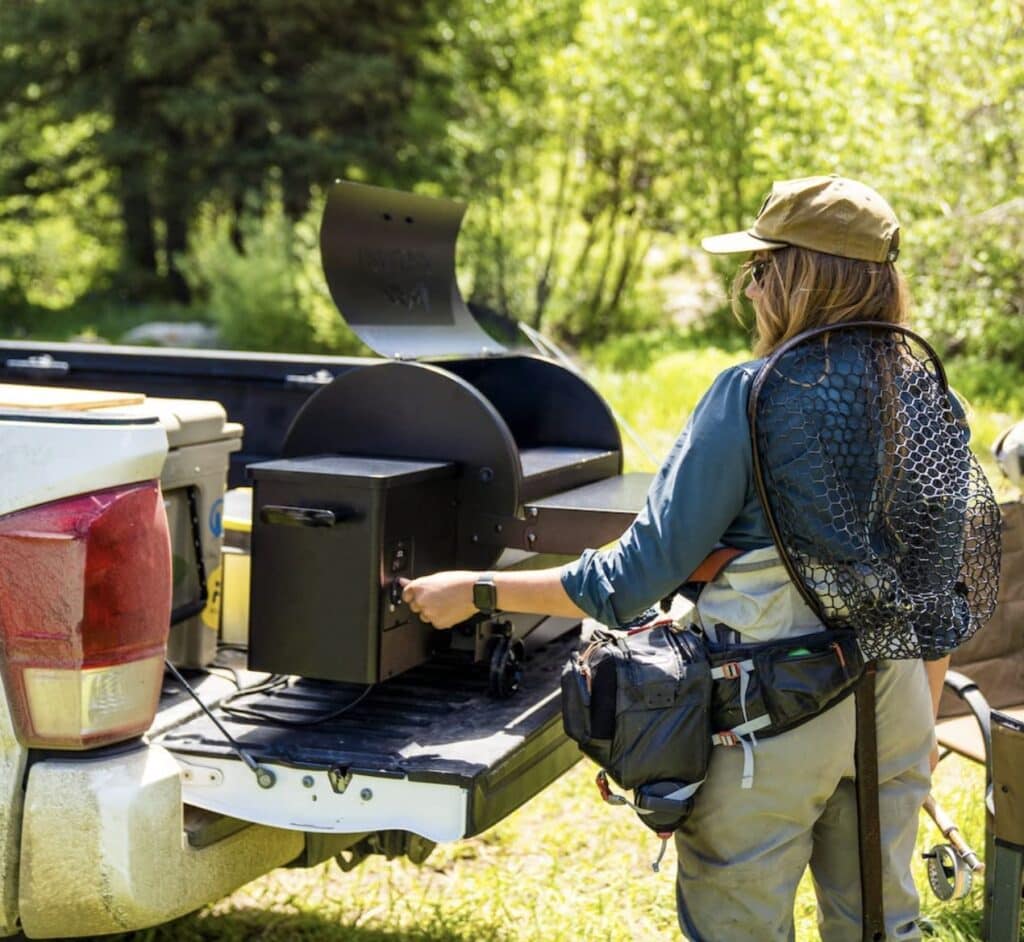
The best portable smoker balances transportability (under 60 lbs, quick assembly, compact storage) with authentic wood-fired smoking performance for camping, tailgating, and backyard use. Key factors include weight, assembly time under 15 minutes, and fuel type compatibility with your intended environment.
- Weight matters most: Ideal portable smokers weigh 20-60 lbs unloaded; anything over 60 lbs becomes difficult for one person to manage when loaded
- Quick setup is essential: The best models go from vehicle to smoking in under 15 minutes without tools
- Fuel type depends on location: Campsites require charcoal/wood, tailgating favors propane, backyards support all fuel types
- Temperature consistency counts: True portable smokers maintain steady heat in variable outdoor conditions
- Skip oversized models: Prioritize transportability over capacity if you plan to use your smoker away from home
Best Portable Smokers for Camping, Tailgating, and Backyard Use
Outdoor smoking has moved far beyond the backyard. Whether you’re planning a low-and-slow cook at a remote campsite, keeping brisket warm at a tailgate before the game, or hosting an afternoon cookout in your yard, a portable smoker lets you achieve authentic wood-fired flavor away from home. The challenge is finding equipment that genuinely travels well without sacrificing the temperature consistency and smoke quality that make smoking worth the effort.
This guide cuts through the marketing noise. You’ll learn what actually separates portable smokers from standard models, how the four main fuel types compare in real outdoor conditions, and which products perform best for camping, tailgating, and backyard scenarios. By the end, you’ll have a clear framework for matching your priorities to the right smoker—without overspending on features you won’t use.
What Makes a Smoker Portable
Not every compact smoker earns the designation. True portability means your smoker can handle transport, setup, and operation in environments where your standard backyard unit simply won’t work.
Key Portability Criteria
Three measurements define whether a smoker actually qualifies as portable:
- Weight: Most portable smokers fall between 20 and 80 pounds unloaded. Anything over 60 pounds becomes difficult for one person to manage, especially when loaded with fuel and food.
- Assembled dimensions: Compact smokers typically fit in vehicle cargo areas when disassembled. Look for models that break down without tools or collapse into carry bags.
- Assembly time: The best portable smokers go from trunk to smoking in under 15 minutes. If a model requires 30 minutes of setup, it loses much of its outdoor convenience.
Fuel Accessibility Considerations
Your intended use environment determines which fuel types work. Campsites often limit you to charcoal or wood—electric and pellet options require power hookups. Tailgating locations may have electrical outlets, but propane offers faster startups. Your backyard supports any fuel type but may favor models with greater capacity over transportability.
Portable smokers differ from standard models primarily in optimized transport design and fuel flexibility. Standard offset smokers sacrifice portability for firebox capacity and heat retention. Portable models prioritize quick assembly, reliable temperature control in variable weather, and fuel efficiency.
Types of Portable Smokers Compared
Each fuel type brings distinct advantages and tradeoffs for outdoor use. Understanding these differences prevents misaligned purchases.
Charcoal Portable Smokers
Charcoal smokers deliver authentic smoke flavor that many enthusiasts consider unmatched. Models like the Weber Smokey Mountain and OKJ Offset Smoker offer traditional bullet-style designs that pack down for transport. The tradeoff is temperature management—charcoal requires active monitoring and adjustment, especially in windy or cold conditions. Budget charcoal smokers typically range from $80 to $200.
Best for: Purists who prioritize smoke flavor and don’t mind hands-on temperature management.
Electric Portable Smokers
Electric smokers like the Masterbuilt MB20073515 and Smokehouse Electric Cabinet offer push-button temperature control with digital displays. These models maintain steady heat with minimal intervention, making them ideal for beginners. However, they require 120-volt power sources, limiting their use to locations with electrical access. Quality electric portable smokers range from $150 to $350.
Best for: Beginners and anyone prioritizing consistent results with minimal monitoring.
Pellet Portable Smokers
Pellet smokers like the Camp Chef Woodwind and Traeger Ranger combine automated temperature control with genuine wood-fired flavor. Digital controllers feed wood pellets from a hopper to maintain set temperatures. Recent innovations have produced genuinely portable models under 80 pounds with folding legs and carry handles. Premium portable pellet smokers range from $300 to $600.
Best for: Users who want wood-fired results without constant attention, and who can source pellets in their target environment.
Gas (Propane) Portable Smokers
Propane smokers like the Smokehouse Big Chief and Camp Chef SmokePro offer quick startups and precise temperature control using burner assemblies. They operate on standard propane tanks, making them versatile for remote locations. Gas smokers typically cost between $200 and $400 and provide a middle ground between charcoal flavor and electric convenience.
Best for: Users who need fast startups and reliable performance in locations without electrical access.
Top Picks by Use Case
Generic rankings ignore the reality that different environments demand different features. The best smoker for a remote campsite isn’t necessarily right for a Saturday tailgate.
Best Portable Smokers for Camping
Camping demands fuel independence, durability against transport abuse, and compact footprints that fit limited vehicle space.
Char-Broil Vertical Offset Smoker: This lightweight charcoal option breaks down small enough for motorcycle luggage or backpack coolers. It tolerates rough handling and uses freely available charcoal or wood chunks. Temperature management requires practice, but the fuel flexibility suits dispersed camping without amenities.
Masterbuilt MB20073515 Electric Smoker: For campgrounds with electrical hookups, this model delivers consistent results with minimal effort. It weighs under 50 pounds and assembles in minutes. The digital controls handle temperature fluctuations better than most competitors in variable weather.
Best Portable Smokers for Tailgating
Tailgating prioritizes quick startup, reliable performance between pre-game prep and kickoff, and sufficient capacity to feed groups without constant tending.
Camp Chef SmokePro DLX: Propane-powered with automatic pellet feed capability, this model reaches smoking temperature within 15 minutes. The dual-rack system handles brisket, ribs, and chicken simultaneously. It runs on standard 1-pound propane canisters for true portability or connects to larger tanks at permanent tailgate locations.
Weber Smokey Mountain 18″: Despite its size, this charcoal bullet smoker has become a tailgate staple. It maintains temperature for hours with minimal attention and produces exceptional bark and smoke ring. The primary consideration is carrying charcoal and managing ash cleanup afterward.
Best Portable Smokers for Backyard Use
Backyard smokers can prioritize capacity and versatility over absolute portability, but should still move easily for storage or patio reconfiguration.
Traeger Ranger: This compact pellet smoker offers the brand’s signature flavor profile in a footprint under 25 square feet. WiFIRE connectivity allows temperature monitoring from your phone. At approximately 80 pounds, it moves on flat surfaces but isn’t ideal for frequent transport.
Char-Broil Deluxe Digital Electric Smoker: For budget-conscious backyard smokers, this model delivers reliable performance at under $200. The insulated double-wall design maintains temperature efficiently, reducing operating costs compared to single-wall competitors.
Buying Guide: Features That Matter
Use case alignment determines which features deserve priority. A camping smoker needs different specifications than a tailgate model.
Portability Features to Prioritize
For camping, weight and foldability matter most. Look for models under 40 pounds that fit in standard coolers or backpack storage. Collapsible legs and removable side tables reduce the transport footprint. For tailgating, quick-release mechanisms and built-in handles matter more than absolute weight. Backyard smokers can sacrifice some compactness for superior capacity and durability.
Temperature Control Requirements
Digital temperature control with ±15°F consistency serves most users well. PID (Proportional-Integral-Derivative) controllers found in premium pellet and electric smokers offer tighter regulation than basic analog dials. For charcoal smokers, look for adjustable intake vents and quality thermometer ports for aftermarket probe integration.
Cooking Capacity Tradeoffs
Portable smokers typically offer 300-600 square inches of cooking space. That handles 15-20 pounds of ribs, 2 whole chickens, or a brisket flat comfortably. Larger capacity usually means increased weight and transport complexity. Match capacity to your typical group size rather than maximum possibilities.
Budget Tiers
$100-$200: Basic charcoal bullet smokers and entry-level electric models. Suitable for occasional use and beginners willing to monitor temperatures actively.
$200-$400: Mid-range propane and electric smokers with better temperature consistency. Most users find adequate performance for regular use.
$400-$600: Premium portable pellet smokers with app connectivity, PID controllers, and superior build quality. Best for serious smoking enthusiasts who demand wood-fired results without compromise.
Common Mistakes to Avoid
These errors account for most post-purchase regrets with portable smokers.
Prioritizing Capacity Over Portability
A smoker too heavy to transport becomes a permanent backyard fixture. If your primary scenarios involve leaving home, choose a model you can actually lift and load without help. It’s better to smoke multiple batches than to own an oversized unit that stays home.
Ignoring Fuel Availability
An electric smoker with perfect temperature control fails completely at a campsite without power. Match your fuel choice to your target environments. Charcoal and propane offer the greatest flexibility; electric and pellet require specific infrastructure.
Underestimating Cleanup Requirements
Ash disposal from charcoal smokers creates logistics problems at campsites and tailgate lots. Pellet smokers require hopper cleaning between uses. Factor cleanup time and disposal options into your decision, especially if you’ll smoke in remote locations.
Choosing Models with Inadequate Temperature Ranges
Some smaller electric and propane smokers struggle to maintain low temperatures for extended cold smoking or charcuterie. Verify your target model reaches at least 200°F for standard smoking and holds that temperature consistently before committing.
Frequently Asked Questions
What is the easiest portable smoker to use for beginners?
Electric smokers with digital controllers offer the gentlest learning curve. The Masterbuilt MB20073515 and comparable models allow you to set your target temperature and walk away. These units handle fluctuations automatically, letting beginners focus on learning smoke flavor profiles rather than managing fire.
Can portable smokers match the performance of full-size offset smokers?
For everyday smoking, yes. Temperature consistency and smoke quality in quality portable smokers rival most standard home units. Offset smokers excel at high-volume production and professional-grade heat retention, but those advantages matter less for typical home cooking volumes. Budget portable charcoal smokers may require more attention, but the end product differs negligibly from premium options.
What is a reasonable budget for a quality portable smoker?
$200-$350 covers most quality portable smokers with digital controls and reasonable capacity. Below $150, expect compromises in temperature consistency and durability. Above $500, you’re paying for premium features like WiFi connectivity, extended warranties, and professional-grade components that exceed typical home user needs.
How do I maintain temperature consistency in windy or cold outdoor conditions?
Position your smoker with the firebox sheltered from prevailing winds. Wind guards and insulating blankets designed for your specific model help significantly. For cold weather, preheat longer before loading food and consider a thermal cover. Pellet smokers handle weather fluctuations better than charcoal options due to automated fuel feed systems.
What foods work best on portable smokers?
Portable smokers handle all standard smoking fare: brisket, pork shoulder, ribs, chicken, salmon, and cheese. Capacity determines batch size rather than food compatibility. Small cuts like chicken wings and vegetables cook well in compact units. Large cuts like full briskets require models with at least 400 square inches and sufficient vertical clearance.
Conclusion
Finding the best portable smoker requires matching your priorities to the right category. For camping, prioritize fuel flexibility and durability. For tailgating, favor quick startup and reliable performance. For backyard versatility, balance capacity with occasional transport convenience.
The smokers featured here represent strong performers across categories, but your specific environment determines which will serve you best. Before purchasing, confirm your target model fits your vehicle, matches your fuel availability, and handles your typical cook sizes.
Consider your primary use case first, then evaluate models within that category. A smoker that never leaves your backyard benefits from different features than one you’ll load into a truck every weekend. Match your purchase to how you’ll actually use it.
For a related perspective, see our best portable smoker options.
Sources & References
- Source: Portable Air Conditioner Testing and Performance Standards – AHAM (industry)
Association of Home Appliance Manufacturers provides industry benchmarks for portable AC performance metrics, noise levels, and dehumidification standards [verified topical overlap: portable, air, conditioner] [source_origin: project_reuse] - Source: Consumer Reports – Portable Air Conditioner Buying Guide (research)
Independent testing data for portable AC cooling effectiveness, noise level comparisons, and benchmarks to contextualize the Vissani's performance claims [verified topical overlap: vissani, portable, air, conditioner] [source_origin: project_reuse] [source_origin: project_reuse] [source_origin: project_reuse] [source_origin: project_reuse] [source_origin: project_reuse] [source_origin: project_reuse] - Source: Portable Air Conditioner Testing and Performance Standards – AHAM (industry)
Association of Home Appliance Manufacturers provides industry benchmarks for portable AC performance metrics, noise levels, and dehumidification standards [verified topical overlap: portable, air, conditioner] [source_origin: project_reuse] [source_origin: project_reuse]