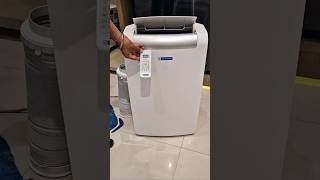
Portable Air Conditioners Are Gaining Popularity in 2025
As temperatures climb, many homeowners and renters look for cooling solutions that don’t require permanent installation. Window units are effective, but they can be restrictive. Central air conditioning is great, but it’s not always practical or affordable for every living space. That’s where portable air conditioners come in.
In 2025, the portable AC segment continues to expand, with brands like Bluestar offering models designed for Indian homes, apartments, and small offices. One video that has been getting attention is titled “Bluestar Portable AC 1 Ton 2025 / Best Portable AC 2025”, published on the YouTube channel The chandni info. The video highlights a Bluestar portable AC with a 1-ton cooling capacity and calls attention to the 5-star energy rating angle.
While we cannot confirm every detail discussed in the footage itself, we can use the video as a starting point to explore what matters when choosing a portable AC. This article provides independent context, practical advice, and key buying considerations.
Why Choose a Portable AC?
A portable air conditioner is a self-contained unit that sits on the floor and vents warm air through a window kit. Unlike split ACs, it does not require wall mounting or professional installation. That makes it an attractive option for:
- People living in rented apartments where modifications are not allowed.
- Small rooms, studio apartments, or home offices.
- Those who need a temporary cooling solution.
- Users who want the flexibility to move the unit from one room to another.
Portable ACs are not the same as air coolers. They use refrigerant and a compressor, which means they genuinely dehumidify and cool the air. The trade-off is that they can be noisier and slightly less efficient than split ACs, but their convenience often wins over buyers.
Bluestar: A Quick Brand Overview
Bluestar is a well-known name in the Indian air conditioning and commercial refrigeration space. The company has a long history of manufacturing cooling products for homes and businesses. Their lineup includes split ACs, window ACs, air coolers, and portable air conditioners.
Bluestar’s positioning generally emphasizes reliability, after-sales service, and efficient cooling in Indian climate conditions. For someone looking for a portable AC, choosing a reputable brand can make a significant difference in terms of support and durability.
Understanding the 1-Ton Capacity
The term “ton” in air conditioning refers to cooling capacity, not weight. A 1-ton AC is typically designed to cool rooms of around 100 to 150 square feet, depending on factors like ceiling height, sunlight exposure, and number of occupants.
If the Bluestar portable AC featured in the video is indeed a 1-ton unit, it is best suited for:
- Bedrooms and small living rooms.
- Compact home offices.
- Personal study spaces.
Before buying any portable AC, measure your room. If your room is larger than 150 square feet, a 1-ton unit may struggle to cool it effectively. In that case, you might need a higher-capacity portable model or a different type of AC.
5-Star Energy Rating: Why It Matters
The video’s title includes #5starac, which suggests the Bluestar portable AC may feature a 5-star energy rating. In India, the Bureau of Energy Efficiency (BEE) awards star ratings to air conditioners based on how efficiently they convert electricity into cooling.
A 5-star AC is more energy-efficient than a 3-star or 1-star model. That means:
- Lower electricity bills over time.
- Less strain on the power grid.
- A smaller carbon footprint.
However, portable air conditioners are generally less efficient than split ACs because they cool a single room while also venting hot air through a hose. A 5-star rating on a portable unit is still a good sign, but you should not expect the same level of efficiency as a 5-star split AC.
What to Look for in the Best Portable AC 2025
Whether you are considering the Bluestar portable AC or another model, here are the features to evaluate:
1. Cooling Capacity and Room Size
Check the BTU (British Thermal Unit) rating. A 1-ton AC is roughly equivalent to 12,000 BTU. For best results, match the capacity to your room size. Portable ACs often rate their capacity based on an ideal room size, so leave some margin for hot climates.
2. Energy Efficiency Ratio (EER)
The EER is the ratio of cooling output to power input. A higher EER means better efficiency. Look for models with high EER and a 5-star BEE rating if available.
3. Noise Level
Portable ACs place the compressor inside the room, so they can be noisy. Look for models with a stated decibel rating. If you plan to use the AC in a bedroom, low noise is important. Some units have a sleep mode that reduces fan speed and compressor noise.
4. Installation and Exhaust Hose
Most portable ACs come with a window vent kit. Check the length of the exhaust hose and the type of window you have. Sliding windows and casement windows may require different kits. The unit also needs drainage for condensed water, although newer models evapotranspirate some moisture.
5. Extra Modes and Features
Modern portable ACs often include:
- Dehumidifier mode.
- Fan-only mode.
- Remote control or Wi-Fi control.
- Timer function.
- Auto-restart after power failure.
These features improve convenience, but they should not replace the basic requirements of capacity and efficiency.
Benefits of a Portable AC for Indian Homes
India’s climate varies dramatically from region to region. In humid coastal areas, portable ACs with strong dehumidification are valuable. In dry, hot regions, an air cooler might be cheaper, but a portable AC can still provide better comfort during extreme heat.
Some additional benefits of portable ACs in the current market include:
- No permanent modification: Good for rented homes.
- Easy relocation: Move it from bedroom to living room as needed.
- Lower upfront cost than split AC installation in some cases.
- Simple setup with a window kit included in the box.
Potential Drawbacks to Keep in Mind
No product is perfect. Portable ACs have known limitations that you should consider before buying:
- Higher noise levels compared to split or window ACs.
- Reduced efficiency due to the exhaust hose and indoor compressor.