Portable Product Guides for Life AnywhereBuying Guides · Comparisons · How-To
Portable GuideOther Portable

Cost of Portable Bathroom Rental: Pricing Breakdown for 2025

Planning an outdoor event, managing a construction site, or hosting a backyard celebration requires careful attention to sanitation facilities. Understanding the cost of portable bathroom […]
Cost of Portable Bathroom Rental

Planning an outdoor event, managing a construction site, or hosting a backyard celebration requires careful attention to sanitation facilities. Understanding the cost of portable bathroom rental helps you budget accurately and select the right units for your specific needs. Whether you need basic porta potties for a construction crew or luxury restroom trailers for an upscale wedding, rental prices vary significantly based on multiple factors including unit type, location, rental duration, and additional amenities.

The portable restroom rental industry has evolved dramatically over the past decade, offering everything from no-frills standard units to high-end facilities that rival indoor bathrooms. According to recent industry data, standard porta potty rentals at All Site Rentals cost approximately $194.63 per day, $239.65 per week, and $276.99 per month, while national averages show most homeowners pay around $220 for a one-week rental of a flushable portable toilet and sink. These figures represent baseline pricing, but actual costs depend on numerous variables that can substantially increase or decrease your final bill.

Understanding Portable Bathroom Rental Pricing

The cost of portable bathroom rental isn’t a one-size-fits-all figure. Rental companies structure their pricing based on sophisticated algorithms that consider market demand, operational costs, unit availability, and competitive positioning. Most providers offer standardized rental periods rather than true daily rates, which creates better value for customers while ensuring efficient service delivery.

Table of Contents

Standard porta potty rentals cost between $199-$349 per rental period, whether for 3-day events or 28-day construction cycles, demonstrating how rental companies optimize pricing structures. Event rentals typically operate on three-day periods covering setup, execution, and cleanup, while construction projects use 28-day billing cycles for predictable budgeting. This standardization means you’re often paying the same base rate whether you rent for three days or a full month, making longer-term rentals exceptionally economical.

The pricing structure reflects the operational realities of portable restroom services. Delivery, setup, removal, and servicing represent significant portions of rental costs regardless of duration. A delivery truck traveling to your site costs the same whether dropping off units for a weekend wedding or a month-long construction project, which explains why weekly and monthly rates often provide dramatically better per-day value than hypothetical daily calculations.

Standard Portable Toilet Rental Costs

Standard portable toilets represent the most common and affordable option for temporary sanitation needs. These basic units include essential features like a toilet seat, urinal, toilet paper dispenser, and hand sanitizer dispenser, providing functional facilities without premium amenities. The average cost to rent a standard porta potty is $130 per week, or $139 every four weeks, making them ideal for construction sites, outdoor festivals, community events, and casual gatherings where basic functionality meets all necessary requirements.

Weekly rental rates for standard units vary by region and provider, typically ranging from $130 to $240 depending on local market conditions and service frequency. Most rental agreements include weekly servicing, which involves emptying waste tanks, replenishing supplies like toilet paper and hand sanitizer, and basic cleaning to maintain hygiene standards. If your event or project requires more frequent servicing, expect pricing adjustments accordingly. A $138 standard porta potty rate includes service once per week for a 4-week rental, but if serviced twice weekly, the price increases to $268.

Monthly rental costs for standard portable toilets offer significant savings compared to weekly rates. Construction companies and long-term projects benefit from these extended rental periods, which typically cost only slightly more than weekly rates while providing four times the rental duration. The majority of rental costs cover delivery, placement, and removal logistics, so extending the rental period adds minimal incremental expense once units are on-site.

Standard Unit Features and Specifications

Standard portable bathrooms measure approximately 44 inches wide by 48 inches deep by 89 inches tall, providing sufficient interior space for one person. The translucent roof panel allows natural light during daytime hours, reducing the need for artificial lighting. Ventilation comes from built-in vents that promote air circulation and help minimize odors. Waste holding tanks typically have 60-gallon capacity, adequate for 8-10 workers over a standard workweek with regular servicing.

Basic units lack running water, flushing mechanisms, interior lighting, and climate control. These omissions keep costs low while still meeting fundamental sanitation requirements. The toilet seat sits above the waste tank with a chemical deodorizer solution that controls odors and begins waste breakdown. The urinal directs liquid waste into the same holding tank. Wall-mounted dispensers provide toilet paper and hand sanitizer as the primary hygiene amenities.

ADA-Compliant Portable Restroom Pricing

ADA-compliant portable restrooms serve individuals with disabilities by providing wheelchair accessibility, spacious interiors, and safety features that meet Americans with Disabilities Act requirements. These specialized units cost more than standard portable toilets but ensure legal compliance and inclusive access for all guests or workers. ADA-compliant porta potty rentals at All Site Rentals cost approximately $243.90 per day, $295.25 per week, and $348.48 per month, representing a premium of about 25-30% over standard units.

Legal requirements mandate accessible facilities for many events and construction sites. If you provide portable single-user toilets, the Americans with Disabilities Act requires that at least 5% of each bathroom cluster be accessible, meaning 1 of every 20 porta-potties must meet applicable accessibility requirements. Failure to provide accessible restrooms can result in legal liability, discrimination complaints, and penalties. The additional cost for ADA-compliant units represents a small investment in legal compliance and demonstrates respect for all individuals who need to use your facilities.

ADA-compliant portable bathrooms feature wider entrances with ramp access to accommodate wheelchairs and mobility devices. Interior dimensions provide sufficient turning radius for wheelchairs, typically measuring 56 inches wide compared to 44 inches for standard units. Sturdy grab bars assist users with transfers and stability. The toilet seat sits at appropriate height for wheelchair transfers. Door latches and fixtures are positioned within reach zones specified by accessibility guidelines.

When ADA Compliance Is Required

Construction sites with employee counts exceeding certain thresholds must provide accessible facilities. Public events open to general attendance require accessible restrooms regardless of anticipated attendance. Government contracts and projects using public funding typically mandate ADA-compliant portable restrooms as contractual requirements. Private events like weddings or corporate functions aren’t legally required to provide accessible facilities, but many hosts choose to do so out of courtesy and inclusivity.

Building permits for construction projects often specify portable restroom requirements including accessibility provisions. Local jurisdictions may have specific regulations beyond federal ADA requirements. Consulting with your rental company about applicable regulations helps ensure compliance. Reputable rental providers understand local requirements and can advise on the appropriate number and type of accessible units needed for your specific situation.

Deluxe and Flushable Portable Toilet Costs

Deluxe portable toilets bridge the gap between basic standard units and luxury restroom trailers, offering enhanced comfort and amenities at moderate price points. These upgraded units typically feature flushing mechanisms, interior lighting, improved ventilation, hand-washing sinks with running water, mirrors, and more refined interior finishes. The average cost to rent a deluxe Flush Plus unit is $290 per week or $258 every four weeks, representing a reasonable upgrade for events where guest comfort matters.

Flushable portable restrooms provide a significantly better user experience compared to standard units. The foot-pedal or hand-pump flushing system circulates fresh water through the toilet bowl, rinsing away waste and dramatically reducing odors. Integrated sinks with running water allow proper handwashing with soap, a feature particularly important for food service events, medical facilities, or situations where hand sanitizer alone proves insufficient. Deluxe porta potties cost around $300-$400 per rental period and often combine multiple amenities like flushing toilets with integrated sinks, soap dispensers, mirrors, and better lighting.

Interior lighting transforms the user experience during evening events or in dimly lit locations. Battery-powered LED lights illuminate the interior without requiring external power connections. Mirrors allow guests to check their appearance, a small touch that elevates perceived quality. Improved ventilation systems actively circulate air rather than relying solely on passive vents, keeping interiors fresher. Enhanced interior finishes like textured walls and slip-resistant floors make deluxe units feel more like permanent facilities.

Ideal Applications for Deluxe Units

Outdoor weddings benefit enormously from deluxe portable restrooms. Guests dressed in formal attire appreciate the ability to wash hands with soap and water, check their appearance in mirrors, and use facilities that feel closer to indoor bathrooms. The modest price premium over standard units represents excellent value for the enhanced guest experience and positive impression these facilities create.

Corporate events, client meetings, and professional gatherings warrant deluxe portable restrooms. Providing upgraded facilities demonstrates attention to detail and respect for attendees. Film production sets and commercial photography shoots often specify deluxe units to accommodate crew and talent. Private parties, family reunions, and backyard celebrations upgrade to deluxe options when hosts want to provide comfortable, dignified facilities for friends and relatives.

Food service events and situations involving meal preparation require hand-washing facilities beyond simple sanitizer. Health department regulations for catering and food vendors often mandate hand-washing stations with running water. Deluxe units with integrated sinks satisfy these requirements while consolidating facilities into single units rather than requiring separate hand-washing stations alongside standard portable toilets.

Luxury Restroom Trailer Rental Rates

Luxury restroom trailers represent the premium tier of portable sanitation, providing experiences comparable to upscale hotel bathrooms. These sophisticated mobile facilities feature multiple private stalls, full-size flushing toilets, running water sinks with hot water, climate control systems, interior and exterior lighting, premium finishes like hardwood flooring and elegant countertops, and even amenities like Bluetooth sound systems and flat-screen TVs. Renting a restroom trailer in 2025 typically costs $1,300-$2,000 per day for 2-stall units and $1,700-$2,200 per day for 4-stall units.

The dramatic price difference between luxury trailers and standard portable toilets reflects the substantial infrastructure these units contain. Restroom trailers arrive on wheeled chassis that require towing to site locations. Fresh water tanks hold hundreds of gallons to supply multiple sinks and flushing toilets. Waste holding tanks accommodate significantly larger volumes than single-unit portable toilets. Climate control systems including air conditioning and heating ensure comfort regardless of weather conditions. Electrical systems power lighting, HVAC equipment, and optional amenities.

Long-term rentals ranging from $2,999-$6,999 per 28 days provide dramatic per-day savings compared to daily event rates. A 2-stall trailer costing $1,799 daily drops to approximately $2,999 for 28 days, working out to about $107 per day, saving over 80% on the daily rate. Construction projects, home renovations, and temporary workplace solutions benefit most from monthly rates, especially when factoring in reduced service call costs compared to maintaining multiple individual portable toilets.

Luxury Trailer Size Options and Capacity

2-Stall Restroom Trailers accommodate approximately 50-75 guests comfortably, making them ideal for intimate weddings, small corporate retreats, residential construction, and film shoots with limited crews. These trailers average $1,799-$2,499 per day for event rentals, with long-term rentals starting at $2,999. Two private stalls with locking doors provide simultaneous usage without wait times for smaller gatherings.

4-Stall Restroom Trailers serve 100-150 guests effectively and represent the most popular size for medium events. Wedding receptions, corporate functions, and community festivals typically select 4-stall configurations. Additional stalls reduce wait times and prevent bottlenecks during peak usage periods. The larger infrastructure supports higher capacity without sacrificing comfort or amenities.

6-Stall and Larger Trailers accommodate major events with 200+ attendees. Music festivals, large-scale corporate events, and public gatherings require these high-capacity units. Some luxury trailers offer 8-10 individual stalls with both men’s and women’s facilities in a single trailer. Pricing for these large units starts around $3,000-$5,000 daily depending on specific configuration and amenities.

Premium Amenities and Add-On Features

Climate control with air conditioning and heating ensures comfort regardless of weather, typically adding $200-$400 to rental costs. Summer outdoor weddings and winter construction projects transform climate control from nice-to-have into absolutely essential. Temperature-controlled restrooms prevent heat exhaustion during summer events and protect plumbing systems from freezing during cold weather operations.

Corian countertops and upscale finishes create an elegant atmosphere that complements high-end events. Coordinated fixtures, ambient lighting, and premium flooring make luxury trailers feel more like hotel restrooms than temporary facilities. Some units include flower arrangements, decorative mirrors, and artwork that enhance visual appeal. These aesthetic touches contribute to the overall event atmosphere and guest experience.

Bluetooth sound systems provide subtle background music, particularly popular for weddings and upscale corporate events. Touchless fixtures including automatic faucets, soap dispensers, and paper towel dispensers improve hygiene and create a modern, sophisticated feel. Some luxury trailers even incorporate flat-screen TVs, USB charging stations, and WiFi connectivity for ultimate convenience.

Geographic Location Impact on Rental Prices

Where you rent portable bathrooms dramatically affects pricing due to delivery distances, regional demand, local market competition, and operational costs that vary by area. Urban markets with multiple rental providers typically offer competitive pricing, while rural or remote locations face premium charges for extended delivery distances. Geographic location significantly impacts rental costs due to delivery distances, regional demand, and local market competition.

Major metropolitan areas generally feature lower base rental rates due to intense competition among numerous providers. Cities with established rental companies benefit from operational efficiencies, centralized maintenance facilities, and high-volume purchasing power that reduces per-unit costs. However, urban locations may incur additional charges for difficult access sites, parking permits, and tight delivery windows that complicate logistics. Dense urban environments with limited space and strict regulations can offset competitive pricing advantages.

Rural and remote locations face delivery premiums that substantially increase overall costs. Rental companies calculate delivery charges based on distance from their depot to your site, fuel expenses, and driver time. Remote construction sites, agricultural events, and properties far from population centers can see delivery fees exceeding $200-$300 per trip. Some providers establish minimum order quantities for distant locations to justify delivery expenses, requiring you to rent multiple units even if you only need one or two.

Suggested read: How Much to Rent a Portable Toilet: Pricing & Cost Breakdown for 2026

Regional Price Variations Across the United States

Regional cost differences reflect local economic conditions, labor rates, regulatory environments, and market maturity. A deluxe portable flushing toilet may cost only $100 per week to rent in Lexington, Kentucky, but the same type of unit can run as high as $850 per week in Madison, Wisconsin. These dramatic variations demonstrate why obtaining local quotes proves essential for accurate budgeting.

Coastal markets, particularly in California, New York, and Florida, typically charge premium rates reflecting higher operational costs, expensive real estate for storage yards, and elevated labor expenses. Midwestern and Southern states often offer more moderate pricing due to lower overall business costs. However, seasonal demand fluctuations can temporarily reverse these patterns when major events strain local supplies.

Washington portable toilet rental costs between $179 and $358 depending on service frequency in each 7-day rental period, with event portable toilets costing between $209 and $298 depending on the number of units needed. Meanwhile, average porta potty rental cost in Boston is $90-$210, but could vary from $77 to $361. These city-specific price ranges demonstrate the importance of researching local market rates rather than relying on national averages.

Rental Duration and Service Frequency Effects

How long you rent portable bathrooms directly impacts both total costs and per-day rates, with longer rental periods typically offering better value. Most rental companies structure pricing around standardized periods rather than true daily calculations, creating natural pricing tiers that favor extended rentals. Understanding these duration-based pricing structures helps you optimize costs while ensuring adequate service frequency.

Standard billing follows two main structures: three-day periods for events covering setup, event day, and pickup, and 28-day cycles for construction projects, with both rental durations typically costing the same base rate. This pricing approach means weekend events pay essentially the same as week-long rentals, making shorter durations excellent value. Construction and long-term projects benefit from monthly rates that provide four weeks of service for minimal premium over weekly costs.

Service frequency affects pricing beyond base rental rates. Weekly servicing represents the standard inclusion in most rental agreements, covering waste removal, tank cleaning, supply replenishment, and basic maintenance. Projects or events requiring more frequent servicing incur additional charges. High-traffic locations with heavy usage might need twice-weekly or even daily servicing to maintain hygiene standards and prevent capacity overflows.

Comparing Short-Term Event vs. Long-Term Project Pricing

Weekend Event Rentals typically operate on 3-day billing covering Friday delivery, weekend usage, and Monday pickup. This standard event package costs the same as units rented for just Saturday, making Friday setup and Monday removal essentially free. Event pricing usually includes one pre-event cleaning and post-event removal, with no mid-rental servicing for three-day periods. Most providers offer fixed weekend rates regardless of whether you need units for one day or three days.

Weekly Construction Rentals provide seven days of on-site access with one scheduled servicing visit during the week. Weekly rates typically range from $130-$300 depending on unit type and local market. The weekly servicing maintains units in usable condition for consistent daily usage by construction crews. Predictable weekly costs simplify project budgeting and accounting.

Monthly Construction Rentals offer exceptional value for long-term projects. A standard porta potty costs $139 every four weeks, barely more than weekly rates despite providing four times the rental duration. Monthly billing includes weekly servicing visits throughout the 28-day period, maintaining hygiene standards while spreading delivery and pickup costs across the extended rental period. Projects lasting multiple months often negotiate reduced monthly rates for 2-month, 3-month, or longer commitments.

Seasonal Demand and Pricing Fluctuations

The time of year you rent portable bathrooms significantly affects both pricing and availability, with dramatic swings between peak and off-peak seasons. Understanding seasonal patterns helps you secure better rates, ensure availability, and plan around potential supply shortages. Summer months from June to August can increase rates by 40-60% due to peak wedding, festival, and construction season demand compared to off-peak winter pricing.

Peak season stretches from late spring through early fall when outdoor events, weddings, festivals, and construction activity reaches annual highs. Graduation parties, outdoor weddings, summer concerts, county fairs, and construction projects all compete for limited portable restroom inventory. Major events like marathons, music festivals, and sporting events can temporarily exhaust local supply, forcing rental companies to bring units from other regions and pass transportation costs to customers.

Wedding season particularly strains luxury restroom trailer availability. Saturdays between May and October represent the most competitive booking periods, with premium units reserved months in advance. Brides and event planners who wait until weeks before their events often face limited options, elevated prices, and compromises on preferred unit types. Early booking during peak season proves essential for securing desired facilities at reasonable rates.

Off-Peak Opportunities and Winter Pricing

Fall and winter offer the best deals for those watching their budget, with November through March seeing discounts as providers aim to keep cash flow steady. Rental companies offer waived delivery fees, package deals, free extras like hand sanitizer stations, and other incentives to maintain utilization during slow periods. Construction projects scheduling portable restroom rentals during winter months can negotiate significant discounts.

Holiday events and year-end gatherings create brief demand spikes during otherwise slow winter months. Christmas parties, New Year’s celebrations, and Thanksgiving gatherings require temporary facilities, but nowhere near summer volumes. Smart planners capitalize on winter’s generally lower demand and pricing while understanding that specific holiday weekends might see temporary price increases.

Early booking strategies mitigate peak season challenges. Reserving portable restrooms 3-6 months before major summer events locks in lower rates and guarantees availability. Rental companies appreciate early commitments that help them plan logistics and may offer early-bird discounts. Waiting until the last minute during peak season virtually ensures paying premium rates and accepting whatever units remain available.

Additional Fees and Hidden Costs

Base rental rates represent only part of total portable bathroom costs, with various additional fees and charges potentially adding substantial amounts to final bills. Understanding common add-on costs helps you budget accurately and avoid surprise expenses. Transparent rental companies clearly outline all potential fees in quotes and contracts, while less reputable providers may bury charges in fine print.

Delivery and pickup fees cover transportation logistics and typically range from $35-$100 depending on distance and unit type. Delivery costs average $36.93 depending on distance, type of toilet product, and current fuel prices. Some providers include delivery and pickup in base rental rates for local deliveries within a certain radius, while charging additional fees for more distant locations. Heavy units like restroom trailers incur higher delivery charges than single portable toilets.

Damage deposits protect rental companies against unit damage, theft, or excessive cleaning needs beyond normal wear. Deposits typically range from $50-$500 depending on unit value and rental duration. You receive full deposit refunds when units return in acceptable condition. Document unit condition upon delivery with photos to protect against false damage claims. Most damage results from vandalism, weather events, or improper usage rather than normal wear.

Extra service calls beyond included weekly servicing incur additional charges, typically $50-$150 per visit depending on location and scope of service needed. High-traffic events or projects may require mid-week servicing to prevent capacity overflows and maintain hygiene. Emergency service calls for urgent issues like tipped units or blocked plumbing cost more than scheduled visits. Planning appropriate unit quantities relative to expected usage reduces the need for extra service calls.

Understanding Service Agreements and Contracts

Damage waiver fees function like rental insurance, covering minor damage and wear without charging you for repairs. These optional fees typically add 10-15% to base rental rates but provide peace of mind against unexpected repair bills. Declining damage waivers means you’re financially responsible for any damage regardless of fault. Vandalism during public events particularly justifies damage waiver protection.

Weekend surcharges apply when delivery or pickup occurs on Saturdays, Sundays, or holidays. These fees compensate rental companies for premium labor costs during non-business hours. Weekend surcharges typically add $50-$150 to standard delivery fees. Planning deliveries on weekdays when possible avoids these surcharges. However, event logistics often necessitate Friday afternoon delivery and Monday morning pickup despite weekend fees.

Fuel surcharges reflect fluctuating diesel and gasoline prices, particularly during periods of high fuel costs. These variable charges adjust monthly or quarterly based on fuel price indices. Fuel surcharges typically add 5-10% to total bills. Long-distance deliveries to remote locations magnify fuel surcharge impacts. Rental contracts specify how fuel surcharges calculate and adjust.

Cleaning fees beyond normal servicing apply when units require extensive sanitization due to vandalism, misuse, or excessive soiling. These charges range from $50-$200 depending on cleaning intensity required. Providing clear usage guidelines to event attendees and posting facility rules helps prevent situations triggering extra cleaning fees. Some rental companies waive cleaning fees when damage waivers are purchased.

Calculating Porta Potty Quantities for Your Event

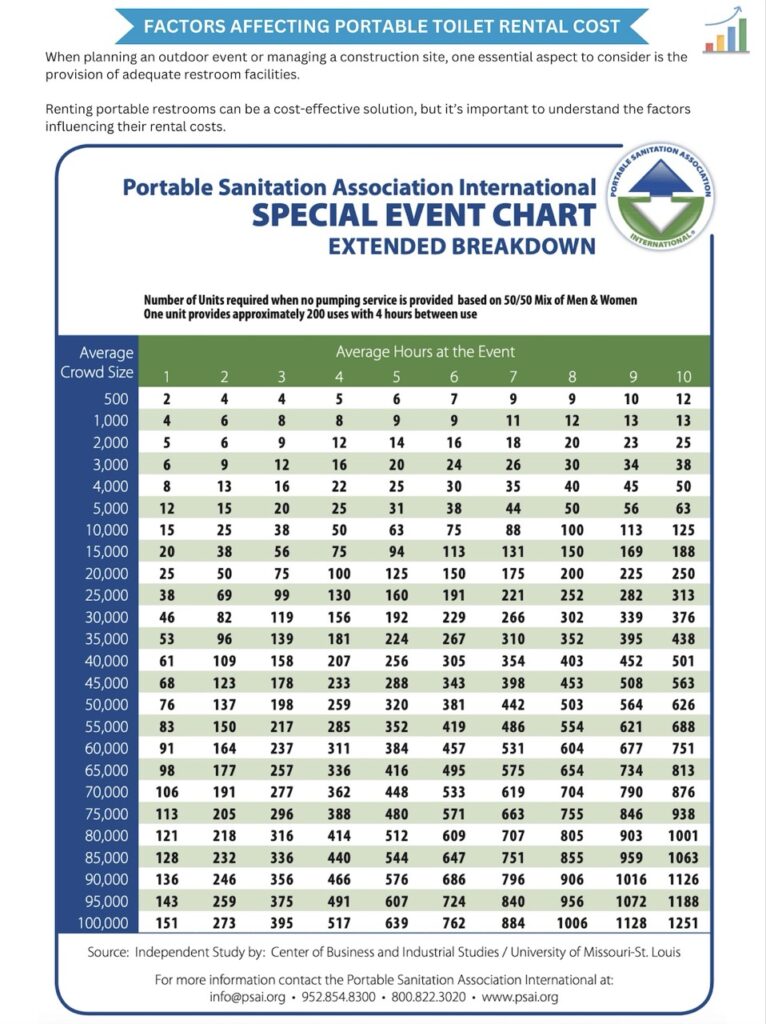
Determining the appropriate number of portable bathrooms prevents both inadequate facilities causing guest discomfort and over-renting wasting budget on unnecessary units. Industry guidelines based on attendance, event duration, alcohol service, and facility types provide starting points for quantity calculations. Adjusting these baseline estimates for your specific circumstances optimizes both guest experience and costs.

General occupancy ratios recommend one portable toilet for every 50 guests for events lasting up to four hours. Longer events require additional capacity, with recommendations increasing to one unit per 40 guests for 4-6 hour events and one per 30 guests for all-day events. These ratios assume standard portable toilets without additional amenities like hand-washing stations.

Alcohol service substantially increases restroom usage, necessitating higher unit ratios. Events serving alcohol should increase portable toilet quantities by 25-30% compared to non-alcohol events. Beer gardens, wine tastings, and cocktail receptions particularly require generous facility provisions. One toilet per 30-40 guests represents appropriate ratios for alcohol-focused events.

Gender considerations affect optimal configurations when demographic splits are known. Events with predominantly female attendance benefit from additional units, as women typically require more time per restroom visit. Some event planners specify female-to-male ratios of 2:1 or 3:1, particularly for events like bridal showers, baby showers, or women’s conferences.

Construction Site Requirements and OSHA Regulations

OSHA requires that employers provide workers with access to sanitary restrooms, with best practices suggesting employers regularly evaluate the condition of construction porta potties and schedule routine maintenance. While OSHA doesn’t specify exact ratios for portable toilets, industry standards recommend one unit per 10 workers for projects lasting over 10 days.

Short-term construction projects (1-4 weeks) typically require one standard portable toilet per 10 workers with weekly servicing. Smaller crews of 5 or fewer workers often rent minimum single units despite ratios suggesting adequate capacity. The convenience and morale benefits of on-site facilities justify rental costs even when ratios indicate fractional unit needs.

Long-term construction projects (multiple months) benefit from regular servicing schedules and potential additional amenities. Multi-month projects might add hand-washing stations, particularly when workers handle food during lunch breaks. Cold weather projects sometimes include heated portable restrooms to prevent waste tank freezing and provide worker comfort.

Multi-shift operations require recalculating capacity based on simultaneous worker counts rather than total daily workers. Two 12-hour shifts with 15 workers each need capacity for 15, not 30 workers, since shifts don’t overlap. However, 24-hour operations should consider increased servicing frequency to maintain hygiene standards across all shifts.

Money-Saving Tips for Portable Bathroom Rentals

Strategic planning and informed decisions substantially reduce portable bathroom rental costs without sacrificing quality or adequate capacity. Understanding rental company incentives, timing bookings appropriately, and optimizing unit selections balance budget constraints with functional requirements. Small adjustments to rental specifications and planning timelines can save hundreds of dollars on projects and events.

Book early during peak season to secure lower rates and guarantee availability. Rental companies appreciate advance commitments that facilitate logistics planning and may offer early-bird discounts of 10-20% for bookings made 3-6 months ahead. Early booking also provides first selection of premium units, ensuring you get exactly the facilities you want rather than accepting whatever remains available.

Suggested read: Best Portable Bathroom With Shower Options for Any Outdoor Adventure

Rent during off-peak periods when possible to capitalize on winter and fall discounts. November through March sees discounts as providers aim to keep cash flow steady, with waived delivery fees, package deals, or free extras like hand sanitizer stations. Construction projects with flexible timelines can schedule major work phases during off-peak months to minimize portable restroom expenses.

Bundle multiple units to negotiate volume discounts. Rental companies prefer larger orders that maximize delivery efficiency and generate higher revenue per trip. Orders of 5+ units typically qualify for 10-15% discounts. Major events needing dozens of units sometimes negotiate 20-25% below standard rates. Even small events should inquire about multi-unit discounts if needing 3-4 facilities.

Optimizing Unit Selection and Configuration

Choose appropriate quality levels matching your specific needs rather than defaulting to premium options. Construction sites with worker-only access rarely need luxury restroom trailers or deluxe units. Standard portable toilets with basic amenities satisfy worker needs while minimizing costs. Conversely, client-facing events justify upgraded facilities that create positive impressions and enhance guest experiences.

Consider hand-washing stations separately rather than renting only flushable units with integrated sinks. Standalone hand-washing stations cost $40-$80 to rent, while upgrading to flushable units costs $100-$150 per toilet. Events needing hand-washing for food service might pair standard portable toilets with standalone hand-washing stations, saving money compared to all-flushable configurations.

Extend rental periods to leverage better monthly rates compared to weekly pricing. Projects initially planned for two weeks might cost only slightly more when extended to four weeks, since delivery and removal fees get spread across more days. Construction projects should rent on monthly cycles rather than weekly renewals, even when exact project duration remains uncertain. Keeping units an extra week or two costs minimal amounts compared to paying separate delivery fees for short-term renewals.

Negotiate service frequency based on actual usage patterns rather than accepting default weekly servicing. Low-traffic events and lightly-used construction sites might negotiate reduced servicing to lower costs. Conversely, high-traffic situations benefit from increased servicing that maintains hygiene and prevents capacity issues. Matching service frequency to actual needs optimizes value.

Comparing Portable Bathroom Rental Companies

Selecting the right rental company affects both cost and service quality, with significant variations among providers in pricing, unit quality, reliability, and customer service. Obtaining multiple quotes and evaluating company reputations helps you identify providers offering the best combination of competitive pricing and dependable service. Cheap rates mean nothing if units arrive dirty, late, or improperly maintained.

Request detailed quotes from 3-5 companies to understand local market rates and identify outliers. Quotes should itemize all costs including base rental rates, delivery fees, service charges, taxes, and potential additional fees. Beware quotes that seem too good to be true, as unscrupulous providers sometimes advertise artificially low base rates while hiding substantial fees in contracts. Legitimate companies provide transparent, comprehensive quotes that clearly outline all anticipated charges.

Verify what’s included in base rental rates to ensure you’re comparing equivalent services. Some companies include delivery, pickup, and weekly servicing in advertised rates while others charge separately for these services. One company’s $150 weekly rate with free delivery and servicing might actually cost less than another’s $125 rate plus $50 delivery fee and $40 service charge. Calculate total costs across the full rental period for accurate comparisons.

Research company reputations through online reviews, testimonials, Better Business Bureau ratings, and references from past customers. Portable bathroom rentals aren’t complex purchases where you need extensive research, but basic due diligence prevents selecting unreliable providers who deliver dirty units, miss scheduled service calls, or fail to show up for deliveries. Companies with consistently positive reviews across multiple platforms typically provide reliable service.

Red Flags and Warning Signs

Extremely low pricing substantially below market rates often indicates hidden fees, poor unit quality, or unreliable service. Rental companies face similar operational costs for vehicles, labor, equipment maintenance, and regulatory compliance. Providers undercutting competitors by 40-50% either aren’t being transparent about total costs or are cutting corners on unit maintenance and service quality.

Lack of proper insurance and licensing exposes you to potential liability if accidents occur during delivery or if units cause property damage. Legitimate rental companies carry comprehensive commercial liability insurance and maintain required business licenses. Request certificates of insurance before finalizing rental agreements, particularly for significant events or projects.

Vague contract terms without clear specifications for included services, pricing structures, cancellation policies, and dispute resolution procedures suggest unprofessional operations. Professional rental companies use clear, detailed contracts protecting both parties. Read contracts carefully before signing and request clarification of any ambiguous terms.

Pushy sales tactics pressuring immediate commitments without allowing time for comparisons or consideration indicate questionable business practices. Reputable companies provide quotes without aggressive sales pressure, understanding that customers need time to compare options and make informed decisions. High-pressure tactics often accompany overpriced services or hidden fees the company hopes you won’t discover until after signing contracts.

Environmental Considerations and Waste Management

Modern portable bathroom rentals incorporate environmentally conscious practices that minimize ecological impact while maintaining hygiene standards. Understanding how rental companies handle waste, chemicals, and resource consumption helps you select providers aligned with sustainability values. Green rental practices reduce environmental footprints without compromising sanitation or user experience.

Waste disposal from portable restrooms follows strict regulatory protocols designed to protect public health and environmental quality. All waste pumped out of portable toilets is disposed by rental companies at any local wastewater treatment facility within the area, always done by the regulations and policies of the region. Reputable companies never dump waste illegally or dispose of it improperly. Treatment facilities process portable restroom waste through the same sewage treatment processes as waste from permanent plumbing systems.

Chemical additives in portable restroom holding tanks serve important functions including odor control, waste breakdown, and bacterial suppression. Traditional chemical additives used harsh biocides and formaldehyde-based solutions that posed environmental concerns. Modern eco-friendly alternatives use enzyme-based and bacterial solutions that biodegrade naturally while still providing effective odor control. Progressive rental companies transition toward these green chemical alternatives, reducing environmental impact without sacrificing performance.

Water Conservation and Sustainable Practices

Standard portable toilets use no water, relying on chemical deodorizers and holding tanks rather than flushing mechanisms. This waterless design conserves hundreds or thousands of gallons compared to traditional flushable toilets over rental periods. Construction sites and long-term rentals particularly benefit from water conservation advantages, as standard units require no water supply connections or ongoing water consumption.

Flushable portable toilets and luxury restroom trailers use significantly less water than permanent facilities despite offering similar flushing experiences. Low-flow flushing mechanisms recirculate water efficiently, using only 1-2 gallons per flush compared to 3-7 gallons for older traditional toilets. Fresh water tanks lasting multiple days without refilling demonstrate the efficiency of modern portable restroom water systems. Solar-powered lighting and ventilation systems reduce electrical consumption and fossil fuel dependence.

Recycled and Sustainable Materials

Progressive rental companies increasingly use recycled plastics and sustainable materials in portable restroom construction. Recycled polyethylene forms durable, lightweight unit bodies that withstand years of use while reducing virgin plastic consumption. Some manufacturers incorporate bio-based plastics derived from renewable resources rather than petroleum products. These sustainable material choices reduce the environmental footprint of portable restroom manufacturing without compromising durability or functionality.

Unit longevity represents another important sustainability factor. High-quality portable restrooms last 10-15 years with proper maintenance, serving thousands of events and projects before retirement. This extended useful life spreads manufacturing environmental costs across many uses. Rental companies that maintain units properly and invest in quality equipment demonstrate environmental stewardship through reduced replacement frequency and waste generation.

Portable Bathroom Rental for Special Event Types

Different event types require specific portable bathroom configurations optimized for anticipated attendance patterns, guest expectations, and site logistics. Understanding event-specific requirements helps you select appropriate unit types and quantities that balance functionality with budget constraints. Tailoring restroom facilities to event characteristics enhances guest satisfaction while avoiding both over-spending and inadequate capacity.

Weddings and Formal Events

Wedding portable bathroom rentals demand special attention to aesthetics, cleanliness, and guest comfort. Couples invest heavily in venue decoration, catering, photography, and overall event ambiance, making substandard restroom facilities particularly jarring. Luxury restroom trailers with climate control, elegant interiors, and full amenities represent the gold standard for upscale weddings. Units featuring hardwood floors, granite countertops, ambient lighting, and premium fixtures complement wedding elegance.

Budget-conscious couples can compromise by renting deluxe flushable units with sinks and mirrors rather than full luxury trailers. These mid-tier options provide significantly better guest experiences than standard portable toilets while costing $300-$400 per unit versus $1,500-$2,000 for luxury trailers. Strategic placement behind decorative privacy screens, landscaping, or temporary fencing minimizes visual impact while maintaining convenient access.

Wedding planners typically recommend one portable toilet for every 50 guests for 4-hour receptions, increasing to one per 35-40 guests when significant alcohol is served. Cocktail receptions with open bars require more generous facilities than dinner receptions with limited bar service. All-day wedding celebrations spanning ceremony through late-night dancing need higher capacity ratios of one unit per 30 guests to accommodate extended usage periods.

Construction Sites and Contractor Projects

Construction portable bathroom rentals prioritize durability, security, and cost-effectiveness over luxury amenities. Workers need functional, hygienic facilities rather than elegant finishes or premium comfort features. Standard portable toilets with weekly servicing satisfy construction site requirements while minimizing expenses. Durable construction withstands harsh job site conditions including frequent usage, weather exposure, and occasional rough handling.

Job site placement considerations include accessibility for service trucks, proximity to work areas without obstructing equipment or materials, and stability on uneven terrain. Concrete blocks or wooden platforms provide stable bases preventing units from tipping on sloped or soft ground. Strategic placement near parking areas or site entrances provides convenient access for arriving workers while keeping units away from active construction zones where damage risks increase.

OSHA requirements for construction site sanitation mandate that employers provide adequate restroom facilities accessible to workers. While OSHA doesn’t specify exact portable toilet quantities, industry best practices suggest one unit per 10 workers for projects exceeding 10 days duration. Projects with fewer than 10 workers typically rent minimum single units despite low worker counts, as the morale and productivity benefits justify minimal rental costs.

Festivals, Concerts, and Large Public Events

Large-scale public events require substantial portable restroom infrastructure with dozens or hundreds of units depending on attendance. Music festivals, food festivals, county fairs, marathons, and community celebrations need careful capacity planning to prevent overwhelming restroom facilities during peak usage periods. Inadequate facilities create uncomfortable waits, unsanitary conditions, and negative attendee experiences that damage event reputations.

Festival organizers typically provide one portable toilet per 50-75 attendees for events lasting 6-8 hours, increasing density to one per 30-40 attendees when alcohol sales are prominent. Multi-day festivals require higher ratios and more frequent servicing, often including mid-day service calls during heavy usage periods. Strategic placement throughout venue areas prevents bottlenecks and ensures convenient access from all locations.

ADA-compliant portable restrooms must represent at least 5% of total units at public events, ensuring accessibility for attendees with disabilities. Large events often exceed minimum accessibility requirements, providing 10-15% accessible units to prevent long waits for mobility-impaired guests. Placement near accessible parking areas and along accessible pathways ensures ADA-compliant units serve their intended purpose rather than simply meeting technical compliance.

Corporate Events and Business Functions

Corporate portable bathroom rentals balance professional appearance with cost management. Client-facing events like outdoor meetings, corporate retreats, product launches, and company celebrations warrant upgraded facilities that reflect positively on the organization. Deluxe portable toilets or compact restroom trailers provide appropriate quality without luxury trailer expense levels that strain event budgets.

Employee-only events like staff picnics, team-building activities, or company volunteer days can utilize standard portable toilets with weekly servicing. These casual internal events don’t require the same elevated facility standards as client-facing functions. However, providing adequate quantities remains important for employee satisfaction and morale, with ratios of one unit per 50 employees for events lasting 4-6 hours.

Suggested read: The Best Hairdresser Sink Portable Options for Mobile Stylists in 2025

Portable restrooms for corporate construction projects follow standard construction site guidelines rather than event protocols. Office renovations, facility expansions, and new construction projects need functional worker facilities throughout project duration. Monthly rental agreements with weekly servicing provide cost-effective sanitation for employees and contractors during extended construction timelines.

Understanding insurance coverage, liability issues, and legal requirements protects you from unexpected financial exposure and regulatory problems. Portable restroom rentals involve potential risks including property damage during delivery, injuries related to unit usage, and regulatory violations if facilities don’t meet applicable codes. Proper insurance coverage and contractual protections mitigate these risks while ensuring legal compliance.

Rental company insurance should cover property damage caused during delivery, placement, or removal of portable restrooms. Delivery trucks damaging landscaping, driveways, or structures create potential liability for either the rental company or customer depending on fault and contractual terms. Reputable rental companies carry comprehensive commercial general liability insurance protecting both parties. Request certificates of insurance from rental providers before finalizing agreements, particularly for high-value properties or significant events.

Personal injury liability represents another important consideration. Guests or workers injured due to defective equipment, improper placement, or inadequate maintenance might pursue legal claims. Rental company insurance typically covers equipment defects and maintenance failures, while your general liability or homeowner’s insurance covers placement decisions and site conditions. Event liability insurance specifically covering portable restroom-related injuries provides additional protection for major events with substantial attendance.

Contractual Protections and Terms

Rental agreements should clearly specify which party bears responsibility for various risks and costs. Damage to units from vandalism, weather events, or misuse typically falls to the renter unless damage waivers are purchased. Theft of rental equipment might be covered by rental company insurance or customer responsibility depending on contractual terms and circumstances. Clear contracts prevent disputes by establishing responsibilities before problems occur.

Force majeure clauses protect both parties from liability when circumstances beyond reasonable control prevent contract fulfillment. Severe weather, natural disasters, or government restrictions might necessitate cancellation or rescheduling of events requiring portable restroom rentals. Fair force majeure provisions allow cancellations without penalty when truly unforeseeable circumstances make performance impossible, while protecting rental companies from revenue loss due to frivolous cancellations.

Cancellation policies vary significantly among rental providers, with some offering full refunds for cancellations made weeks in advance while others charge cancellation fees regardless of notice period. Peak season cancellations particularly frustrate rental companies, as late cancellations prevent rebooking units to other customers. Understanding cancellation terms before booking helps you assess financial risk if event plans change.

Maintenance and Servicing Standards

Regular maintenance and servicing keep portable restrooms hygienic, functional, and pleasant for users throughout rental periods. Understanding what standard servicing includes versus optional services helps you ensure adequate maintenance while avoiding unnecessary costs. Servicing frequency and thoroughness directly impact user experience and sanitation quality.

Standard weekly servicing includes waste tank pumping and disposal, fresh water replenishment for flushable units, supply restocking including toilet paper and hand sanitizer, interior cleaning and sanitizing, and basic inspection for damage or mechanical issues. Service technicians use specialized vacuum trucks that pump waste from holding tanks, rinse tanks with fresh water and chemicals, and dispose of waste at approved treatment facilities.

Interior cleaning during standard servicing involves wiping down surfaces, cleaning toilet seats and urinals, mopping floors, and removing trash. Service quality varies among providers, with some performing thorough cleaning and sanitizing while others do minimal maintenance. Before selecting a rental company, ask specific questions about their servicing protocols and consider checking online reviews mentioning service quality. Well-maintained units reflect positively on your event or project, while poorly serviced facilities create negative impressions.

Enhanced Service Options

Premium servicing packages offer more thorough cleaning, more frequent visits, or additional amenities beyond standard weekly maintenance. High-profile events sometimes specify premium servicing with pre-event deep cleaning, mid-event service calls, and post-event removal. These enhanced service levels ensure pristine conditions but typically cost 25-50% more than standard servicing.

Restroom attendants provide the ultimate service level for luxury events, with dedicated staff members maintaining facilities throughout the event. Attendants continuously monitor unit cleanliness, restock supplies as needed, address minor issues immediately, and provide guest assistance. Restroom attendant services cost $25-$40 per hour per attendant, representing significant expense justified only for high-end weddings, corporate galas, or VIP events where perfect restroom conditions throughout the event justify premium costs.

Emergency service calls address urgent issues arising between scheduled servicing visits. Capacity overflows from higher-than-anticipated usage, mechanical failures, vandalism, or tipping incidents might necessitate emergency service. While costly at $100-$200 per emergency call, these urgent visits prevent complete facility failure that would ruin events or shut down construction sites.

Alternative Sanitation Solutions

Beyond traditional portable restrooms, several alternative sanitation solutions address specific needs or preferences. Understanding available options helps you select the most appropriate facilities for unique circumstances where standard portable toilets might prove inadequate. Specialized sanitation equipment serves niche applications that justify premium costs or specialized features.

Portable hand-washing stations provide dedicated hand hygiene facilities separate from toilet units. These standalone stations feature foot-pedal or hands-free operation, fresh water tanks, waste water collection, soap dispensers, and paper towel dispensers. Hand-washing stations cost $40-$80 per week to rent, making them economical additions rather than upgrading all portable toilets to flushable units with integrated sinks. Food service events, medical clinics, and situations requiring frequent hand-washing benefit from dedicated washing stations.

Portable urinals efficiently serve large male populations at events like sporting events, concerts, or construction sites. These narrow units occupy less space than full portable toilets while providing targeted functionality. Banks of portable urinals paired with smaller quantities of full toilets optimize capacity and costs for events with predominantly male attendance. Portable urinal rentals typically cost $35-$50 per week, offering substantial savings when appropriate for your demographics.

Shower trailers provide bathing facilities for multi-day events, disaster response, or remote worker camps. Music festival campers, emergency relief operations, and temporary workforce housing sometimes require shower facilities beyond basic sanitation. Shower trailers with multiple private stalls, hot water, and changing areas rent for $1,500-$3,000 per week depending on capacity and amenities. These specialized units address unique needs beyond typical portable restroom applications.

Portable Sinks and Gray Water Management

Standalone portable sinks serve applications from outdoor kitchens to art festivals where hand-washing needs extend beyond standard restroom usage. These dedicated washing stations accommodate higher volumes than integrated restroom sinks, with larger fresh water tanks and waste water collection. Events with messy activities like arts and crafts, pottery, painting, or food preparation benefit from abundant washing facilities separate from restroom traffic.

Gray water disposal from portable sinks and hand-washing stations follows different regulations than black water from toilets. Some jurisdictions allow gray water disposal into landscaping or drainage systems, while others require collection and treatment facility disposal. Rental companies handle gray water disposal as part of servicing agreements, ensuring regulatory compliance. Understanding local gray water rules helps you place washing stations appropriately and avoid violations.

Technology Integration in Modern Portable Restrooms

Contemporary portable restroom rentals increasingly incorporate technology enhancing user experience, operational efficiency, and management visibility. Smart features transform basic sanitation facilities into connected equipment providing real-time data and enhanced functionality. While technology adds costs, the benefits for certain applications justify premium rates.

Smart monitoring systems track usage patterns, supply levels, waste tank capacity, and maintenance needs through cellular or satellite connectivity. Fleet management technology allows rental companies to optimize servicing schedules based on actual usage rather than arbitrary weekly visits. High-traffic units triggering capacity alerts receive priority servicing, while lightly-used facilities might extend service intervals. This data-driven approach improves efficiency while ensuring hygienic conditions.

Customers benefit from technology integration through better service reliability and potentially reduced costs. Units with smart monitors rarely experience capacity overflows or supply shortages, as alerts prompt timely servicing before problems develop. Long-term construction rentals sometimes negotiate reduced service costs when monitoring data consistently shows low usage, as rental companies can confidently extend service intervals without risking hygiene problems.

Mobile applications allow customers to request service, report issues, track service visit completion, and manage rental accounts digitally. Modern rental companies offer apps streamlining communication and improving response times compared to phone-based systems. Event organizers particularly appreciate the ability to monitor multiple rental locations and request service through mobile interfaces rather than coordinating through office staff during busy event preparation.

Emerging Sustainable Technologies

Solar-powered portable restrooms use photovoltaic panels generating electricity for LED lighting and ventilation fans without external power connections or battery replacements. These eco-friendly units reduce fossil fuel consumption while providing enhanced functionality. Solar lighting ensures adequate illumination throughout evenings without draining batteries, important for multi-day events or remote locations where battery service proves difficult.

Composting portable toilets represent cutting-edge sustainable sanitation technology converting waste into compost material through biological processes. These waterless systems separate liquid and solid waste, treat solids with composting agents, and produce relatively odor-free byproducts. While still niche products, composting toilets gain traction for eco-conscious events, sustainable construction projects, and permanent installations in remote locations. Rental costs remain premium due to specialized servicing requirements and limited availability.

Touchless technology including automatic flush sensors, hands-free faucets, and automatic soap dispensers improves hygiene while creating more sophisticated user experiences. These features particularly benefit luxury restroom trailers and high-end portable toilets where upscale amenities justify increased costs. Touchless operation reduces surface contact and pathogen transmission, increasingly important considerations in post-pandemic event planning.

Planning Checklist for Portable Bathroom Rentals

Successful portable restroom rental requires careful planning addressing multiple considerations before finalizing arrangements. This comprehensive checklist ensures you address all important factors rather than discovering oversights when units arrive or problems develop during usage.

Timeline Planning:

  • Reserve units 3-6 months ahead for peak season events
  • Confirm delivery window aligning with event setup schedules
  • Schedule pickup timing allowing post-event cleanup
  • Consider weather backup plans requiring potential rental extensions

Quantity Calculations:

  • Estimate accurate attendance figures for events
  • Calculate appropriate ratios based on event duration
  • Factor alcohol service increasing usage rates
  • Include required ADA-compliant accessible units
  • Add extra capacity for contingency reserves

Site Preparation:

  • Designate placement locations with level, stable ground
  • Ensure adequate access for delivery and service trucks
  • Consider proximity to guests or workers versus discretion
  • Plan pathways with lighting for evening access
  • Verify placement complies with venue or municipal regulations

Vendor Selection:

  • Obtain quotes from 3-5 local providers
  • Verify insurance coverage and business licensing
  • Read online reviews and check references
  • Clarify all included services versus additional fees
  • Review contract terms including cancellation policies

Amenities and Features:

  • Select appropriate quality level matching event type
  • Determine if flushable toilets justify premium costs
  • Decide whether luxury trailers fit budget and needs
  • Plan hand-washing stations or integrated sinks
  • Consider lighting needs for evening events

Service Requirements:

Suggested read: Lightweight Portable Security: Essential Solutions for Mobile Protection in 2025

  • Confirm included service frequency and scope
  • Evaluate whether additional mid-rental service needed
  • Determine waste disposal procedures and responsibilities
  • Understand emergency service availability and costs

Budget Considerations:

  • Calculate total costs including all fees and taxes
  • Build contingency for potential additional services
  • Compare package deals versus itemized pricing
  • Evaluate damage waiver value versus self-insurance
  • Consider off-peak timing for cost savings

The portable sanitation industry continues evolving through technological innovation, sustainability initiatives, changing customer expectations, and market dynamics. Understanding emerging trends helps you anticipate future developments and make informed decisions about portable restroom rentals. Several key trends are reshaping the industry and influencing how companies deliver sanitation services.

Luxury segment growth represents the most dramatic trend, with increasing demand for high-end restroom trailers at weddings, corporate events, and upscale gatherings. Customers increasingly view portable restrooms as important event elements rather than necessary evils, leading them to invest in premium facilities that enhance rather than detract from overall experiences. This premiumization trend drives rental companies to expand luxury fleets and develop even more sophisticated amenities.

Sustainability initiatives gain importance as environmental consciousness influences purchasing decisions across industries. Rental companies adopting eco-friendly chemicals, solar power, water conservation technology, and sustainable materials differentiate themselves in competitive markets. Some customers now specifically request green portable restroom options and will pay premium rates for verified sustainable practices. This trend will likely accelerate as environmental regulations tighten and corporate sustainability commitments expand.

Technology integration continues advancing beyond current smart monitoring systems. Future developments might include IoT sensors providing detailed usage analytics, predictive maintenance algorithms preventing equipment failures, mobile app-based facility finding and feedback systems, and augmented reality features enhancing user experiences. Technology-enabled efficiency improvements will likely reduce costs while improving service quality and reliability.

Health and hygiene standards elevated during the COVID-19 pandemic will likely persist, with customers expecting and providers offering enhanced cleaning protocols, touchless fixtures, air filtration systems, and transparent sanitation documentation. Events and construction sites may routinely specify stringent cleaning requirements that were previously considered excessive or unnecessary. This heightened focus on hygiene permanently raises industry service standards.

Resources for Further Information

Comprehensive research from reputable sources provides additional information about portable bathroom rental costs, industry standards, and best practices. The following authoritative resources offer detailed guidance for those seeking to learn more about the cost of portable bathroom rental and related topics:

The Portable Sanitation Association International (PSAI) serves as the industry’s professional organization, providing standards, educational resources, and best practices for portable restroom providers and customers. Their website at psai.org offers industry statistics, regulatory guidance, and consumer information about portable sanitation services.

Occupational Safety and Health Administration (OSHA) publishes construction site sanitation requirements and workplace restroom standards at osha.gov. Their guidelines clarify legal requirements for construction portable toilet provisions and help employers ensure regulatory compliance.

United Site Services, All Site Rentals, and major national providers publish extensive educational content about portable restroom rentals, including pricing guides, planning resources, and product comparisons. Their websites offer practical tools like cost calculators, quantity estimators, and product specifications helping customers make informed decisions.

For specific pricing information relevant to your location and requirements, contact multiple local rental providers to obtain detailed quotes reflecting current market rates and availability. Local companies understand regional factors affecting costs and can provide the most accurate pricing for your specific situation.


Frequently Asked Questions About the Cost of Portable Bathroom Rental

How much does it cost to rent a portable bathroom for a week?

Standard portable bathroom rentals cost approximately $130-$240 per week depending on your location and the rental company you choose. This weekly rate typically includes delivery, pickup, one servicing visit, and basic supplies like toilet paper and hand sanitizer. Deluxe flushable units with sinks cost around $290-$400 per week, while luxury restroom trailers range from $1,300-$2,200 for weekly rentals depending on size and amenities.

What factors affect the cost of portable bathroom rental?

The cost of portable bathroom rental depends on several key factors including unit type and quality level, geographic location and delivery distance, rental duration and service frequency, seasonal demand during peak months, quantity of units rented, and additional features like ADA compliance or luxury amenities. Projects in remote locations or during peak summer months typically face higher costs, while off-season rentals and bulk orders often receive discounts.

How many portable bathrooms do I need for my event?

For most events, plan on one portable toilet for every 50 guests when the event lasts up to four hours. Increase this to one unit per 40 guests for events lasting 4-6 hours, and one per 30 guests for all-day events. If serving alcohol, add 25-30% more capacity as alcohol consumption significantly increases restroom usage. Always include at least one ADA-compliant accessible unit, and consider that 5% of your total units should be accessible for public events.

What is included in standard portable bathroom rental costs?

Standard rental costs typically include the portable unit itself, delivery and placement at your location, one scheduled servicing visit per week, removal at the end of the rental period, and basic supplies including toilet paper and hand sanitizer. Most companies also include waste disposal at approved treatment facilities. Additional services like extra servicing visits, damage waivers, weekend delivery surcharges, or fuel charges may cost extra depending on your rental agreement.

Are there hidden fees I should know about when renting portable bathrooms?

Common additional fees beyond base rental rates include delivery and pickup charges ranging from $35-$100, damage deposits of $50-$500 that are refundable if units return undamaged, extra service calls for $50-$150 per visit, weekend delivery surcharges of $50-$150, fuel surcharges based on current diesel prices, and cleaning fees for excessive soiling or vandalism. Always request detailed, itemized quotes specifying all potential charges to avoid surprise costs.

How much does it cost to rent an ADA-compliant portable restroom?

ADA-compliant portable bathroom rentals cost approximately 25-30% more than standard units, with weekly rates around $240-$350 depending on location. These accessible units feature wider entrances, interior space for wheelchair turning radius, grab bars, and appropriately positioned fixtures. While more expensive than standard units, ADA-compliant restrooms are often legally required for construction sites and public events to ensure accessibility for individuals with disabilities.

Can I save money on portable bathroom rentals?

You can reduce portable bathroom rental costs by booking early during peak season for better rates and availability, renting during off-peak fall and winter months when discounts are common, bundling multiple units to negotiate volume discounts, extending rental periods to monthly rates rather than weekly renewals, choosing appropriate quality levels that match your needs without over-upgrading, and comparing quotes from multiple providers to identify competitive pricing. These strategies can potentially save 20-40% on total rental expenses.

How much do luxury restroom trailers cost to rent?

Luxury restroom trailer rentals cost significantly more than standard portable toilets, with daily event rates ranging from $1,300-$2,000 for 2-stall units and $1,700-$2,200 for 4-stall configurations. However, long-term monthly rentals offer substantial savings at $2,999-$6,999 per 28 days, working out to approximately $100-$250 per day. These premium facilities include features like climate control, running water, flushing toilets, elegant interiors, and sometimes amenities like Bluetooth sound systems and premium lighting.

What is the cost difference between short-term and long-term portable bathroom rentals?

Short-term event rentals operating on 3-day periods and weekly construction rentals typically cost similar amounts for standard units, around $130-$240 per week. Monthly rentals offer the best value at only slightly higher rates than weekly despite providing four times the duration. For example, a standard porta potty costing $240 weekly might only increase to $280 monthly, reducing the effective daily rate from $34 to just $10 per day for long-term projects.

Do portable bathroom rental costs vary by season?

Yes, seasonal demand significantly impacts portable bathroom rental pricing. Summer months from June through August can increase rates by 40-60% compared to off-peak winter pricing due to peak wedding, festival, and construction season demand. Fall and winter months from November through March typically offer the best deals, with rental companies offering discounts, waived delivery fees, and package deals to maintain steady business during slower periods. Booking early for peak season events helps secure lower rates before demand drives prices higher.


Ready to get accurate pricing for your project? Contact local portable restroom providers today to receive detailed quotes for the cost of portable bathroom rental specific to your location and requirements. Whether you need basic units for a construction site or luxury trailers for an elegant outdoor wedding, understanding your options helps you make informed decisions that balance quality, functionality, and budget considerations.

For other portable solutions for your property or project, explore options like chicken cage portable equipment and additional portable products at The Portable Shop.