Planning an outdoor event or managing a construction site? Understanding how much to rent a portable toilet is essential for budgeting your project effectively. Portable restroom rentals have become an indispensable solution for events, construction sites, festivals, and emergency situations. The cost of renting these facilities varies significantly based on numerous factors, from the type of unit you choose to the duration of your rental period. This comprehensive guide breaks down everything you need to know about portable toilet rental costs, helping you make an informed decision that fits your budget and meets your specific needs.
Whether you’re organizing a small backyard wedding, coordinating a large music festival, or overseeing a multi-month construction project, getting accurate pricing information upfront can save you from unexpected expenses. The portable sanitation industry has evolved dramatically over the past decade, offering a wide range of options from basic units to luxury restroom trailers with climate control and premium amenities. According to industry data from the Portable Sanitation Association International (PSAI), the portable toilet rental market has grown by approximately 4.2% annually, reflecting increased demand across various sectors. Let’s dive deep into the costs, factors, and considerations that will help you determine exactly how much you’ll need to budget for your portable toilet rental.
Understanding Portable Toilet Rental Costs
The question of how much to rent a portable toilet doesn’t have a one-size-fits-all answer. Rental costs fluctuate based on your location, rental duration, unit type, and additional services required. On average, standard portable toilet rentals range from $75 to $225 per month for basic units, while premium options can cost anywhere from $700 to $3,000 or more for luxury restroom trailers. Understanding these baseline costs helps you create a realistic budget for your project.
Short-term event rentals typically operate on a different pricing structure than long-term construction site rentals. For a single-day event, you might pay between $150 to $300 per unit, including delivery, pickup, and one servicing. Weekend rentals often fall in the $200 to $400 range. Construction sites requiring monthly rentals benefit from reduced per-day costs, with standard units averaging $100 to $175 per month depending on servicing frequency and location.
Geographic location plays a substantial role in determining rental costs. Urban areas with higher operating expenses tend to charge more than rural locations. For instance, renting a portable toilet in major metropolitan areas like New York City or San Francisco might cost 30-50% more than in smaller cities or rural regions. Additionally, transportation costs increase when your site is located far from the rental company’s depot, potentially adding $50 to $150 to your total bill for remote locations.
Types of Portable Toilets and Their Rental Prices
Understanding the different types of portable sanitation units available helps you choose the right option for your needs and budget. Each category serves specific purposes and comes with distinct pricing structures.
Standard Portable Toilets
Standard portable toilets represent the most economical option for temporary sanitation needs. These units feature a basic toilet, urinal, toilet paper holder, and hand sanitizer dispenser. Monthly rental costs for standard units typically range from $75 to $150, making them ideal for construction sites and basic outdoor events. The units are durable, weather-resistant, and designed for high-volume use in challenging environments.
Standard units come in various colors, with blue and green being most common. Some rental companies offer units with translucent roofs that allow natural light, reducing the claustrophobic feeling users sometimes experience. Despite their basic nature, modern standard portable toilets are significantly more comfortable and hygienic than older models, featuring improved ventilation systems and antimicrobial surfaces that help control odors and bacteria.
Deluxe Portable Toilets
Deluxe or enhanced portable toilets offer additional amenities while remaining more affordable than luxury options. These units typically include hand-washing stations with running water, foot-operated sinks, soap dispensers, paper towel holders, and interior lighting. Rental costs for deluxe units range from $175 to $300 per month or $250 to $450 for weekend event rentals.
The enhanced features make deluxe units particularly popular for weddings, corporate events, and upscale outdoor gatherings where guest comfort matters. The built-in handwashing stations promote better hygiene compliance compared to separate handwashing units, which is especially important for events involving food service. Many deluxe models also feature larger interior spaces, making them more accessible for users with mobility considerations.
ADA-Compliant Handicap Accessible Units
Americans with Disabilities Act (ADA) compliant portable toilets provide wheelchair accessibility and enhanced space for users with mobility challenges. These units feature wider doorways, interior grab bars, lower toilet seats, and spacious interiors that accommodate wheelchairs and mobility devices. Monthly rental costs for ADA-compliant units range from $125 to $225, while event rentals typically cost $200 to $400 for a weekend.
Federal regulations and local building codes often mandate accessible restroom facilities for public events and construction sites. The ratio requirements vary by jurisdiction, but a common standard requires one accessible unit for every eight to ten standard units. Beyond legal compliance, providing accessible facilities demonstrates inclusivity and ensures all attendees or workers can comfortably use sanitation facilities. These units are typically larger and heavier than standard models, which may affect delivery logistics and placement considerations.
Luxury Restroom Trailers
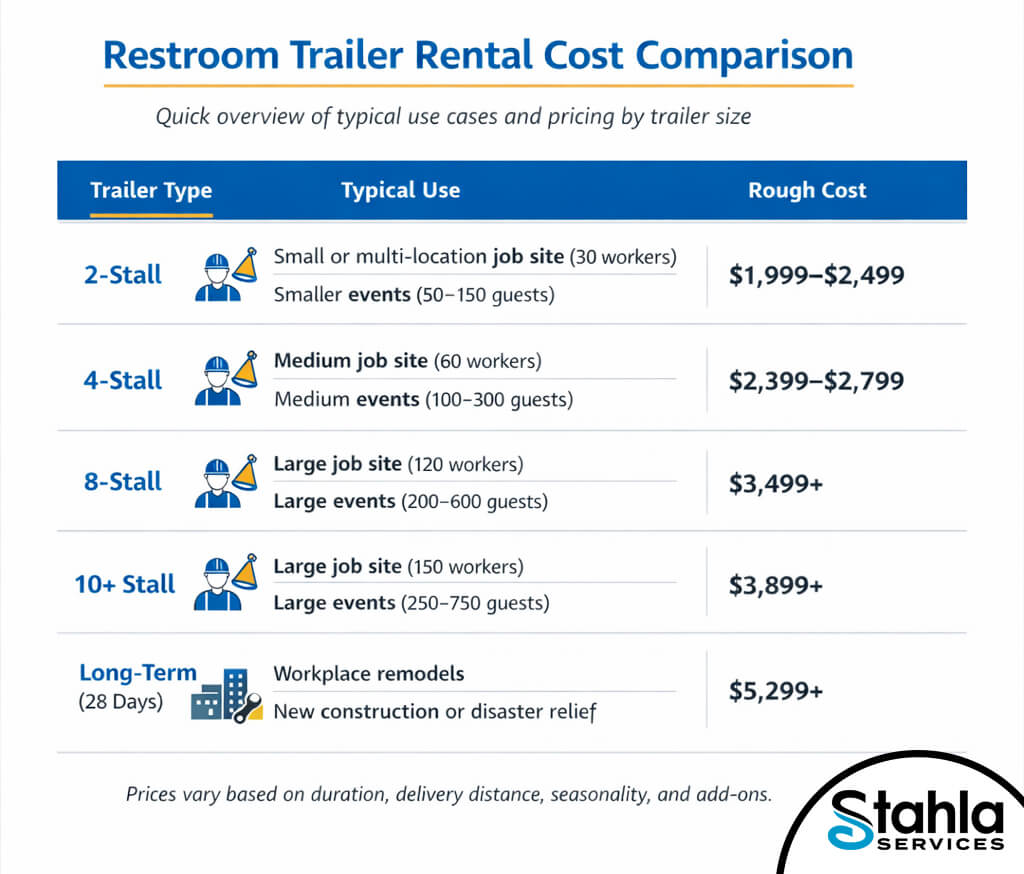
Luxury restroom trailers represent the premium tier of portable sanitation, offering experiences comparable to permanent indoor facilities. These climate-controlled units feature flushing toilets, running water sinks with mirrors, interior lighting, heating and air conditioning, premium finishes, and sometimes even sound systems. Rental costs for luxury trailers vary widely from $1,000 to $5,000+ for weekend events, depending on size and amenities.
Luxury trailers come in various configurations, from compact two-stall units to expansive trailers with separate men’s and women’s facilities containing multiple stalls and urinals. High-end models feature hardwood flooring, granite countertops, full-length mirrors, premium fixtures, and exterior entrance ramps. These trailers require level ground for setup, electrical hookups for lighting and climate control, and sometimes water and sewage connections for extended use.
The investment in luxury restroom trailers pays dividends for upscale events like weddings, galas, VIP corporate functions, and film productions where maintaining a sophisticated atmosphere throughout the venue is essential. Many event planners find that luxury restrooms significantly enhance guest satisfaction and can justify premium event ticket pricing. The professional appearance and comfort level of these units often becomes a talking point among attendees, contributing to the overall event experience.
How Much Does It Cost to Rent a Portable Toilet for Different Durations?
Rental duration significantly impacts your total costs. Understanding pricing structures for various timeframes helps you optimize your budget and avoid unnecessary expenses.
Daily and Weekend Event Rentals
Single-day events present unique rental considerations. Most companies price daily rentals at $150 to $300 per unit for standard toilets, which includes delivery, setup, one servicing (if needed), and removal. Weekend packages (Friday through Sunday) typically cost $200 to $400 per standard unit, offering better value than paying three separate daily rates.
Event rental pricing often includes specific services tailored to gatherings. Companies typically deliver units the day before your event and retrieve them the day after, ensuring availability throughout your timeframe. Servicing during the event is generally included for multi-day weekend events, maintaining hygiene standards for your guests. Some rental companies offer discounted rates for multiple units, with savings of 10-20% when renting five or more toilets for the same event.
Weekly Portable Toilet Rentals
Weekly rentals bridge the gap between event and long-term pricing. Standard units cost approximately $125 to $200 per week, making this option ideal for short-term construction projects, week-long festivals, or temporary worksite facilities. Weekly rates typically include one mid-week servicing to maintain cleanliness and functionality throughout the rental period.
This rental duration works well for projects with defined short timelines, such as residential renovations, outdoor workshops, or community events spanning several days. The per-day cost decreases substantially compared to daily rentals, offering better value for projects lasting more than a weekend but less than a month. Many companies require a minimum rental period, so even if you only need the unit for four or five days, you might pay the full weekly rate.
Monthly Construction Site Rentals
Monthly rentals represent the most cost-effective long-term solution for construction sites, remote work locations, and extended projects. Standard portable toilets rent for $75 to $175 per month, with pricing variations based on servicing frequency, location, and contract length. Construction companies often negotiate preferential rates for multi-month commitments or multiple simultaneous units.
Monthly rental agreements typically include weekly or bi-weekly servicing, ensuring consistent hygiene standards for workers. The servicing schedule can be adjusted based on usage volume, with high-traffic sites requiring more frequent attention. Some contractors opt for reduced servicing frequency to lower costs, though this approach requires careful monitoring to maintain acceptable sanitation levels.
Long-term rentals often include additional benefits such as priority service, dedicated account management, and flexible contract terms allowing for adding or removing units as project needs evolve. Construction firms managing multiple simultaneous projects may qualify for fleet pricing, reducing per-unit costs across all their rental agreements. The relationship between rental companies and repeat customers often yields better pricing and service reliability over time.
Seasonal and Extended Rentals
Seasonal rentals, typically spanning three to six months, offer reduced monthly rates for extended commitments. These arrangements work well for agricultural operations, seasonal tourism facilities, outdoor recreation areas, and long-term construction projects. Monthly costs for seasonal rentals can drop to $60 to $125 per unit when committing to multi-month contracts.
Extended rental agreements provide budget predictability and ensure consistent service throughout your project timeline. Many rental companies offer winter pricing adjustments in colder climates, where demand decreases and additional winterization services may be required. Winterized units include heated tanks, insulation, and antifreeze treatments to prevent freezing in sub-zero temperatures, sometimes adding $25 to $50 to monthly costs.
Factors That Affect How Much to Rent a Portable Toilet
Multiple variables influence your final rental costs beyond the base unit price. Understanding these factors helps you anticipate expenses and potentially identify cost-saving opportunities.
Geographic Location and Market Rates
Your location dramatically impacts rental pricing. Metropolitan areas with higher operating costs, labor expenses, and property values translate to increased rental rates. Comparative data shows that portable toilet rentals in San Francisco or Boston might cost 40-60% more than identical units in Des Moines or Tulsa. Market competition also affects pricing, with areas having multiple rental providers often offering more competitive rates than markets dominated by a single company.
Transportation costs constitute a significant portion of rental expenses, particularly for remote or rural locations. Rental companies calculate delivery fees based on distance from their nearest depot, with charges typically ranging from $0.50 to $2.00 per mile beyond a standard service radius. Sites located more than 50 miles from the depot may incur substantial additional charges, potentially adding hundreds of dollars to your total rental cost.
Servicing Frequency Requirements
Servicing frequency directly impacts your monthly costs. Standard construction site rentals typically include weekly servicing, while high-traffic events or locations may require twice-weekly or even daily servicing. Each additional servicing beyond the standard schedule typically costs $50 to $100, depending on your location and the number of units requiring service.
Servicing encompasses pumping waste tanks, refilling toilet paper and hand sanitizer, cleaning interior surfaces, and minor maintenance tasks. High-volume usage locations, such as major events or large construction sites with many workers, generate more waste and consume supplies faster, necessitating more frequent servicing. Some rental companies offer usage-based servicing where they monitor tank levels and service units as needed rather than on a fixed schedule, potentially optimizing costs for variable-usage situations.
Quantity Discounts and Multi-Unit Rentals
Renting multiple units for the same location often unlocks volume discounts. Many companies offer tiered pricing structures where the per-unit cost decreases as quantity increases. For example, renting five standard units might cost $125 each, while renting ten units could reduce the per-unit price to $100 or $95. These discounts reflect the efficiency of delivering and servicing multiple units at a single location.
Suggested read: Best Portable Toilet Bags: Top Picks for Camping, Travel & Emergencies
Event planners and construction managers should carefully calculate the appropriate number of units based on expected usage. Industry guidelines suggest one portable toilet per 50 people for events lasting up to four hours, with the ratio increasing for longer events or those serving alcohol. Construction sites typically provide one toilet per ten workers for the first 40 workers, then one additional unit per 20 workers beyond that threshold. Accurate unit quantity planning prevents both overspending on unnecessary units and creating unsanitary conditions from insufficient facilities.
Additional Features and Amenities
Optional features and upgrades add to base rental costs but enhance user experience and convenience. Common additions include:
Handwashing Stations: Standalone handwashing units with foot pumps cost $75 to $125 per month or $100 to $175 for weekend events. These units complement standard toilets that lack integrated sinks.
Interior Lighting: Solar-powered or battery-operated lighting systems add $15 to $30 per month or $25 to $50 for event rentals, essential for evening events or indoor construction sites with limited natural light.
Climate Control: Portable toilets with heating or air conditioning cost $50 to $100 more per month than standard units, providing comfort in extreme weather conditions.
Premium Supplies: Upgraded amenities like air fresheners, antimicrobial hand soap, premium toilet paper, and seat covers may add $10 to $25 per servicing visit.
Damage Waiver Insurance: Optional damage protection, similar to car rental insurance, costs approximately $10 to $20 per unit per month and covers repair costs from vandalism or accidental damage.
Delivery, Setup, and Removal Fees
While many companies advertise all-inclusive pricing, some separate delivery, setup, and removal charges from rental fees. Standard delivery and pickup fees range from $75 to $150 per load, regardless of unit quantity. This pricing structure benefits larger orders where a single delivery truck transports multiple units, distributing the delivery cost across all units.
Setup requirements vary by terrain and site conditions. Units placed on level, accessible ground incur no additional setup charges, while difficult placements may require extra time and equipment. Steep hills, areas requiring significant walking distances from the truck, or locations with access restrictions may incur additional labor charges of $50 to $100 or more. Luxury restroom trailers requiring electrical hookups, water connections, or special positioning often include higher setup fees due to complexity and time requirements.
Industry Pricing Benchmarks and Cost Comparison Tables
Understanding typical market rates helps you evaluate quotes and negotiate effectively. The following tables present current industry pricing benchmarks based on data from leading portable sanitation providers across the United States.
Standard Rental Pricing by Unit Type
| Unit Type | Daily/Event Rate | Weekend Rate | Weekly Rate | Monthly Rate |
|---|---|---|---|---|
| Standard Portable Toilet | $150-$250 | $200-$350 | $125-$200 | $75-$150 |
| Deluxe/Enhanced Unit | $200-$350 | $250-$450 | $175-$275 | $150-$250 |
| ADA-Compliant Unit | $175-$300 | $200-$400 | $150-$250 | $125-$200 |
| Handwashing Station | $75-$125 | $100-$175 | $75-$125 | $60-$100 |
| Luxury Restroom Trailer (2-stall) | $800-$1,500 | $1,000-$2,000 | N/A | $1,500-$3,000 |
| Luxury Restroom Trailer (4+ stall) | $1,500-$3,000 | $2,000-$4,000 | N/A | $3,000-$6,000 |
Regional Price Variations
| Region | Standard Monthly Rate | Deluxe Monthly Rate | Delivery Fee Range |
|---|---|---|---|
| Northeast (Urban) | $125-$175 | $225-$300 | $100-$175 |
| Northeast (Rural) | $90-$135 | $175-$240 | $75-$125 |
| Southeast | $80-$130 | $160-$225 | $65-$110 |
| Midwest | $75-$120 | $150-$210 | $60-$100 |
| Southwest | $85-$140 | $170-$240 | $70-$120 |
| West Coast (Urban) | $135-$200 | $250-$350 | $125-$200 |
| West Coast (Rural) | $95-$145 | $180-$250 | $80-$130 |
Servicing Cost Breakdown
| Service Type | Frequency | Cost per Service | Monthly Impact |
|---|---|---|---|
| Standard Servicing | Weekly | Included | $0 (base rate) |
| Bi-Weekly Servicing | Every 2 weeks | Included | -$15 to -$25 |
| Twice-Weekly Servicing | 2x per week | $40-$65 | +$160-$260 |
| Daily Servicing | Daily | $50-$85 | +$1,500-$2,550 |
| Emergency Service Call | As needed | $100-$175 | Variable |
How to Calculate Total Rental Costs
Accurately calculating your total portable toilet rental expenses requires considering all cost components beyond the base rental rate. This comprehensive approach prevents budget surprises and helps you make informed decisions.
Base Rental Cost Calculation
Start with the base rental rate for your chosen unit type and rental duration. For example, if you need three standard portable toilets for a construction project lasting four months:
Calculation: 3 units × $110 per month × 4 months = $1,320 base rental cost
This baseline establishes your primary expense but doesn’t account for additional fees and services that will affect your final bill. Always verify whether quoted rates are per unit or total for multiple units to avoid confusion during budgeting.
Adding Delivery and Service Fees
Include one-time delivery and pickup charges, typically combined into a single fee. Using the previous example with a delivery fee of $125:
Delivery/Pickup Fee: $125 (one-time charge)
Subtotal: $1,320 + $125 = $1,445
For long-term rentals, the delivery fee’s impact on per-month costs decreases over time. A $125 delivery fee spread across four months equals approximately $31 per month, while the same fee over twelve months drops to about $10 per month. This dynamic makes longer rental periods more economical from a per-day cost perspective.
Factoring in Extra Servicing
If your site requires additional servicing beyond the standard weekly schedule, calculate these recurring costs. Assuming one extra servicing per week at $60 per visit:
Extra Servicing: 4 weeks per month × 4 months × $60 = $960
New Subtotal: $1,445 + $960 = $2,405
High-traffic construction sites or events may require evaluation of servicing needs based on worker/attendee count and usage patterns. Monitoring initial usage helps you adjust servicing frequency if needed, potentially reducing costs while maintaining sanitary conditions.
Including Optional Features and Upgrades
Adding handwashing stations, lighting, or other amenities increases total costs. For one handwashing station at $80 per month:
Handwashing Station: 1 unit × $80 per month × 4 months = $320
Final Total: $2,405 + $320 = $2,725
Optional features should align with actual needs rather than perceived luxuries. Construction sites may legally require handwashing facilities in certain jurisdictions, making these “optional” features actually mandatory. Event planners should weigh guest comfort and event sophistication level against budget constraints when selecting upgrades.
Hidden Costs and Unexpected Fees
Several potential additional charges may affect your total cost:
Fuel Surcharges: Some companies apply fuel surcharges when diesel prices exceed certain thresholds, typically 2-8% of total charges during high fuel cost periods.
Environmental Fees: Waste disposal and environmental compliance fees range from $5 to $15 per unit per month in some jurisdictions.
After-Hours Delivery: Requesting delivery or pickup outside standard business hours may incur surcharges of $50 to $150.
Cleaning Fees: Units returned in excessively dirty or vandalized condition may incur cleaning fees of $100 to $300 or more.
Suggested read: Best Portable Potty for Kids: Top Picks, Tips & What to Buy in 2026
Contract Cancellation: Early termination of long-term rental agreements sometimes carries penalties, typically one month’s rental fee or 10-15% of remaining contract value.
Money-Saving Tips for Portable Toilet Rentals
Strategic planning and informed decision-making can significantly reduce your portable toilet rental costs without sacrificing quality or compliance.
Optimize Rental Duration
Aligning rental periods with actual project needs prevents paying for unused time. If your project completes early, contact your rental company immediately to schedule pickup and stop charges. Conversely, accurate timeline estimation from the outset prevents expensive emergency extensions. Many companies charge 15-25% premiums for rush extensions needed with less than 48 hours notice.
Consider whether your project truly requires daily availability or if intermittent access suffices. Some construction managers rent units only for active work periods, removing them during planned shutdowns or winter breaks to avoid paying for unused months. This approach requires careful coordination but can yield substantial savings on long-duration projects with known interruption periods.
Negotiate Multi-Unit and Long-Term Contracts
Rental companies offer better rates for larger commitments. When requesting quotes, ask specifically about volume discounts. Even if you initially need only a few units, committing to a longer-term contract or indicating potential expansion can unlock preferential pricing. Companies value relationship-building with customers likely to provide recurring business.
Don’t hesitate to negotiate, especially for substantial rentals or long-term projects. Rental companies often have flexibility in pricing, particularly during slower seasons or when competing for large contracts. Mentioning competitive quotes from other providers may motivate better offers, though maintaining professional relationships should take priority over aggressive haggling.
Choose Appropriate Service Frequency
Avoid over-servicing by accurately assessing usage levels. A construction site with fifteen workers might function well with weekly servicing, while requesting twice-weekly service wastes money. Conversely, insufficient servicing creates unsanitary conditions and may violate health regulations. Start with standard servicing and adjust based on actual experience rather than assumptions.
Some rental companies offer remote monitoring systems that track waste tank levels, enabling servicing only when needed rather than on rigid schedules. While this technology isn’t yet widespread, it represents an emerging cost-optimization opportunity worth inquiring about if available in your market.
Consider Off-Peak Rental Timing
Portable toilet demand varies seasonally and weekly. Summer months and weekends see peak demand for events, while winter and weekdays may offer reduced rates. If your project timing is flexible, scheduling during off-peak periods can yield 10-20% cost reductions. Similarly, booking well in advance for peak periods often provides better rates than last-minute arrangements.
Wedding season (May through October) drives premium pricing for luxury units and deluxe toilets. Couples planning off-season weddings might find significant savings on restroom rentals alongside reductions in other vendor costs. Construction projects scheduled during winter in moderate climates may benefit from lower rental rates, though additional winterization costs in harsh climates may offset these savings.
Provide Easy Access and Placement
Minimizing delivery and pickup complexity reduces labor costs that rental companies pass along to customers. Ensure your site offers level ground accessible to delivery trucks without obstacles requiring special equipment. Units placed close to vehicle access points require less manual handling than those requiring extensive walking or special positioning.
Consolidating multiple units in a single location rather than spreading them across a large site simplifies servicing logistics and may reduce servicing costs. While worker convenience matters, extreme dispersion of facilities increases the time servicing technicians spend on-site, potentially triggering higher charges or necessitating more servicing trips.
Bundle Services with Other Equipment
If your project requires additional rental equipment—fencing, generators, storage containers, or lightweight portable security systems—inquire about bundled pricing from full-service rental companies. Providers offering multiple equipment categories often discount bundles compared to renting each item separately. These relationships also simplify logistics by centralizing vendor management and potentially coordinating deliveries to reduce your administrative burden.
Legal Requirements and Compliance Considerations
Understanding regulatory requirements helps you avoid fines and ensures you rent appropriate quantities and types of portable toilets.
OSHA Requirements for Construction Sites
The Occupational Safety and Health Administration (OSHA) mandates specific portable toilet requirements for construction sites. According to OSHA Standard 1926.51, construction employers must provide toilet facilities that meet these criteria:
Quantity Requirements: One toilet seat and one urinal per 40 workers for the first 80 workers, then one additional toilet seat and one urinal per 50 workers beyond 80. For practical purposes, this typically translates to one portable toilet per 10-15 workers on most job sites.
Accessibility: Toilet facilities must not be more than a five-minute walk from any work area. Large construction sites may require strategically positioned units rather than a single centralized cluster to meet this requirement.
Sanitation Standards: Facilities must be kept in clean and sanitary condition, requiring regular servicing. OSHA doesn’t specify exact servicing frequency but mandates that waste receptacles must not overflow and facilities must remain functional and hygienic.
Violations of OSHA portable toilet requirements can result in significant fines ranging from $1,000 to $15,625 per violation depending on severity. Beyond financial penalties, inadequate facilities hurt worker morale, productivity, and potentially expose companies to worker complaints and lawsuits.
ADA Compliance for Public Events
The Americans with Disabilities Act requires accessible facilities at public events and gathering spaces. While specific requirements vary by event size, location, and nature, general guidelines include:
Ratio Requirements: At least 5% of total toilet facilities must be accessible, with a minimum of one accessible unit regardless of total facility count. Events expecting 200 attendees requiring ten standard units should include at least one ADA-compliant unit.
Placement Standards: Accessible units must be located on accessible routes connecting to other event facilities. Placing ADA units on steep slopes, soft ground unsuitable for wheelchairs, or distant from main event areas violates accessibility principles even if technically present on-site.
Signage: International Symbol of Accessibility signage must identify accessible units. Some jurisdictions require specific directional signage guiding attendees from parking areas to accessible facilities.
Event organizers failing to provide adequate accessible facilities face potential ADA complaints, civil lawsuits from attendees or advocacy groups, and reputational damage. Proactively exceeding minimum requirements demonstrates inclusive event planning and avoids legal complications.
Local Health Department Regulations
Municipal and county health departments often impose additional portable toilet requirements beyond federal standards. These local regulations vary considerably but commonly address:
Servicing Frequency Minimums: Some jurisdictions mandate minimum servicing frequencies, such as weekly servicing regardless of usage levels or twice-weekly servicing for high-traffic events.
Waste Disposal Requirements: Health departments regulate where and how waste is disposed, requiring licensed waste haulers and approved disposal facilities. Verify your rental company maintains proper licensing and compliance.
Special Event Permitting: Many localities require portable toilet provisions as part of special event permit applications. Permit approvals may depend on submitting acceptable sanitation plans detailing unit quantities, types, locations, and servicing schedules.
Rental companies operating in your area typically understand local requirements and can guide compliance. However, ultimate legal responsibility for regulatory compliance rests with the renter (you), so verify that your rental plans meet all applicable regulations.
Choosing the Right Portable Toilet Rental Company
Selecting a reliable rental provider ensures you receive quality units, dependable service, and fair pricing. Several factors distinguish excellent companies from mediocre ones.
Evaluating Company Reputation and Reviews
Research potential rental companies thoroughly before committing. Online reviews on Google, Yelp, and industry-specific platforms provide insights into customer experiences. Look for patterns in feedback rather than isolated complaints—every company occasionally disappoints someone, but systemic issues indicate problematic providers.
Suggested read: How to Rent Portable A/C Units: Smart Cooling Solutions for Any Space
Key reputation indicators include:
Service Reliability: Do reviews mention timely deliveries, consistent servicing, and prompt responses to service requests? Companies that frequently miss scheduled servicing or ignore customer communications create unacceptable sanitation conditions.
Equipment Quality: Customer feedback about unit cleanliness, functionality, and good repair indicates maintenance standards. Companies with aging, poorly maintained fleets save money on capital expenses but create poor experiences for renters.
Pricing Transparency: Reviews mentioning unexpected charges, hidden fees, or billing disputes suggest companies that quote attractive rates but add numerous extras to final invoices. Reputable providers offer clear, comprehensive quotes detailing all anticipated charges.
Problem Resolution: Occasional issues are inevitable, but how companies respond separates good from bad providers. Reviews praising responsive problem-solving and fair resolution of disputes indicate customer-focused operations.
Verifying Licenses and Insurance
Legitimate portable toilet rental companies maintain proper licensing and insurance coverage. Request verification of:
Business Licensing: Companies should hold valid local business licenses and any specialized permits required for waste hauling and disposal. Municipal or county clerk offices can verify licensing status if you question a company’s legitimacy.
Liability Insurance: Adequate general liability coverage protects you from responsibility if someone is injured using rented facilities or if units damage property during delivery or servicing. Request certificates of insurance (COI) showing minimum coverage of $1 million per occurrence.
Waste Hauler Permits: Waste hauling requires specialized permits ensuring proper disposal at approved treatment facilities. Unlicensed haulers may dump waste illegally, exposing you to environmental liability and regulatory penalties.
Workers Compensation: Companies should carry workers compensation insurance protecting their employees. While not directly affecting you, its presence indicates professional operations and protects you from potential liability if company workers are injured on your property.
Comparing Service Offerings
Not all rental companies offer identical services. Compare what’s included in base rates versus additional charges:
Servicing Frequency: Does the monthly rate include weekly servicing, or do you pay extra for each service visit? Companies with all-inclusive pricing may appear more expensive initially but prove more economical than those charging separately for servicing.
Service Area: Verify the company serves your location and check for distance-based delivery fees. Regional companies may offer better pricing for nearby sites, while larger national providers might have more extensive fleet options and potentially more competitive rates due to economies of scale.
Emergency Services: Does the company offer 24/7 emergency response for urgent issues like overflowing units or vandalism? Events and critical construction milestones may justify paying slightly more for companies guaranteeing rapid emergency response.
Equipment Variety: Larger rental companies typically maintain diverse inventories including standard units, ADA-compliant facilities, deluxe units, and luxury trailers. Smaller providers may specialize in specific unit types, offering expertise and potentially better pricing in their specialty areas but limited options for varied needs.
Getting Detailed Written Quotes
Always obtain written quotes before committing to rentals. Comprehensive quotes should specify:
- Exact unit types and quantities
- Rental duration and specific dates
- Base rental rates (per unit, per period)
- Delivery and pickup fees
- Included servicing frequency
- Costs for additional servicing if needed
- Any applicable taxes, environmental fees, or fuel surcharges
- Cancellation and modification policies
- Damage waiver options and terms
- Payment terms and methods accepted
Written quotes protect both parties by establishing clear expectations and preventing disputes about pricing or service inclusions. Companies reluctant to provide detailed written estimates may be hiding fees or maintaining pricing flexibility that benefits them at your expense.
Real-World Cost Examples and Case Studies
Examining specific scenarios helps illustrate how various factors combine to determine total portable toilet rental costs.
Case Study 1: Backyard Wedding Reception
Scenario: A couple planning a 150-person backyard wedding reception on a Saturday in suburban Ohio needed portable toilet facilities to supplement limited indoor bathrooms.
Solution: They rented two deluxe portable toilets with handwashing stations and one ADA-compliant unit for the event.
Cost Breakdown:
- 2 Deluxe units (weekend rental): 2 × $300 = $600
- 1 ADA-compliant unit (weekend rental): $275
- 1 Handwashing station (weekend rental): $125
- Delivery and pickup: $100
- Total Cost: $1,100
Outcome: The facilities accommodated all guests comfortably. The couple received numerous compliments about the cleanliness and quality of the restrooms. By choosing deluxe units over luxury trailers, they saved approximately $1,500-$2,000 while still providing elevated amenities appropriate for their upscale event.
Case Study 2: Three-Month Construction Project
Scenario: A commercial construction company breaking ground on a retail development in Phoenix, Arizona, required portable toilet facilities for crews averaging 25 workers over a three-month construction phase.
Solution: They rented three standard portable toilets with weekly servicing through a monthly contract.
Cost Breakdown:
- 3 Standard units: 3 × $115 per month × 3 months = $1,035
- Delivery and pickup: $125
- Total Cost: $1,160
- Average monthly cost: $387
Outcome: The weekly servicing maintained acceptable sanitation standards for the crew size. The company locked in a three-month rate rather than using rolling monthly agreements, securing a 12% discount off the regular monthly rate. They also established a relationship with the rental provider for future projects, qualifying for preferential pricing on subsequent rentals.
Case Study 3: Week-Long Music Festival
Scenario: Organizers of a week-long outdoor music festival in rural Oregon expected 5,000 daily attendees and needed extensive sanitation infrastructure.
Solution: They rented 100 standard portable toilets, 10 ADA-compliant units, 15 handwashing stations, and one luxury restroom trailer for VIP guests, with twice-daily servicing.
Cost Breakdown:
- 100 Standard units (week rental): 100 × $175 = $17,500
- 10 ADA units (week rental): 10 × $225 = $2,250
- 15 Handwashing stations (week rental): 15 × $100 = $1,500
- 1 Luxury trailer (week rental): $3,500
- Extra servicing (once-daily additional): 7 days × $850 = $5,950
- Delivery and setup: $1,500
- Total Cost: $32,200
- Cost per attendee per day: Approximately $0.92
Outcome: The extensive facilities prevented long wait times and maintained sanitary conditions throughout the festival. The twice-daily servicing proved essential given heavy usage. While the total cost appeared substantial, distributing it across the 35,000 total attendee-days resulted in minimal per-person impact. The investment in adequate facilities generated positive feedback and contributed to the festival’s reputation for good organization and attendee care.
Case Study 4: Remote Construction Site
Scenario: A civil engineering firm conducting environmental assessment work at a remote mountain site in Colorado needed portable toilet facilities for a six-month project with 8-12 rotating workers.
Suggested read: Best Portable Drafting Board: Top Picks for Students & Professionals in 2026
Solution: They rented two standard portable toilets with bi-weekly servicing due to low usage levels and remote location.
Cost Breakdown:
- 2 Standard units: 2 × $95 per month × 6 months = $1,140
- Reduced servicing frequency discount: -$180
- Remote delivery fee (75 miles): $275
- Winterization (2 units, 3 winter months): 2 × $40 × 3 = $240
- Total Cost: $1,475
- Average monthly cost: $246
Outcome: The remote location significantly impacted costs through delivery fees, though the six-month commitment helped offset this through better monthly rates. Bi-weekly servicing proved adequate for the small crew size, generating savings versus standard weekly servicing. Winterization became necessary when the project extended into November and December, adding unanticipated costs but preventing freezing damage and maintaining usability throughout winter months.
Common Questions About Portable Toilet Rental Costs
Understanding frequently asked questions helps address concerns and clarify important details about renting portable toilets.
How much does portable toilet rental cost per day?
Daily portable toilet rental costs vary by unit type and location. Standard units typically rent for $150 to $300 per day for events, including delivery, pickup, and basic servicing. This daily rate exceeds the prorated cost of longer rental periods because companies factor in the labor and logistics of delivery and removal for very short-term rentals. If you need facilities for multiple days, weekend or weekly rates offer substantially better value than consecutive daily rentals.
Is it cheaper to rent portable toilets monthly or weekly?
Monthly portable toilet rentals provide significantly better per-day value compared to weekly rentals. Weekly rates average $125-$200 for standard units, equating to approximately $18-$29 per day. Monthly rates of $75-$150 translate to roughly $2.50-$5.00 per day. For projects lasting more than two weeks, monthly rentals almost always prove more economical. Companies incentivize longer commitments through reduced pricing because they provide revenue stability and reduce administrative overhead associated with frequent delivery and pickup cycles.
What’s included in the portable toilet rental price?
Standard rental agreements typically include the unit itself, delivery and setup, scheduled servicing (usually weekly for monthly rentals or once for weekend events), toilet paper, hand sanitizer, and final pickup and removal. However, inclusions vary by company, so always verify specifically what your quoted price covers. Extra servicing, fuel surcharges, environmental fees, damage waivers, and additional amenities like lighting or climate control generally cost extra. Reading contracts carefully and asking questions prevents surprise charges when your final invoice arrives.
Do I need to pay a deposit for portable toilet rentals?
Deposit requirements vary by rental company and rental type. Many companies don’t require deposits for standard monthly construction site rentals, particularly when working with established commercial customers or those with strong credit. Event rentals, especially for luxury units or large quantities, more commonly require deposits of $100 to $500 or 20-30% of total rental cost. Deposits protect rental companies against cancellations and ensure committed customers. Reputable companies refund deposits promptly after successful rental completion and unit return, though some convert deposits to damage charges if units are returned in unacceptable condition.
Can I rent portable toilets just for one weekend?
Yes, weekend portable toilet rentals represent a common rental category. Most companies offer Friday-through-Sunday packages designed specifically for events. Weekend rates typically cost $200-$400 for standard units, $250-$450 for deluxe units, and $1,000-$2,000+ for luxury trailers. Companies usually deliver units Friday morning or afternoon and retrieve them Monday morning, providing full availability throughout your weekend event. Some companies offer flexible weekend definitions (Saturday-Sunday only, or Thursday-Sunday for extended events), so clarify timing when requesting quotes.
How many portable toilets do I need for my event?
The number of portable toilets required depends on attendee count, event duration, and alcohol service. General guidelines suggest:
- 1 toilet per 50 people for events lasting up to 4 hours
- 1 toilet per 40 people for 4-8 hour events
- 1 toilet per 30 people for events exceeding 8 hours or serving substantial alcohol
For example, a 200-person wedding reception lasting 6 hours should provide 5 portable toilets minimum (200 ÷ 40 = 5). Events with predominantly female attendees benefit from adding extra units, as women typically require 1.5-2 times longer per bathroom visit than men. Including at least one ADA-compliant unit ensures accessibility regardless of calculated totals. Most rental companies offer planning assistance and can recommend appropriate quantities based on your specific event details.
What happens if portable toilets need emergency servicing?
If units require unscheduled servicing due to heavy usage, vandalism, or mechanical issues, contact your rental company immediately to request emergency service. Most companies charge $100-$175 for emergency service calls, depending on timing and urgency. Companies offering 24/7 emergency response may charge premium rates for after-hours calls, particularly on weekends and holidays. Proactive monitoring during events helps identify problems before they become urgent—designating someone to check facilities periodically allows you to schedule servicing during regular business hours rather than paying emergency rates.
Are there extra charges for difficult terrain or access?
Yes, challenging site conditions can trigger additional charges. Units delivered to locations with steep grades, soft or unstable ground, significant walking distance from truck access, narrow gates or pathways, overhead obstacles preventing truck access, or other complications may incur extra fees of $50-$200+ depending on difficulty. When requesting quotes, accurately describe site conditions so companies can factor appropriate charges. Providing detailed photos of delivery and placement locations helps rental companies assess challenges and quote accurately. Some extremely difficult sites may require special equipment like all-terrain forklifts, substantially increasing delivery and pickup costs.
Frequently Asked Questions (FAQs) About How Much to Rent a Portable Toilet
What factors determine how much to rent a portable toilet?
Multiple factors influence rental costs, including unit type (standard, deluxe, ADA-compliant, luxury), rental duration (daily, weekly, monthly), geographic location and delivery distance, servicing frequency, quantity of units rented, seasonal demand, and additional amenities requested. Understanding these variables helps you anticipate costs and potentially identify savings opportunities through strategic choices aligned with your specific needs.
How much does it cost to rent a portable toilet for a construction site?
Construction site portable toilet rentals typically cost $75-$175 per month for standard units with weekly servicing. Actual costs vary by location, number of units, contract length, and servicing requirements. Long-term construction projects benefit from volume discounts and negotiated rates, potentially reducing per-unit monthly costs to $60-$125 for multi-month commitments. Don’t forget to factor in one-time delivery charges and any necessary additional features like handwashing stations or ADA-compliant units.
How much to rent a portable toilet for a wedding?
Wedding portable toilet rentals depend on guest count and desired amenity level. Basic calculations suggest one unit per 50 guests. A 150-person wedding might rent three units at costs ranging from $450-$900 total for standard units to $750-$1,350 for deluxe units with handwashing capabilities. Many couples choose luxury restroom trailers for upscale weddings, costing $1,000-$3,000+ for weekend rentals. The investment in quality facilities enhances guest comfort and overall event experience.
Are portable toilet rental prices negotiable?
Yes, particularly for larger rentals or long-term contracts, pricing often has flexibility. Companies compete for business and may adjust quotes when facing competition or during slower seasons. Respectfully asking about volume discounts, long-term contract rates, or price matching competitor quotes can yield savings of 10-25%. However, avoid aggressive negotiation that damages vendor relationships—fair, professional discussions about pricing produce better results and establish positive long-term partnerships.
How much does it cost to rent an ADA-compliant portable toilet?
ADA-compliant portable toilets typically cost $125-$225 per month or $200-$400 for weekend event rentals. These accessible units command slightly higher prices than standard toilets due to larger size, additional features like grab bars and wider doorways, and lower inventory availability at most rental companies. The incremental cost represents a small investment in ensuring all attendees or workers can access sanitation facilities, while protecting you from ADA compliance violations.
Does portable toilet rental price include servicing?
Most portable toilet rental agreements include regular servicing—typically weekly for monthly rentals or once for weekend event rentals. However, policies vary by company, so always verify what’s included in quoted prices. Some companies itemize servicing separately, while others bundle it into all-inclusive rates. Additional servicing beyond the standard schedule almost always costs extra, with fees ranging from $50-$100 per additional service visit depending on unit quantity and location.
How much more do luxury portable restroom trailers cost?
Luxury restroom trailers cost substantially more than standard portable toilets—typically $1,000-$5,000+ for weekend events compared to $200-$400 for standard units. Monthly rentals of luxury trailers range from $1,500-$6,000+ depending on size and amenities. The premium reflects upscale features including flushing toilets, running water, climate control, premium finishes, and interior lighting. Luxury trailers suit high-end events where restroom quality impacts overall guest experience and event perception.
What’s the cheapest way to rent portable toilets?
Minimizing portable toilet rental costs requires strategic planning. The most cost-effective approaches include renting during off-peak seasons when demand and prices drop, committing to longer rental periods to benefit from reduced monthly rates, renting multiple units from a single provider to access volume discounts, choosing standard units rather than premium options unless guest experience justifies the upgrade, accepting standard servicing frequency rather than requesting extra visits, providing easy site access to minimize delivery complications, and comparing quotes from multiple providers. However, never sacrifice essential safety, legal compliance, or adequate quantity to save money—insufficient or poorly maintained facilities create bigger problems than rental costs.
How far in advance should I book portable toilet rentals?
Booking timelines depend on your rental type and timing. For off-peak weekday construction site rentals, one to two weeks notice typically suffices. Peak season event rentals (summer weekends) should be booked 2-3 months in advance, particularly for luxury trailers or large quantities with limited availability. Last-minute rentals are sometimes possible but may incur rush fees and provide limited unit selection. Early booking secures your preferred units, locks in better pricing, and ensures rental company availability during your timeframe.
What payment methods do portable toilet rental companies accept?
Most portable toilet rental companies accept multiple payment methods including credit cards (Visa, Mastercard, American Express), business checks, electronic funds transfer (EFT), and cash. Commercial customers often qualify for invoicing with net-30 payment terms after establishing credit relationships. Event rentals more commonly require advance payment or deposits via credit card. Some companies offer payment plans for expensive long-term rentals or large event orders, spreading costs across multiple installments. Verify accepted payment methods and timing when booking to ensure you can meet the company’s requirements.
Making an Informed Decision About Portable Toilet Rentals
Understanding how much to rent a portable toilet empowers you to budget accurately and make informed choices that balance cost with quality, compliance, and user needs. The rental market offers solutions ranging from economical standard units at $75-$150 monthly to luxurious climate-controlled trailers exceeding $3,000 per weekend, ensuring appropriate options exist for virtually any budget and requirement.
Successful portable toilet rental planning considers multiple factors beyond base pricing. Evaluating total costs including delivery, servicing, additional features, and potential hidden charges prevents budget surprises. Understanding legal requirements ensures compliance with OSHA standards, ADA accessibility mandates, and local health regulations while avoiding costly violations. Choosing reputable rental companies with strong service records, proper licensing, and comprehensive insurance protects your interests and ensures reliable facility availability.
Whether managing a construction site, planning a wedding, organizing a festival, or addressing temporary sanitation needs, the information and strategies outlined in this guide position you to secure quality portable toilet rentals at fair prices. Take time to compare providers, negotiate when appropriate, and prioritize essential features while avoiding unnecessary luxuries that inflate costs without proportional benefits.
Remember that adequate, clean, well-maintained sanitation facilities directly impact worker productivity, event guest satisfaction, and overall project success. The modest investment in quality portable toilet rentals pays dividends through enhanced experiences, regulatory compliance, and the peace of mind that comes from properly addressing this essential logistical consideration.
Ready to secure portable toilet rentals for your project or event? Start by determining your specific needs, including unit quantity, type, and rental duration. Request detailed written quotes from at least three reputable local providers, comparing not just pricing but also service inclusions, company reputation, and contract terms. Don’t hesitate to ask questions about anything unclear—professional rental companies welcome inquiries and provide guidance to ensure you select optimal solutions.
For more information about how much to rent a portable toilet and current pricing in your area, contact local portable sanitation providers or visit resources from the Portable Sanitation Association International (PSAI) at https://psai.org for industry information and certified company directories. Investing time in research and planning now ensures you secure the right facilities at the right price, supporting successful project completion or memorable events without sanitation-related complications.
This article provides general information about portable toilet rental costs based on 2026 industry data. Actual pricing varies by location, provider, and specific circumstances. Always obtain written quotes from rental companies serving your area for accurate pricing applicable to your situation.