Whether you’re tackling rust on a steel beam, prepping a concrete floor, or stripping old paint off metal, a portable grit blaster is the powerhouse tool you need. Unlike fixed sandblasting rigs, portable units give you the freedom to work anywhere — on job sites, in workshops, outdoors, or in tight spaces. This article covers everything you need to know before buying one.
What Is a Portable Grit Blaster?
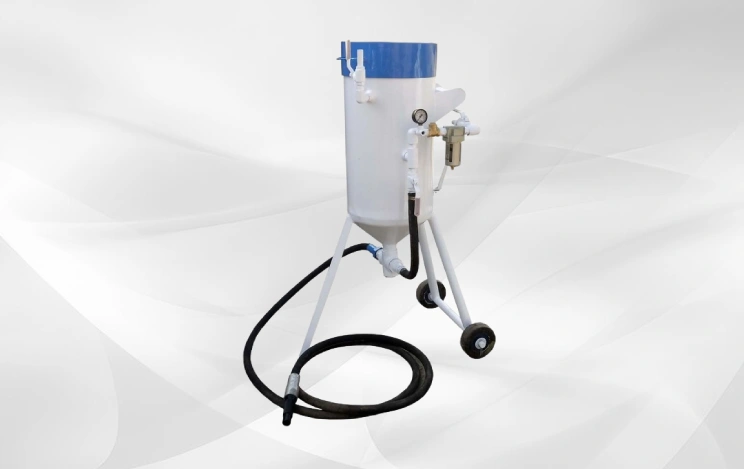
A portable grit blaster is a compact, mobile abrasive blasting machine that propels abrasive media — such as sand, steel grit, glass beads, or aluminum oxide — at high velocity onto a surface to clean, strip, or prepare it. These machines are powered by compressed air and are designed to be moved from one location to another with ease.
Key components of a portable grit blaster include:
- Blast pot (pressure vessel): Holds the abrasive media
- Air compressor connection: Provides pressurized airflow
- Blast hose and nozzle: Directs the abrasive stream
- Media metering valve: Controls the flow rate of grit
- Deadman safety switch: Stops blasting instantly when released
Portable grit blasters differ from consumer-grade sandblasters in their pressure capacity, media volume, and durability. They’re built for professional use, industrial cleaning, and heavy-duty surface preparation tasks.
Why You Need a Portable Grit Blaster on Your Job Site
Not every surface preparation job happens in a controlled facility. Portable grit blasters solve the problem of mobility. You bring the equipment to the surface — not the other way around.
Top Reasons Professionals Choose Portable Grit Blasters
| Reason | Benefit |
|---|---|
| Mobility | Work anywhere — indoors or outdoors |
| Speed | Strip surfaces up to 10x faster than hand tools |
| Versatility | Compatible with multiple abrasive media types |
| Cost Efficiency | Reduce labor hours significantly |
| Surface Quality | Achieve SA 2.5 or SA 3 cleanliness standards |
| Portability | Fits in vans, trucks, or trailers |
“Portable blasting units have revolutionized on-site surface preparation. What used to take days now takes hours.” — Surface Technology International Journal, 2022
These advantages make the portable grit blaster a must-have for contractors, fabricators, shipyards, bridge maintenance crews, and industrial painters.
How Does a Portable Grit Blaster Work?
Understanding the mechanics helps you choose the right unit and use it safely. The machine works on a pressurized pot system: abrasive media is loaded into the blast pot, which is then sealed and pressurized using compressed air. When the operator activates the deadman switch, the media-air mixture travels through the blast hose and exits through the nozzle at high velocity.
The basic working cycle:
- Load abrasive media into the blast pot
- Seal the pot and pressurize it (typically 80–125 PSI)
- Adjust the metering valve to control grit flow
- Activate the deadman switch to begin blasting
- Direct the nozzle at the target surface
- Release the switch to stop blasting instantly
The nozzle size directly affects productivity. Larger nozzles move more media per minute but require higher CFM (cubic feet per minute) from your air compressor. Most portable units use nozzles between ¼” and ½” in diameter.
Types of Portable Grit Blasters
Not all portable grit blasters are the same. They vary in size, pressure capacity, media capacity, and application. Here’s a breakdown of the main types available on the market.
1. Siphon (Suction) Blast Units
These are the most affordable and lightest portable options. They use a siphon action to pull abrasive media from a separate container into the air stream. Best for: light-duty cleaning, small metal parts, hobbyist use.
Pros:
- Inexpensive
- Easy to set up
- Lightweight and compact
Cons:
- Lower blasting pressure
- Slower than pressure pots
- Less efficient media usage
2. Pressure Pot Portable Grit Blasters
These are the industry standard for professional surface prep. The blast pot is pressurized, delivering significantly more power and productivity than siphon units. Best for: industrial rust removal, paint stripping, structural steel prep.
Pros:
- High-pressure output (up to 150 PSI)
- Large media capacity (1.5 cu ft – 6 cu ft)
- Works with virtually all abrasive media types
- Faster coverage area per hour
Cons:
- Heavier than siphon units
- Requires larger air compressor (185+ CFM)
- Higher initial investment
3. Wet Abrasive (Vapor) Blast Units
Wet abrasive blasters mix water with the abrasive media stream. This reduces dust by up to 92% compared to dry blasting, making them ideal for confined spaces and environmentally sensitive areas.
Best for: dust-controlled environments, near populated areas, marine applications.
4. Mini/Hobby Portable Grit Blasters
Compact desktop or handheld units designed for small-scale work — model restoration, jewelry cleaning, auto detailing. These typically run on small air compressors (under 30 CFM).
Choosing the Right Portable Grit Blaster: Key Factors to Consider
Buying a portable grit blaster is an investment. Making the wrong choice costs you time, money, and project quality. Here are the most critical factors to evaluate before purchasing.
① Air Compressor Requirements
This is the single most important factor. Every portable grit blaster has a minimum CFM (Cubic Feet per Minute) requirement. If your compressor can’t keep up, blasting performance drops dramatically.
| Nozzle Size | Minimum CFM Required | Ideal For |
|---|---|---|
| ¼” | 25 CFM | Light-duty, small areas |
| 5/16″ | 45 CFM | Medium tasks |
| 3/8″ | 81 CFM | Large surfaces |
| ½” | 150 CFM | Industrial/heavy-duty |
Always match your compressor output to your nozzle size — or you’ll waste money on a unit you can’t fully power.
② Blast Pot Capacity
Larger pots mean fewer refills and more continuous blasting time. Here’s what to expect:
- 1–2 cu ft pots: Hobbyist and light commercial use — refill every 20–40 minutes
- 3–4 cu ft pots: Mid-range commercial — ideal for most job sites
- 6+ cu ft pots: Heavy industrial — maximum productivity, minimal downtime
③ Compatible Abrasive Media
A quality portable grit blaster should work with multiple media types. The abrasive you choose depends on the surface material and the finish you need.
Popular abrasive media types:
- Steel grit – Fast cutting, recyclable, ideal for heavy rust
- Aluminum oxide – Hard, sharp, great for hard metals and stone
- Glass beads – Smooth finishes, non-ferrous metals
- Crushed glass – Eco-friendly, cost-effective
- Coal slag – Budget-friendly, one-time use
- Walnut shells – Soft blasting for delicate surfaces
- Sodium bicarbonate (baking soda) – Ultra-gentle, aviation and auto use
④ Build Quality and Materials
Look for blast pots manufactured from ASME-rated steel with proper pressure vessel certifications. Valves, fittings, and hoses should be heavy-duty and rated for the working pressure. Cheap plastic fittings fail under sustained use and create safety hazards.
⑤ Nozzle Material
Nozzles wear out — that’s a fact. Choose your nozzle material based on usage frequency:
| Nozzle Material | Lifespan | Best For |
|---|---|---|
| Ceramic | 20–40 hours | Light use, budget-conscious |
| Silicon carbide | 50–100 hours | Medium use |
| Boron carbide | 750–1,500 hours | Heavy industrial |
| Tungsten carbide | 500–800 hours | Versatile, most popular |
Boron carbide nozzles are the longest-lasting option and reduce long-term costs significantly despite their higher upfront price.
Top Portable Grit Blaster Applications
Surface Preparation for Industrial Coatings
Before any protective coating, primer, or industrial paint can bond properly, the surface must be clean and properly profiled. A portable grit blaster achieves a surface profile of 1–4 mils (25–100 microns), which dramatically improves coating adhesion. This is critical for pipelines, structural steel, bridges, and offshore platforms.
Rust and Corrosion Removal
Rust is the enemy of metal. Chemical rust removers take hours and leave residue. Portable grit blasting removes even heavy rust scale in minutes, exposing clean, bare metal ready for coating. Steel structures treated with abrasive blasting before coating last 3–5x longer than those coated over inadequately prepared surfaces.
Automotive Restoration
Restorers and body shops use portable grit blasters to strip paint, primer, and rust from vehicle bodies, frames, and engine components. Unlike chemical strippers, blasting doesn’t introduce moisture or chemicals into seams and crevices. Many restoration shops prefer glass bead blasting for a smooth, factory-like finish on aluminum and chrome parts.
Concrete Surface Preparation
Concrete floors must be profiled before epoxy coatings, overlays, or waterproofing membranes are applied. Portable grit blasters — especially those with vacuum recovery systems — prepare concrete surfaces efficiently without the mess of traditional shot blasters.
Marine and Shipyard Applications
Boats, barges, and ship hulls accumulate rust, barnacles, and old anti-fouling paint rapidly. Portable grit blasters allow shipyard workers to blast hull sections in place without removing components. Wet abrasive blasters are especially popular here because they reduce dust near water environments.
Bridge and Infrastructure Maintenance
Bridges are repainted on a rotating cycle, and surface prep is the most labor-intensive part. Portable abrasive blasting crews use trailer-mounted or skid-mounted portable grit blasters alongside containment systems to strip old coatings and re-prepare steel girders and decking.
Portable Grit Blaster Safety: What Every Operator Must Know
Operating a portable grit blaster involves high-pressure air, abrasive media, and significant dust generation. Safety is non-negotiable. Every operator must follow established protocols.
Essential Personal Protective Equipment (PPE)
- ✅ Supplied-air blast helmet (NIOSH-approved, Grade D air)
- ✅ Leather or canvas blast suit (protects from ricocheting media)
- ✅ Leather blast gloves (heavy-duty, gauntlet style)
- ✅ Steel-toed boots
- ✅ Hearing protection (105+ dB noise levels)
⚠️ WARNING: Never use a standard dust mask or respirator for dry abrasive blasting. Only a supplied-air blast hood with a filtered air source provides adequate respiratory protection.
Key Safety Practices
- Inspect all hoses and fittings before each use — look for cracks, wear, or loose connections
- Never point the nozzle at people — abrasive exits at up to 400 mph
- Use whip checks on all hose connections to prevent whipping if a coupling fails
- Verify deadman switch function before pressurizing the pot
- Ensure proper ventilation in enclosed spaces
- Follow OSHA 29 CFR 1910.94 regulations for abrasive blasting operations
Portable Grit Blaster Maintenance: Keep It Running Like New
Preventive maintenance extends equipment life and prevents costly downtime. A well-maintained unit can last 10–20 years in commercial service.
Daily Maintenance Checklist
| Task | Frequency |
|---|---|
| Inspect blast hose for wear | Before each use |
| Check nozzle for wear (measure bore diameter) | Daily |
| Drain moisture from compressor and pot | Daily |
| Inspect deadman switch function | Before each use |
| Check metering valve for blockages | As needed |
| Clean and dry blast pot interior | After each use |
Weekly Maintenance
- Lubricate all threaded fittings
- Inspect the pressure relief valve
- Check all gaskets and seals for cracking
- Test pressure gauge accuracy
When to Replace Your Nozzle
A worn nozzle costs you money. As the bore diameter increases from wear, you lose velocity and productivity — but your air consumption stays the same. Replace the nozzle when the bore diameter has increased by 1/16″ from its original size.
Portable Grit Blaster vs. Other Surface Prep Methods
How does a portable grit blaster compare to alternative surface preparation methods?
| Method | Speed | Surface Quality | Cost | Portability |
|---|---|---|---|---|
| Portable Grit Blaster | ⭐⭐⭐⭐⭐ | SA 2.5 – SA 3 | Medium-High | ✅ Excellent |
| Angle Grinder | ⭐⭐ | St 2 – St 3 | Low | ✅ Excellent |
| Needle Scaler | ⭐⭐ | St 2 | Low | ✅ Good |
| Chemical Stripping | ⭐⭐ | Variable | Medium | ⚠️ Limited |
| Hydroblasting | ⭐⭐⭐ | WJ 1 – WJ 3 | High | ⚠️ Limited |
| Wire Brushing | ⭐ | St 1 – St 2 | Low | ✅ Excellent |
For speed, surface profile quality, and professional results, the portable grit blaster consistently outperforms all other portable surface prep methods.
Case Study: Portable Grit Blaster in Bridge Rehabilitation
Project: Riverside Highway Bridge, Mid-Atlantic Region, USA Challenge: 1,200 linear feet of corroded steel girders requiring paint removal and recoating Solution: Two-crew team using portable pressure pot grit blasters (6 cu ft capacity, boron carbide nozzles)
Results:
- Surface prep time reduced by 47% compared to previous project using hand tools
- Achieved SSPC-SP 10 Near-White Metal blast standard
- Coating applied within 4 hours of blasting — no flash rust
- Total project cost savings: $38,000 in labor hours
- Coating system lasted 12 years before next maintenance cycle
This case study demonstrates the direct ROI of investing in a quality portable grit blaster for industrial surface prep projects.
How Much Does a Portable Grit Blaster Cost?
Pricing varies significantly based on capacity, brand, and features. Here’s a general market overview:
| Category | Price Range | Best For |
|---|---|---|
| Entry-level siphon units | $150 – $500 | Hobbyists, light DIY |
| Mid-range pressure pots (1–2 cu ft) | $600 – $1,500 | Small contractors |
| Professional pressure pots (4–6 cu ft) | $1,500 – $4,000 | Commercial contractors |
| Heavy industrial units | $4,000 – $15,000+ | Industrial, shipyard, infrastructure |
| Wet abrasive blasters | $2,000 – $12,000 | Specialty applications |
Additional costs to factor in:
- Abrasive media: $0.15 – $1.50 per lb depending on type
- Blast nozzles: $20 – $300 each
- Protective equipment (full kit): $300 – $800
- Blast hose (per 50 ft section): $80 – $250
- Air compressor rental/purchase: varies
Where to Buy a Portable Grit Blaster
You can purchase a portable grit blaster from the following channels:
- Industrial supply distributors (e.g., Grainger, MSC Industrial)
- Specialty blasting equipment suppliers
- Online marketplaces (Amazon, eBay for entry-level)
- Direct from manufacturers (Clemco, Airblast, Graco, Kennametal)
- Equipment rental companies (for project-based needs)
When buying online, always verify that the unit includes a pressure vessel certification, safety documentation, and at minimum a 1-year warranty on the pot.
Best Brands of Portable Grit Blasters
Clemco Industries
Clemco is one of the most trusted names in abrasive blasting. Their portable pressure pots are ASME-certified, built from heavy-gauge steel, and backed by decades of engineering expertise. The Clemco Classic Blast Machine series is a top seller for commercial contractors.
Graco
Graco offers a range of portable abrasive blasters including their popular Graco Contractor PC line. Known for reliability and ease of use, Graco units are widely used in automotive, marine, and light industrial applications.
Airblast
Airblast manufactures a comprehensive range of portable blasting equipment including pressure pots, wet blasters, and recovery systems. Their units are widely used in European and Asian industrial markets.
Kennametal
Known primarily for cutting tools, Kennametal also produces high-performance blast nozzles — particularly boron carbide nozzles — that significantly extend productivity between nozzle changes.
Environmental Considerations When Using a Portable Grit Blaster
Abrasive blasting generates significant waste. Responsible operators must plan for containment, collection, and disposal of spent media and loosened surface contaminants.
Environmental best practices:
- Use containment tarps and shrouding to capture spent media and debris
- Separate recyclable media (steel grit, aluminum oxide) from non-recyclable
- Dispose of lead-containing paint debris according to EPA regulations (40 CFR Part 745)
- In sensitive areas, use wet abrasive blasting to suppress dust
- Obtain necessary environmental permits before blasting near waterways
Note: Some abrasive media — particularly silica sand — is subject to strict OSHA silica exposure regulations (29 CFR 1926.1153). Many contractors now opt for silica-free media such as crushed glass, steel grit, or aluminum oxide to eliminate this liability.
Also, if your job site requires portable sanitation solutions, check out our portable hand wash station options — perfect for keeping crews clean and compliant on any work site.
Ready to Buy a Portable Grit Blaster? Here’s Your Action Plan
If you’re ready to invest in a portable grit blaster, follow this step-by-step purchasing checklist:
- [ ] Identify your application — what surfaces, what contaminants, what finish standard?
- [ ] Calculate required CFM based on your target nozzle size
- [ ] Choose your media type based on surface material and desired profile
- [ ] Select pot capacity based on your typical job size
- [ ] Budget for PPE — don’t skip safety equipment
- [ ] Plan for abrasive media supply — know your supplier before you start
- [ ] Consider wet blasting if dust is a concern
- [ ] Compare warranties and certifications from multiple suppliers
👉 Shop Portable Grit Blasters Now and get the right unit delivered to your door.
Frequently Asked Questions About Portable Grit Blasters
What is a portable grit blaster used for?
A portable grit blaster is used for abrasive blasting tasks including rust removal, paint stripping, concrete surface preparation, and achieving specific surface cleanliness standards (such as SSPC-SP 6, SP 10, or SP 5) before applying protective coatings.
How much air pressure does a portable grit blaster need?
Most portable grit blasters operate between 80 and 125 PSI. The air compressor must also deliver sufficient CFM — typically 100 to 185+ CFM for professional-grade units. Always match your compressor to your nozzle size.
What abrasive media can I use in a portable grit blaster?
You can use steel grit, aluminum oxide, glass beads, crushed glass, coal slag, walnut shells, garnet, and sodium bicarbonate, depending on your application. Avoid using silica sand due to OSHA silica exposure regulations unless proper controls are in place.
Is it safe to operate a portable grit blaster?
Yes — when proper PPE is worn and OSHA guidelines are followed. A supplied-air blast helmet, blast suit, gloves, and hearing protection are mandatory. Never operate a grit blaster without a functioning deadman safety switch.
How long does it take to blast a surface with a portable grit blaster?
Blasting speed depends on nozzle size, pressure, media type, and surface condition. A professional operator using a ⅜” nozzle at 100 PSI can typically clean 40–60 square feet per hour of heavily rusted steel to near-white metal standard.
Can I rent a portable grit blaster instead of buying?
Yes. Many equipment rental companies offer portable grit blasters by the day or week. Rental makes sense for one-time projects. For regular use, ownership typically becomes cost-effective after 5–10 rental cycles.
What is the difference between a grit blaster and a sandblaster?
The terms are often used interchangeably. Sandblasting specifically refers to using silica sand as the abrasive. Grit blasting is a broader term covering all abrasive media types. Modern industry favors “grit blasting” because silica sand use is now heavily regulated due to silicosis risk.
How do I maintain my portable grit blaster?
Drain moisture daily, inspect hoses and nozzles before each use, replace worn nozzles promptly, lubricate fittings weekly, and store the unit dry and covered when not in use. Follow the manufacturer’s maintenance schedule for pressure valve and gasket replacement.
Citation
Portable grit blaster technology and abrasive blasting standards referenced in this article are consistent with guidelines published by the Society for Protective Coatings (SSPC), the NACE International Institute (now AMPP), and OSHA Standard 29 CFR 1910.94 – Abrasive Blasting. For further technical reading, visit AMPP.org and SSPC.org.
For a wide selection of portable equipment for your job site — from blasting equipment to sanitation — visit ThePortableShop.com and explore our full range of portable solutions built for professionals.