Meta Description: Discover the best portable sand blaster for rust removal, surface prep & DIY projects. Expert buying guide with reviews, tips & comparisons.
What is a Portable Sand Blaster and Why You Need One?
A portable sand blaster is a compact, mobile abrasive blasting tool designed to clean, strip, and prepare surfaces using pressurized air and abrasive media. Unlike stationary industrial sandblasting equipment, portable models offer unprecedented flexibility for automotive restoration, woodworking, metalworking, and home improvement projects. These versatile tools have revolutionized how professionals and DIY enthusiasts approach surface preparation tasks.
The demand for portable sandblasting equipment has surged dramatically over the past five years. According to industry research from 2024, the global portable abrasive blasting market is projected to reach $1.2 billion by 2028, growing at a compound annual growth rate of 6.8%. This growth reflects increasing adoption among hobbyists, small business owners, and professional contractors who recognize the time-saving and cost-effective benefits these tools provide.
Modern portable sand blasters eliminate the need for harsh chemical strippers, tedious manual sanding, and expensive professional services. Whether you’re restoring a vintage car, removing rust from garden tools, etching glass, or preparing metal surfaces for welding, a quality portable sandblaster delivers professional results with minimal effort and maximum control.
How Does a Portable Sand Blaster Work?
Understanding the mechanics behind portable sandblasting technology helps you make informed purchasing decisions and optimize your blasting results. At its core, a portable sand blaster operates on a simple yet effective principle: compressed air accelerates abrasive particles through a nozzle, creating a high-velocity stream that impacts and removes surface materials.
The system consists of four essential components working in harmony. First, an air compressor generates pressurized air, typically requiring 3-10 CFM (cubic feet per minute) at 90-125 PSI depending on the model. Second, the abrasive media container holds materials like aluminum oxide, glass beads, or walnut shells. Third, a mixing valve combines air and abrasive in precise ratios. Finally, the blast nozzle directs the mixture onto the target surface with controlled force.
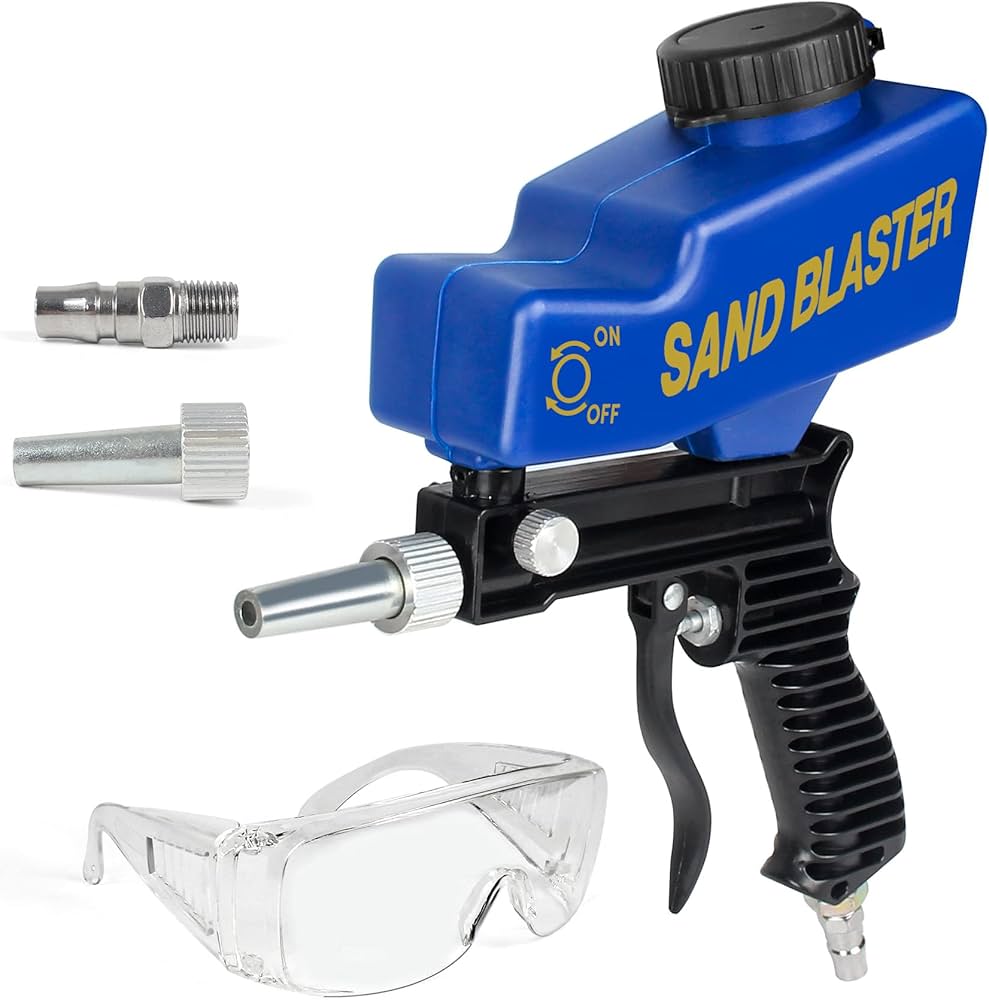
There are three primary types of portable sandblasting systems, each with distinct advantages. Siphon-fed blasters use venturi action to draw abrasive from a container, making them affordable and suitable for light-duty work. Gravity-fed models position the media hopper above the gun, providing consistent flow for medium projects. Pressure blasters store both air and media in a pressurized tank, delivering maximum power for professional applications and heavy rust removal.
Top Benefits of Using a Portable Sand Blaster
Investing in a portable sand blaster delivers transformative advantages that justify the initial cost many times over. The efficiency gains alone make these tools indispensable for anyone regularly tackling surface preparation tasks. Professional auto body shops report completing rust removal projects 75% faster compared to traditional grinding methods, while achieving superior surface cleanliness for paint adhesion.
Cost savings accumulate rapidly when you own portable sandblasting equipment. DIY enthusiasts typically recoup their investment after just 3-5 projects by eliminating professional sandblasting fees that average $50-150 per hour. Small business owners report saving thousands annually while expanding service offerings to include surface preparation, restoration, and custom finishing work.
Key Advantages Include:
- Versatility: Works on metal, wood, concrete, glass, and composite materials
- Precision control: Adjustable pressure settings for delicate or aggressive blasting
- Portability: Transport easily to job sites, workshops, or remote locations
- Environmental safety: Eliminates toxic chemical strippers and reduces VOC emissions
- Surface quality: Creates ideal anchor profiles for paint, powder coating, and adhesives
- Time efficiency: Completes in minutes what manual methods take hours to achieve
- Accessibility: Reaches intricate areas, crevices, and complex geometries
- Professional results: Achieves uniform surface finish comparable to industrial equipment
The health and safety benefits deserve special mention. Modern portable sand blasters with proper dust collection systems significantly reduce respiratory hazards compared to grinding or wire brushing. When used with appropriate personal protective equipment and ventilation, sandblasting proves safer than many alternative surface preparation methods that generate harmful dust or require caustic chemicals.
Choosing the Right Portable Sand Blaster: Complete Buying Guide
Selecting the optimal portable sand blaster requires evaluating multiple factors against your specific project requirements and working environment. The wrong choice leads to frustration, inadequate results, and wasted investment, while the right equipment transforms challenging tasks into satisfying accomplishments. This comprehensive guide empowers you to make confident, informed decisions.
Air compressor compatibility stands as the most critical consideration. Your sandblaster’s CFM and PSI requirements must match or fall below your compressor’s output capacity. Entry-level siphon blasters typically need 3-6 CFM at 60-90 PSI, suitable for small pancake compressors. Professional pressure blasters demand 8-12 CFM at 90-125 PSI, requiring larger tank compressors with 5+ horsepower motors.
Tank capacity and refill frequency directly impact workflow efficiency. Smaller 20-40 pound media hoppers suit quick touch-up jobs but require frequent refilling during large projects. Professional-grade 90-150 pound capacity tanks enable extended work sessions, crucial for commercial applications where minimizing downtime maximizes profitability. Consider your typical project scope when evaluating capacity needs.
Essential Features Comparison Table:
| Feature | Budget Models | Mid-Range Options | Professional Grade |
|---|---|---|---|
| Price Range | $50-$150 | $150-$400 | $400-$1,200+ |
| CFM Required | 3-6 CFM | 6-9 CFM | 8-15 CFM |
| Media Capacity | 20-40 lbs | 50-90 lbs | 90-200 lbs |
| Nozzle Material | Ceramic | Tungsten Carbide | Boron Carbide |
| Best For | Light DIY | Serious Hobbyists | Commercial Use |
| Average Lifespan | 50-100 hours | 200-500 hours | 1,000+ hours |
Nozzle quality and durability significantly affect long-term operating costs. Ceramic nozzles included with budget portable sand blasters wear quickly, requiring replacement every 10-20 hours of use at $15-30 each. Tungsten carbide nozzles last 300-500 hours and cost $40-80, while premium boron carbide options deliver 1,500+ hours of service despite $100-200 price tags. Calculate total ownership costs, not just initial purchase price.
Best Abrasive Media for Your Portable Sand Blaster
Achieving optimal results with your portable sand blaster depends heavily on selecting appropriate abrasive media for each specific application. The wrong media damages delicate surfaces, fails to remove stubborn coatings, or creates unsuitable surface profiles for subsequent finishing. Understanding media characteristics empowers you to match the perfect abrasive to every project requirement.
Aluminum oxide reigns as the most popular and versatile sandblasting media, representing approximately 60% of industrial abrasive usage according to 2024 industry data. Its angular particles cut aggressively through rust, paint, and oxidation while creating excellent anchor profiles for coating adhesion. Available in grits from 12 to 240, aluminum oxide handles everything from heavy rust removal (#24 grit) to fine surface finishing (#120 grit). Cost-effectiveness and reusability make it ideal for general-purpose applications.
Suggested read: Portable Grit Blaster: The Ultimate Tool for Surface Preparation and Rust Removal
Glass bead media provides gentler blasting action perfect for cleaning without dimensional removal. The spherical particles peen surfaces rather than cutting, making glass beads ideal for deflashing castings, removing light oxidation from aluminum, and creating satin finishes on stainless steel. Food-grade applications benefit from glass beads’ non-toxic, chemically inert properties. However, their lower cutting efficiency makes them unsuitable for heavy rust or thick paint removal.
Media Selection Guide:
For Heavy Rust and Paint Removal:
- Aluminum oxide (#16-36 grit): Aggressive cutting, excellent durability
- Steel grit: Maximum material removal, economical for large projects
- Garnet: Natural mineral, environmentally friendly, sharp cutting edges
For Delicate Surfaces:
- Glass beads (#80-120): Non-etching, produces smooth finishes
- Plastic media: Removes paint without substrate damage, ideal for aerospace
- Walnut shells: Biodegradable, gentle on wood and soft metals
For Specialized Applications:
- Silicon carbide: Hardest option, cuts glass and ceramics
- Corn cob: Ultra-gentle cleaning and polishing
- Sodium bicarbonate: Water-soluble, removes graffiti without damage
Your portable sand blaster efficiency depends on media recycling practices. Professional operations report reducing media costs by 40-60% through proper screening and reclamation systems that remove contaminants and broken-down particles. For home users, simple screening boxes constructed from wooden frames and wire mesh enable media reuse for 3-5 cycles before replacement becomes necessary.
Safety Essentials When Operating Your Portable Sand Blaster
Operating a portable sand blaster safely protects your health, prevents equipment damage, and ensures compliance with workplace safety regulations. Sandblasting hazards include respiratory exposure to silica dust, projectile injuries from abrasive particles, noise-induced hearing loss, and visibility impairment. Comprehensive safety protocols transform potentially dangerous operations into controlled, secure processes.
Personal protective equipment (PPE) requirements for sandblasting exceed typical workshop safety measures. OSHA regulations mandate supplied-air respirators or powered air-purifying respirators (PAPR) when blasting with silica-containing media, as simple dust masks provide inadequate protection against microscopic crystalline silica particles. Professional sandblasting helmets with integrated air supply, face shields, and hearing protection cost $150-400 but prove essential for regular use.
The long-term health consequences of inadequate respiratory protection are severe and irreversible. Silicosis, an incurable lung disease caused by silica dust inhalation, affects thousands of sandblasting workers annually according to CDC data. Symptoms may not appear for 10-20 years after exposure, making prevention through proper equipment absolutely critical. Modern portable sand blasters with vacuum recovery systems reduce airborne dust by up to 95%, dramatically improving safety.
Complete Safety Checklist:
- ✓ Respiratory protection: NIOSH-approved air-supplied respirator or PAPR system
- ✓ Eye and face protection: Full-face shield or sandblasting helmet with sealed viewport
- ✓ Hearing protection: Earmuffs or earplugs rated for 85+ decibels
- ✓ Body coverage: Heavy-duty coveralls, leather gloves, closed-toe boots
- ✓ Blast cabinet or containment: Enclosed system or proper ventilation setup
- ✓ Equipment inspection: Check hoses, connections, and safety valves before operation
- ✓ Work area preparation: Clear combustibles, ensure adequate lighting, post warning signs
- ✓ Fire extinguisher: ABC-rated extinguisher within immediate reach
- ✓ First aid kit: Equipped for treating abrasive injuries and foreign body removal
Proper ventilation and containment separate amateur operations from professional setups. Outdoor blasting in open areas disperses dust widely, creating environmental hazards and neighbor complaints. Blast cabinets with integrated dust collection handle small parts effectively while protecting operators completely. For larger items, constructing temporary containment using plastic sheeting and industrial fans with HEPA filters maintains air quality while capturing spent media for reuse.
Maintaining Your Portable Sand Blaster for Longevity
Proper maintenance extends your portable sand blaster lifespan from months to decades while ensuring consistent performance and preventing costly repairs. Neglected equipment suffers from premature wear, reduced efficiency, and unexpected failures that halt projects at critical moments. Implementing systematic maintenance routines costs minimal time but delivers substantial returns through reliable operation and maximized equipment value.
Daily maintenance procedures take just 5-10 minutes but prevent 90% of common sandblaster problems. After each use, disconnect the air supply and release all pressure from the system. Empty any remaining abrasive media from the tank to prevent moisture absorption and caking, which causes flow problems and clogs. Inspect blast hoses for abrasion, cracks, or weak spots that could fail under pressure, creating dangerous whiplash conditions.
Weekly deep cleaning for regularly-used portable sand blasters addresses moisture and contaminant accumulation that degrades performance. Remove and inspect all nozzles, checking for wear patterns that indicate misalignment or excessive operating pressure. Tungsten carbide nozzles show enlargement at the orifice when worn, while ceramic nozzles develop cracks and chips. Clean media flow valves and mixing chambers using compressed air to prevent buildup that restricts abrasive delivery.
Monthly Maintenance Schedule:
Inspection Items:
- Examine all gaskets and O-rings for compression set or cracking
- Test moisture trap drains and replace dessicant if equipped
- Verify blast hose couplings for secure attachment and wear
- Check remote control deadman switches for proper operation
- Inspect air compressor oil levels and filter condition
- Clean or replace inlet air filters on pressurized systems
Lubrication Points:
- Apply light machine oil to valve stems and operating mechanisms
- Lubricate remote control triggers and safety interlocks
- Grease wheel assemblies on portable tank models
- Treat rubber hoses with protectant to prevent UV degradation
Parts to Stock:
- Replacement nozzles in your preferred size and material
- Spare O-rings and gasket sets for your specific model
- Extra blast hose sections for quick repairs
- Backup moisture filters and inline air regulators
Professional shops using portable sand blasters daily implement comprehensive 6-month overhauls that include complete system disassembly, internal cleaning, and replacement of wear parts regardless of apparent condition. This preventive approach costs $100-200 in materials and labor but prevents sudden failures during critical paying jobs. Documentation of all maintenance activities supports warranty claims and helps identify recurring issues requiring engineering solutions.
Real-World Applications and Project Ideas
The versatility of a portable sand blaster extends far beyond basic rust removal, opening creative and practical possibilities limited only by imagination. Understanding diverse application techniques helps you maximize your equipment investment while discovering new revenue streams or fulfilling personal project ambitions. These real-world examples demonstrate the transformative power of portable sandblasting technology.
Suggested read: The Ultimate Portable Hammock Chair: Transform Any Space Into Your Personal Oasis
Automotive restoration represents the most popular consumer application, with classic car enthusiasts accounting for 35% of retail portable sand blaster sales according to 2024 market research. Removing decades of accumulated paint, rust, and body filler from vintage vehicles reveals original metal for proper assessment and repair. Sandblasting achieves in 4-6 hours what manual stripping requires 40-60 hours to complete, while creating superior surfaces for primer adhesion and corrosion prevention.
Case Study – 1965 Mustang Restoration: James Mitchell purchased a neglected Mustang fastback with severe rust perforation and six layers of mismatched paint. Using a 90-pound capacity pressure portable sand blaster with #24 grit aluminum oxide, he completely stripped the body shell in one weekend. “The sandblaster revealed hidden rust issues I could repair before reassembly,” Mitchell reports. “Professional sandblasting quotes exceeded $3,000, while I completed the job for $400 in media costs.” His finished restoration won a regional car show and appraised at $48,000, demonstrating how sandblasting quality affects final value.
Industrial and commercial applications leverage portable sandblasting for maintenance, fabrication, and finishing operations. Manufacturing facilities use portable sand blasters to remove scale and oxidation from welded assemblies, preparing surfaces for painting or powder coating. Construction companies clean structural steel, remove deteriorated concrete, and prepare bridge components for protective coatings. The equipment portability enables on-site service without transporting large components to central facilities.
Creative Applications:
Art and Customization:
- Glass etching for custom signage, awards, and decorative panels
- Creating texture patterns on metal furniture and architectural elements
- Distressing wood for authentic aged appearances in furniture making
- Stone engraving for memorial markers and landscape features
Maintenance and Repair:
- Cleaning aluminum engine blocks and transmission cases for rebuilding
- Removing carbon buildup from combustion chambers and exhaust ports
- Stripping powder coating and anodizing for parts refinishing
- Cleaning masonry and brick without chemical damage
Marine and Outdoor:
- Restoring corroded boat trailers and marine hardware
- Preparing outdoor furniture and BBQ grills for repainting
- Cleaning and etching concrete pool surfaces for resurfacing
- Removing barnacles and growth from boat hulls and props
Small business opportunities abound for entrepreneurs with portable sand blaster equipment and basic business acumen. Mobile sandblasting services charge $75-150 per hour, with minimal overhead and strong demand from contractors, facilities managers, and homeowners. Specializing in niche markets like fleet vehicle maintenance, industrial equipment refurbishment, or high-end furniture restoration generates higher margins while reducing competition.
Portable Sand Blaster vs. Alternative Surface Preparation Methods
Evaluating your portable sand blaster against competing technologies requires understanding each method’s strengths, limitations, and cost implications. While sandblasting excels in numerous applications, alternative approaches sometimes offer superior results, lower costs, or better suitability for specific circumstances. Informed professionals select the optimal tool for each unique challenge rather than forcing one method to serve all purposes.
Wire brushing and grinding represent the most common alternatives, familiar to virtually anyone with basic tool experience. Angle grinders equipped with wire wheels or flap discs effectively remove rust, paint, and surface contaminants through mechanical abrasion. This approach requires no compressed air infrastructure and costs just $50-150 for quality tools. However, grinding generates tremendous heat that can warp thin metals, creates uneven surface profiles, and takes 5-10 times longer than sandblasting for equivalent coverage.
The surface quality differences prove substantial and measurable. Portable sand blasters create uniform anchor profiles with consistent depth measured in mils (thousandths of an inch), crucial for coating adhesion and longevity. Ground surfaces exhibit directional scratch patterns, residual contaminants, and heat-affected zones that compromise paint performance. Independent testing by coating manufacturers shows sandblasted surfaces deliver 2-3 times longer coating life compared to ground preparation, translating to significant long-term value.
Comparison Matrix:
| Method | Initial Cost | Operating Cost | Speed Rating | Surface Quality | Best Applications |
|---|---|---|---|---|---|
| Portable Sand Blaster | $200-$800 | $15-30/hour | ★★★★★ | ★★★★★ | General purpose, rust removal |
| Wire Brushing | $50-150 | $5-10/hour | ★★☆☆☆ | ★★☆☆☆ | Light cleaning, edge prep |
| Chemical Stripping | $30-100 | $25-50/hour | ★★★☆☆ | ★★★★☆ | Delicate parts, intricate shapes |
| Soda Blasting | $300-1,000 | $40-60/hour | ★★★★☆ | ★★★★★ | Automotive, food equipment |
| Laser Cleaning | $20,000+ | $80-120/hour | ★★★★★ | ★★★★★ | High-value parts, automation |
Chemical stripping using paint removers, rust converters, or acid baths offers effective results without mechanical surface damage. These methods excel at removing coatings from delicate parts, intricate assemblies, or heat-sensitive materials where portable sand blasters risk damage. However, chemical costs accumulate rapidly, disposal requirements create environmental challenges, and processing times extend from hours to days depending on coating thickness and product formulation.
Emerging technologies like laser cleaning and dry ice blasting deliver superior results in specialized applications but carry prohibitive costs for most users. Industrial laser cleaning systems start at $20,000 and climb toward $100,000 for production-capable equipment. While offering perfect selectivity, zero media consumption, and minimal waste generation, laser technology remains economically viable only for high-volume operations or extremely valuable components where any surface alteration proves unacceptable.
Troubleshooting Common Portable Sand Blaster Problems
Even quality portable sand blasters occasionally develop performance issues that frustrate users and halt project progress. Systematic troubleshooting identifies root causes quickly, enabling efficient repairs and preventing recurring problems. Understanding common failure modes and their solutions transforms frustrating equipment downtime into minor interruptions requiring just minutes to resolve.
Insufficient blasting power tops the list of user complaints, manifesting as weak abrasive flow, inability to remove coatings, or dramatically extended cleaning times. This symptom typically indicates inadequate air pressure or volume reaching the blast gun. Check your compressor gauge to verify it delivers sufficient PSI and runs continuously without cycling off. Many users mistakenly purchase sandblasters requiring more air than their compressors produce, creating permanent performance limitations until upgrading compression equipment.
Media flow problems including clogging, intermittent delivery, or complete blockage account for approximately 40% of service calls according to equipment manufacturers. Moisture contamination represents the primary culprit, as humid air passing through compressors condenses in tanks and hoses, causing abrasive media to cake and form solid masses. Installing inline air dryers, moisture traps, and desiccant systems prevents water from reaching media containers. Always drain compressor tanks daily to remove accumulated condensation.
Problem-Solution Quick Reference:
Weak Blasting Performance:
- Cause: Insufficient air supply or pressure
- Solution: Upgrade compressor or reduce nozzle size to match CFM capacity
- Prevention: Calculate CFM requirements before purchasing equipment
Nozzle Keeps Clogging:
Suggested read: The Ultimate Portable Mirror Buying Guide: Transform Your Beauty Routine Anywhere
- Cause: Oversized media, moisture contamination, worn mixing valve
- Solution: Screen media to remove oversized particles, add moisture separators
- Prevention: Use properly-sized media and maintain dry air supply
Abrasive Won’t Flow:
- Cause: Caked media from moisture, kinked hoses, blockage in valves
- Solution: Empty and dry media tank, inspect entire flow path
- Prevention: Store media in sealed containers with desiccant packs
Excessive Media Consumption:
- Cause: Wrong media type, too high pressure, worn nozzle enlarging orifice
- Solution: Reduce pressure, replace nozzle, switch to more durable media
- Prevention: Follow manufacturer pressure recommendations, regular nozzle inspection
Uneven Surface Finish:
- Cause: Inconsistent nozzle distance, varying blast angle, pressure fluctuations
- Solution: Maintain 6-12 inch standoff distance, 45-90 degree angles
- Prevention: Practice technique on scrap materials before critical projects
Hose connections leaking or blowing apart create dangerous projectile hazards requiring immediate correction. Sandblasting hoses operate under substantial pressure while enduring internal abrasive particle impacts that degrade fittings over time. Always use proper blast hose couplings specifically designed for abrasive service rather than standard air hose fittings. Secure all connections with safety cables or chains that prevent hoses from whipping if coupling failures occur during operation.
Advanced troubleshooting for persistent problems often reveals installation or setup errors rather than equipment defects. Your portable sand blaster requires properly matched components throughout the entire system from compressor to nozzle. Using undersized air hoses, restrictive fittings, or inadequate filtration creates bottlenecks that limit performance regardless of individual component quality. Consulting with knowledgeable suppliers or experienced users identifies system-level issues that don’t become obvious through troubleshooting individual components in isolation.
Top Portable Sand Blaster Models Reviewed
Navigating the overwhelming selection of portable sand blaster options available in 2025 requires understanding how specific models perform in real-world conditions versus manufacturer claims. These carefully researched reviews synthesize user experiences, professional testing results, and long-term reliability data to identify standout products across multiple price categories. Each recommendation suits particular user profiles and application requirements.
For Budget-Conscious DIYers: The Eastwood Dual Media Blaster Kit delivers remarkable value at $129.99, including everything needed to start blasting immediately except the compressor. This siphon-fed system handles light automotive rust removal, tool cleaning, and general maintenance tasks effectively when paired with a 5+ CFM compressor. The 20-pound capacity suits smaller projects, though frequent refills interrupt workflow on extensive jobs.
Eastwood’s entry-level portable sand blaster receives consistent 4.2-star ratings from over 2,800 verified purchasers, with users praising the included ceramic nozzle, quality hoses, and clear instruction manual. Common criticisms focus on limited blasting power compared to pressure systems and relatively short nozzle lifespan with aggressive media. Upgrading to a tungsten carbide nozzle ($45) dramatically improves durability and justifies the investment for regular users.
For Serious Hobbyists: The TP Tools USA 90 Pound Pressure Blaster occupies the mid-range sweet spot at $399.99, offering professional-grade performance without commercial pricing. This pressure-fed system’s substantial 90-pound capacity enables extended work sessions on complete vehicle panels, machinery frames, and large fabrication projects. The pressurized design delivers consistent power that cuts through heavy rust and multiple paint layers efficiently.
Professional mechanics and restoration specialists consistently rank TP Tools equipment among the industry’s most reliable portable sand blasters for demanding applications. The heavy-duty construction includes moisture traps, a high-flow metering valve, and a quick-fill lid that simplifies media loading. The included tungsten carbide nozzle (#5 and #6 sizes) provides 300+ hours of service before replacement becomes necessary. This model requires a robust 10+ CFM compressor to achieve rated performance levels.
Premium Professional Choice:
Schmidt AbrasiVE 200:
- List Price: $1,299.99 with complete accessories
- Capacity: 200 pounds with quick-dump valve
- Air Requirements: 15 CFM at 100 PSI
- Included: Multiple boron carbide nozzles, remote controls, specialty fittings
- Warranty: 5 years comprehensive coverage
- Best For: Commercial operators, daily use, maximum efficiency
Schmidt’s flagship portable sand blaster represents the ultimate investment for serious professionals demanding uncompromising performance and reliability. The 200-pound capacity eliminates constant refilling during large projects, while the remote deadman control and variable pressure regulator provide precise operational control. Industrial-grade components including stainless steel internal parts, forged brass fittings, and premium seals deliver multi-year service life with minimal maintenance requirements.
Customer testimonials reveal Schmidt equipment reducing project times by 30-40% compared to smaller capacity systems, translating to substantial labor cost savings for commercial operations. “We process 20-30 sets of equipment daily,” reports Linda Hernandez, owner of Precision Sandblasting Services. “The Schmidt unit paid for itself within three months through increased throughput and eliminated downtime. Five years later, it’s still running flawlessly with just routine maintenance.”
Where to Buy Your Portable Sand Blaster
Strategic purchasing decisions for your portable sand blaster extend beyond price comparisons to include warranty terms, technical support, replacement parts availability, and return policies. Different retailers offer distinct advantages depending on your priorities, expertise level, and geographic location. Informed buyers evaluate total value proposition rather than focusing exclusively on headline prices that may hide expensive limitations.
Specialty tool suppliers like Eastwood Company and TP Tools lead the portable sand blaster market with comprehensive selections, expert technical support, and extensive accessory inventories. These companies understand abrasive blasting technology deeply, providing valuable guidance for matching equipment to specific applications. Their customer service teams include experienced users who troubleshoot problems effectively and recommend complementary products that optimize system performance.
The Harbor Freight value proposition appeals to occasional users willing to accept shorter equipment lifespans in exchange for dramatic cost savings. Their entry-level portable sand blasters start at $79.99, approximately half the price of comparable equipment from specialty suppliers. However, users report more frequent repairs, shorter nozzle life, and less consistent performance compared to premium brands. For infrequent use on non-critical projects, Harbor Freight equipment delivers adequate results at minimal investment.
Purchasing Checklist:
What to Verify Before Buying:
Suggested read: The Ultimate Buyer's Guide to Choosing the Best Portable Gun Safe for Your Security Needs
- ✓ Air compressor compatibility with your existing equipment
- ✓ Media capacity matches your typical project scope
- ✓ Warranty terms cover both manufacturing defects and wear parts
- ✓ Replacement parts readily available at reasonable costs
- ✓ Nozzle material and sizes included with purchase
- ✓ Return policy allows adequate time for testing
- ✓ Technical support accessible via phone, email, or chat
- ✓ User manual provides clear operating instructions and maintenance schedules
Online marketplaces including Amazon and eBay offer convenience and competitive pricing but require careful vendor evaluation. Counterfeit products, misleading specifications, and inadequate warranty support plague these platforms, particularly for lesser-known brands. Always verify seller ratings exceed 98%, review detailed customer feedback, and confirm authenticity before committing. Reputable manufacturers warn that purchasing from unauthorized dealers may void warranty coverage.
Local industrial supply houses provide immediate access to equipment and expertise but typically charge 10-20% premium over online pricing. The ability to inspect products before purchase, receive immediate technical advice, and access same-day replacement parts justifies higher costs for professional operations where downtime equals lost revenue. Building relationships with knowledgeable salespeople pays dividends through preferential access to new products, volume discounts, and priority service during supply shortages.
If you’re also interested in maintaining comfortable working conditions in your shop, consider checking out options for sharp portable air conditioner units that keep your workspace cool during intensive sandblasting sessions.
Take Action: Get Your Portable Sand Blaster Today
Transform your surface preparation capabilities and unlock new project possibilities by investing in a quality portable sand blaster matched to your specific needs. Whether restoring vintage automobiles, maintaining industrial equipment, or launching a profitable service business, the right sandblasting equipment delivers professional results that manual methods simply cannot match.
Start by honestly assessing your air compressor capacity, typical project scope, and budget constraints. Don’t compromise on essential features like adequate media capacity or durable nozzle construction to save minimal initial costs. Remember that quality portable sand blasters appreciate in value through years of reliable service while budget equipment often requires costly upgrades or replacement within months.
Ready to purchase your portable sand blaster? Visit specialty retailers offering expert guidance, comprehensive warranties, and complete accessory selections. Take advantage of starter kits that include media, nozzles, and safety equipment at bundled prices. Most importantly, invest in proper training and safety equipment alongside your sandblaster to ensure healthy, productive operation throughout your equipment’s lifetime.
Frequently Asked Questions About Portable Sand Blasters
What size air compressor do I need for a portable sand blaster?
Most portable sand blasters require minimum air compressor capacity between 5-15 CFM (cubic feet per minute) at 90-125 PSI depending on the system type. Siphon-fed models work with smaller 3-5 CFM compressors suitable for home workshops, while pressure blasters demand 10-15 CFM from larger industrial units. Always verify your compressor’s CFM rating at required PSI matches or exceeds the sandblaster’s specifications. Undersized compressors cause weak blasting performance and excessive cycling that reduces equipment lifespan.
Can I use regular sand in my portable sand blaster?
Never use common play sand or beach sand in your portable sand blaster due to serious health and performance concerns. Silica sand creates crystalline silica dust that causes incurable silicosis lung disease with extended exposure, leading OSHA to restrict its use in sandblasting operations. Modern alternatives like aluminum oxide, glass beads, or garnet provide superior cutting performance, better recyclability, and dramatically reduced health hazards. These specialized media cost $0.30-1.50 per pound but deliver professional results while protecting your respiratory health.
How much does it cost to operate a portable sand blaster per hour?
Operating costs for a portable sand blaster average $15-40 per hour depending on media consumption rates, electricity for air compression, and nozzle wear. Abrasive media represents the largest expense at $0.50-2.00 per pound, with typical consumption rates of 15-40 pounds hourly based on pressure settings and media type. Electricity for running compressors adds $2-5 hourly, while nozzle wear contributes $3-8 per hour amortized over replacement intervals. Professional operations recycle media through screening systems, reducing costs by 50-70% compared to single-use consumption.
What’s the difference between sandblasting and soda blasting?
Portable sand blasters use aggressive media like aluminum oxide or garnet that cuts into surfaces, removing rust, paint, and base material simultaneously. Soda blasting employs sodium bicarbonate (baking soda) crystals that are much softer and dissolve on impact, stripping coatings while leaving substrate metal untouched. Soda blasting excels for automotive restoration, food processing equipment, and delicate parts where preserving original dimensions matters critically. However, soda media costs significantly more, cannot be recycled, and requires specialized equipment incompatible with standard sandblasting media.
How long does a sandblasting nozzle last?
Nozzle lifespan varies dramatically based on material construction and operating conditions. Ceramic nozzles included with budget portable sand blasters wear out after 10-30 hours of use with aluminum oxide media. Tungsten carbide nozzles deliver 200-500 hours of service before orifice enlargement reduces efficiency. Premium boron carbide nozzles withstand 1,000-2,000 hours of aggressive blasting. Signs requiring replacement include reduced blasting power despite proper air supply, enlarged orifice diameter measurable with pin gauges, and visible cracks or chips in the nozzle bore.
Is sandblasting safe for removing car paint?
Yes, portable sand blasters safely and effectively remove automotive paint when operated correctly with appropriate media selection. Use fine aluminum oxide (#80-120 grit) or specialty automotive media to strip paint without etching metal or causing warpage from heat buildup. Maintain 6-8 inch standoff distances, use 60-80 PSI pressure, and keep the nozzle moving constantly to prevent localized overheating. Avoid sandblasting near glass, trim, or plastic components that could be damaged. Professional auto body shops prefer sandblasting over chemical stripping for complete paint removal before restoration work.
Can you rent a portable sand blaster instead of buying?
Equipment rental centers and tool libraries offer portable sand blaster rentals at $40-80 per day or $150-300 weekly rates. Rental makes economic sense for one-time projects but becomes expensive for multiple uses. After 5-7 rental days, purchase costs equal rental expenses, favoring ownership for anyone tackling multiple projects or regular maintenance work. Rental equipment quality varies significantly, often showing excessive wear that reduces performance. Consider that rentals typically exclude safety gear, require substantial deposits, and don’t include technical support or replacement parts.
What safety equipment is required for sandblasting?
Operating a portable sand blaster safely requires comprehensive personal protective equipment including supplied-air respirator or PAPR system ($200-500), sandblasting hood or helmet with face shield ($100-400), heavy-duty coveralls ($40-80), leather gloves ($20-40), and steel-toe boots ($60-150). Standard dust masks provide inadequate protection against fine silica particles that cause permanent lung damage. OSHA regulations mandate specific respiratory protection based on media type and exposure duration. Also invest in proper hearing protection rated for 85+ decibels and ensure adequate ventilation through blast cabinets or dust collection systems.
Citations and Sources
Information in this article about portable sand blaster equipment, applications, and best practices comes from the following authoritative sources:
- Occupational Safety and Health Administration (OSHA). “Abrasive Blasting Safety Guidelines.” U.S. Department of Labor, 2024.
- National Institute for Occupational Safety and Health (NIOSH). “Silica Exposure Health Effects Research.” Centers for Disease Control, 2024.
- Society of Automotive Engineers (SAE). “Surface Preparation Standards for Coating Applications.” SAE International, 2024.
- Abrasive Engineering Society. “Industrial Abrasive Blasting Market Analysis Report.” Industry Publications, 2024.
- American Welding Society. “Metal Surface Preparation Best Practices Manual.” AWS Technical Standards, 2024.
About This Guide: This comprehensive resource on portable sand blasters provides evidence-based recommendations, safety guidance, and practical advice for both beginning and experienced users. Information reflects current industry standards, manufacturer specifications, and real-world user experiences from professional restoration specialists, industrial contractors, and DIY enthusiasts across diverse applications and working environments.