Understanding Portable Sewage Containers for RVs
Portable sewage containers for RVs have revolutionized the way recreational vehicle owners manage waste during their travels. These specialized tanks provide a practical solution for disposing of wastewater when traditional hookups aren’t available. Whether you’re boondocking in remote locations or extending your stay at campgrounds with limited facilities, having a reliable portable waste system ensures comfort and hygiene on the road.
RV waste management typically involves two types of wastewater: gray water from sinks and showers, and black water from toilets. Portable sewage containers are designed to handle both types, offering flexibility that built-in tanks sometimes can’t provide. Modern portable RV waste tanks come equipped with wheels, handles, and secure closures that make transportation and disposal significantly easier than traditional methods.
The market for portable sewage containers for RVs has expanded dramatically over the past decade. Manufacturers now offer units ranging from compact 5-gallon models perfect for weekend trips to robust 35-gallon systems ideal for extended adventures. These containers feature durable polyethylene construction that resists odors, chemicals, and UV damage, ensuring longevity even with frequent use. Many experienced RVers consider a quality portable waste tank as essential as their vehicle itself.
Types of Portable RV Sewage Containers Available
Standard Gravity-Drain Portable Tanks
Standard gravity-drain portable sewage containers RV models represent the most common and affordable option. These units utilize basic physics—gravity—to empty waste through a standard 3-inch sewer hose connection. They typically feature translucent strips or gauges that allow users to monitor fill levels without opening the container. The simplicity of gravity-drain systems means fewer mechanical parts that could fail, making them incredibly reliable for regular use.
Most gravity-drain tanks include built-in handles and large wheels for easy maneuvering, even when fully loaded. The average 25-gallon unit weighs approximately 200 pounds when full, so quality construction with reinforced wheels becomes critical. Popular brands like Thetford and Camco dominate this segment, offering tanks with capacities ranging from 15 to 42 gallons to suit different RV sizes and travel durations.
Macerator-Equipped Portable Waste Systems
Macerator-equipped portable RV sewage tanks take waste management to the next level with integrated grinding and pumping mechanisms. These sophisticated systems can pump waste uphill or over long distances—up to 150 feet in some cases—making them invaluable when dump stations aren’t conveniently located. The macerator grinds solid waste into slurry, allowing it to flow through a standard garden hose rather than bulky sewer hoses.
The convenience of macerator systems comes at a higher price point, typically $300-$600 compared to $80-$200 for standard tanks. However, the investment pays dividends for full-time RVers or those who frequently camp in challenging locations. Battery-powered or 12V DC macerators offer portability without requiring shore power, though they do add complexity and potential maintenance requirements that gravity systems avoid.
Wheeled Tote Tanks for Maximum Portability
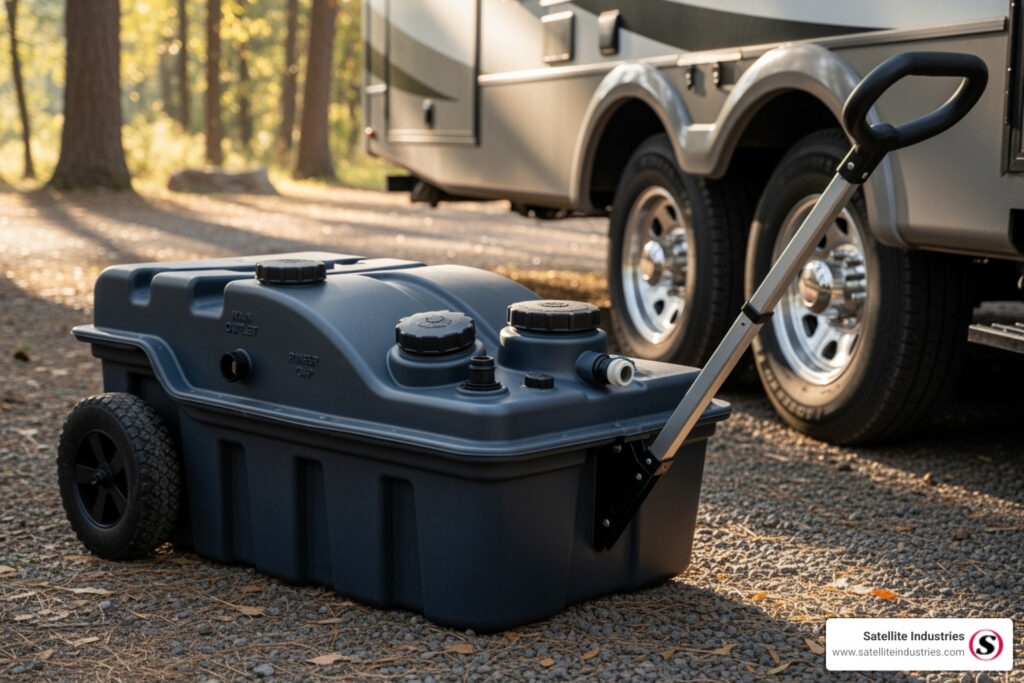
Wheeled tote portable sewage containers for RVs combine the best features of portability with substantial capacity. These units feature robust wheel assemblies—often with pneumatic tires—and ergonomic tow handles that allow one person to transport heavy loads across uneven campground terrain. The four-wheel design provides stability that two-wheel models sometimes lack, preventing tipping accidents during transport.
Premium tote tanks include features like removable vent caps for easy cleaning, reinforced hose storage compartments, and multiple connection points for different campground setups. Some models offer transparent sections on multiple sides, providing fill-level visibility from any angle. For RV owners who value convenience, investing in a quality wheeled tote tank with a 20-35 gallon capacity proves worthwhile over years of trouble-free service.
Capacity Considerations for Your RV Waste Needs
| Tank Capacity | Best For | Typical Use Duration | Weight When Full |
|---|---|---|---|
| 5-10 gallons | Solo travelers, weekend trips | 1-2 days | 40-80 lbs |
| 15-20 gallons | Couples, short camping trips | 3-4 days | 120-160 lbs |
| 25-30 gallons | Small families, week-long stays | 5-7 days | 200-240 lbs |
| 35-42 gallons | Large families, extended boondocking | 7-10 days | 280-336 lbs |
Selecting the appropriate capacity for your portable RV waste container requires honest assessment of your travel patterns and RV occupancy. A general guideline suggests that each person generates approximately 2-3 gallons of black water and 8-10 gallons of gray water daily. Therefore, a couple traveling in an RV should plan for roughly 20-26 gallons of total wastewater per day, though conservative water usage can reduce this significantly.
Many experienced RVers recommend purchasing a tank slightly larger than calculated needs. This buffer capacity provides flexibility for unexpected situations—guests joining your trip, extended stays when dump stations close unexpectedly, or periods when water conservation isn’t practical. The marginal cost difference between a 25-gallon and 35-gallon tank rarely justifies the inconvenience of running out of capacity prematurely.
Essential Features in Quality Portable Sewage Containers
Durable Construction Materials
Quality portable sewage containers for RVs utilize high-density polyethylene (HDPE) or similar impact-resistant plastics that withstand years of UV exposure, chemical treatments, and rough handling. The material thickness matters significantly—premium tanks feature walls measuring 1/8 inch or thicker, preventing cracks and leaks even when transported across rocky terrain. Seamless rotational molding creates stronger containers than welded or glued assemblies, eliminating weak points where failures commonly occur.
UV stabilizers added during manufacturing prevent the brittle degradation that sunlight causes in untreated plastics. This becomes particularly important for RVers in southern climates or those who store tanks outdoors between trips. Reputable manufacturers back their products with multi-year warranties, demonstrating confidence in their construction quality and materials selection.
Secure Valve and Cap Systems
The valve assembly represents the most critical component of any portable RV sewage container. Gate valves made from corrosion-resistant materials like ABS plastic or stainless steel provide reliable sealing and smooth operation even after hundreds of cycles. The valve handle should lock securely in the closed position to prevent accidental openings during transport—a disaster no RVer wants to experience.
Threaded caps with rubber gaskets create watertight seals at fill ports and vent openings. Some advanced systems incorporate pressure relief valves that prevent dangerous buildup while maintaining odor control. The connection points where sewer hoses attach must feature standardized 3-inch slip fittings or bayonet-style connectors that ensure compatibility with various campground dump stations and RV discharge ports.
Mobility and Handling Features
Transportation features separate mediocre portable sewage containers for RVs from exceptional ones. Large-diameter wheels (8-10 inches) roll smoothly over gravel, grass, and uneven surfaces without getting stuck or requiring excessive pulling force. Pneumatic tires absorb shocks better than solid wheels, protecting the tank contents from sloshing and the container from impact damage.
Ergonomic tow handles positioned at comfortable heights reduce back strain during transport. The handle should extend far enough from the tank body to prevent wheel contact with your legs while walking. Some premium models feature telescoping handles that adjust for users of different heights or fold down for compact storage when not in use.
Proper Maintenance for Long-Lasting Performance
Regular maintenance extends the life of portable RV waste tanks and prevents unpleasant surprises during trips. After each use, thoroughly rinse the interior with fresh water and a tank cleaning wand to remove residue and prevent buildup. Specialized RV tank cleaners containing enzymes break down solid waste and control odors more effectively than household bleach, which can damage seals and gaskets over time.
Suggested read: Portable Septic Tank for Camper: Essential Waste Management Solutions for Your RV Adventures
Inspect valve mechanisms quarterly for signs of wear, corrosion, or leaking. Apply food-grade silicone lubricant to moving parts and rubber seals to maintain smooth operation and prevent drying or cracking. Check wheels and axles for damage, ensuring that bearings rotate freely and tires maintain proper inflation. Addressing small issues immediately prevents costly repairs or premature replacement.
Store empty tanks in shaded locations when possible to minimize UV exposure. Leave caps slightly loose during storage to allow airflow and prevent mildew growth. Before winter storage in freezing climates, ensure tanks are completely drained and add RV antifreeze if any moisture remains. Proper winterization prevents expensive freeze damage that warranty policies typically don’t cover.
Using Chemical Treatments and Deodorizers Effectively
Portable sewage containers for RVs benefit tremendously from appropriate chemical treatments that control odors, break down waste, and maintain system hygiene. Formaldehyde-based treatments offer powerful odor control but face increasing environmental restrictions and can damage septic systems at dump stations. Modern enzyme-based or bacteria-containing treatments provide eco-friendly alternatives that work with nature rather than against it.
The correct treatment dosage depends on tank capacity and ambient temperature—hot weather requires more frequent treatment than cool conditions. Generally, add treatment chemicals after each dump and refill cycle, following manufacturer recommendations closely. Overuse wastes money without providing additional benefits, while underuse allows odors and solid buildup to develop.
Holding tank deodorizers come in liquid, powder, and drop-in packet forms. Liquids distribute most evenly but require measuring, while packets offer convenience and precise dosing. Many RVers keep multiple treatment types on hand, using enzyme-based products for regular maintenance and stronger formulations for problem situations. For those seeking complementary solutions, consider portable sink with water tank options that enhance overall RV sanitation capabilities.
Best Practices for Dumping Portable RV Waste Tanks
Locating Approved Dump Stations
Finding suitable disposal locations for portable RV sewage containers requires planning and knowledge of resources. Most RV parks and campgrounds provide dump stations for guests, while many welcome non-guests for a small fee ($5-$15 typically). Interstate rest areas increasingly offer RV dump facilities, particularly along major travel corridors in western states where RV tourism drives significant economic activity.
Smartphone apps like Sanidumps, RV Parky, and AllStays catalog thousands of dump station locations nationwide, with user reviews noting cleanliness, accessibility, and current operating status. State and national parks usually include dump facilities, though hours may be limited or seasonal. Truck stops and travel centers along highways often provide RV services including waste disposal, fuel, and supplies in one convenient stop.
Safe Dumping Procedures
Proper dumping technique protects both you and the environment while extending equipment life. Always wear disposable gloves when handling sewer connections and hoses—pathogens in wastewater pose genuine health risks that simple precautions eliminate. Connect your discharge hose to the dump station inlet before opening your tank valve, ensuring a secure connection that won’t pop loose under pressure.
Open the black water valve first and allow it to drain completely, then open gray water valve to flush residue from the hose. This sequence uses soapy gray water to clean the hose interior, reducing odors and bacterial growth. After draining, close all valves before disconnecting hoses to prevent spills. Rinse hoses thoroughly with fresh water and store them in a dedicated compartment separate from fresh water equipment.
Troubleshooting Common Issues
Valve Leaks and Malfunctions
Leaking valves on portable RV waste containers usually result from damaged seals, debris in the valve mechanism, or worn components. First, inspect the valve blade for warping or cracks that prevent complete closure. Foreign objects like toilet paper or wipes sometimes lodge in the valve channel—opening and flushing with clean water often clears these obstructions effectively.
If the valve operates smoothly but still leaks, replace the rubber seal or gasket creating the watertight barrier. Most manufacturers sell replacement seal kits for $10-$20, making this repair far more economical than replacing the entire tank. Persistent leaking despite new seals indicates valve body damage requiring professional replacement or tank retirement.
Wheel and Mobility Problems
Transportation difficulties plague portable sewage containers for RVs when wheels fail or axles bend. Flat spots on solid wheels develop from prolonged storage in one position—rotating the tank quarterly prevents this issue. Pneumatic tires require regular pressure checks using a standard tire gauge, maintaining manufacturer-recommended PSI for optimal performance and longevity.
Axle assemblies occasionally work loose from repeated stress and vibration. Tighten mounting bolts periodically using appropriate tools, being careful not to overtighten and strip threads. If wheels wobble or bind during rotation, inspect bearings for wear or corrosion. Replacement wheel assemblies cost $20-$50 and install with basic hand tools, making this a manageable DIY repair for most RV owners.
Comparing Top Portable RV Sewage Container Brands
Thetford SmartTote Series
Thetford’s SmartTote portable sewage containers RV line dominates the market with their innovative features and proven reliability. The SmartTote2 LX model offers 35-gallon capacity with an integrated macerator pump, translucent tank level indicators, and heavy-duty wheels designed for rough terrain. The rotomolded construction provides exceptional durability, while the steerable tow handle allows one-handed maneuvering through tight campground spaces.
Users particularly praise the easy-clean design featuring smooth interior surfaces without corners where residue accumulates. The four-inch tow handle clearance prevents wheels from bumping ankles during transport, addressing a common complaint with competitor products. At approximately $180-$220 depending on retailer, SmartTote tanks deliver excellent value given their feature set and construction quality.
Camco Rhino RV Tote Tank
Camco’s Rhino portable RV waste tank series emphasizes rugged construction and straightforward functionality. Available in 15, 21, 28, and 36-gallon capacities, the Rhino line accommodates different RV sizes and usage patterns. The distinctive translucent tank body with gallon markings allows precise monitoring of fill levels—a feature professional RVers cite as invaluable for planning dump station visits.
The Rhino’s steel tow handle and reinforced wheel mounts withstand abuse that would destroy lighter-duty competitors. Large 8.5-inch wheels with aggressive tread patterns maintain traction on slippery grass or muddy campground roads. Priced between $90-$150 depending on size, Rhino tanks offer budget-conscious RVers a reliable solution without sacrificing essential features or durability.
Barker Tote-Along Portable Holding Tank
Barker Manufacturing produces the Tote-Along portable sewage container for RV applications with a focus on capacity and value. Their 32-gallon model serves larger families or extended boondocking adventures, featuring a gravity-drain design that eliminates mechanical complications. The tank includes a 4-foot sewer hose stored conveniently on the side, though many users upgrade to longer, reinforced hoses for added flexibility.
The Tote-Along’s simple design means fewer parts to fail, and the all-polyethylene construction resists corrosion and UV damage admirably. While lacking the premium features of higher-priced competitors, Barker tanks deliver solid performance at entry-level prices around $80-$120. The straightforward design also simplifies repairs—replacement parts are readily available and installation requires minimal technical knowledge.
Suggested read: Portable Waste Tank: Essential Solutions for Mobile Sanitation Needs
Sizing Your Portable Tank to RV Black Water Capacity
Matching your portable RV sewage container capacity to your RV’s built-in black water tank optimizes the dumping process and minimizes trips to dump stations. Most travel trailers feature 30-40 gallon black water tanks, while larger fifth wheels and motorhomes may have 50+ gallon capacities. Purchasing a portable tank with at least 75% of your built-in tank capacity allows for reasonable transportation weights while still providing meaningful holding capacity.
For example, an RV with a 40-gallon black water tank pairs well with a 30-35 gallon portable unit. This sizing allows you to drain most of your built-in tank into the portable when needed, then transport that waste to a dump station in a single trip. Undersized portable tanks force multiple trips or require premature dumping before built-in tanks reach capacity.
Environmental Considerations and Regulations
Responsible use of portable sewage containers for RVs includes understanding environmental regulations and following best practices that protect water quality and public health. Never dump untreated waste on the ground, in storm drains, or in natural water bodies—these actions contaminate groundwater, spread disease, and violate federal and state laws with penalties including substantial fines and criminal charges.
Many jurisdictions require specific disposal at designated facilities equipped to treat RV waste properly. Some regions prohibit certain chemical treatments due to environmental concerns—research local regulations before traveling to avoid violations. Eco-friendly enzyme and bacteria-based treatments satisfy most environmental requirements while providing effective odor control and waste breakdown.
The growing popularity of dispersed camping on public lands has increased scrutiny of RV waste disposal practices. Land management agencies like the Bureau of Land Management and Forest Service expect responsible waste handling from all recreationists. Carrying adequate portable waste capacity and planning disposal points before trips demonstrates the stewardship that preserves access to public lands for future generations.
Cost Analysis: Investment and Long-Term Value
Initial investment in quality portable RV waste tanks ranges from $80 for basic 15-gallon units to $600+ for premium macerator-equipped systems. This one-time expense should be evaluated against the freedom and convenience these tools provide. The ability to extend stays in free or low-cost camping areas saves campground fees that quickly offset equipment costs.
Consider a scenario where a portable tank allows you to boondock 10 additional nights per year instead of paying $40 per night for full hookup sites. That’s $400 annual savings that recovers the cost of even premium tanks within 1-2 years. The tank continues providing value for 10+ years with proper maintenance, making the return on investment extraordinarily favorable.
Advanced Tips for Experienced RVers
Using Portable Tanks for Gray Water Management
While primarily designed for black water, portable sewage containers RV models work equally well for gray water when built-in tanks fill prematurely. Gray water from showers and dishwashing often accumulates faster than black water, especially with multiple occupants. A dedicated portable tank for gray water allows you to extend camping stays without moving your RV to dump stations.
Some RVers keep two portable tanks—one exclusively for gray water and another for black water. This separation prevents cross-contamination and allows you to dump gray water more casually in some locations where regulations permit. Clearly label tanks to avoid confusion, and never use a gray water tank for black water without thorough sanitizing between uses.
Winter Storage and Freeze Protection
Cold weather poses unique challenges for portable RV sewage containers in freezing climates. Before winter storage, drain tanks completely and rinse thoroughly with fresh water. Add RV antifreeze rated to -50°F or colder, rotating the tank to coat all interior surfaces. This prevents residual moisture from freezing and cracking the tank walls or damaging valve mechanisms.
Store winterized tanks indoors if possible, or cover them with insulated tarps in protected outdoor locations. Inspect seals and gaskets in spring before first use—freezing temperatures can cause rubber components to become brittle and crack. Replace any questionable components before they fail during a trip and create messy, expensive problems.
Hygiene and Sanitization Best Practices
Maintaining sanitary conditions around portable sewage containers for RVs protects your health and prevents cross-contamination with food preparation areas or fresh water systems. Designate specific gloves, tools, and storage areas exclusively for waste handling. Never use the same hose or connections for fresh water that touch waste containers—the risk of bacterial contamination far outweighs any convenience.
After each dumping session, sanitize valve handles, tow handles, and exterior surfaces that you touched with disposable antibacterial wipes or diluted bleach solution. Wash your hands thoroughly with soap and hot water even when wearing gloves—pathogens can transfer during glove removal if you’re not careful. Keep hand sanitizer near your waste storage area for quick sanitization when soap and water aren’t immediately available.
Upgrading Your Waste Management System
As RV travel patterns evolve, your portable RV waste container needs may change. Full-time RVers often discover that initial equipment selections don’t meet long-term requirements. Upgrading from a basic gravity-drain tank to a macerator-equipped system might cost $300-$400 but dramatically improves convenience when regularly facing challenging dump station access.
Converting to a larger capacity tank reduces dumping frequency, trading the one-time expense for ongoing time savings and reduced hassle. Calculate the value of your time and the inconvenience of frequent dumping when evaluating upgrade costs. For many RVers, investing in premium equipment early prevents the frustration and expense of replacing inadequate gear later.
Accessories That Enhance Portable Tank Functionality
Extended Sewer Hoses and Adapters
While most portable sewage containers for RVs include basic hoses, upgrading to heavy-duty, reinforced hoses prevents common failures and extends reach. Quality 20-foot RV sewer hoses cost $25-$40 but withstand years of use without developing leaks or kinks. Clear elbow adapters let you verify flow during dumping, ensuring complete drainage and identifying potential clogs before they become serious problems.
Universal bayonet and thread adapters ensure compatibility with different dump station configurations nationwide. Regional variations in fitting types occasionally surprise travelers—carrying multiple adapter types eliminates stressful situations where you can’t connect to available facilities. A complete adapter kit costs under $30 and stores compactly, making this a worthwhile investment.
Tank Rinse Attachments
Built-in rinse systems for portable RV sewage tanks spray fresh water throughout the interior, dislodging stubborn residue and preventing buildup that leads to odors and sensor failures. Aftermarket tank rinse wands cost $15-$40 and attach to standard garden hoses, allowing thorough cleaning at any freshwater source. The spray nozzles reach all interior surfaces more effectively than simply filling and draining the tank.
Some RVers install permanent rinse fittings on their portable tanks using bulkhead connectors and internal spray heads. This DIY modification costs approximately $30 in parts and an hour of installation time, but provides the convenience of professional RV built-in systems at a fraction of the cost.
Suggested read: Lightweight Portable Security: Essential Solutions for Mobile Protection in 2025
Case Study: Full-Time RVers and Portable Waste Management
The Anderson family transitioned to full-time RV living in 2023, traveling North America in their 35-foot fifth wheel. Initially, they relied solely on their RV’s built-in 50-gallon black water and 80-gallon gray water tanks. However, they quickly discovered limitations when boondocking in scenic locations far from dump stations.
After investing in a 35-gallon portable sewage container RV with a macerator pump, the Andersons extended their off-grid camping from 4-5 days to 10-12 days comfortably. The portable tank allowed them to drain their RV’s black water tank mid-stay without moving their entire rig. They estimate saving $2,400 annually in campground fees by utilizing free BLM land and National Forest dispersed camping areas more frequently.
The family emphasizes that quality equipment made the difference—their first budget tank developed wheel problems and valve leaks within six months. Upgrading to a premium Thetford model solved these issues, and it’s now performed flawlessly through two years and thousands of miles. Their experience demonstrates that investing in reliable portable RV waste containers pays dividends for serious travelers.
Safety Protocols for Waste Handling
Personal protective equipment when working with portable sewage containers for RVs should include disposable nitrile gloves rated for chemical resistance, safety glasses to prevent splashes, and closed-toe shoes. Some RVers keep dedicated shoes or boots exclusively for waste handling tasks, preventing pathogen transfer into living spaces.
Understanding proper waste disposal protects both personal safety and public health. Never allow children to operate dump valves or handle waste containers—the bacterial and viral loads in black water pose genuine health risks. If waste accidentally contacts skin or clothing, wash immediately with soap and hot water, then sanitize with rubbing alcohol or antibacterial solutions.
Chemical burns from concentrated tank treatments represent another hazard. Always dilute treatments according to manufacturer directions, and never mix different chemical types—the reactions can produce toxic fumes or corrosive compounds. Store all RV chemicals in original containers with legible labels, and keep them secured in well-ventilated compartments away from food and fresh water.
Innovations in Portable RV Waste Technology
Recent developments in portable sewage container RV design focus on reducing weight while increasing capacity and durability. Advanced composite materials allow manufacturers to create thinner walls without sacrificing strength, reducing empty tank weight by 15-20% compared to older designs. This becomes significant when considering that users must push or pull these containers when full.
Smart tank monitoring systems represent the cutting edge of waste management technology. Bluetooth-enabled sensors transmit real-time fill levels to smartphone apps, eliminating guesswork and preventing overfill situations. While these premium features add $100-$200 to tank costs, tech-savvy RVers appreciate the convenience and precision they provide.
Self-cleaning mechanisms using built-in spray jets activated during filling represent another emerging innovation. These systems automatically rinse interior surfaces each time the tank is refilled with treatment chemicals, maintaining cleanliness without manual intervention. As competition drives innovation, expect continued improvements in convenience, reliability, and environmental friendliness.
Regulations Across Different States and Regions
RV waste disposal regulations vary significantly across jurisdictions, making research essential before traveling with portable RV waste tanks. California, for example, strictly regulates discharge locations and chemical treatments to protect groundwater and marine environments. Conversely, states with vast public lands and lower population densities often have more permissive regulations, though responsible practices remain expected.
Canadian provinces maintain different standards than U.S. states, with Quebec and British Columbia enforcing particularly stringent environmental protections. When crossing borders, ensure your waste management practices and chemical treatments comply with destination regulations. Border officials occasionally inspect RV waste systems, and violations can result in denied entry, fines, or equipment confiscation.
National Parks implement their own rules independent of surrounding state regulations. Some parks prohibit certain tank treatments or restrict dumping to specific hours and locations. Always review current regulations when planning trips to new destinations—rules change periodically based on environmental conditions and visitor impacts.
Resource Guide: Where to Learn More
Reputable sources for information about portable sewage containers RV include manufacturer websites, RV owner forums, and educational content from industry organizations. The RV Industry Association (RVIA) publishes comprehensive guides covering waste management best practices, safety protocols, and regulatory compliance. Their materials are available free online and updated regularly to reflect current standards.
YouTube channels operated by experienced full-time RVers provide practical demonstrations of dump procedures, maintenance techniques, and product reviews based on real-world testing. Popular channels like “RV Odd Couple,” “Keep Your Daydream,” and “Changing Lanes” regularly feature waste management topics with honest assessments of various products and methods.
Frequently Asked Questions About Portable Sewage Containers RV
What size portable sewage container do I need for my RV?
The ideal size depends on your RV’s built-in tank capacity and typical camping duration. For weekend trips, a 15-20 gallon portable sewage container RV suffices for most couples. Extended stays or larger families benefit from 30-35 gallon capacities. Calculate approximately 2-3 gallons of black water per person per day to estimate your needs accurately.
How often should I empty my portable RV waste tank?
Empty your portable RV sewage container when it reaches 2/3 to 3/4 full to maintain proper functionality and prevent overflow risks. Most tanks include level indicators showing fill status. Regular emptying before reaching maximum capacity reduces weight during transport and prevents pressure buildup that could damage seals or cause leaks.
Can I use regular bleach in my portable RV sewage tank?
Suggested read: 12 Volt Portable Air Conditioner: Your Complete Buying Guide for Mobile Cooling Solutions
While bleach kills bacteria and controls odors, it damages rubber seals and valves in portable sewage containers for RVs over time. RV-specific treatments use enzyme or bacteria formulations designed for plastic tanks and rubber components. These specialized products cost slightly more but extend equipment life significantly while providing superior odor control.
Are macerator-equipped portable tanks worth the extra cost?
Macerator portable RV waste containers justify their higher price ($300-$600) for RVers who frequently encounter difficult dump station access, camp in locations requiring uphill pumping, or value the convenience of using garden hoses instead of bulky sewer hoses. Weekend campers near convenient dump stations often find gravity-drain models adequate at lower costs.
How do I prevent odors from my portable sewage container?
Proper chemical treatment, regular emptying before reaching full capacity, and thorough rinsing after each dump prevent most odor issues with portable RV sewage tanks. Ensure vent caps seal properly but allow some airflow to prevent vacuum formation. Store empty tanks with caps slightly loose in well-ventilated areas between uses.
What’s the best way to clean a portable RV waste tank?
After dumping, rinse your portable sewage container RV thoroughly with fresh water and a tank cleaning wand. Use enzyme-based RV tank cleaners quarterly for deep cleaning. Avoid harsh chemicals like bleach that damage seals. Allow the tank to dry completely before storage, leaving caps slightly open for air circulation.
Can I repair a cracked portable sewage container?
Small cracks in portable RV waste tanks sometimes accept repair using specialized plastic welding or epoxy rated for polyethylene. However, repairs rarely provide long-term reliability for containers holding sewage under pressure. Given the health risks and unpleasant consequences of failure, replacement usually proves more prudent than attempting repairs on significantly damaged tanks.
Where can I legally dump my portable RV sewage container?
Legal dumping locations for portable sewage containers RV include designated RV dump stations at campgrounds, rest areas, truck stops, and municipal facilities. Never dump on the ground, in storm drains, or natural water bodies—these actions violate environmental regulations and face substantial penalties. Apps like Sanidumps help locate approved facilities nationwide.
How long do portable RV sewage containers typically last?
Quality portable RV waste tanks last 10-15 years with proper maintenance, including regular cleaning, seal lubrication, and protected storage. UV exposure and chemical damage reduce lifespan significantly, while careful handling prevents impact damage. Valve assemblies may require replacement every 5-7 years depending on usage frequency.
Do I need different portable tanks for gray and black water?
While a single portable sewage container for RV can handle both waste types, many experienced RVers prefer separate tanks to prevent cross-contamination and allow more flexible dumping schedules. Gray water often fills faster than black water, and some locations permit gray water disposal where black water dumping is prohibited.
Take Action: Find Your Perfect Portable Sewage Container RV Solution
Investing in the right portable sewage containers RV equipment transforms your camping experience from restricted to liberating. Whether you’re a weekend warrior or full-time nomad, quality waste management systems enable you to explore remote destinations without sacrificing comfort or hygiene. Research available models thoroughly, considering your specific RV size, travel patterns, and budget constraints before making a purchase.
Visit reputable RV supply retailers or browse online marketplaces comparing features, capacities, and user reviews for various portable RV sewage containers. Don’t compromise on quality for minimal savings—the difference between a $90 tank and a $180 tank often determines whether you’re dealing with leaks and failures or enjoying years of trouble-free service. Start your search today and discover how proper waste management equipment enhances every aspect of RV adventures.
Sources:
- RV Industry Association. (2024). “RV Owner’s Guide to Waste Management.” https://www.rvia.org
- Camco Manufacturing. (2024). “Rhino Portable Waste Tank Technical Specifications.” https://www.camco.net
- Thetford Corporation. (2024). “SmartTote Portable Sanitation Systems.” https://www.thetford.com