Portable Product Guides for Life AnywhereBuying Guides · Comparisons · How-To
Portable GuideOther Portable

Portable Stairs: The Ultimate Solution for Safe and Convenient Access Anywhere

When it comes to accessing elevated spaces safely and efficiently, portable stairs have become an indispensable tool for both residential and commercial applications. Unlike traditional […]
Portable Stairs

When it comes to accessing elevated spaces safely and efficiently, portable stairs have become an indispensable tool for both residential and commercial applications. Unlike traditional fixed staircases or cumbersome ladders, portable stairs offer unmatched flexibility, safety, and convenience for a wide range of scenarios. These versatile access solutions are revolutionizing how we approach height-related challenges in warehouses, retail environments, homes, outdoor events, and industrial facilities. Whether you’re a warehouse manager seeking OSHA-compliant access equipment, a homeowner needing temporary elevation solutions, or an event coordinator planning stadium seating arrangements, understanding the features, benefits, and applications of portable stairs can significantly improve both safety outcomes and operational efficiency in your specific context.

What Are Portable Stairs and Why Are They Essential?

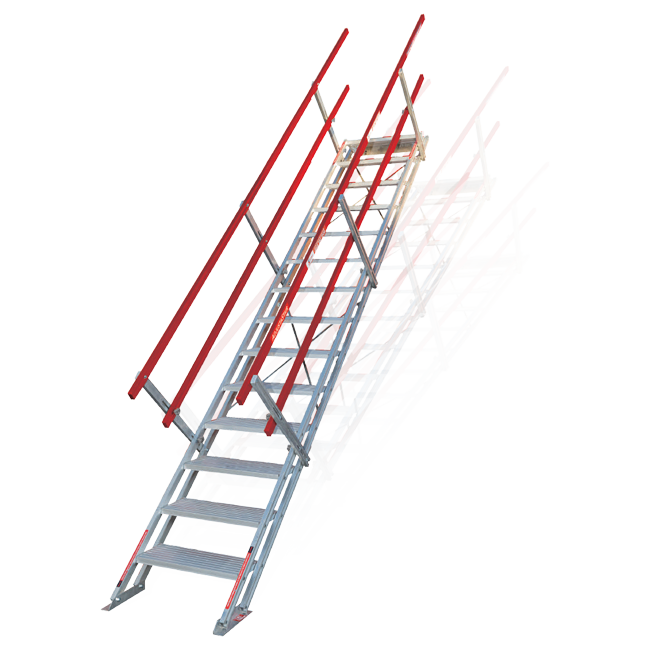
Portable stairs are mobile stairway systems designed to provide safe, temporary, or semi-permanent access to elevated platforms, vehicles, equipment, or structures. These innovative access solutions combine the stability and safety of traditional staircases with the mobility and flexibility of portable equipment. The fundamental design typically includes a sturdy frame construction, slip-resistant treads, handrails for user safety, and wheels or a lightweight structure for easy relocation. Modern portable stair systems are engineered using high-grade materials such as aluminum, steel, or reinforced composites that deliver exceptional strength-to-weight ratios while maintaining durability under demanding conditions.

The essential nature of these stairs stems from their ability to eliminate the hazards associated with ladder use, which accounts for approximately 500,000 injuries annually in the United States according to the American Academy of Orthopedic Surgeons. By providing a stable, code-compliant alternative, portable stairs significantly reduce workplace accidents while improving accessibility and productivity across diverse environments.

Key Components of Quality Portable Stairs

Understanding the construction elements that make portable stairs effective helps buyers make informed decisions. Treads form the foundation of user safety, with the best systems featuring deep, non-slip surfaces that provide secure footing even in wet or oily conditions. High-quality portable stair treads typically measure 10-12 inches deep and incorporate aggressive tread patterns, perforated metal surfaces, or specialized grip coatings that meet or exceed industry slip-resistance standards. Handrails represent another critical safety component, with OSHA regulations requiring rails on both sides of stairs with four or more risers, positioned at heights between 30-38 inches. Premium portable stair systems feature ergonomically designed handrails with comfortable grip diameters and adequate structural strength to support users in emergency situations.

Frame construction determines overall stability and load capacity, with industrial-grade systems typically utilizing welded aluminum or steel frames that can support 500-1000 pounds or more. The frame geometry should incorporate wide stances, reinforced joints, and appropriate bracing to prevent wobbling or lateral movement during use. Mobility features such as heavy-duty casters, locking mechanisms, and tow handles enable easy repositioning while ensuring the stairs remain stationary during use. Additional components like adjustable leg levelers, platform extensions, and modular configurations enhance versatility for various applications.

Safety Standards and Compliance Requirements

Portable stairs must meet rigorous safety standards to ensure user protection and legal compliance in workplace environments. The Occupational Safety and Health Administration (OSHA) provides comprehensive regulations governing portable stair design, construction, and use under standards 1910.24 and 1910.25. These regulations specify minimum tread depth requirements of 9.5 inches, maximum riser heights of 9.5 inches, and mandatory handrail installations for specific configurations. Portable stairs used in industrial settings must also comply with load capacity requirements, typically mandating a minimum capacity of 250 pounds per square foot for stair treads.

The American National Standards Institute (ANSI) provides additional guidelines through standards such as ANSI A14.7, which addresses portable reinforced plastic ladders and platform ladders that often share design principles with portable stair systems. International Building Code (IBC) requirements may also apply depending on the installation context and duration of use. Quality manufacturers conduct third-party testing and certification to verify their products meet these stringent standards. Compliance documentation should include load capacity certifications, material specifications, and detailed assembly instructions that help users maintain safety compliance throughout the product lifecycle.

Types and Styles of Portable Stairs

The portable stairs market offers diverse configurations designed for specific applications and environments. Rolling platform stairs represent one of the most popular categories, featuring mobile platforms with integrated staircases that provide elevated work positions for maintenance, inspection, or assembly tasks. These systems typically include large platform areas measuring 20×30 inches or larger, surrounded by safety railings and accessed via stairs with 7-12 steps depending on the desired working height. Rolling platform stairs commonly incorporate heavy-duty casters with foot-operated locks that enable quick repositioning and stable positioning during use.

Modular stair systems offer exceptional versatility through configurable components that can be assembled into custom configurations matching specific site requirements. These systems typically use standardized stair sections, platform modules, and connecting hardware that allow users to create straight runs, 90-degree turns, 180-degree switchbacks, or multi-level access solutions. The modular approach provides scalability for growing operations and adaptability when access requirements change.

Folding portable stairs maximize space efficiency by collapsing into compact profiles for storage and transportation, making them ideal for residential applications, recreational vehicles, or situations where permanent storage space is limited. Dock stairs serve the specialized purpose of providing safe access between loading docks and truck beds, featuring adjustable height mechanisms that accommodate varying vehicle heights and incorporate extra-wide treads for carrying materials.

Specialized Applications and Industry-Specific Designs

Different industries have driven the development of specialized portable stairs optimized for unique requirements. Warehouse and distribution facilities utilize heavy-duty industrial portable stairs designed for frequent use, high traffic volumes, and integration with existing racking systems or mezzanine structures. These systems often feature extra-wide stair widths of 36-48 inches to accommodate two-way traffic and material transport, with load capacities exceeding 1000 pounds to support equipment and multiple simultaneous users.

Retail environments employ portable stairs for inventory access, display setup, and maintenance activities, with emphasis on aesthetic appearance, compact footprints, and quiet operation that won’t disturb customers. Retail-focused designs may incorporate powder-coated finishes in various colors, enclosed bases to conceal storage areas, and smooth-rolling casters that protect floor surfaces. Aircraft maintenance represents a highly specialized application requiring portable stairs with specific height ranges, platform configurations, and mobility characteristics that comply with aerospace industry standards and airport operational requirements.

Pool and spa access demands corrosion-resistant materials like stainless steel or specialized coatings that withstand constant moisture exposure and chemical treatments. Stage and event applications require portable stairs with aesthetic appeal, rapid deployment capabilities, and ADA-compliance options that provide accessible routes for performers and attendees with mobility limitations.

Material Selection: Aluminum vs Steel vs Composite

Material choice significantly impacts the performance, durability, and value proposition of portable stairs for different applications. Aluminum portable stairs dominate many markets due to their exceptional strength-to-weight ratio, inherent corrosion resistance, and ease of handling. Marine-grade aluminum alloys such as 6061-T6 provide tensile strengths exceeding 45,000 PSI while weighing approximately one-third as much as equivalent steel constructions. This weight advantage translates into easier repositioning, reduced strain on users during setup, and lower shipping costs. Aluminum’s natural corrosion resistance makes it ideal for outdoor applications, coastal environments, and facilities where exposure to moisture or chemicals is common. However, aluminum typically costs 20-30% more than comparable steel constructions and may show surface scratches more readily than coated steel.

Steel portable stairs offer maximum strength and rigidity at lower initial costs, making them preferred for heavy industrial applications where load capacity and structural stability are paramount concerns. Powder-coated or galvanized steel finishes provide adequate corrosion protection in most indoor environments, though these coatings require periodic inspection and maintenance. Steel constructions typically weigh 2-3 times more than aluminum equivalents, which can complicate mobility but enhances stability during use.

Composite materials including reinforced plastics and fiberglass offer unique advantages for specialized applications requiring electrical non-conductivity, extreme corrosion resistance, or specific hygiene standards. Composite portable stairs cost significantly more than metal alternatives but excel in chemical processing facilities, electrical utility applications, and food processing environments where metal contamination is prohibited.

Load Capacity Considerations and Weight Ratings

Understanding load capacity specifications is crucial when selecting portable stairs for safe and compliant operations. Manufacturers rate portable stair systems using two distinct metrics: rated load capacity and actual breaking strength. The rated load capacity represents the maximum weight the stairs can safely support during normal use, incorporating appropriate safety factors as mandated by OSHA and ANSI standards. Industry-standard safety factors typically range from 3:1 to 5:1, meaning stairs with a 500-pound rated capacity have been tested to breaking points of 1,500 to 2,500 pounds. Commercial and industrial portable stairs commonly offer rated capacities between 300-1,000 pounds, with heavy-duty industrial models available up to 1,500 pounds or more.

Users must calculate total load by combining the weight of all simultaneous users, any tools or materials being carried, and dynamic forces generated during movement. The platform capacity may differ from stair tread capacity, requiring separate evaluation when users will be standing or working from elevated platforms. Duty rating classifications provide another framework for assessing suitability, with Type IA (extra heavy duty, 300 lbs), Type I (heavy duty, 250 lbs), and Type II (medium duty, 225 lbs) designations indicating intended use categories. Organizations should select portable stairs with capacity ratings that exceed anticipated loads by comfortable margins, accounting for potential overload scenarios and long-term structural degradation.

Suggested read: Portable Grit Blaster: The Ultimate Tool for Surface Preparation and Rust Removal

Design Features That Enhance Safety and Usability

Modern portable stairs incorporate numerous design innovations that improve user safety and operational convenience beyond basic structural requirements. Deep tread design represents one of the most impactful safety features, with premium systems offering tread depths of 11-12 inches compared to the OSHA minimum of 9.5 inches. This additional depth provides more comfortable foot positioning, reduces fatigue during extended use, and accommodates larger safety footwear common in industrial environments.

Serrated or perforated tread surfaces dramatically improve slip resistance compared to solid metal treads, with aggressive patterns and self-cleaning perforations that shed water, oil, and debris. Some manufacturers incorporate specialized grip tape or molded rubber tread covers that meet or exceed ASTM slip resistance standards even in extremely challenging conditions.

Dual handrails exceeding minimum requirements provide enhanced stability and accommodate users of different heights or those carrying materials that require one-hand gripping. Premium handrail systems extend beyond the top and bottom stairs as OSHA recommends, creating secure transition zones where falls are most likely to occur. Platform extensions or tool trays integrated into the top platform create convenient work surfaces that keep tools, materials, and equipment within easy reach without cluttering the workspace or creating tripping hazards.

Mobility and Positioning Features

Portable stairs must balance stability during use with ease of repositioning between work locations. Heavy-duty caster systems represent the foundation of mobility, with quality implementations using wheels 4-6 inches in diameter manufactured from non-marking polyurethane, rubber, or phenolic materials that protect floor surfaces while providing smooth rolling action. Swivel casters on the front corners or all four corners enable tight-radius turning for maneuvering in constrained spaces, though fixed rear wheels provide more stable straight-line tracking for longer movements.

Foot-operated locks allow users to engage and disengage wheel locks without bending down or using their hands, maintaining better balance and control during positioning. The best designs incorporate positive-locking mechanisms that clearly indicate engaged and released positions through visual and tactile feedback. Spring-loaded casters on some designs automatically retract when weight is applied to the stairs, lowering the base directly onto the floor for maximum stability during use, then extending again when weight is removed for easy relocation.

Tow handles or push bars positioned at ergonomic heights facilitate comfortable pushing or pulling across facilities without awkward body positioning. Some industrial-grade portable stairs include hitch connections that enable mechanical towing using forklifts, pallet jacks, or tug vehicles for longer distances or in high-volume repositioning scenarios.

Applications Across Industries and Environments

The versatility of portable stairs makes them valuable across an impressive range of professional and personal applications. Warehouse operations utilize these systems extensively for inventory access in high-bay storage facilities where fixed staircases would be impractical or impossible. Mobile platform stairs enable workers to safely access materials stored at heights up to 20 feet while maintaining OSHA compliance and reducing the injury risks associated with ladder use. Distribution centers report productivity improvements of 15-25% when replacing ladders with appropriate portable stair systems, as workers can move more quickly, carry materials more safely, and maintain better body positioning during picking operations.

Manufacturing facilities deploy portable stairs for equipment maintenance, quality inspection, and assembly operations where elevations vary across production lines. The mobility allows a single portable stair system to serve multiple workstations rather than installing multiple fixed staircases, reducing capital costs while improving space utilization. Retail environments including big-box stores, grocery chains, and warehouse clubs rely on portable stairs for inventory management, display setup, and facility maintenance. Retailers particularly value compact folding designs that can be stored unobtrusively during business hours and quickly deployed when needed without disrupting customer experiences.

Residential and Recreational Uses

Beyond commercial applications, portable stairs serve numerous residential and recreational purposes that enhance safety and convenience. Home maintenance activities including gutter cleaning, exterior painting, roof inspection, and window washing become safer and more comfortable with portable stairs compared to traditional extension ladders. The stable platform and handrails allow homeowners to work with both hands while maintaining three points of contact, significantly reducing fall risks.

RV and trailer applications use specialized portable stairs designed for recreational vehicle access, replacing rickety folding steps with sturdy alternatives that provide safer entry and exit, particularly for elderly users or those with mobility limitations. These RV-specific designs often feature adjustable heights to accommodate varying door heights and ground clearances, non-slip treads for safe use in wet conditions, and lightweight constructions that won’t significantly impact vehicle weight ratings. Pool and hot tub access represents another important residential application where corrosion-resistant portable stairs provide safe entry and exit routes for users of all ages and abilities.

Attic access becomes more practical and safer with semi-permanent portable stair installations that replace pull-down ladder systems with more stable alternatives while remaining removable when not needed. Outdoor events including backyard parties, weddings, and family gatherings can utilize portable stairs for deck access, stage platforms, or temporary viewing stands that accommodate guests safely and comfortably.

Sizing and Configuration Selection Guide

Choosing appropriately sized portable stairs requires careful analysis of multiple dimensional factors and operational requirements. Platform height represents the primary specification, measured as the vertical distance from the floor to the top platform surface. Common platform height ranges include 2-4 feet for low-level applications, 5-8 feet for mid-level requirements, and 9-14 feet for high-access needs, with specialized designs available up to 20 feet or more. The platform height directly determines the number of steps required, with each step typically representing a 7-10 inch rise.

Stair width significantly impacts traffic flow and usability, with narrow 24-inch widths suitable for single-user applications, standard 30-36 inch widths accommodating most commercial uses, and wide 42-60 inch configurations supporting two-way traffic or material transport. Platform dimensions should provide adequate working space, with minimum recommendations of 20×20 inches for simple standing platforms and 30×40 inches or larger for platforms where users will be performing tasks requiring movement or material handling.

Overall footprint including the base dimensions and stair projection angle affects space requirements and may be constrained by facility layouts. Steeper stair angles (approximately 50-60 degrees) create more compact footprints but reduce comfort and safety, while gentler angles (30-45 degrees) improve usability at the cost of larger floor space requirements.

Calculating the Right Configuration for Your Needs

Determining optimal portable stairs specifications requires systematic evaluation of use case parameters. Begin by measuring the vertical height to the access point where users need to reach, whether it’s a platform, equipment, or storage location, ensuring measurements account for any obstructions or clearance requirements. Assess user requirements including the number of simultaneous users, frequency of use, duration of platform occupancy, and whether users will be carrying tools or materials. This evaluation informs load capacity requirements and helps determine whether basic access stairs or working platform stairs are more appropriate.

Evaluate spatial constraints by measuring available floor space, identifying obstacles or clearance requirements, and determining whether the portable stairs will remain in one location or require frequent repositioning. Facilities with limited space may need to prioritize compact folded dimensions or vertical clearance specifications.

Consider regulatory requirements applicable to your industry and location, ensuring selected portable stairs meet OSHA, ANSI, and local building code requirements for your specific application. Some industries face additional standards such as FDA requirements for food processing facilities or aerospace standards for aircraft maintenance applications. Calculate total cost of ownership beyond initial purchase price by factoring in expected lifespan, maintenance requirements, potential productivity improvements, and injury cost avoidance compared to ladder alternatives.

Installation, Setup, and Operational Best Practices

Proper implementation of portable stairs ensures maximum safety and longevity of the equipment investment. Initial inspection upon delivery should verify all components are present and undamaged, structural welds or connections show no defects, safety features function correctly, and documentation includes assembly instructions and compliance certifications. Many portable stair systems arrive partially assembled, requiring only attachment of handrails, platforms, or mobility hardware using provided fasteners and tools.

Suggested read: The Ultimate Buyer's Guide to Choosing the Best Portable Gun Safe for Your Security Needs

Assembly procedures must follow manufacturer specifications exactly, with particular attention to torque specifications for bolted connections, proper orientation of directional components, and verification that all locking mechanisms engage fully. Some jurisdictions require certified inspections before placing newly installed portable stairs into service, particularly for systems that will serve as semi-permanent access solutions.

Initial positioning should place portable stairs on level, solid surfaces capable of supporting the combined weight of the stairs, users, and materials. Uneven floors require the use of adjustable leg levelers or shims to ensure the stairs stand plumb and don’t rock during use. Caster locks must engage fully before allowing users to access the stairs, and periodic verification of lock functionality should be incorporated into pre-use inspection routines.

Maintenance Procedures and Inspection Schedules

Regular maintenance preserves the safety and functionality of portable stairs throughout their service life. Daily pre-use inspections should become standard practice, with users conducting quick visual and functional checks before each use period. These inspections verify structural integrity with no visible cracks, bends, or damage to frame members, treads, or handrails; confirm all fasteners remain tight and properly secured; test mobility hardware including casters, locks, and wheel assemblies for proper operation; and check that slip-resistant tread surfaces remain effective without excessive wear or material buildup.

Weekly or monthly formal inspections depending on use intensity should document findings in maintenance logs and address issues requiring corrective action. These detailed inspections may include load testing to verify the stairs maintain proper rigidity under working loads, measurement of critical dimensions to detect gradual deterioration, and thorough cleaning of moving parts with appropriate lubrication.

Annual professional inspections by qualified personnel or third-party services provide comprehensive assessments including structural load testing, compliance verification against current standards, and documentation suitable for insurance and regulatory audits. Maintenance activities should address specific material considerations, with aluminum portable stairs requiring periodic cleaning to remove accumulated debris but generally resisting corrosion, while steel systems need vigilant monitoring of protective coatings with touch-up painting or treatment of any areas showing rust development.

Cost Analysis and Value Proposition

Understanding the complete cost structure of portable stairs helps organizations make informed purchasing decisions that optimize both safety and financial outcomes. Entry-level portable stairs suitable for light-duty residential or occasional commercial use typically range from $200-600, offering basic functionality with lower load capacities (300-500 lbs), simpler construction using lighter-gauge materials, and limited features beyond essential safety requirements. These budget options serve applications where portability and space efficiency outweigh heavy-duty performance requirements.

Mid-range commercial portable stairs priced between $600-2,000 represent the sweet spot for many businesses, delivering robust construction with 500-800 pound capacities, quality mobility hardware, and enhanced safety features while maintaining reasonable investment levels. This category includes most rolling platform stairs used in warehouses, retail environments, and light manufacturing.

Heavy-duty industrial portable stairs costing $2,000-5,000 or more provide maximum performance through extra-wide configurations, 1,000+ pound capacities, premium materials and construction, and specialized features for demanding applications. Large facilities may invest $8,000-15,000 in custom modular stair systems that create comprehensive access solutions replacing multiple separate units. Specialty designs including aircraft maintenance stairs, dock access systems, or ADA-compliant configurations command premium pricing reflecting their specialized engineering and limited production volumes.

Return on Investment and Cost Justification

The financial benefits of portable stairs extend well beyond their purchase price through multiple value mechanisms. Injury cost avoidance represents the most significant potential savings, as workplace falls from elevation cause an average of 65 fatalities and 20,000 lost-time injuries annually in the United States according to the Bureau of Labor Statistics. The National Safety Council estimates the average cost of a workplace fall injury at $47,000 when accounting for medical expenses, lost productivity, administrative costs, and potential litigation. A single prevented fall injury can justify the cost of multiple portable stair systems, making safety-focused investments highly economical.

Productivity improvements from 10-25% are commonly reported when replacing ladders with appropriate portable stairs, as workers access elevated areas more quickly, maintain better body positioning during tasks, and experience reduced fatigue during extended elevated work periods. For operations requiring frequent elevated access, these productivity gains can generate thousands of dollars in labor savings annually.

Space efficiency benefits materialize when mobile portable stairs replace multiple fixed staircases, reclaiming valuable floor space for productive uses while improving operational flexibility. Reduced liability exposure through OSHA compliance and industry best practices can lower workers’ compensation insurance premiums and reduce the organization’s exposure to citation penalties that currently range from $15,625 for serious violations to $156,259 for willful or repeated violations under OSHA’s 2024 penalty structure.

Leading Manufacturers and Brand Comparisons

The portable stairs market includes numerous manufacturers offering varying quality levels, feature sets, and price points. Cotterman stands as one of the most recognized brands in industrial access equipment, manufacturing aluminum and steel portable stairs since 1923. Their product line spans from basic rolling ladders to sophisticated modular stair systems, with particular strength in custom configurations for unique applications. Cotterman products typically command premium pricing but deliver exceptional durability and comprehensive safety features backed by industry-leading warranties.

Ballymore represents another major manufacturer specializing in aluminum portable stairs and rolling platforms, offering extensive standard product lines with quick delivery and competitive pricing. Their catalog includes over 200 platform ladder and rolling stair configurations with heights ranging from 2-20 feet and various width options.

Tri-Arc Manufacturing focuses on heavy-duty steel and aluminum portable stairs for industrial environments, with emphasis on OSHA compliance and custom fabrication capabilities. Their products serve demanding applications in manufacturing, utilities, and aviation maintenance. Louisville Ladder, traditionally known for extension and step ladders, has expanded into the portable stairs market with aluminum rolling platforms that leverage their established distribution networks and brand recognition. EGA Products manufactures an extensive range of aluminum portable stairs with particular expertise in modular systems and ADA-compliant designs that meet accessibility requirements for commercial installations.

Evaluating Quality and Selecting Reliable Suppliers

Choosing high-quality portable stairs from reputable suppliers requires evaluating multiple factors beyond initial price. Manufacturing standards indicate commitment to quality, with ISO 9001 certification demonstrating established quality management systems and consistent production processes. Third-party testing and certification from organizations like UL, CSA, or independent testing laboratories verify that products meet claimed specifications and safety standards. Request documentation of load capacity testing, material certifications, and compliance with applicable OSHA and ANSI standards.

Warranty coverage reveals manufacturer confidence in product durability, with quality portable stairs typically carrying 1-5 year warranties against manufacturing defects and structural failures. Extended warranties and prompt warranty service suggest established companies committed to customer satisfaction.

Customer reviews and references from organizations with similar applications provide valuable insights into real-world performance, durability, and manufacturer support. Look for feedback specifically addressing longevity in high-use environments, quality of customer service, and ease of obtaining replacement parts.

Delivery timelines and shipping costs significantly impact total cost of ownership, with some manufacturers maintaining extensive inventory for immediate shipment while others require 2-6 weeks for production of custom configurations. Shipping costs for heavy portable stairs can range from $100-500 or more depending on size, distance, and delivery method.

Suggested read: Portable Satellite Dish: Your Complete Solution for Internet and TV Anywhere

Safety Training and User Guidelines

Proper training ensures users maximize the safety benefits of portable stairs while avoiding improper practices that compromise protection. Basic safety training should cover fundamental principles including the three-point contact rule (maintaining three limbs in contact with the stairs at all times), proper ascending and descending techniques (face the stairs, use handrails, avoid rushing), and load limits (never exceed rated capacity including user weight, tools, and materials).

Inspection training teaches users to identify common defects or damage that warrant removing portable stairs from service, including structural cracks or bends, loose or missing fasteners, damaged treads or handrails, and malfunctioning mobility hardware. Workers should understand the inspection process and feel empowered to report concerns without fear of reprisal.

Positioning guidelines address proper setup procedures including verifying level surfaces, engaging wheel locks, confirming stability before climbing, and maintaining clear zones around the base to prevent collision hazards.

Special circumstances training covers considerations for specific environments such as requirements when working near electrical hazards (using non-conductive fiberglass portable stairs), protocols for inclement weather exposure (avoiding use in high winds or on slippery surfaces), and proper use of fall protection systems when portable stairs are used at extreme heights.

Creating Effective Safety Programs

Organizations implementing portable stairs should develop comprehensive safety programs that extend beyond basic user training. Written procedures should document appropriate applications for portable stairs versus other access methods, specify inspection requirements and documentation, establish maintenance schedules and responsible parties, and define authorization requirements for high-elevation applications.

Incident reporting systems encourage users to report not only injuries but also near-misses, equipment defects, and unsafe conditions so organizations can address hazards before incidents occur. Anonymous reporting options can increase participation by eliminating concerns about repercussions. Regular safety audits verify compliance with established procedures, identify training gaps or misunderstandings, and reveal opportunities for improving safety outcomes through equipment upgrades or procedural refinements.

Safety performance metrics including incident rates, inspection compliance rates, and training completion rates provide objective measures of program effectiveness and help leadership understand return on safety investments. Continuous improvement processes incorporate lessons learned from incidents, near-misses, and industry best practices to regularly update procedures and training content. Organizations should review portable stairs safety programs annually at minimum, with additional reviews triggered by regulatory changes, incident patterns, or equipment modifications.

The portable stairs industry continues evolving with innovations that enhance safety, usability, and adaptability to changing workplace requirements. Integrated fall protection systems represent a significant advancement, with some manufacturers incorporating guardrail systems, safety gates, and personal fall arrest anchor points directly into portable stair designs. These integrated systems eliminate the need for separate fall protection equipment while ensuring consistent protection across all users and applications.

Smart safety monitoring using IoT sensors and connected systems tracks portable stairs usage patterns, monitors structural conditions through load sensors and accelerometers, and sends alerts when inspection intervals approach or abnormal stress events occur. This predictive maintenance approach prevents failures before they result in safety incidents while optimizing maintenance resource allocation.

Adjustable height systems using motorized or mechanical mechanisms allow single portable stair units to serve multiple access points at different elevations, improving equipment utilization and reducing the number of units required. Some designs incorporate telescoping structures that adjust from 4-12 feet in height within seconds. Modular quick-connect systems simplify reconfiguration of portable stair layouts, enabling rapid assembly of custom access solutions without tools or specialized training.

Sustainability and Environmental Considerations

Environmental consciousness increasingly influences portable stairs design and purchasing decisions. Material sustainability drives adoption of recycled aluminum content in portable stair manufacturing, with some products incorporating up to 90% post-consumer recycled aluminum without compromising structural performance. This recycled content significantly reduces the carbon footprint compared to virgin material production while maintaining the corrosion resistance and strength benefits of aluminum.

End-of-life recyclability ensures portable stairs don’t contribute to landfill waste, with aluminum and steel components fully recyclable through standard metal recovery processes. Quality manufacturers design products for disassembly, allowing easy separation of materials during recycling and maximizing recovery rates.

Durability and longevity represent perhaps the most important sustainability factors, as portable stairs lasting 15-20 years or more through proper maintenance avoid the environmental impacts of replacement and disposal cycles. Premium construction and corrosion-resistant materials justify higher initial costs through extended service lives.

Energy-efficient manufacturing processes including powder coating versus liquid painting and optimized material cutting patterns reduce production environmental impacts. Some manufacturers pursue carbon-neutral operations through renewable energy use and carbon offset programs.

Local manufacturing and sourcing reduces transportation emissions while supporting domestic economies, with many leading portable stair manufacturers maintaining production facilities in North America rather than importing from overseas sources.

FAQs About Portable Stairs

What are the main advantages of portable stairs over traditional ladders?

Portable stairs offer superior safety compared to ladders by providing stable platforms with handrails, wider treads for secure footing, and the ability to maintain three points of contact while working. They reduce fatigue during extended use, allow hands-free ascending and descending, and comply more readily with OSHA requirements for elevated access. Studies show that portable stairs can reduce fall-related injuries by up to 60% compared to ladder use in similar applications.

How much weight can portable stairs typically support?

Standard commercial portable stairs typically support 300-500 pounds, while heavy-duty industrial models can handle 800-1,500 pounds or more. The weight capacity includes the combined weight of users, tools, and materials. Always verify the specific load rating for your portable stairs model and ensure total loads remain well below the maximum rating to maintain appropriate safety margins as recommended by OSHA standards.

Do portable stairs require assembly, or do they come ready to use?

Most portable stairs arrive partially assembled, requiring attachment of handrails, platforms, or mobility components using basic tools and provided hardware. Assembly typically takes 30-60 minutes and doesn’t require specialized skills. Some compact folding portable stairs come fully assembled and ready for immediate use. Manufacturers provide detailed assembly instructions, and some offer assembly videos or customer support to assist with setup.

What maintenance do portable stairs require?

Portable stairs need regular inspections before each use to check for structural damage, loose fasteners, and proper mobility hardware function. Monthly detailed inspections should verify slip-resistant treads remain effective, handrails stay secure, and wheel assemblies operate smoothly. Clean debris from treads and moving parts regularly, lubricate casters and pivot points annually, and address any damage or wear immediately. Steel portable stairs require periodic inspection of protective coatings with touch-up as needed.

Are portable stairs suitable for outdoor use?

Yes, portable stairs can be used outdoors when constructed from appropriate weather-resistant materials. Aluminum portable stairs naturally resist corrosion and work well in outdoor environments. Steel models require galvanized or powder-coated finishes for outdoor durability. Avoid using portable stairs in extreme weather conditions including high winds, ice, or heavy rain that could create unsafe conditions. For permanent outdoor installations, choose models specifically rated for weather exposure.

How do I determine the right height for my portable stairs?

Measure the vertical distance from the floor to the access point where users need to reach. Select portable stairs with a platform height that matches or slightly exceeds this measurement. Consider whether users need to step up onto a platform from the top of the stairs, which requires additional height clearance. Most manufacturers offer portable stairs in 2-foot height increments, making it easy to find appropriate sizes for common elevation requirements.

Can portable stairs be used on uneven floors?

Quality portable stairs include adjustable leg levelers that compensate for minor floor irregularities of 1-2 inches. For more significant slopes or uneven surfaces, specialized base plates or custom leveling solutions may be required. Never use portable stairs on severely uneven surfaces where stability cannot be ensured, as this creates serious fall hazards. If your facility has problematic floor conditions, consult with manufacturers about custom solutions or alternative access methods.

What’s the difference between portable stairs and rolling platform ladders?

The terms are often used interchangeably, though portable stairs typically emphasize stairway-style climbing with deeper treads and gentler angles, while platform ladders may use steeper climbing angles closer to ladder configurations. Both provide elevated platforms with safety features, but portable stairs generally offer more comfortable access for frequent use and users carrying materials. Check specific product specifications as definitions vary among manufacturers.


Take Action: Invest in Safety with Quality Portable Stairs Today

Don’t compromise on workplace safety or operational efficiency when safe access solutions are readily available. High-quality portable stairs represent an investment in employee wellbeing, regulatory compliance, and improved productivity across your operations. Whether you need a basic rolling platform for occasional use or a comprehensive modular system for complex access requirements, the right portable stairs solution can transform how your team approaches elevated work safely and efficiently.

Start by assessing your specific access requirements, identifying the heights you need to reach, the frequency of use, and any special environmental considerations that might influence material selection. Consult with reputable manufacturers who can provide expert guidance on optimal configurations for your applications, ensuring you select portable stairs that meet both your operational needs and all applicable safety standards. Consider the long-term value proposition rather than focusing solely on initial purchase price, as quality portable stairs from established manufacturers deliver decades of reliable service while preventing costly injuries and regulatory violations.

For comprehensive portable equipment solutions beyond stairs, explore options for other portable tools that enhance workplace flexibility. Just as portable stairs provide safe elevation access, a quality viewsonic portable monitor can enhance productivity in mobile work environments by providing flexible display solutions wherever they’re needed. Visit The Portable Shop today to discover how the right combination of portable equipment can revolutionize your operational capabilities while maintaining the highest safety standards.

Make the decision to prioritize safety and efficiency by upgrading to appropriate portable stairs for your facility. Contact manufacturers for quotes, request demonstrations to evaluate products firsthand, and implement comprehensive training programs that ensure every team member understands proper usage procedures. Your employees deserve safe access equipment, your operations benefit from improved productivity, and your organization gains peace of mind through OSHA compliance and reduced liability exposure. Take action now to invest in portable stairs that will serve your needs reliably for years to come while protecting your most valuable asset—your people.


Information about OSHA regulations and workplace safety statistics referenced throughout this article can be verified at the official OSHA website (osha.gov) and the Bureau of Labor Statistics (bls.gov). Specific product specifications and technical details are derived from leading portable stairs manufacturers’ published documentation and industry standards organizations including ANSI and IBC.