Why General Electric Portable AC Units Are Perfect for Your Cooling Needs
When summer temperatures soar, finding reliable cooling without permanent installation is essential. A General Electric portable AC unit delivers exactly that. Combining over a century of engineering expertise with modern innovation, these versatile systems provide exceptional comfort for homes, apartments, and offices. Whether you are managing a sweltering bedroom, a stuffy home office, or a warm living area, GE portable air conditioners offer powerful, flexible cooling that moves with you from room to room.
GE has maintained its reputation as a trusted household brand by consistently balancing performance, reliability, and intuitive design. Their portable AC lineup spans from compact 6,100 BTU models ideal for small bedrooms to robust 14,000 BTU systems capable of cooling spaces up to 550 square feet. Understanding how these units work and selecting the right capacity can transform your home comfort while potentially saving hundreds compared to central air conditioning installation.
Understanding General Electric Portable AC Technology
The engineering behind a General Electric portable AC extends far beyond basic cooling mechanics. With more than 100 years of appliance experience, GE incorporates advanced refrigerant technology and efficient compressor designs to maximize cooling output while keeping energy consumption reasonable. Most models feature Energy Efficiency Ratios (EERs) between 7.5 and 9.5, positioning them competitively in the portable market. Many carry EnergyStar certification, meeting strict EPA guidelines that translate to lower summer electricity bills.
Additionally, GE has embraced smart home integration. Select models offer Wi-Fi connectivity and compatibility with the SmartHQ app, allowing remote control of temperature, fan speed, and operating modes from your smartphone. Voice control via Amazon Alexa and Google Assistant adds further convenience, letting you adjust settings without interrupting your day.
Auto-Evaporation Technology: A Practical Advantage
One of the biggest frustrations with traditional portable ACs is frequent water tank emptying. GE addresses this with auto-evaporation technology, which uses exhaust heat to evaporate collected condensate under normal room conditions. This eliminates routine draining, allowing continuous operation without manual intervention. A drain port remains available for periods of extreme humidity.
Complete Range of General Electric Portable AC Models
Choosing the right cooling capacity is critical. GE offers a diverse lineup tailored to specific room sizes:
- Small Rooms (150–250 sq ft): The 6,100 BTU model efficiently cools compact spaces like bedrooms and studios, combining cooling, two fan speeds, and dehumidification in a single package. The 8,000 BTU option (Model APFA08YBMW) covers up to 150 sq ft with dual cooling modes, a digital LED display, remote control, and smooth-moving casters.
- Medium Rooms (350–450 sq ft): The 11,000 BTU ASHRAE / 7,800 BTU SACC model (APCA11YBMW) handles medium-sized rooms with ease, earning praise for its ability to cool connected spaces effectively. For larger areas near 450 sq ft, the 10,000 BTU Smart model balances power and efficiency, featuring three cooling modes, WiFi app control, and auto-evaporation.
- Large Rooms (500–550 sq ft): The 14,000 BTU 115V unit provides robust coverage for expansive rooms. It integrates with SmartHQ, offers 3-in-1 functionality, and includes high-quality casters for easy relocation. Users frequently note it exceeds expected cooling performance for its size.
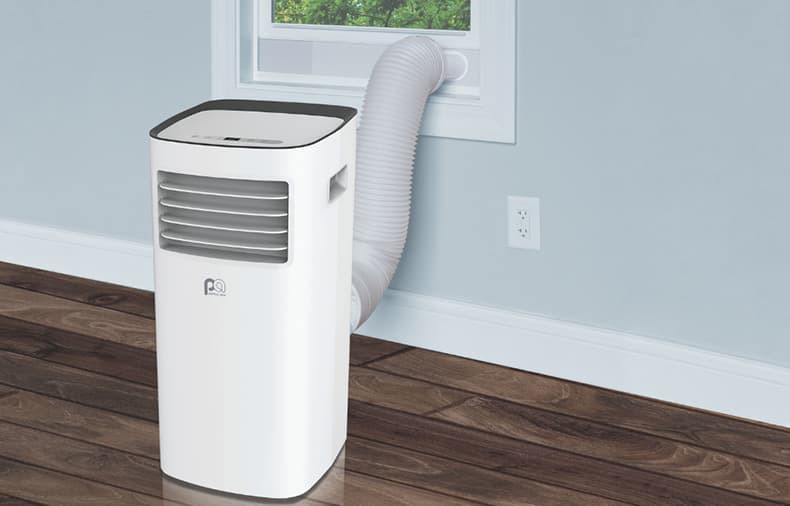
- Premium Options: The GE Profile series introduces dual-hose technology, drawing outside air for exhaust while expelling hot air separately. This design significantly improves airflow and cooling speed compared to single-hose units. Accordion-style hoses fold neatly for compact storage, reflecting GE’s focus on user-friendly design.
Key Features That Set General Electric Portable AC Apart
Smart Home Integration Excellence
GE leads in accessible smart features. The SmartHQ app supports Wi-Fi control and voice commands. A standout geolocation feature detects when your phone approaches home, automatically adjusting settings to pre-cool the space efficiently. This intelligent automation prevents energy waste while guaranteeing comfort upon arrival.
Multi-Functional Operating Modes
Most units operate in cooling, dehumidifying, and fan-only modes. Dehumidification is ideal for humid climates or transitional seasons, while fan-only mode circulates air without compressor usage, saving energy during mild weather. This versatility makes the unit a year-round comfort tool.
Installation Simplicity
Each model ships with a complete window kit, including an adjustable bracket for double-hung or sliding windows, exhaust hose, connector, and foam weatherstripping. Setup typically takes 10–15 minutes with minimal tools, creating an airtight seal that prevents hot air infiltration and maintains cooling efficiency.
Maintenance and Filter Accessibility
All units feature washable, reusable filters that trap dust and pollen. Cleaning every few weeks maintains airflow, protects the compressor, and ensures consistent air quality without ongoing filter replacement costs. Regular cleaning also extends component life by preventing dust accumulation on cooling coils.
Comparing BTU Ratings and Room Size Requirements
Selecting appropriate cooling capacity prevents two common mistakes: purchasing an undersized unit that runs constantly without reaching target temperatures, or buying an oversized system that cycles too frequently, reducing dehumidification effectiveness.
- 6,100 BTU: Up to 250 sq ft | Ideal for small bedrooms, home offices, studios | Example: APFA06YBMW
- 8,000 BTU: Up to 300 sq ft | Suitable for medium bedrooms, guest rooms | Example: APFA08YBMW
- 10,000–11,000 BTU: Up to 450 sq ft | Designed for living rooms, master bedrooms, offices | Examples: APCA10YABW, APCA11YBMW
- 14,000 BTU: Up to 550 sq ft | Built for large living areas, open-concept spaces | Example: APSA13YBMW
Additional Factors Affecting Cooling Needs
Room dimensions are just the starting point. Vaulted ceilings require 10–15% more capacity per extra foot above eight feet. Rooms with heavy afternoon sun or south/west-facing windows need roughly 10% additional cooling. Each occupant beyond two people adds about 600 BTU to the requirement, as do computers, TVs, and other electronics. Poor insulation, single-pane windows, or inadequate weather stripping may necessitate 20–30% more capacity to maintain comfort.
Installation Best Practices for Maximum Efficiency
Proper setup maximizes efficiency and minimizes electricity consumption. Ensure the window kit is tightly sealed with no gaps, using extra foam tape if needed. Keep the exhaust hose as straight as possible; each 90-degree bend reduces airflow by 10–15%. Avoid kinks and maintain the shortest practical distance to the window.
Place the unit away from heat sources and direct sunlight. Position it in shaded areas when possible, and leave 12–18 inches of clearance on all sides for proper ventilation. Center placement near interior doorways helps distribute cool air naturally throughout adjacent spaces.
Maximizing Cooling Performance
Contain cooled air by closing doors and windows in the target zone. In open layouts, pair the AC with strategically placed fans to push air into adjacent rooms. Ceiling fans set to counterclockwise rotation enhance circulation without significant energy use. During peak heat hours, use blackout curtains or reflective blinds to block solar gain, allowing the unit to work less hard and run quieter.
Energy Efficiency and Operating Costs
Understanding power consumption helps manage expenses. A typical 10,000 BTU unit draws 1,000–1,200 watts, costing roughly $1.20–$1.80 daily for eight hours of use at average U.S. rates ($0.15/kWh). Monthly summer costs range from $36–$54, significantly lower than whole-home central systems. EnergyStar-certified models reduce consumption by 10–15%.
The SmartHQ app tracks usage patterns, enabling scheduled shutdowns during unoccupied hours or automated temperature adjustments via geolocation to prevent energy waste. These smart features allow precise control over operating schedules, ensuring comfort without unnecessary runtime.