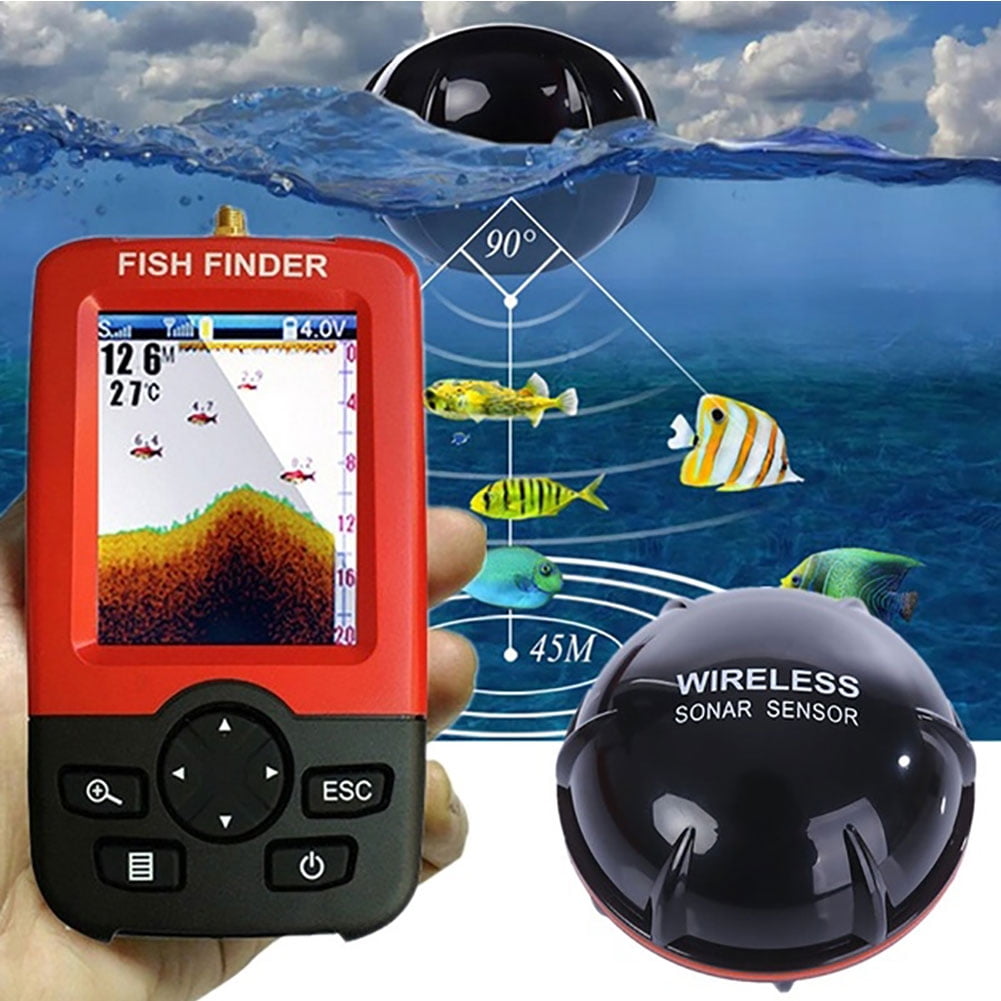
Finding fish in vast bodies of water has always been one of the biggest challenges anglers face, whether fishing from a boat, kayak, or shoreline. A portable fish finder revolutionizes this age-old problem by using cutting-edge sonar technology to reveal what’s happening beneath the water’s surface. These compact devices have transformed recreational and professional fishing by providing real-time data about fish location, water depth, bottom contours, and underwater structures. Unlike traditional fixed fish finders that require permanent installation on boats, portable models offer incredible versatility and convenience that appeals to modern anglers who value flexibility and mobility in their fishing adventures.
The fishing electronics market has experienced explosive growth over the past decade, with portable fish finders leading the charge in innovation and accessibility. These devices range from simple, budget-friendly models perfect for casual weekend anglers to sophisticated units with GPS mapping, wireless connectivity, and high-definition imaging capabilities that rival professional-grade equipment. Understanding how these devices work, what features matter most, and which models deliver the best value can significantly improve your fishing success rate while making your time on the water more enjoyable and productive.
Understanding How a Portable Fish Finder Actually Works
The technology behind a portable fish finder relies on sonar principles that have been refined over decades of marine electronics development. At its core, every fish finder contains a transducer that emits sound waves into the water at specific frequencies, typically ranging from 50 kHz to 800 kHz depending on the model and intended use. When these sound waves encounter objects underwater—whether fish, structures, vegetation, or the bottom itself—they bounce back to the transducer, which then converts these echoes into electrical signals. The device’s processor analyzes the time it takes for each signal to return and the strength of the echo, translating this raw data into visual representations that anglers can interpret on their display screens.
Different frequencies serve distinct purposes and offer varying levels of detail and depth penetration. Lower frequencies like 50 kHz or 83 kHz penetrate deeper water and provide broader coverage areas, making them ideal for deep-sea fishing or scanning large areas quickly. However, they sacrifice some detail and resolution in the process. Higher frequencies such as 200 kHz, 455 kHz, or even 800 kHz offer exceptional detail and target separation, allowing you to distinguish individual fish and identify smaller objects with remarkable clarity. The tradeoff is reduced depth capability and narrower cone angles. Many modern portable fish finders utilize dual-frequency or even multi-frequency technology, automatically switching between frequencies or combining data from multiple frequencies to provide optimal performance across various depths and conditions.
The transducer’s cone angle determines the coverage area beneath your boat or fishing location. Traditional cone angles range from 20 degrees for narrow, focused beams to 60 degrees for wider coverage. Some advanced models feature side-imaging and down-imaging technologies that dramatically expand coverage and provide photographic-quality images of underwater structures. The display screen presents this information in various formats, including traditional 2D sonar views that show fish as arches or marks, flasher displays popular with ice fishermen, or detailed imaging views that reveal structure with stunning clarity. Understanding these fundamental principles helps anglers choose the right portable fish finder for their specific fishing style and target species.
Key Features That Separate Basic from Advanced Portable Fish Finders
When evaluating different portable fish finder options, several critical features determine overall performance, usability, and value. Display quality ranks among the most important considerations because even the most powerful sonar system becomes nearly useless if you can’t clearly see the information it provides. Screen size varies from compact 3-inch displays suitable for ice fishing or kayak applications to larger 7-inch or 9-inch screens that offer more viewing area but sacrifice some portability. Resolution matters tremendously—higher pixel counts deliver sharper, more detailed images that make fish identification and structure interpretation much easier, especially in bright sunlight or from difficult viewing angles.
Display brightness and sunlight readability separate premium models from budget options. Many anglers fish during peak sunlight hours when glare can render cheaper displays nearly invisible. Quality portable fish finders feature high-brightness screens measured in nits, often exceeding 1000 nits for the best visibility in direct sunlight. Some models incorporate anti-glare coatings or bonded screens that eliminate the air gap between the protective lens and the display panel, reducing reflections and improving contrast. Color displays generally provide better detail discrimination than monochrome screens, though they consume more battery power. The best units offer customizable color palettes that let you adjust the display to match your preferences and lighting conditions.
Battery life and power management directly impact how long you can fish before needing to recharge or replace batteries. Portable fish finders typically run on rechargeable lithium-ion batteries or standard AA or AAA batteries, with runtime varying from 4 hours to over 20 hours depending on the model, display size, and usage patterns. Units with larger, brighter screens naturally consume more power than compact models. Many anglers carry spare batteries or portable power banks to extend their fishing sessions. Some high-end models feature intelligent power management systems that automatically adjust screen brightness and sonar ping rates to maximize battery life without significantly compromising performance.
GPS and mapping capabilities transform a portable fish finder from a simple fish locator into a comprehensive fishing system. Built-in GPS enables waypoint marking, allowing you to save productive fishing spots and navigate back to them with precision. This feature proves invaluable when you discover a hidden honey hole or locate a specific structure that holds fish. Advanced models include detailed mapping software preloaded with thousands of lakes, rivers, and coastal areas, showing contours, depths, and sometimes even fishing hot spots identified by other anglers. Some units support custom mapping, letting you create your own detailed lake maps as you explore new waters. The combination of real-time sonar and accurate mapping creates a powerful fishing intelligence system that consistently puts you on fish.
Types of Portable Fish Finders for Different Fishing Scenarios
Castable fish finders represent one of the most innovative categories in portable fishing electronics, offering unprecedented versatility for shore anglers, kayakers, and anyone who wants to scout water without entering it. These sphere-shaped devices attach to your fishing line and cast out like a bobber, using Bluetooth or Wi-Fi to transmit sonar data back to your smartphone or tablet. The range typically extends from 100 to 300 feet depending on the model and environmental conditions. Castable units shine when fishing from shore, docks, or piers where traditional boat-mounted systems aren’t practical. They also excel for pre-fishing tournaments, allowing anglers to quickly scout multiple locations without launching a boat. However, they have limitations—battery life is usually limited to a few hours, depth capability rarely exceeds 250 feet, and you can only view data when the unit is in the water, not while actively fishing with it.
Handheld portable fish finders with built-in displays offer the classic portable fishing electronics experience that many anglers prefer. These self-contained units feature integrated screens, batteries, and controls in a compact, weather-resistant housing that you can easily transport and deploy anywhere. The transducer connects via cable and can be mounted temporarily on a kayak, canoe, or small boat using suction cups, clamps, or float systems. Many handheld models also work excellently for ice fishing, with specialized flasher modes and zoom features perfect for vertical jigging. These units typically offer superior battery life compared to castable models, with many running 10-15 hours or more on a single charge. They also provide more robust feature sets, including better sonar performance, larger displays, and advanced signal processing that delivers clearer, more detailed images in challenging conditions.
Wireless portable fish finders bridge the gap between castable and handheld models by using your smartphone or tablet as the display while offering more flexibility in transducer placement. These systems typically include a compact sonar module that houses the transducer and wireless transmitter, which can be mounted to your boat, kayak, or float tube using various mounting options. Your mobile device receives data via Bluetooth or Wi-Fi and displays it using a dedicated app. This approach offers several advantages—you already own the display device, the apps often receive regular updates with new features and improvements, and you can use a larger screen than most dedicated handheld units provide. The downside involves potential connectivity issues, dependence on your phone’s battery life, and the need to protect your expensive mobile device from water damage. Many anglers use waterproof cases or mounts to mitigate these concerns while enjoying the convenience and large display area these systems provide.
Choosing the Right Portable Fish Finder for Your Fishing Style
Kayak anglers require specialized portable fish finder features that accommodate the unique challenges of fishing from these compact, agile watercraft. Compact size and lightweight design are paramount since kayaks have limited storage space and weight capacity affects performance and stability. Many kayak fishermen prefer units with screens in the 4-5 inch range that provide enough detail without dominating the limited dashboard space. Transducer mounting presents unique challenges on kayaks—through-hull installations aren’t practical, so most anglers use scupper mounts that fit into drain holes, shoot-through-hull mounts that attach inside the kayak and transmit through the plastic, or arm mounts that position the transducer beside the kayak. Battery consumption matters more in kayak applications because space constraints limit the size of the power supply you can carry. Models with long battery life or the ability to run on portable power banks are highly valued by kayak anglers who often spend entire days on the water far from charging opportunities.
Ice fishing enthusiasts need portable fish finders optimized for vertical fishing in cold conditions where traditional sonar displays become less effective. Flasher mode represents the gold standard for ice fishing electronics, displaying real-time sonar returns in a circular format that immediately shows your lure, the bottom, and any fish in between without the lag inherent in scrolling displays. This instant feedback lets you see how fish react to your jigging technique and detect subtle bites that might otherwise go unnoticed. Zoom functions allow you to focus on specific depth ranges, especially important when targeting suspended fish or fishing in deep water where the entire water column doesn’t fit on one screen. Cold-weather performance is critical—lithium batteries perform better in freezing temperatures than standard alkaline cells, and units with bright, high-contrast displays remain visible even in bright snow glare conditions. Portability reaches its peak importance in ice fishing, where you might drill dozens of holes searching for active fish, so lightweight, compact units with built-in transducers that fit through standard 8-inch ice holes are strongly preferred.
Shore and bank anglers face different challenges that make castable or wireless portable fish finders ideal solutions. Since you can’t position a transducer directly beneath where you’re fishing, castable models let you scout structure, locate fish, and determine depth in areas you plan to target. This intelligence gathering dramatically improves your fishing efficiency by eliminating unproductive water and helping you select appropriate tackle and techniques. Wireless models with float systems work well for shore anglers who fish from the same spot regularly—you can position the sonar float in your fishing zone and monitor it continuously from your phone. Range becomes a critical factor, as you need sufficient distance to reach productive water while maintaining reliable data transmission. Battery life matters less for castable units since you typically retrieve them between uses, but it’s important for floating wireless systems that remain deployed throughout your fishing session.
Top Portable Fish Finder Technologies Explained
CHIRP sonar technology has revolutionized fish finder performance and represents the current standard in quality portable fish finders. Unlike traditional sonar that transmits single-frequency pulses, CHIRP (Compressed High-Intensity Radiated Pulse) sweeps across a range of frequencies within each pulse, transmitting a longer-duration signal that packs more energy into the water. This approach delivers significantly better target separation, allowing you to distinguish individual fish in schools, differentiate your lure from nearby fish, and identify targets near the bottom that traditional sonar would blend into a single return. CHIRP also improves depth capability and works better in challenging conditions like heavy vegetation, thermoclines, or areas with lots of suspended particles. The enhanced detail helps anglers make better decisions about lure presentation, identify specific species based on size and behavior, and understand underwater structure with unprecedented clarity. Most modern portable fish finders in the mid-range and premium segments now incorporate CHIRP technology, and the performance improvement over older pulse sonar is immediately noticeable even to novice users.
Down-imaging and side-imaging technologies provide photographic-quality views of underwater structure that traditional sonar simply cannot match. Down-imaging uses very high frequencies (typically 455 kHz or 800 kHz) focused into a thin, wide beam that scans directly beneath your boat like a copy machine, producing detailed images that reveal individual rocks, logs, fish, and bottom composition with remarkable clarity. You can easily distinguish hard bottom from soft bottom, identify specific structure types, and locate fish holding tight to cover. Side-imaging extends this concept by scanning to both sides of your boat, covering swaths of water up to 240 feet wide or more, depending on depth and water conditions. This massive coverage lets you efficiently scout large areas, locate distant structure, and identify fish-holding areas without having to pass directly over them. The images produced by these technologies look remarkably like aerial photographs and require some practice to interpret, but once you learn to read them, they provide fishing intelligence that gives you a tremendous advantage over anglers using traditional sonar alone.
Suggested read: Best Fish Finder Portable Devices That Will Transform Your Fishing in 2024
GPS and mapping integration elevates a portable fish finder from a tactical fish-finding tool to a strategic fishing system that improves your efficiency and success across multiple trips. When your fish finder includes accurate GPS, you can mark waypoints for productive locations, structure, hazards, or any other points of interest. This feature becomes invaluable when fishing large bodies of water where relocating specific spots without GPS would be nearly impossible. The ability to create and follow routes helps you navigate safely and efficiently, especially in unfamiliar waters or low-visibility conditions. Advanced mapping features display detailed lake contours, allowing you to identify drop-offs, underwater points, and depth changes that typically hold fish without having to actually see them with sonar first. Some premium portable fish finders include thousands of preloaded maps covering popular fishing destinations worldwide, while others support custom mapping that lets you create your own high-resolution maps as you explore. The synergy between real-time sonar data and GPS mapping creates a complete fishing intelligence picture that consistently helps you catch more fish.
Installation and Setup Tips for Maximum Performance
Proper transducer placement dramatically affects the performance of your portable fish finder and represents one of the most common areas where anglers compromise their system’s effectiveness. The transducer must remain fully submerged during operation and should be positioned where it has clean water flow without turbulence, air bubbles, or interference from the hull or mounting hardware. For portable installations, this means careful consideration of mounting location based on your watercraft type. On kayaks, scupper mounts work well because they position the transducer in clean water away from the hull, but you must ensure the mounting pole is long enough to keep the transducer submerged even when the kayak rocks or waves pass underneath. Suction cup mounts offer quick installation and removal but can detach if not properly cleaned and secured to smooth surfaces. Transom mounts work excellently on small boats but require the transducer to be adjusted to the proper depth and angle—too high and you get intermittent readings, too low and you create drag and risk damage.
Transducer orientation also matters significantly for optimal performance. Most transducers should be installed so they point straight down, perpendicular to the water surface, rather than angled forward or backward. Tilting the transducer causes the sonar beam to strike the bottom at an angle, which can produce distorted readings, false bottom returns, or complete signal loss at depth. When using side-imaging or down-imaging technologies, proper transducer orientation becomes even more critical because the narrow beams used by these systems are highly sensitive to alignment issues. Some portable fish finder models include gimbal mounts or adjustable brackets that let you fine-tune the transducer angle after installation, which is helpful for achieving optimal performance on different watercraft or in various conditions.
Display positioning and protection deserve careful consideration to maximize usability and protect your investment. The screen should be positioned where you can easily view it without creating an awkward posture or obstructing your fishing activities. For kayak installations, dashboard-mounted RAM ball mounts offer excellent adjustability and quick release capability when you need to remove the unit. The display should be angled to minimize glare and positioned close enough to operate controls without stretching or leaning excessively. Protecting the screen from impact, scratches, and water damage extends the life of your portable fish finder significantly. Many manufacturers offer protective cases or covers designed specifically for their models. Even water-resistant units benefit from covers when not in use, as they protect against sun damage, dust, and accidental impacts during transport. Consider using a screen protector to guard against scratches, and always secure the unit with a lanyard or tether to prevent losing it overboard if the mount fails or you hit rough water.
Comparing Popular Portable Fish Finder Brands and Models
Garmin Striker series has earned its reputation as one of the most popular portable fish finder lines by delivering reliable performance, user-friendly interfaces, and solid build quality at reasonable price points. The Striker 4, Striker 5, and Striker 7 models offer progressively larger screens and more advanced features, but all share Garmin’s excellent sonar processing and intuitive menu systems. These units include CHIRP sonar for superior target separation, built-in GPS for waypoint marking and speed tracking, and high-sensitivity receivers that maintain signal lock even in challenging conditions. The Striker Plus models add quickdraw contours mapping, which lets you create custom maps with one-foot contours as you explore new waters. Battery life typically ranges from 5-8 hours depending on screen brightness and usage patterns. The Striker series works particularly well for kayak anglers and ice fishermen who want reliable performance without overwhelming complexity or high cost. Many users appreciate the Striker’s simplified interface that focuses on fishing rather than cluttering the screen with unnecessary information.
Humminbird Helix series represents the premium end of portable fish finder technology, offering some of the most sophisticated sonar and mapping capabilities available in portable formats. Helix models feature large, high-resolution displays with outstanding sunlight visibility, dual-spectrum CHIRP sonar, and advanced imaging technologies including MEGA Side Imaging and MEGA Down Imaging that provide the clearest underwater views in the industry. The Helix 5, 7, and 9 models suit different portability needs and budgets, with the larger screens offering more viewing area at the cost of some compactness. GPS and mapping capabilities are exceptional, with support for Navionics and LakeMaster mapping cards that provide incredibly detailed lake maps complete with highlighted fishing areas and depth contours. The interface is more complex than simpler units, reflecting the extensive feature set, but Humminbird’s cross-touch interface combining touchscreen and physical controls makes operation intuitive once you learn the system. Many professional anglers choose Helix units because they provide tournament-level intelligence in a package you can move between boats or use in portable applications.
Deeper portable fish finders pioneered the castable fish finder category and continue to lead it with innovative designs and smartphone integration. The Deeper PRO+ and Deeper CHIRP+ models cast like a fishing bobber and connect to your phone or tablet via Wi-Fi, providing sonar data you can view from shore, boat, or ice. These units excel for anglers who want to scout water before fishing, explore areas inaccessible to boats, or simply avoid the expense and complexity of traditional fish finders. Depth capability reaches 330 feet for the PRO+ and 100 feet for the CHIRP+ model. The smartphone app offers GPS mapping, allowing you to create bathymetric maps as you cast and retrieve the unit. Battery life typically provides 5-6 hours of continuous use, and the compact size makes these units incredibly portable—they easily fit in a tackle box or jacket pocket. The main limitation involves the temporary nature of the data—you only receive sonar information while the unit is in the water, not while you’re actively fishing. However, for shore anglers, ice fishermen, and kayakers who want lightweight, affordable portable fish finder technology, Deeper units deliver excellent value and performance.
Real-World Performance: What to Expect from Different Price Ranges
Budget portable fish finders under $150 typically offer basic sonar functionality with smaller displays, single-frequency operation, and limited features beyond showing fish and bottom depth. These entry-level units serve casual anglers well who fish occasionally and primarily want to confirm water depth and locate general fish activity. Display sizes usually range from 3.5 to 4.5 inches with lower resolution screens that can be challenging to read in bright sunlight. Depth capability typically maxes out around 240-300 feet, which is adequate for most freshwater fishing but limiting for deep-water applications. Battery life tends to be shorter, often 4-6 hours, and build quality may not withstand heavy abuse or harsh conditions as well as premium models. However, these units still provide valuable fishing intelligence that dramatically outperforms fishing blind, and they represent an excellent starting point for anglers new to electronics who want to explore fish finder benefits without major investment.
Mid-range portable fish finders in the $200-$500 range deliver significant performance improvements that serious anglers immediately notice and appreciate. This price segment typically includes CHIRP sonar for better target separation, larger displays with higher resolution, GPS functionality for waypoint marking, and better battery life ranging from 8-12 hours. Build quality improves substantially, with better waterproof ratings, more durable housings, and screens designed for sunlight readability. Many mid-range units offer dual-frequency or multi-frequency capability, allowing you to switch between wide coverage and detailed views as conditions demand. The interface becomes more sophisticated with customization options for display colors, alarm settings, and sonar sensitivity. This price range represents the sweet spot for dedicated recreational anglers who fish regularly and want reliable, capable electronics without paying for professional features they won’t use. The performance difference compared to budget models is substantial enough that most anglers who upgrade from entry-level units to mid-range models never look back.
Premium portable fish finders above $500 push the boundaries of fishing electronics technology with cutting-edge features that provide professional-level fishing intelligence. These units typically include advanced imaging technologies like side-imaging and down-imaging that reveal underwater structure with photographic clarity. Display quality reaches its peak with large, high-resolution screens exceeding 1000 nits brightness, making them readable even in harsh glare conditions. GPS and mapping capabilities expand to include detailed preloaded maps, custom mapping creation, and sometimes networking capability that lets you share waypoints and routes with other units. Battery technology improves with efficient power management systems that can run these feature-rich units for 15-20 hours or more. Build quality is exceptional, with robust waterproof housings designed to withstand the rigors of professional fishing where electronics are used daily in all weather conditions. Tournament anglers and serious fishing enthusiasts who want every possible advantage choose premium units because the detailed information they provide often makes the difference between success and going home empty-handed.
Essential Accessories to Enhance Your Portable Fish Finder Setup
Mounting solutions dramatically affect how well your portable fish finder performs and how convenient it is to use in different fishing situations. RAM mounting systems have become the industry standard for marine electronics because their ball-and-socket design provides infinite adjustability while maintaining secure positioning even in rough conditions. A typical kayak setup might include a RAM mount ball base that attaches to your kayak’s track system or dashboard, connected to a mount-specific adapter for your fish finder via a RAM arm of appropriate length. This configuration lets you position the display exactly where you want it and quickly adjust it for different viewing angles or fishing positions. For ice fishing, portable stands or clamp mounts let you set up your fish finder beside your hole without permanent installation. Float systems designed for wireless portable fish finders keep the transducer stable and properly oriented while fishing, often including battery compartments and weather protection. Investing in quality mounting hardware prevents frustration, protects your equipment, and ensures you can actually use your fish finder effectively in real fishing conditions.
Battery solutions and power management extend your fishing time and provide backup power when you need it most. While most portable fish finders include built-in rechargeable batteries, carrying additional power options prevents the disappointment of watching your screen go dark in the middle of a hot bite. Lithium-ion portable power banks designed for outdoor use provide compact, lightweight backup power that can extend runtime by several hours or even double it, depending on capacity. These power banks typically feature waterproof housings, multiple USB outputs, and enough capacity to charge your fish finder multiple times. For longer fishing trips or when using power-hungry units with large displays and advanced sonar, dedicated 12-volt batteries designed for marine electronics deliver extended runtime without the bulk and weight of full-size marine batteries. Some anglers use small sealed lead-acid batteries or lithium-ion battery packs specifically designed for fish finder applications. Always carry appropriate charging cables and consider a car charger for recharging during travel between fishing spots.
Protective cases and storage solutions protect your investment during transport and storage while keeping all your components organized and ready to deploy. Many portable fish finder manufacturers offer custom-fit cases designed specifically for their models, with compartments for the display unit, transducer, cables, and mounting hardware. These cases typically feature waterproof or water-resistant construction with foam padding that protects against impacts during transport in vehicles, boats, or while hiking to remote fishing locations. Hard-sided cases provide maximum protection but add weight and bulk, while soft-sided bags offer lighter weight and easier storage at the cost of some protection. Organization matters—cases with multiple compartments and cable management features prevent tangled wires and make setup faster when you reach the water. If you frequently switch your portable fish finder between different watercraft or fishing situations, consider keeping dedicated mounting hardware for each application stored in your case so you always have what you need without having to remove and reinstall mounts constantly.
Optimizing Settings for Different Fishing Conditions
Shallow water settings require specific adjustments to prevent interference and ensure your portable fish finder provides useful information when fishing in 20 feet of water or less. Shallow water presents unique challenges because the sonar signal travels to the bottom and back very quickly, and fish often appear very close to the surface or bottom on the display, making them harder to distinguish. Reducing the range setting so the display only shows the actual depth you’re fishing helps spread out the water column vertically on the screen, making fish easier to see. Many anglers fishing in 10 feet of water make the mistake of leaving their range set to auto or 100 feet, which compresses all the action into a tiny sliver at the top of the screen. Sensitivity adjustments also matter in shallow water—you might need to reduce sensitivity to prevent surface clutter and noise from overwhelming actual fish signals. Frequency selection influences performance in shallow environments, with higher frequencies like 200 kHz providing better detail and target separation when depth isn’t a limiting factor.
Deep water fishing demands different settings and understanding of your portable fish finder’s capabilities and limitations. When fishing in 100 feet of water or deeper, lower frequencies penetrate better and maintain signal strength throughout the entire depth range. Many units offer 83 kHz or 50 kHz options that work better for deep applications than standard 200 kHz. Increasing sensitivity helps in deep water because the sonar signal weakens as it travels longer distances, but too much sensitivity adds noise and false returns that clutter the display. Using zoom functions to focus on specific depth ranges where you expect fish improves detail—if you’re targeting suspended fish at 60-80 feet, zooming into that window lets you see more detail than viewing the entire 150-foot water column at once. Ping speed or scroll speed adjustments affect how often the sonar updates, with faster speeds providing more real-time information but consuming more battery power. Deep water fishing often involves slower boat speeds, so reducing scroll speed matches actual bottom movement and prevents display clutter.
Dealing with interference and clutter challenges every fish finder user at some point, and understanding how to minimize these issues improves your fishing efficiency. Surface clutter appears as a thick band of returns just below the surface caused by waves, algae, suspended particles, or temperature layers. Reducing sensitivity helps, as does using the clutter or interference rejection features many portable fish finders include. These filters identify and remove repetitive noise patterns while preserving actual fish returns. However, too much filtering can remove weak fish signals, so finding the right balance requires experimentation in your specific conditions. Electrical interference from other electronics, radio antennas, or even the motor on your kayak’s fish finder can create vertical lines or random noise on the display. Moving cables away from the fish finder unit, using shielded cables, or repositioning the transducer often solves these problems. In tournaments or crowded fishing areas, multiple fish finders operating on the same frequency can interfere with each other—switching to an alternative frequency band or adjusting your ping rate can reduce this interference.
Maintenance and Care for Long-Term Reliability
Cleaning and protecting your portable fish finder after each use prevents damage and maintains optimal performance throughout its lifespan. Freshwater isn’t particularly corrosive, but mineral deposits, algae, and dirt can accumulate on the transducer face, reducing sonar performance by blocking or scattering the signal. After fishing, rinse the entire unit and transducer with clean fresh water, paying special attention to the transducer face and any mounting hardware. Use a soft cloth to gently wipe the screen and housing, avoiding abrasive materials that could scratch the display or protective coatings. The transducer face is particularly sensitive—never use harsh chemicals or abrasive cleaners on it, as damage to the transducer can significantly degrade sonar performance or render it completely nonfunctional. For saltwater use, thorough rinsing becomes even more critical because salt crystals and corrosion can damage electronics and mounting hardware. Some anglers apply marine-grade corrosion inhibitor to mounting hardware and connections to prevent long-term corrosion issues.
Battery maintenance directly impacts the longevity and reliability of your portable fish finder between charges. Lithium-ion batteries, which power most modern portable fish finders, last longest when kept between 20% and 80% charge rather than being fully discharged or constantly kept at 100%. Before storing your unit for extended periods, charge it to approximately 50% rather than full or empty, as this reduces stress on the battery chemistry. Store the unit in a cool, dry place away from temperature extremes—excessive heat degrades lithium batteries quickly, while extreme cold can damage them permanently. Many portable fish finders feature removable batteries, making it easy to store the battery separately from the main unit during off-season storage. If your unit uses replaceable AA or AAA batteries, remove them before storage to prevent corrosion damage if they leak. Check battery contacts periodically for corrosion, cleaning them with a cotton swab and contact cleaner if you notice any buildup that could affect conductivity.
Suggested read: The Ultimate Guide to Griddle Portable : Transform Your Outdoor Cooking Experience
Software updates and troubleshooting keep your portable fish finder operating at peak performance with the latest features and bug fixes. Many modern units support firmware updates that add new capabilities, improve existing features, or fix performance issues discovered after manufacturing. Check the manufacturer’s website periodically for available updates, and follow their instructions carefully to avoid corrupting the device’s software during the update process. Some newer portable fish finders with wireless connectivity can update directly from your smartphone app, making the process remarkably convenient. When problems arise, systematic troubleshooting usually identifies the issue quickly. No display or power issues typically indicate battery problems or poor connections—check that the battery is charged and properly installed, and inspect all power connections for corrosion or damage. Poor sonar performance often relates to transducer problems like improper installation, a damaged transducer face, or interference from nearby electronics. GPS issues might stem from obstructed satellite view or needing to reset the GPS receiver. Most manufacturers provide detailed troubleshooting guides in their user manuals or support websites, and their customer service teams can help with problems you can’t solve yourself.
Understanding Sonar Returns and Reading Your Display Like a Pro
Identifying fish versus structure represents one of the most important skills for getting maximum value from your portable fish finder. Fish appear as arches on traditional 2D sonar displays because as your boat moves past a stationary fish, the sonar beam first catches the fish at the edge of the cone where depth appears greater, then directly beneath where it’s shallowest, then at the opposite edge where depth increases again—this creates the characteristic arch shape. However, fish don’t always appear as perfect arches. If your boat moves very slowly or the fish swims at the same speed as your boat, the fish might appear as a straight line or even just a dot. Fish size, sonar strength, and sensitivity settings all affect how fish appear. Larger fish or schools create stronger, thicker returns, while small baitfish might appear as clouds or faint specks. Structure like rocks, logs, and vegetation creates returns that extend upward from the bottom, often with harder, brighter returns than the softer bottom itself. Learning to distinguish these different signatures takes practice, but most anglers develop good interpretation skills after spending a few trips actively comparing what they see on the screen to what they know exists in waters they fish regularly.
Bottom composition interpretation provides valuable fishing intelligence because different species prefer different bottom types, and understanding what you’re seeing helps you fish more effectively. Hard bottoms composed of rock, gravel, or clay appear as bright, strong returns with a thin, distinct bottom line and little or no secondary returns beneath it. Soft bottoms like mud or silt produce weaker returns with a thicker, less defined bottom line often showing a secondary return slightly below the primary return as the sonar signal penetrates into the soft material before reflecting back. Vegetation appears as returns rising from the bottom, sometimes with characteristics that help identify the type—tall weeds show as vertical structures reaching from the bottom toward the surface, while low grass or moss creates a fuzzy appearance on the bottom. Understanding these differences helps you select appropriate tackle—fishing soft bottoms requires different lures and techniques than fishing rock or wood. Many game fish species show strong preferences for specific bottom types, so identifying these areas helps you eliminate unproductive water and focus on locations where your target species is likely to be present.
Using depth and temperature information strategically elevates your fishing from randomly searching to understanding where fish should be and why. Most game fish species have preferred temperature ranges where they’re most active and comfortable. During summer, fish often suspend at specific depths where the thermocline creates their ideal temperature zone—your portable fish finder with temperature capability can reveal these layers, allowing you to target your presentations at the exact depth where fish are most likely to be active. Depth contours visible on your display or mapping screen show key structure elements like drop-offs, points, and channels that concentrate fish. The depth at which you mark fish tells you whether to use deep-diving crankbaits, weighted rigs, or surface presentations. Watching how fish depth changes throughout the day helps you understand daily movement patterns—fish might be shallow early morning, move to deeper structure during midday heat, then return to shallows during evening feeding periods. Recording this information along with time, weather conditions, and water temperature helps you build a fishing pattern that consistently puts you on fish during future trips to the same waters.
Advanced Techniques: Getting More from Your Portable Fish Finder
Waypoint management and mapping strategies transform scattered fishing success into repeatable patterns that consistently produce. Every time you catch a fish, mark a waypoint immediately—don’t trust your memory to remember exactly where you were, especially on large bodies of water where landmarks provide limited reference. Include notes with your waypoints indicating date, species caught, presentation used, and water conditions. This data becomes invaluable over time, revealing patterns like “northern point in 15 feet produces bass on spinnerbaits during spring mornings” or “submerged hump at 22 feet holds crappie during summer thermocline periods.” Creating routes between productive waypoints optimizes your time on the water by eliminating guesswork about where to fish next. Many successful anglers develop detailed custom maps of their favorite lakes, marking not just where they caught fish but also structure, vegetation edges, and depth changes that might hold fish in different seasons or conditions. This systematic approach to waypoint management essentially creates a personal fishing database that grows more valuable with every trip.
Combining sonar with visual observation provides the complete fishing intelligence picture that neither source alone can deliver. Your portable fish finder shows what’s happening beneath the surface, but visual clues above water add critical context. When you mark fish on your sonar but notice baitfish activity on the surface, you know predators are actively feeding and aggressive presentations might work best. If your fish finder shows schools of baitfish but no gamefish, scanning for diving birds, surface disturbances, or other predator indicators helps you locate where the action is actually happening. Understanding the relationship between what your electronics show and what you observe helps you make better decisions about lure selection, presentation speed, and fishing technique. Experienced anglers constantly correlate sonar information with environmental factors like wind direction, sun position, water clarity, and seasonal patterns to build a complete understanding of why fish position themselves in specific locations and how to catch them most effectively.
Utilizing multiple frequencies and views simultaneously on advanced portable fish finders that support split-screen or multi-window displays provides comprehensive information that helps you make faster, better fishing decisions. Running traditional 2D sonar on one side of the screen with down-imaging or side-imaging on the other lets you see both real-time fish location and detailed structure information simultaneously. The 2D sonar excels at showing fish and tracking your lure or bait as it descends, while imaging technologies reveal structure details that help you understand the complete underwater environment. Some anglers prefer displaying different frequency ranges side by side—a lower frequency for depth penetration and coverage paired with higher frequency for detail and target separation. This approach works particularly well when fishing suspended fish over deep water, where the wide-angle, deep-penetrating frequency helps locate fish while the detailed frequency identifies individual targets and maintains track of your presentation. Experimenting with different display configurations helps you discover which combinations provide the most useful information for your specific fishing situations and personal preferences.
Portable Fish Finder Performance in Specialized Fishing Applications
Tournament fishing applications demand the absolute best performance from portable fish finders because competition intensity and prize money justify premium equipment. Tournament anglers often use their portable fish finders to pre-fish events, scouting multiple lakes or reservoirs to identify patterns and productive areas before competition begins. The ability to create detailed custom maps with marked waypoints for structure, depth changes, and fish-holding locations provides a tremendous advantage when official competition starts and every minute counts. Many tournament formats restrict anglers to specific areas or create off-limits zones, making accurate GPS and mapping capability essential for staying within boundaries while maximizing fishing time. The real-time intelligence portable fish finders provide during competition helps anglers adjust to changing conditions, locate active fish when initial patterns fail, and make strategic decisions about when to move versus continuing to work current locations. Professional bass anglers, walleye tournament competitors, and multi-species tournament fishermen consistently cite quality fish finders as one of their most important tools, and portable models offer the flexibility to move electronics between tournament boats and personal watercraft for practice sessions.
Ice fishing precision reaches its peak when using portable fish finders specifically designed or optimized for vertical presentations in frozen environments. The instantaneous feedback provided by flasher-mode displays shows your lure descending through the water column in real-time, reveals fish approaching or fleeing from your presentation, and detects subtle bites that might be imperceptible through heavy ice and fishing line. Advanced ice anglers watch their portable fish finder displays constantly while jigging, adjusting cadence, lure size, and presentation depth based on how fish respond on the screen. When a fish mark appears below your lure, you know to pause or slow your jigging to let it catch up. When fish rise toward your lure but turn away, you know to downsize or change colors. This real-time intelligence transforms ice fishing from a waiting game into an active, engaging pursuit where you constantly adjust based on fish behavior. The portability aspect becomes crucial when ice fishing because mobile anglers who drill multiple holes searching for active fish need electronics they can quickly move and set up repeatedly throughout the day without complicated installation procedures.
Kayak fishing optimization with portable fish finders requires balancing performance against the unique constraints of human-powered watercraft. Every ounce matters in a kayak, so anglers must carefully consider the trade-offs between display size, battery capacity, and feature sets against overall weight and space requirements. Successful kayak anglers often choose compact units in the 4-5 inch screen range that provide essential functionality without dominating their limited dashboard real estate. Battery management becomes critical during all-day kayak fishing trips where you can’t easily return to shore for charging or battery changes. Many kayak fishermen carry compact portable power banks or spare batteries to extend their fish finder runtime, storing them in waterproof dry bags within reach. The transducer mounting challenges specific to kayaks require careful attention—scupper mounts work well but must be properly installed at the correct depth to maintain signal even when the kayak rocks or waves pass underneath. Some kayak models include integrated transducer mounting systems or track systems that simplify installation, but most require aftermarket mounting solutions. Despite these challenges, portable fish finders have revolutionized kayak fishing by providing intelligence that helps these highly mobile anglers locate and stay on productive water throughout their fishing sessions.
Cost-Benefit Analysis: Is a Portable Fish Finder Worth the Investment?
Quantifying fishing success improvements reveals the tangible value that portable fish finders deliver beyond just the novelty of underwater visibility. Multiple studies and angler surveys consistently show that fish finders improve catch rates by 30-50% or more compared to fishing without electronics, particularly in unfamiliar waters or when targeting species in deeper water. This improvement stems from several factors working together—eliminating unproductive water saves time that you can spend fishing areas that actually hold fish, understanding bottom composition and structure helps you select appropriate presentations, and seeing fish location lets you position baits at the correct depth. For casual anglers who fish occasionally, even modest catch rate improvements justify the investment because every fishing trip becomes more productive and satisfying. Tournament anglers and fishing guides view portable fish finders as essential professional tools that directly impact their competitive success and income, making even premium units excellent investments that pay for themselves quickly through prize money or satisfied clients.
Comparing portable versus fixed installation costs shows that portable fish finders often provide better value for anglers who fish from multiple watercraft or who prefer flexibility in their electronics setup. A quality fixed-installation fish finder system with professional installation typically costs $400-$1500 or more depending on features and complexity, and once installed, it stays with that specific boat. Portable fish finders in the mid-range segment deliver comparable performance for $200-$500, and you can move them between your kayak, a friend’s boat, or use them for ice fishing and shore fishing applications. This versatility means you’re getting more utility from your investment across different fishing scenarios. Additionally, portable units don’t require professional installation, eliminating labor costs and allowing you to upgrade or change equipment without dealing with mounting holes or wiring modifications. For anglers who own multiple watercraft or who fish primarily from kayaks, canoes, or float tubes, portable fish finders represent the obvious choice because permanent installations aren’t practical in these applications.
Long-term value and durability considerations factor significantly into the true cost of ownership for portable fish finders. Premium units with robust construction, quality components, and strong manufacturer support typically last 5-10 years or longer with proper care and maintenance. Budget models might only survive 2-3 seasons before experiencing failures or performance degradation that necessitates replacement. When you calculate cost per fishing trip or cost per year of service, mid-range and premium portable fish finders often deliver better long-term value than repeatedly replacing cheaper units. Manufacturer warranty and customer support also contribute to long-term value—companies that stand behind their products with multi-year warranties and responsive customer service reduce the risk of your investment being lost to premature failure. Software updates that add new features or improve performance extend the useful life of your portable fish finder by keeping it current with evolving technology. Considering these factors alongside initial purchase price provides a more accurate picture of true cost and value over the lifetime of your equipment.
Safety Considerations and Best Practices for Portable Fish Finder Use
Electronics and water safety requires constant vigilance when using portable fish finders because combining electrical devices with water environments creates inherent risks. Always ensure your portable fish finder is rated for the water resistance level appropriate to your fishing style—most units carry IPX ratings that indicate their waterproof capability. IPX7 ratings indicate the device can withstand temporary submersion up to one meter for 30 minutes, which provides adequate protection for most fishing applications. However, water resistance can degrade over time as seals age or if the unit experiences impacts that compromise the housing integrity. Regularly inspect your portable fish finder for cracks, damaged ports, or seal degradation, and immediately address any issues before using the unit around water. When connecting external power sources, ensure all connections are properly sealed and use marine-grade connectors designed for wet environments. Never use damaged charging cables or adapters, as compromised wiring creates shock hazards when exposed to moisture.
Navigational awareness and situational consciousness must remain your top priority even when using the advanced GPS and mapping capabilities of modern portable fish finders. While these devices provide excellent navigational tools, they should supplement rather than replace common sense and visual awareness of your surroundings. When navigating using GPS, continuously verify that the mapped information matches the actual underwater terrain and obstacles you encounter—lakes change over time due to drought, flooding, or submerged hazards not present when maps were created. Always maintain visual lookout for floating debris, other boaters, swimmers, and sudden weather changes regardless of what your electronics show. Many anglers become so focused on their fish finder displays that they fail to notice approaching weather hazards, changing water conditions, or other boats. Set alarms and alerts for shallow water depth warnings, but don’t rely on them exclusively—use your fish finder as one tool among many for safe navigation and fishing.
Battery management for extended safety involves planning ahead to ensure you have sufficient power not just for your portable fish finder but also for safety-critical communication devices and navigation tools. If you’re using your smartphone as the display for a wireless or castable fish finder, monitor battery consumption carefully to ensure you retain enough power for emergency communication if needed. Many anglers carry dedicated portable power banks specifically for safety equipment, keeping them separate from the power sources used for fish finders and convenience electronics. In remote fishing locations or when fishing alone, maintaining communication capability can literally be life-saving if you experience equipment failure, injury, or sudden weather changes. Consider your portable fish finder battery planning within the context of overall trip safety—how long will you be on the water, what backup power do you have, and what’s your plan if electronics fail? Having redundant navigation methods like compass and paper maps, backup lighting, and alternative communication options ensures your safety doesn’t depend entirely on electronic devices that can fail or run out of power at critical moments.
Environmental Factors Affecting Portable Fish Finder Performance
Water clarity and composition impacts on sonar performance vary significantly depending on suspended particles, algae blooms, and mineral content in the water you’re fishing. Extremely clear water typically provides excellent sonar performance because sound waves travel through it efficiently with minimal scattering or absorption. However, water with heavy algae blooms, suspended sediment from recent storms, or high concentrations of plankton can scatter sonar signals and create clutter on your display that obscures actual fish returns. Thermoclines—sharp temperature boundaries between warm surface water and cold deep water—also affect sonar performance by reflecting or refracting sound waves, sometimes creating false bottom readings or split returns. Understanding these environmental impacts helps you adjust sensitivity and filter settings to minimize clutter while maintaining sufficient signal strength to detect fish. In particularly challenging conditions, switching between different sonar frequencies can help, as higher frequencies typically penetrate clutter better while lower frequencies maintain signal strength despite interference.
Suggested read: The Ultimate Portable Hammock Chair: Transform Any Space Into Your Personal Oasis
Temperature stratification and its effects on both fish behavior and fish finder performance deserve careful consideration throughout the fishing season. During summer months in lakes and reservoirs, thermal stratification creates distinct layers with different temperatures and oxygen levels that significantly influence fish location and activity. The thermocline represents the transition zone between warm surface water and cold bottom water, and many species suspend at or just above this layer where temperature and oxygen levels meet their preferences. Your portable fish finder can often detect thermoclines as they appear as subtle horizontal lines on the display or as sudden temperature changes if your unit includes temperature sensors. Understanding these thermal layers helps you fish more effectively by focusing your efforts at depths where fish are likely to be comfortable and active. Cold fronts and seasonal changes alter stratification patterns, causing fish to adjust their depth preferences accordingly. Anglers who pay attention to these thermal dynamics and adjust their fish finder settings and fishing techniques to match catch significantly more fish than those who ignore temperature impacts.
Electrical interference from environmental sources occasionally affects portable fish finder performance in ways that aren’t immediately obvious. Thunderstorms create electromagnetic interference that can disrupt GPS signals or create noise on sonar displays—if your fish finder performance suddenly degrades during approaching storms, electrical interference might be the cause rather than equipment failure. High-voltage power lines crossing over water sometimes generate electromagnetic fields strong enough to affect sensitive electronics, creating display noise or GPS errors when fishing directly beneath them. In marinas or areas with multiple boats, the concentration of electrical systems, depth sounders, and communication equipment can create a soup of electromagnetic interference affecting everyone’s electronics. Cell phone towers and radio transmitters rarely cause direct interference with fish finders, but if you experience mysterious performance problems that only occur in specific locations, consider environmental interference as a possible cause. Identifying these sources helps you determine whether your portable fish finder needs service or if you’re simply operating in a challenging electrical environment that requires workarounds like frequency changes or increased filtering.
Integrating Your Portable Fish Finder into a Complete Fishing System
Coordinating electronics with fishing techniques maximizes the value of your portable fish finder by ensuring the intelligence it provides directly influences your fishing approach. When your fish finder shows suspended fish at 20 feet in 40 feet of water, you adjust your presentation accordingly—perhaps using a countdown method with lures, adding split shot to reach the target depth, or using suspend baits that maintain specific depths during retrieval. When side-imaging reveals fish tight to structure on one side of your boat, you position yourself to cast to that specific area rather than wasting time working unproductive water. Understanding the relationship between what your electronics show and how to adjust your fishing technique creates a feedback loop where you catch more fish, gain more experience interpreting sonar returns, and continuously improve your effectiveness. Many successful anglers develop systematic approaches where they scout areas with their fish finder, identify likely spots based on structure and fish presence, then methodically work those locations with appropriate presentations before moving to the next marked area.
Building fishing patterns with electronic intelligence elevates random fishing into strategic, repeatable approaches that consistently produce results. Start each trip by using your portable fish finder to quickly assess multiple areas, marking waypoints for promising structure, fish concentrations, and productive depth ranges. Look for commonalities among successful spots—perhaps all productive areas feature similar depth ranges, bottom composition, or proximity to deeper water. These patterns help you eliminate vast amounts of unproductive water by focusing on locations that match the characteristics fish are relating to on that particular day. As conditions change throughout the day, your fish finder helps you adapt by revealing whether fish remain in the same locations and depths or if they’re moving shallower or deeper. Over multiple trips, these patterns become increasingly refined as you learn how seasonal changes, weather fronts, and daily timing affect fish location in your waters. Serious anglers maintain fishing journals that record not just what they caught but also the patterns revealed by their portable fish finder, creating a knowledge base that dramatically improves future success.
Combining traditional fishing knowledge with modern technology produces the best results because neither alone provides the complete picture. Experienced anglers understand fish behavior, habitat preferences, and feeding patterns through years of observation and study. Portable fish finders confirm these traditional insights and reveal opportunities that might otherwise be missed. When your experience says bass should be on points during spring, your fish finder confirms their presence and shows exactly where on that point they’re holding. Traditional knowledge about how fish relate to cover and structure helps you interpret sonar returns more effectively. Understanding that walleye often suspend just off steep breaks rather than tight to the bottom helps you recognize fish marks others might dismiss. The synergy between traditional fishing wisdom and modern electronic intelligence creates a powerful combination that outperforms either approach alone. Anglers who dismiss technology as unnecessary or who rely exclusively on electronics without developing fundamental fishing knowledge limit their success compared to those who effectively integrate both approaches.
Market Trends and Future Developments in Portable Fish Finder Technology
Artificial intelligence and machine learning are beginning to transform portable fish finders from passive sensors into intelligent systems that actively help anglers make better decisions. Current AI-powered fish finders can automatically identify fish species based on size, depth, and behavioral patterns, though this technology remains in early stages and accuracy varies. Machine learning algorithms analyze your fishing history, sonar returns, and catch data to suggest productive locations and presentations based on current conditions. Future developments will likely include predictive analytics that forecast where fish will be based on weather trends, seasonal patterns, and historical data aggregated from thousands of anglers. Voice-activated controls and natural language processing may eliminate the need to manually adjust settings, allowing you to simply tell your fish finder “show me suspended bass in 15-20 feet” and have it automatically configure display and sensitivity settings accordingly. These AI enhancements promise to make advanced fish finding technology accessible to novice anglers while providing expert-level intelligence that helps even experienced fishermen discover patterns and opportunities they might otherwise miss.
Connectivity and cloud-based fishing intelligence represent major trends that are reshaping how anglers use portable fish finders and share fishing information. Many modern units support wireless connectivity that syncs your waypoints, maps, and fishing data to cloud storage accessible from multiple devices. This means waypoints marked on your portable fish finder during a fishing trip automatically appear on your home computer or tablet, allowing detailed trip analysis and planning. Community-based mapping platforms let anglers share contour maps they’ve created, contributing to ever-improving cartography of lakes and reservoirs worldwide. Social fishing apps integrate with fish finder data, allowing you to see where other anglers are catching fish, what techniques they’re using, and what species are active—though some anglers prefer keeping their honey holes secret rather than broadcasting their locations. Real-time weather integration provides detailed forecasts specific to your fishing location, with advanced systems correlating weather patterns with historical catch data to predict optimal fishing times. As connectivity improves and more anglers adopt smart fishing technology, these networked systems will become increasingly powerful tools for finding and catching fish.
Miniaturization and enhanced portability continue advancing as manufacturers develop increasingly compact fish finders without sacrificing performance or features. Today’s high-performance portable units pack capabilities that required bulky, boat-mounted systems just a few years ago into packages small enough to fit in large pockets. Battery technology improvements deliver longer runtimes from smaller power sources as lithium-ion chemistry becomes more efficient and energy-dense. Display technology advances including OLED and micro-LED screens promise brighter, more efficient displays with better contrast and viewing angles than current LCD technology. Transducer miniaturization reduces the bulk and weight of sonar modules while maintaining or even improving performance through better materials and more efficient designs. Some emerging systems integrate all electronics including transducer, GPS, and wireless connectivity into single compact units barely larger than a hockey puck. These advances make portable fish finders more practical for minimalist anglers, backpacking fishermen targeting remote waters, and anyone who values lightweight, compact equipment that doesn’t compromise fishing effectiveness.
Real User Experiences and Case Studies
Case Study: Weekend angler improves catch rate significantly – Mark, a recreational angler who fishes local lakes 2-3 times monthly, purchased a mid-range portable fish finder after years of fishing based solely on visible structure and guesswork. His first season using electronics revealed fish-holding areas he had unknowingly ignored for years, including a submerged hump 200 yards from shore that held concentrations of crappie during spring and fall. By marking productive waypoints and understanding depth patterns, Mark’s average catch per trip increased from 4-5 fish to 12-15 fish within the first three months of using his fish finder. The time saved by eliminating unproductive water allowed him to spend more time actually fishing in areas where fish were present. Mark particularly appreciated being able to see real-time fish activity beneath his boat, helping him understand when fish were actively feeding versus when they were neutral or negative. His investment of $350 paid for itself in improved fishing success and enjoyment within the first season.
Case Study: Tournament kayak angler gains competitive edge – Sarah competes in regional kayak bass fishing tournaments where every fish caught determines standings and prize money. After investing in a premium portable fish finder with side-imaging capability, her tournament performance improved dramatically. During pre-fishing sessions, she could scout vast areas efficiently using side-imaging to locate brush piles, rocky points, and other key structure that held bass. GPS waypoint marking allowed her to relocate these spots precisely during tournament days when every minute counted. The detailed structure imaging helped her position her kayak optimally for casting to specific targets rather than making blind casts hoping to find fish. Over a tournament season, Sarah’s average finish improved from mid-pack to consistent top-ten placements, including several podium finishes. The approximately $700 investment in her portable fish finder system returned several thousand dollars in prize money plus sponsorship opportunities that came from improved tournament performance. She credits the electronics with providing intelligence that separated successful tournament anglers from those fishing without detailed structure knowledge.
Case Study: Shore angler unlocks previously inaccessible information – James primarily fishes from shore at a large reservoir where reading water and locating fish presented constant challenges. After purchasing a castable portable fish finder, his fishing effectiveness improved substantially. He could scout different areas before committing to setting up his fishing gear, quickly determining depth, structure, and fish presence from multiple shore access points. This intelligence helped him identify productive depths and structure types, allowing him to select appropriate tackle and presentations before making his first cast. James discovered that the areas he had been fishing had flat, featureless bottoms in 8-10 feet of water with minimal fish activity, while locations just 300 yards away featured rocky humps in 12-18 feet that consistently held bass and catfish. His castable fish finder also proved invaluable for locating the thermocline during summer, showing him the exact depth where fish suspended over deeper water. Within two months of using his castable unit, James caught personal-best bass and catfish by fishing areas he had previously avoided because they looked unpromising from shore. The $180 investment provided fishing intelligence previously unavailable to shore anglers without access to boats.
Comparing Portable Fish Finders to Other Fishing Technologies
Portable fish finders versus traditional depth finders highlights the massive technological advancement that modern sonar systems represent. Old-style depth finders simply measured bottom depth using basic sonar, displaying only a number indicating feet or meters below the transducer. While this information helped prevent running aground and gave you general depth knowledge, it provided no information about fish location, bottom composition, or structure. Modern portable fish finders offer dramatically more intelligence—they show fish as distinct targets, reveal bottom hardness through return strength, display structure rising from the bottom, and often include imaging technologies that provide photographic views of the underwater environment. Advanced signal processing distinguishes fish from clutter, automatic gain control adjusts sensitivity for varying depths, and customizable displays let you focus on the information most relevant to your fishing. The price difference between old depth finders and modern portable fish finders has narrowed considerably, making basic fish finding technology accessible to virtually all anglers. Given the substantial performance and feature advantages, there’s little reason to choose simple depth finders over capable portable fish finders unless absolute minimum cost is the only consideration.
Underwater cameras versus sonar-based fish finders represent two different approaches to seeing underwater with distinct advantages and limitations for each technology. Underwater fishing cameras provide actual video footage of what’s below, showing fish, structure, and your bait with literal visual clarity that requires no interpretation. This direct observation can be fascinating and occasionally provides insights sonar can’t match, such as seeing how fish react to specific lure colors or presentations. However, cameras have severe limitations—visibility rarely exceeds 20-30 feet in even the clearest water and may be only a few feet in turbid conditions, making them useless in stained or muddy water. Cameras show only the limited area within their viewing angle, whereas sonar covers a much wider area extending hundreds of feet deep and dozens of feet wide. Portable fish finders work effectively in any water clarity and provide the big-picture intelligence needed to locate fish-holding areas efficiently. Most serious anglers consider sonar-based fish finders far more practical for actual fishing, though underwater cameras offer entertainment value and occasional situational usefulness. Some anglers use both technologies—fish finders for locating and understanding patterns, and cameras for observing fish behavior in specific situations like ice fishing.
Smartphone fish finding apps without hardware attempt to provide fish finding capability using your phone’s sensors alone, but these solutions deliver extremely limited practical fishing value. Apps that claim to use your phone’s GPS to show fishing locations based on community reports can help you discover publicly-known fishing spots, but they don’t actually locate fish in real-time the way proper fish finders do. Some apps offer fishing forecasts based on weather, solunar tables, and historical patterns—these provide marginal value as general timing guides but lack the specific intelligence about actual fish location that dedicated fish finding hardware delivers. No smartphone app can replicate true sonar functionality without connecting to external transducer hardware because phones lack the specialized components needed to generate and receive underwater sonar signals. While fishing apps may supplement your overall fishing approach with weather information, journal keeping, or location discovery, they cannot replace the real-time fish locating and structure mapping that proper portable fish finders provide. If you’re seriously interested in using electronics to improve your fishing, invest in actual fish finding hardware rather than hoping smartphone apps will deliver comparable results.
Making Your Purchase Decision: Choosing the Right Portable Fish Finder
Assessing your specific fishing needs should guide your portable fish finder selection more than any other factor because the ideal unit for one angler might be completely wrong for another. Consider where you primarily fish—small ponds and rivers rarely exceed 30-40 feet deep and feature relatively simple structure, meaning basic sonar and small displays work perfectly well. Large reservoirs, Great Lakes, or coastal waters with depths exceeding 100 feet and complex structure benefit enormously from advanced imaging, GPS mapping, and larger displays that show more detail. Your fishing platform matters significantly—kayak anglers need compact, lightweight units with efficient battery systems and mounting solutions designed for tight spaces, while boat owners might prioritize larger screens and advanced features over ultimate portability. Fish species you target influence requirements as well—bass fishing benefits tremendously from structure-revealing imaging technologies, while offshore pelagic fishing requires powerful transducers with deep-water capability and speed-based tracking. Be honest about your skill level and willingness to learn complex systems—advanced fish finders offer incredible capabilities but require investment of time to master their features and interpret their displays effectively.
Balancing features against budget constraints requires prioritizing what matters most to your fishing success while avoiding the temptation to buy more technology than you’ll actually use. Create a list of must-have features versus nice-to-have extras, then shop within your budget focusing on units that deliver your essential requirements. For most recreational anglers, CHIRP sonar, GPS for waypoint marking, reasonable screen size (4-5 inches), and good battery life constitute the must-have features that significantly improve fishing effectiveness. Advanced imaging technologies like side-imaging and down-imaging provide substantial benefits but come at premium prices—determine whether your fishing style and the waters you frequent justify the additional cost. Mapping capabilities range from simple GPS waypoint marking to detailed preloaded maps of thousands of lakes to custom mapping systems that create your own contours—evaluate which level matches your needs and budget. Remember that buying a quality mid-range unit that covers your essential needs delivers better long-term value than stretching your budget for premium features you rarely use or buying a budget unit that frustrates you with limited capabilities and poor performance. Many anglers successfully catch plenty of fish using solid mid-range portable fish finders, proving that expensive doesn’t always mean better for your specific situation.
Considering future-proofing and upgrade paths helps ensure your portable fish finder investment remains valuable for years rather than becoming obsolete quickly as technology advances. Look for units from manufacturers with strong track records of software updates that add new features or improve existing ones—this software support extends the useful life of your electronics significantly. Modular systems that allow transducer upgrades without replacing the entire unit offer flexibility to add capabilities like imaging or deeper-water performance as your fishing evolves. Manufacturers who support their products with good warranties, responsive customer service, and readily available replacement parts and accessories reduce the risk that your investment becomes worthless if problems arise. Consider whether the unit you’re considering uses proprietary batteries and chargers that might become unavailable in a few years or standard power sources that will remain available indefinitely. While it’s impossible to predict exactly how fish finder technology will evolve, choosing reputable brands with comprehensive product ecosystems and strong market positions increases the likelihood your portable fish finder will remain supportable and usable for many seasons. Sometimes paying slightly more for a unit with better future-proofing delivers superior long-term value compared to saving money on a cheaper model that becomes obsolete or unsupported quickly.
Frequently Asked Questions About Portable Fish Finders
What is the best portable fish finder for beginners?
Suggested read: Portable Gas Tank With Pump: Your Ultimate Solution for Fuel Storage and Transfer
For beginners, the best portable fish finder offers straightforward operation without overwhelming complexity while still providing essential fish-finding capabilities. Mid-range units from established brands like Garmin Striker or Humminbird Helix in the $200-$350 range deliver excellent balance of features, performance, and usability for anglers new to fishing electronics. These models include CHIRP sonar for good fish detection, GPS for basic waypoint marking, displays large enough to see clearly, and intuitive interfaces that don’t require extensive experience to operate effectively.
How deep can portable fish finders detect?
Depth capability for portable fish finders varies widely depending on the model and technology used. Budget units typically reach 240-300 feet, which covers most freshwater fishing applications adequately. Mid-range models often achieve 600-800 feet of depth penetration, while premium portable fish finders can detect bottom depths exceeding 1,500 feet in optimal conditions. However, effective fish detection depth is usually less than maximum depth capability, particularly in deeper water where sonar signals weaken. For most recreational freshwater fishing, depth capability of 300-400 feet proves completely sufficient.
Do portable fish finders work from shore?
Yes, portable fish finders work excellently from shore when using castable models specifically designed for this application. Castable fish finders attach to your fishing line and cast out like a bobber, transmitting sonar data wirelessly to your smartphone or tablet from distances up to 300 feet. This technology allows shore anglers to scout depth, structure, and fish location in areas they plan to fish without requiring a boat. Traditional portable fish finders with handheld displays and separate transducers can also work from shore if you wade out or use a float system to position the transducer in the water.
Can I use my portable fish finder for ice fishing?
Most portable fish finders work excellently for ice fishing with appropriate setup and settings adjustments. Units with flasher mode provide optimal performance for ice fishing because they display real-time sonar returns showing your lure, fish, and bottom simultaneously without scrolling lag. The transducer simply goes into the ice hole on a float or arm mount, and the compact size of portable fish finders makes them easy to move between holes as you search for active fish. Some models designed specifically for ice fishing include features like zoom for targeting specific depth ranges and ultra-sensitive sonar for detecting subtle bites in vertical jigging situations.
How long do portable fish finder batteries last?
Battery life for portable fish finders typically ranges from 4-5 hours for compact castable models to 15-20 hours or more for efficient handheld units, depending on display size, brightness settings, and sonar usage patterns. Larger, brighter displays consume more power than smaller, dimmer screens. Running advanced features like GPS, wireless connectivity, or imaging technologies drains batteries faster than basic sonar alone. Most portable fish finders include rechargeable lithium-ion batteries, though some models use standard AA or AAA batteries. Carrying spare batteries or portable power banks extends fishing time significantly for all-day trips.
Are expensive portable fish finders worth the extra cost?
Whether expensive portable fish finders justify their premium prices depends on your fishing frequency, skill level, and specific needs. Premium units typically offer advanced imaging technologies (side-imaging, down-imaging), larger high-resolution displays, superior GPS mapping, better build quality, and more sophisticated sonar processing that reveals details budget models miss. Serious anglers who fish frequently, compete in tournaments, or fish professionally often find premium fish finders worth every penny because the enhanced intelligence directly improves catch rates. Casual anglers fishing occasionally may achieve complete satisfaction with quality mid-range units that cost significantly less while still providing substantial fishing benefits over fishing without electronics.
Do I need GPS on my portable fish finder?
GPS capability significantly enhances portable fish finder usefulness by allowing waypoint marking for productive locations, speed tracking, and navigation features that help you fish more effectively. While basic fish detection works fine without GPS, being able to precisely relocate spots where you caught fish or found good structure provides tremendous value, especially on large bodies of water where visual landmarks don’t reliably indicate specific locations. GPS adds relatively modest cost to portable fish finders, and most anglers who initially consider it unnecessary quickly discover how valuable it becomes once they start using it regularly. Unless fishing only small ponds where relocating spots poses no challenge, GPS is highly recommended.
Can portable fish finders detect small fish like baitfish?
Yes, quality portable fish finders detect baitfish schools and individual small fish, though they appear differently on displays than larger game fish. Baitfish schools typically show as clouds or clusters of small marks on traditional sonar displays, while individual baitfish create weak, small returns that may only be visible with sensitivity turned up. CHIRP sonar and higher-frequency sonar (200 kHz or above) provide better detail for detecting smaller targets compared to lower frequencies optimized for depth penetration. Identifying baitfish concentrations helps locate game fish since predators often hunt near baitfish schools, making this capability valuable even when you’re not targeting the baitfish themselves.
Resources and Further Information
For the latest reviews, comparisons, and detailed specifications on portable fish finder models, visit dedicated fishing electronics websites and forums where experienced anglers share real-world testing results and recommendations. Manufacturer websites provide technical specifications, user manuals, and support resources that help you understand specific models’ capabilities and proper operation procedures.
If you’re interested in other portable fishing equipment, check out options for a portable pellet smoker to enjoy fresh-caught fish prepared with delicious