When planning outdoor events, managing construction sites, or responding to emergency situations, access to proper sanitation facilities is not just a convenience—it’s often a legal requirement and a fundamental aspect of human dignity. Portable shower rental services have emerged as an essential solution for providing clean, accessible bathing facilities in locations where traditional plumbing infrastructure is unavailable or impractical. Whether you’re organizing a multi-day music festival, overseeing a remote construction project, or coordinating disaster relief efforts, understanding the ins and outs of portable shower rentals can make the difference between a successful operation and a logistical nightmare.
Understanding Portable Shower Rental Services
Portable shower rental refers to the temporary provision of mobile bathing facilities that can be transported to and set up at virtually any location. These units range from basic single-stall showers to luxurious trailer-mounted facilities with multiple stations, climate control, and premium amenities. The portable shower industry has evolved significantly over the past two decades, driven by increasing awareness of sanitation standards, stricter regulatory requirements, and growing demand from diverse sectors including construction, events, emergency services, and outdoor recreation.
The fundamental appeal of portable shower rentals lies in their flexibility and convenience. Unlike permanent bathroom facilities that require extensive plumbing, electrical work, and construction permits, portable showers can be delivered, installed, and operational within hours. Modern portable shower units are engineered with self-contained water systems, efficient drainage solutions, and power options ranging from standard electrical hookups to solar panels and generators. This versatility makes them suitable for virtually any environment, from urban construction sites to remote wilderness locations where traditional infrastructure simply doesn’t exist.
Types of Portable Shower Rental Units Available
The portable shower rental market offers a diverse array of options designed to meet different needs, budgets, and usage scenarios. Understanding these variations is crucial for selecting the right solution for your specific situation. Basic single-stall portable showers represent the most economical option, typically featuring a simple shower head, basic privacy curtain, changing area, and water heating capabilities. These units are ideal for small construction crews, intimate outdoor gatherings, or emergency situations where budget constraints are paramount but basic hygiene needs must still be met.
Mid-range portable shower trailers offer enhanced comfort and capacity, often featuring two to four individual shower stalls with improved privacy partitions, better lighting, climate control options, and more spacious changing areas. These units frequently include amenities such as hooks for towels and clothing, shelving for toiletries, and non-slip flooring for enhanced safety. The water systems in mid-range units typically offer better pressure and temperature control, providing a shower experience that more closely resembles home bathroom facilities.
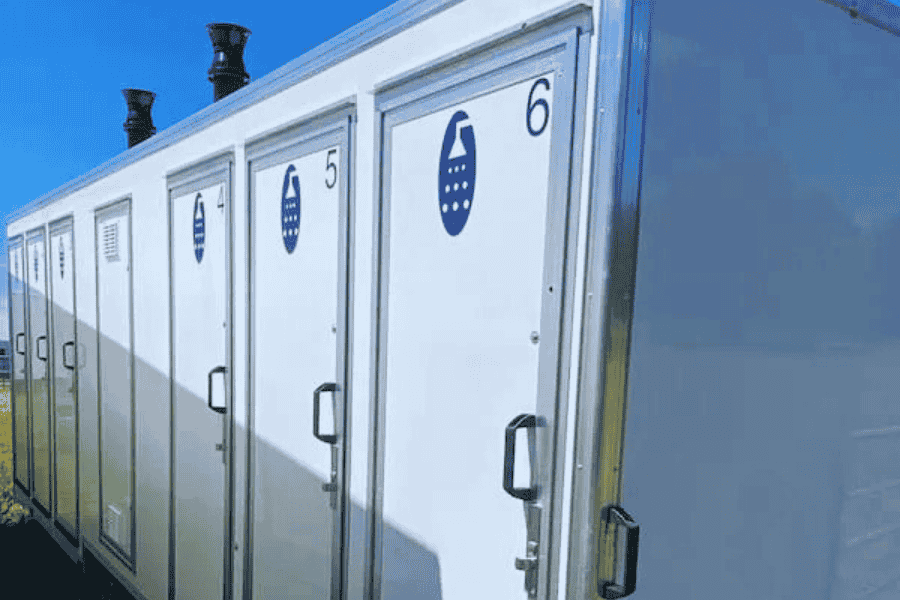
For larger events or extended-duration projects, multi-station shower trailers provide the most comprehensive solution. These premium units can accommodate six to twelve simultaneous users and may include separate men’s and women’s facilities, ADA-compliant accessible stalls, and luxury features such as music systems, premium fixtures, and decorative interiors.
Key Industries and Applications for Portable Shower Rentals
Construction and Industrial Sites
The construction industry represents one of the largest markets for portable shower rental services, and for good reason. OSHA regulations mandate that employers provide adequate washing facilities for workers exposed to harmful substances, and many construction sites are located in areas without immediate access to permanent facilities. Workers who handle concrete, chemicals, insulation, or other potentially hazardous materials need immediate access to showers to rinse off contaminants before they cause skin irritation or other health problems. Beyond regulatory compliance, providing shower facilities demonstrates employer commitment to worker welfare and can significantly boost morale on long-term projects.
Construction projects lasting several months or years often require workers to shower before leaving the site to prevent tracking hazardous materials into their vehicles and homes. Oil and gas operations, mining sites, and industrial cleanup projects face similar needs. The portable shower rental solution allows project managers to maintain compliance with health and safety regulations while providing workers with dignified facilities that support their wellbeing. Studies have shown that construction sites with proper shower facilities experience lower rates of skin conditions, improved worker satisfaction, and better retention rates, as workers appreciate employers who invest in their comfort and safety.
Events and Festivals
Outdoor events ranging from music festivals to sporting competitions have increasingly embraced portable shower rental services as attendee expectations for comfort and hygiene have evolved. Multi-day festivals where participants camp on-site create situations where thousands of people need access to showering facilities. Event organizers who fail to provide adequate shower facilities risk negative reviews, reduced ticket sales for future events, and potential health code violations. Modern festival-goers expect more than basic porta-potties; they want the ability to freshen up, rinse off dust and sweat, and maintain personal hygiene throughout the event duration.
Suggested read: Portable Sawmill Rental: Everything You Need to Know Before You Rent
The scale of shower facilities required varies dramatically based on event size and duration. A three-day music festival with 5,000 camping attendees might require multiple large shower trailers with 20-30 individual stalls operating continuously throughout the day. Sporting events such as marathons, triathlons, and obstacle course races often provide shower facilities at the finish line, allowing participants to clean up before traveling home. Corporate retreats, team-building exercises, and outdoor educational programs also frequently utilize portable shower rentals to ensure participant comfort. Wedding venues in rural locations increasingly offer shower trailer rentals as part of their service packages for wedding parties and overnight guests, adding a touch of luxury to countryside celebrations.
Emergency and Disaster Response
When natural disasters strike, existing infrastructure often fails, leaving affected populations without access to basic sanitation facilities. Portable shower rental services play a critical role in disaster response efforts, providing dignity and disease prevention in challenging circumstances. Organizations such as FEMA, the Red Cross, and local emergency management agencies maintain relationships with portable shower rental companies to ensure rapid deployment capabilities when disasters occur. Flooding, hurricanes, earthquakes, and wildfires can all compromise municipal water systems and damage residential plumbing, creating urgent needs for temporary shower facilities.
Emergency shelter operations require shower facilities that can serve large numbers of people efficiently while maintaining privacy and hygiene standards. The psychological importance of being able to shower during a crisis cannot be overstated—maintaining personal hygiene provides a sense of normalcy and dignity during otherwise traumatic circumstances. Portable shower units deployed in disaster zones must be robust, easy to sanitize between users, and capable of operating with limited utilities. Many emergency response units feature foot-pump water systems, waterless operation options, and antimicrobial surfaces designed to minimize disease transmission risks in high-traffic situations.
Planning Your Portable Shower Rental: Essential Considerations
Calculating Capacity Requirements
Determining the appropriate number and size of portable shower rental units requires careful analysis of several factors. The primary consideration is the total number of people who will need shower access and the time period over which they’ll need it. A construction site with 50 workers on a 10-hour shift will have different requirements than a weekend festival with 2,000 attendees. Industry standards suggest that one shower stall can serve approximately 10-15 people per day under normal circumstances, though this ratio can vary based on shower duration expectations and peak usage patterns.
Peak usage times significantly impact capacity planning. At construction sites, workers typically want to shower at the end of their shifts, creating a concentrated demand period. Festival organizers must account for morning rushes as attendees prepare for the day and evening surges as they clean up after activities. The duration of individual showers also affects capacity—construction workers performing quick rinses may average 5-10 minutes per shower, while festival attendees might spend 10-15 minutes. Multiplying the number of expected users by average shower duration and dividing by available hours provides a baseline for determining how many shower stalls you need.
Site Assessment and Setup Requirements
Before a portable shower rental company can deliver and install units, they need detailed information about your site conditions. Level ground is essential for proper drainage and user safety—shower units placed on uneven surfaces can lead to pooling water, structural stress, and increased accident risk. The delivery area must accommodate large trucks and trailers, with adequate clearance for maneuvering and positioning units. Many portable shower trailers exceed 30 feet in length and require significant turnaround space for safe placement.
Utility access represents another critical consideration. Most portable showers require electrical power for water heaters, lighting, and ventilation fans. Standard units need 110-120V connections, while larger trailer units with multiple stalls and climate control may require 220-240V service. If the site lacks electrical infrastructure, generators can provide power, but rental costs increase accordingly. Water supply options include connection to existing water lines, delivery of fresh water in the unit’s holding tanks, or regular water truck refills for extended rentals. Drainage is equally important—shower units produce substantial amounts of greywater that must be properly disposed of through connection to sewer systems, holding tanks that require regular pumping, or other approved drainage methods.
Cost Factors in Portable Shower Rental
Understanding the pricing structure for portable shower rental services helps you budget accurately and avoid unexpected expenses. Base rental fees typically cover the unit itself for a specified time period—daily, weekly, or monthly. Daily rental rates for basic single-stall showers range from $100-$200, while weekly rates offer better value at $400-$800. Larger multi-stall trailer units command higher prices, with weekly rates ranging from $1,500 to $5,000 or more depending on capacity and amenities. Monthly rates provide the best value for long-term projects, often costing 40-50% less per day than daily rates.
Beyond base rental fees, several additional costs commonly apply. Delivery and pickup fees cover transportation of the units to and from your site, typically ranging from $150-$500 depending on distance from the rental company’s depot. Setup fees may apply if the rental company must install the unit, connect utilities, or perform site preparation work. For units without self-contained water systems, water delivery fees add $100-$300 per delivery depending on tank capacity and delivery frequency. Waste removal or pumping services for greywater tanks cost $150-$400 per service call, with frequency depending on usage levels.
Suggested read: Portable Sink with Water Tank: Everything You Need to Know for Mobile Handwashing Solutions
| Unit Type | Daily Rate | Weekly Rate | Monthly Rate | Typical Capacity |
|---|---|---|---|---|
| Basic Single Stall | $100-$200 | $400-$800 | $1,200-$2,000 | 10-15 users/day |
| Mid-Range Dual Stall | $200-$350 | $900-$1,500 | $2,500-$4,000 | 20-30 users/day |
| Multi-Stall Trailer (4-6 stalls) | $350-$600 | $1,800-$3,500 | $4,500-$8,000 | 40-60 users/day |
| Luxury Shower Trailer (8+ stalls) | $600-$1,000+ | $3,000-$6,000+ | $8,000-$15,000+ | 80-120 users/day |
Regulations and Compliance Requirements
Operating portable shower rental units often involves navigating a complex landscape of regulations at federal, state, and local levels. OSHA standards mandate that employers provide washing facilities when workers are exposed to harmful substances, with specific requirements for water temperature, soap availability, and individual towels or blowers. The standards specify that showers must provide water at temperatures of at least 60°F and be capable of reaching temperatures suitable for comfortable bathing. Failure to comply with OSHA shower requirements can result in citations, fines, and increased liability in the event of worker injury or illness.
Local health departments typically regulate portable shower facilities at events open to the public, setting minimum ratios of shower stalls to attendees and establishing hygiene protocols for cleaning and maintenance. Many jurisdictions require permits for temporary shower installations, with application processes that can take several weeks. Building codes may also apply, particularly for larger trailer units that require utility connections. ADA compliance is mandatory for public events and commercial sites, requiring a specified percentage of shower stalls to meet accessibility standards with features such as grab bars, roll-in entry, and accessible controls and fixtures.
Maintaining Hygiene and Cleanliness Standards
Proper maintenance of portable shower rental units is essential for user safety, regulatory compliance, and positive user experiences. Professional rental companies typically include regular cleaning and maintenance in their service packages, but understanding these requirements helps you evaluate providers and ensure adequate service levels. Daily cleaning protocols should include scrubbing all surfaces with approved disinfectants, removing hair and debris from drains, restocking soap and paper products, and checking water quality and temperature.
High-traffic situations may require multiple cleanings per day to maintain acceptable hygiene standards. The rental company should provide detailed logs of cleaning activities, water quality testing results, and maintenance work performed. Between users, quick wipe-downs of shower surfaces help prevent the buildup of soap scum and reduce slip hazards. Anti-slip mats or textured flooring are essential safety features that require regular cleaning to maintain their effectiveness. Water system maintenance includes regular testing for temperature consistency, pressure levels, and potential bacterial contamination. Hot water systems must be maintained at temperatures high enough to prevent Legionella growth but not so hot as to create scalding risks.
Selecting a Reliable Portable Shower Rental Provider
Choosing the right portable shower rental company significantly impacts the success of your project or event. Start your search by requesting recommendations from colleagues who have previously rented portable showers for similar applications. Online reviews provide valuable insights into customer satisfaction, though you should look for patterns across multiple reviews rather than focusing on individual comments. Professional associations such as the Portable Sanitation Association International maintain directories of member companies who have agreed to adhere to industry standards and best practices.
When evaluating potential providers, ask detailed questions about their fleet quality and age—newer units typically offer better reliability, improved features, and more appealing aesthetics. Request to see photos or inspect units before committing to a rental. Inquire about their maintenance protocols, cleaning schedules, and emergency response capabilities. What happens if a unit malfunctions during your rental period? Can they provide same-day service or replacement units? Understanding their contingency plans protects you from potential disruptions. Insurance coverage is another critical consideration—reputable rental companies carry comprehensive liability insurance and can provide certificates of insurance for your protection.
Environmental Considerations and Sustainability
The environmental impact of portable shower rental operations has received increasing attention as sustainability concerns have become more prominent across all industries. Water consumption represents the most obvious environmental consideration—a single shower can use 2-5 gallons per minute, meaning that 100 showers per day could consume 1,000-2,500 gallons of water. Modern portable shower units increasingly incorporate water-saving technologies such as low-flow shower heads, aerators that maintain pressure while reducing flow rates, and recirculation systems that filter and reuse greywater for toilet flushing or other non-potable applications.
Energy consumption for water heating also contributes to the environmental footprint of portable shower operations. Solar water heating systems have become increasingly viable for portable shower applications, particularly in sunny climates and for extended-duration installations where the higher upfront costs can be amortized over longer rental periods. Tankless on-demand water heaters offer another efficiency improvement, heating water only as needed rather than maintaining large volumes at constant temperature. These systems reduce energy waste and can operate on propane or electricity depending on site conditions. Biodegradable, environmentally-friendly soap products should be specified for use in portable showers, particularly in outdoor locations where greywater may enter natural water systems despite best containment efforts.
Case Study: Major Festival Implementation
The Bonnaroo Music Festival in Tennessee provides an excellent case study in large-scale portable shower rental implementation. This four-day event attracts approximately 80,000 attendees, most of whom camp on-site and require shower access throughout the festival duration. Event organizers contract with multiple portable sanitation companies to provide a combined total of over 500 individual shower stalls distributed across multiple locations throughout the festival grounds. The shower facilities represent a significant investment—estimated at $250,000-$350,000 annually—but organizer feedback consistently identifies shower availability as a top factor in attendee satisfaction and return ticket purchases.
The Bonnaroo shower system incorporates tiered pricing options, with basic shower access included in ticket prices and premium shower facilities available for additional fees. The premium facilities feature shorter wait times, climate-controlled changing areas, upgraded amenities, and guaranteed hot water. This dual-tier approach helps manage demand while generating additional revenue that offsets shower operation costs. Post-event surveys show that 78% of camping attendees use the shower facilities at least once during the festival, with an average of 2.3 showers per camping attendee over the four-day period. Wait times during peak morning hours average 15-20 minutes, while off-peak times typically see minimal queuing.
Suggested read: The Ultimate Resource for Portable RV Waste Holding Tanks: Everything You Need to Know
Innovations and Future Trends in Portable Shower Rental
The portable shower rental industry continues to evolve with new technologies and changing customer expectations driving innovation. Smart monitoring systems now allow rental companies and clients to track water usage, energy consumption, and maintenance needs in real-time through internet-connected sensors. These systems can send alerts when water tanks need refilling, when usage patterns indicate maintenance requirements, or when system malfunctions occur. Remote monitoring capabilities improve operational efficiency and help prevent service interruptions that negatively impact user experience.
Contactless payment systems integrated into portable shower units represent another emerging trend, particularly for event applications where shower access can be monetized. Users can pay via smartphone apps or RFID wristbands, eliminating the need for on-site attendants and cash handling. Usage data collected through these systems helps organizers optimize facility placement and capacity planning for future events. Modular design approaches allow single portable shower units to be connected together, creating larger facilities that can be scaled up or down based on changing needs. This flexibility proves particularly valuable for construction projects where workforce size may vary over time or for events where attendance might differ from projected numbers.
Common Mistakes to Avoid When Renting Portable Showers
Many first-time portable shower rental customers make predictable mistakes that compromise their projects or events. Underestimating required capacity ranks as the most common error—the frustration and negative experience created by long wait times and inadequate facilities far exceeds the relatively small cost savings from renting fewer units than actually needed. When in doubt, err on the side of excess capacity, particularly for applications where usage patterns are difficult to predict. The cost of one additional shower unit pales in comparison to the reputational damage and potential regulatory issues that result from inadequate facilities.
Failing to plan for peak usage times represents another frequent mistake. If your construction shift ends at 4:00 PM and all 50 workers want to shower before going home, you need sufficient capacity to serve them within a reasonable timeframe. Spreading out shower times through staggered shifts or incentivizing off-peak usage can help, but capacity planning must acknowledge realistic usage patterns. Inadequate site preparation causes delays and additional costs when delivery trucks cannot access the intended installation location or when utilities aren’t available as expected. Conduct a thorough site assessment well before the delivery date and communicate any potential obstacles or limitations to the rental company so they can plan accordingly.
Comparing Portable Shower Rental to Alternative Solutions
While portable shower rental offers the most comprehensive solution for many situations, understanding alternative approaches helps you make informed decisions. Building permanent shower facilities makes sense for construction projects lasting several years or for properties that regularly host events requiring shower access. The upfront construction costs are substantially higher—typically $50,000-$200,000 for a basic facility—but eliminate ongoing rental expenses. However, permanent facilities require maintenance, insurance, and utility costs that continue even when not in active use.
Gym memberships or local facility arrangements represent another alternative, particularly for small construction crews working near urban areas. Some construction companies arrange bulk gym memberships for workers, allowing them to shower at nearby fitness centers before heading home. This approach works well for projects with fewer than 20 workers but becomes logistically challenging and potentially more expensive than portable rentals for larger crews. The lack of on-site facilities also means workers must drive to an off-site location, adding time to their workday and increasing liability exposure as they transport potentially hazardous materials on public roads before showering.
For camping and outdoor recreation, natural water sources such as lakes, rivers, or solar shower bags filled from water containers provide low-cost alternatives. However, these options lack privacy, temperature control, and proper drainage, making them unsuitable for commercial applications, events open to the public, or situations where regulatory compliance is required. Looking to add more excitement to your outdoor event? Consider complementing your facilities with a portable stripper pole for entertainment options that help create memorable experiences.
Frequently Asked Questions About Portable Shower Rental
How much does portable shower rental typically cost?
Portable shower rental costs vary significantly based on unit type, rental duration, and location. Basic single-stall units typically range from $100-$200 per day, $400-$800 per week, or $1,200-$2,000 per month. Multi-stall trailer units cost substantially more, with weekly rates of $1,800-$6,000 depending on capacity and amenities. Additional costs for delivery, setup, water service, and waste removal typically add $500-$1,500 to total expenses. Long-term rentals benefit from significant volume discounts, with monthly rates often representing better value than weekly or daily options.
How many people can use one portable shower unit?
A single portable shower rental stall can typically accommodate 10-15 people per day under normal usage conditions, assuming average shower durations of 5-10 minutes. This capacity estimate accounts for cleaning time between users and assumes showers are available throughout the day rather than concentrated during brief peak periods. Multi-stall units scale proportionally—a four-stall trailer can serve 40-60 people daily. For events or situations with high peak-time concentration, reduce capacity estimates by 30-40% to account for queuing and waiting times.
Suggested read: Portable Bathroom Rent: Everything You Need to Know Before You Book
What utilities are required for portable shower rental units?
Most portable shower rental units require electrical power for water heating, lighting, and ventilation, typically needing standard 110-120V connections. Larger trailer units with multiple stalls and climate control may require 220-240V service. Water supply can come from connections to existing water lines, pre-filled holding tanks, or regular water truck deliveries. Drainage options include connections to existing sewer systems, holding tanks requiring regular pumping, or approved greywater disposal methods. Generator power is available for sites without electrical infrastructure, though this increases rental costs.
How often do portable shower units need servicing?
Service frequency for portable shower rental units depends on usage intensity and rental company protocols. High-traffic applications typically require daily cleaning and sanitization, while lower-use situations might need servicing 2-3 times per week. Water holding tanks generally require refilling every 2-5 days depending on capacity and usage levels. Greywater holding tanks need pumping on similar schedules. Professional rental companies should provide clear service schedules as part of rental agreements and be available for emergency service calls if issues arise between scheduled maintenance visits.
Can portable showers operate in cold weather?
Yes, portable shower rental units can operate in cold weather with appropriate preparations. Units equipped with insulation and heating systems maintain comfortable interior temperatures even when outdoor conditions are freezing. Water lines must be protected from freezing through insulation, heat tape, or heated enclosures. Some rental companies offer winterized units specifically designed for cold-climate operation. Users should still expect slightly longer heating times and potentially reduced water pressure in extreme cold. For events or projects occurring during winter months, discuss cold-weather operation capabilities with rental providers during the selection process.
Are portable shower rentals ADA compliant?
Many portable shower rental companies offer ADA-compliant units meeting accessibility requirements for public accommodations and commercial facilities. ADA-compliant showers feature wider entrances accommodating wheelchairs, grab bars positioned according to ADA specifications, roll-in or low-threshold entry designs, accessible controls and fixtures within reach ranges, and adequate maneuvering space inside the stall. Federal law requires that a specified percentage of shower facilities at public events and commercial sites must be accessible. When requesting quotes, explicitly state your need for ADA-compliant units to ensure rental companies provide appropriate options.
What happens if a portable shower unit malfunctions?
Reputable portable shower rental companies should provide emergency service guarantees as part of their rental agreements. If a unit malfunctions due to equipment failure, the rental company should respond within a specified timeframe—typically 4-24 hours depending on the severity and your rental agreement terms. For critical malfunctions affecting usability, many companies offer replacement units while repairs are performed. Review service level agreements carefully before signing rental contracts and verify that the company maintains sufficient backup inventory to fulfill replacement commitments. Consider requiring performance guarantees for essential applications where shower availability is legally mandated or critically important.
Take Action: Secure Your Portable Shower Rental Today
Don’t wait until the last minute to arrange your portable shower rental needs. Lead times for quality providers during peak seasons can extend to several weeks, particularly for large multi-stall units or high-demand periods such as summer festival season. Start your planning process by accurately assessing your capacity requirements, site conditions, and budget parameters. Request detailed quotes from at least three reputable providers, comparing not just pricing but also equipment quality, service levels, and customer reviews.
The difference between adequate portable shower facilities and exceptional ones often lies in the planning details. Work closely with your chosen portable shower rental provider to optimize unit placement, establish clear service schedules, and develop contingency plans for potential issues. Your workers, event attendees, or emergency response efforts deserve reliable access to clean, comfortable shower facilities. Quality portable shower rentals represent an investment in human dignity, regulatory compliance, and operational success that pays dividends through improved satisfaction, safety, and reputation.
Contact professional portable shower rental providers today to discuss your specific needs and receive customized quotes. The right portable shower solution is waiting—all you need to do is take the first step toward securing the facilities your project or event requires. Visit industry-leading portable shower rental companies to find qualified providers in your area who can deliver the reliable, professional service you deserve.
Citations: Information about portable sanitation industry standards and OSHA requirements for workplace shower facilities derived from Portable Sanitation Association International guidelines and U.S. Department of Labor OSHA standards.