Portable Wheelchair Ramps for Stairs: Your Complete Buying and Installation Guide
Navigating stairs presents a significant barrier for wheelchair users, mobility scooter operators, and individuals with limited mobility. Portable wheelchair ramps for stairs deliver an immediate, cost-effective solution that transforms previously inaccessible areas into welcoming spaces. Unlike permanent installations that demand construction permits and heavy capital investment, these versatile mobility aids deploy in minutes and relocate as needed.
Whether you are assisting an elderly parent visiting your home, accommodating a guest with mobility challenges, or managing temporary accessibility during post-surgical recovery, portable ramps restore the independence and dignity everyone deserves. Demand for accessible solutions continues to grow across residential, commercial, community, and public environments, where meeting accessibility standards is both a legal obligation and a moral responsibility.
The market for portable wheelchair ramps for stairs has expanded dramatically, offering everything from lightweight folding models to heavy-duty modular systems. Understanding the distinctions between these options—including weight capacity requirements, surface materials, and safety features—ensures you select a ramp that delivers secure passage tailored to your specific needs. This comprehensive guide covers everything from accurate stair measurement and ADA compliance to maintenance routines and cost considerations that shape your purchasing decision.
Understanding Portable Wheelchair Ramps: Types and Applications
Portable wheelchair ramps for stairs fall into several distinct categories, each engineered for specific environments and use cases. Selecting the right type depends on your frequency of use, storage constraints, and the weight of your mobility device.
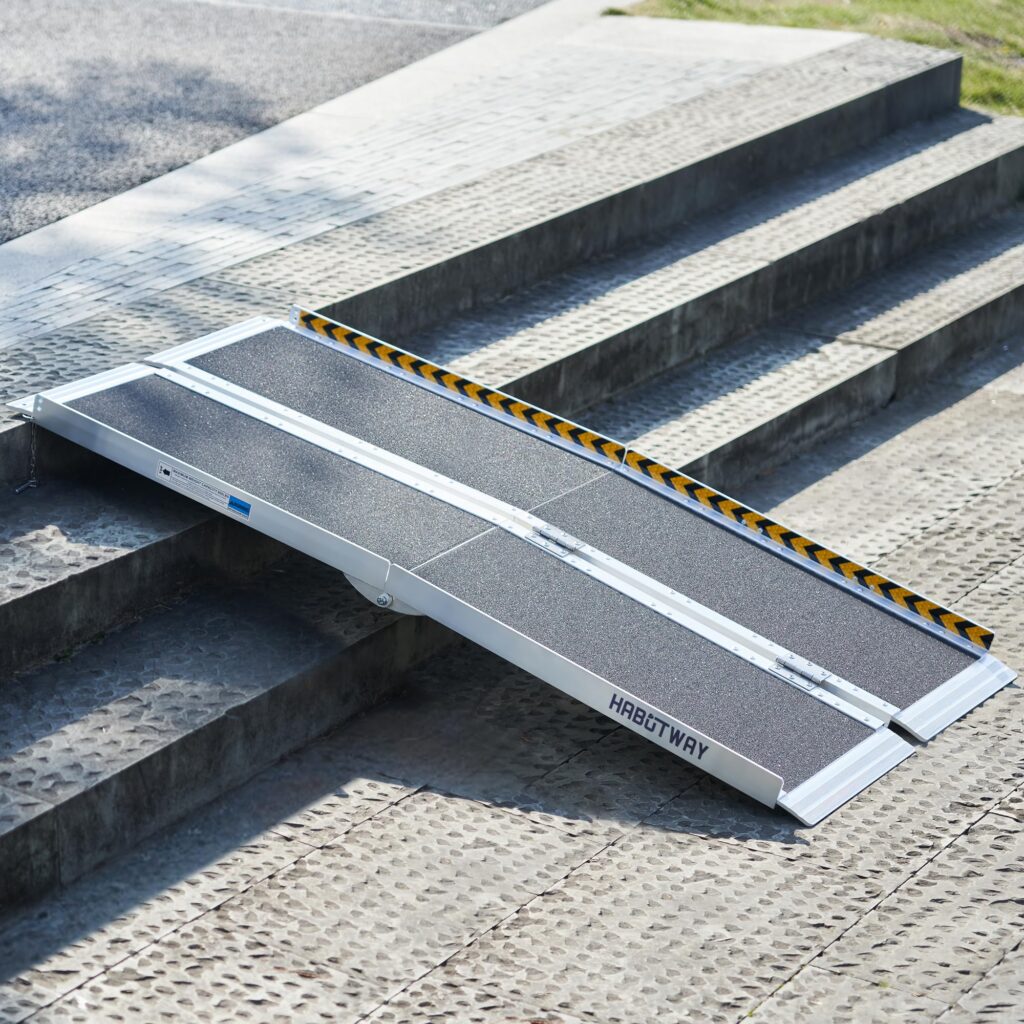
- Folding Ramps: The most popular choice for residential settings, folding ramps feature bi-fold or tri-fold designs that collapse into compact, briefcase-style packages. Typically weighing 15 to 50 pounds, they support 600 to 800 pounds, making them ideal for manual wheelchairs and lightweight power chairs. Aircraft-grade aluminum construction ensures durability without excessive bulk, while textured surfaces maintain grip in wet conditions.
- Telescoping Ramps: These ramps extend to various lengths, offering maximum versatility for different stair configurations. Dual channels slide out to the required length and lock securely, with typical extensions ranging from 4 to 12 feet. The separated track design accommodates different wheel widths and provides excellent stability for both wheelchairs and mobility scooters.
- Roll-Up Ramps: Constructed from flexible materials, roll-up ramps compress into a compact cylinder, making them the lightest option available and perfect for travel. Their lower weight capacity generally limits them to manual wheelchairs and walkers rather than heavy power chairs.
- Threshold Ramps: Designed for single steps, doorways, and elevation changes up to 6 inches, these ramps address minor height discrepancies. While not traditional stair ramps, they are essential components of a complete accessibility strategy.
- Modular Portable Ramps: Representing the premium category, modular systems feature interlocking sections that create customized configurations for complex stair layouts. Supporting over 1,000 pounds, these setups approach the stability of permanent installations while remaining fully portable.
Critical Specifications: Choosing the Right Ramp for Your Stairs
Selecting appropriate portable wheelchair ramps for stairs requires careful evaluation of multiple specifications that directly impact safety and usability. Prioritizing these metrics ensures reliable performance and prevents accidents.
Ramp Length and Slope Ratio
The foundational measurement is ramp length, calculated based on your total stair rise and the recommended slope ratio. The Americans with Disabilities Act (ADA) recommends a 1:12 ratio, meaning one foot of ramp length for every inch of vertical rise. For a 24-inch rise, a 24-foot ramp achieves the gentlest, safest incline. Space limitations often require steeper slopes, with 1:8 representing the maximum steepness for assisted use and 1:6 demanding significant upper body strength.
Weight Capacity
Weight capacity is the second critical factor, with most portable ramps rated between 600 and 1,200 pounds. Manual wheelchairs weigh 35 to 50 pounds, power wheelchairs range from 200 to 400 pounds, and mobility scooters often exceed 300 pounds. Add your body weight to your device weight to determine the minimum requirement, then select a ramp rated at least 200 pounds above that total for a crucial safety margin. Material choice also affects durability, with aircraft-grade aluminum offering the optimal strength-to-weight ratio and fiberglass providing superior corrosion resistance for coastal climates.
Surface Width and Traction
Standard wheelchair ramps measure between 28 and 36 inches wide. Manual wheelchairs require a minimum of 26 inches, power wheelchairs need at least 30 inches, and mobility scooters often demand 32 inches or more. Always measure your specific device to guarantee adequate clearance, especially on ramps with side rails that reduce usable width. Traction surfaces prevent dangerous slips, with options including raised buttons, diamond plate texturing, and applied grip tape. High-quality models feature traction patterns across the entire walking path, ensuring consistent grip regardless of wheel placement.
Safety Features and Standards Compliance
Premium portable wheelchair ramps for stairs incorporate multiple engineering safeguards that prevent accidents and ensure confident navigation.
- Side Rails and Curbs: Typically measuring 2 to 4 inches high, continuous side barriers prevent wheels from rolling off the edges, particularly during angled ascents or descents. These must run the full length of the ramp, not just at the ends.
- Transition Plates: Installed at the top and bottom, these metal plates eliminate gaps between the ramp surface and the stairs or landing, preventing wheels from catching and creating smooth entry and exit points.
- Non-Slip Surfaces: Advanced traction designs maintain grip in rain, snow, or ice. Punched hole patterns enable water drainage while preserving surface friction, and raised button textures provide mechanical traction independent of weather conditions.
- Visibility Enhancements: Yellow safety strips along the edges improve contrast for users with limited vision, clearly defining the safe travel path.
- Structural Reinforcement: Internal ribs distribute weight evenly, preventing flexing or wobbling under load and maintaining a stable riding surface.
While ADA compliance is not legally mandated for private residences, choosing ADA-compliant portable wheelchair ramps for stairs guarantees alignment with professional accessibility benchmarks. Compliant models feature slopes no steeper than 1:12, handrails for ramps exceeding 6 feet, level landings every 30 feet for extended runs, and slip-resistant surfaces at least 36 inches wide for commercial use. Adopting these standards helps residential buyers secure ramps that deliver equivalent safety and usability.
Installation and Deployment Best Practices
Properly deploying portable wheelchair ramps for stairs involves more than simply resting them against a staircase. Follow these steps to ensure secure setup:
- Prepare the Surface: Thoroughly clean both the stair base and the top landing, removing debris, ice, water, or loose material that could compromise contact.
- Inspect Before Use: Check the ramp for cracks, bent sections, loose rivets, or worn traction surfaces. Even minor damage can escalate under load, risking catastrophic failure.
- Position on Level Ground: Place the bottom edge firmly on solid, level ground rather than soft soil, gravel, or uneven terrain. On grass or loose surfaces, lay a solid base plate or thick plywood sheet beneath the ramp to distribute weight and prevent sinking.
- Secure the Top Edge: Rest the ramp securely on the landing or top stair, ensuring transition plates make full contact to eliminate gaps. Never position a ramp against a single stair tread, as this creates an unstable fulcrum point.
- Engage Securing Mechanisms: Use all provided safety pins, straps, or clamps to anchor the ramp. Do not rely on the ramp’s weight alone to maintain position. For frequent stationary use, consider semi-permanent methods like lag bolts in wood or expansion anchors in concrete, while retaining easy removal capability.
- Test Before Loading: Apply gradual weight to verify stability. Watch for shifting, flexing, or instability that indicates improper placement or inadequate anchoring.
Measuring Your Stairs: A Step-by-Step Guide
Accurate measurements guarantee your portable wheelchair ramps for stairs function safely and effectively. Use this systematic approach:
- Measure Total Rise: Determine the vertical distance from the bottom surface where the ramp will sit to the top landing. Place a level on the landing and drop a measuring tape straight down, keeping it perfectly vertical. Record the inches, as this figure dictates minimum ramp length using your chosen slope ratio.
- Measure Total Run: Calculate the horizontal distance from the stair