The Ultimate Portable Highchair Buyer’s Guide: Everything Parents Need to Know in 2024
Finding the right feeding solution for your child can feel overwhelming, especially when your family is constantly on the move. Whether you are traveling, visiting grandparents, or dining out, a portable highchair has become an essential tool for modern households. These innovative products combine convenience, safety, and practicality in ways that traditional highchairs simply cannot match.
The portable highchair market has expanded rapidly, with families increasingly prioritizing flexibility and space-saving designs. Industry projections estimate the global baby care products market will reach $109.8 billion by 2025, with portable feeding solutions leading the growth curve. This trend reflects a fundamental shift in how families approach mealtime, emphasizing mobility and adaptability. Unlike bulky traditional models that dominate kitchen floors, portable options deliver freedom without compromising safety or functionality. These versatile seats transform any standard chair into a secure dining space, making them indispensable for families who value both convenience and quality.
What Makes a Portable Highchair Different from Traditional Models?
A portable highchair differs from conventional models in both design philosophy and practical application. Traditional highchairs are standalone units with fixed legs, large trays, and substantial footprints that permanently occupy dining or kitchen space. In contrast, portable versions are engineered specifically for mobility. They feature lightweight construction, compact folding mechanisms, and secure attachment systems designed for existing furniture.
These differences extend far beyond size. Manufacturers prioritize weight reduction without sacrificing structural integrity, typically using high-grade aluminum frames, reinforced plastics, and durable fabrics. While traditional highchairs often weigh between 20 and 30 pounds, portable counterparts generally range from 3 to 12 pounds. This significant weight difference makes portable models ideal for frequent travelers, multi-generational households, or anyone needing to move the seat between rooms. Additionally, portable designs incorporate quick-release mechanisms, adjustable straps, and tool-free assembly, allowing parents to set up or pack away the chair in under 60 seconds.
Versatility is another key advantage. Most models feature universal mounting systems that secure to dining chairs, restaurant seats, picnic benches, and outdoor furniture. Some advanced designs include table-mounted clamps for direct surface attachment, while others offer freestanding modes for maximum flexibility. This adaptability allows a single portable highchair to replace multiple feeding solutions across different environments. For families managing limited living spaces or embracing minimalist lifestyles, this multi-functionality delivers exceptional value. Maintenance is also streamlined, as most portable models feature removable, machine-washable fabric components that simplify cleanup after messy meals.
Types of Portable Highchairs: Finding Your Perfect Match
Hook-On Highchairs: Maximum Portability
Hook-on highchairs represent the most compact and lightweight category available today. These devices feature a steel or aluminum frame with a fabric seat that clamps directly onto table edges, creating a suspended dining spot for your child. The clamping mechanism typically uses strong grip pads and locking screws to secure the chair to tables between 0.8 and 3.5 inches thick. Weighing between 3 and 6 pounds, hook-on models fold flat to approximately laptop size, making them exceptionally travel-friendly and easy to store in diaper bags or car trunks.
- Pros: Ultra-portable, brings children directly to table level for family bonding, promotes social interaction and dining behavior modeling.
- Cons: Cannot be used on glass tables, pedestal bases, or surfaces with decorative edges; weight capacity typically maxes out at 35–37 pounds; suspended design may feel less secure to some parents despite meeting rigorous safety standards.
Booster Seats with Straps: Versatile Everyday Solutions
Strap-on booster seats are the most popular category of portable highchair products, offering an ideal balance between portability and stability. These seats feature a molded plastic or padded base that elevates children to table height while securing to standard dining chairs with adjustable straps. Most models include multiple height positions, accommodating children from 6 months through 5 years. The seat design typically incorporates a removable tray with dishwasher-safe components, built-in cup holders, and easy-clean surfaces.
- Pros: Highly versatile, grows with your child, features three-point or five-point harness systems, non-slip bases prevent sliding, installs in under a minute with color-coded straps.
- Cons: Requires a chair with a back for secure attachment, limiting use in certain restaurant or outdoor settings.
Travel Highchairs: Lightweight Frame Designs
Freestanding travel highchairs offer the functionality of traditional highchairs in remarkably compact packages designed for families on the move. These models feature collapsible metal or composite frames that fold down to narrow, carry-ready sizes while maintaining structural stability when deployed. Weighing between 10 and 15 pounds, they usually include carrying bags with shoulder straps. The design typically incorporates a fabric seat with multiple recline positions, adjustable footrests, and removable trays that nest within the frame during storage.
- Pros: Independent design eliminates reliance on existing furniture, wide-stance legs provide stability on uneven surfaces like grass or sand, ideal for camping, hotels, and backyard gatherings.
- Cons: Setup takes 2–3 minutes (longer than hook-on or booster models), folded dimensions (6–8 inches wide) require dedicated trunk or closet space.
Key Safety Features Every Portable Highchair Must Have
Safety is the paramount consideration when selecting any portable highchair, as these devices support your child during vulnerable feeding times. According to the American Academy of Pediatrics, highchair-related injuries result in approximately 9,400 emergency room visits annually, underscoring the importance of choosing products with comprehensive safety features. Modern portable highchairs incorporate multiple layers of protection to prevent falls, entrapment, and tipping incidents.
- Five-Point Harness Systems: The gold standard for restraint, securing children at the shoulders, waist, and between the legs. Adjustable strap lengths accommodate growing children while preventing standing or sliding.
- Childproof Buckle Mechanisms: Require deliberate adult action to release, such as simultaneous button presses or complex sliding motions. Advanced models may include magnetic buckles for one-handed operation.
- Stability and Weight Distribution: Hook-on models require robust clamping mechanisms with minimum grip strengths of 50 pounds and rubberized anti-slip pads. Booster seats need textured, non-slip bases and cinching strap systems. Freestanding travel highchairs must feature wide-stance leg configurations and center-of-gravity designs, often enhanced with anti-tip outriggers or weighted bases.
- Material Safety and Construction: All components must be free from BPA, phthalates, and PVC. Look for certifications from JPMA, ASTM International, or equivalent regional bodies. Frames should use high-grade materials without sharp edges or pinch points, and fabric stitching must feature reinforced seams at stress points.
Age and Weight Guidelines: When Can Your Child Use a Portable Highchair?
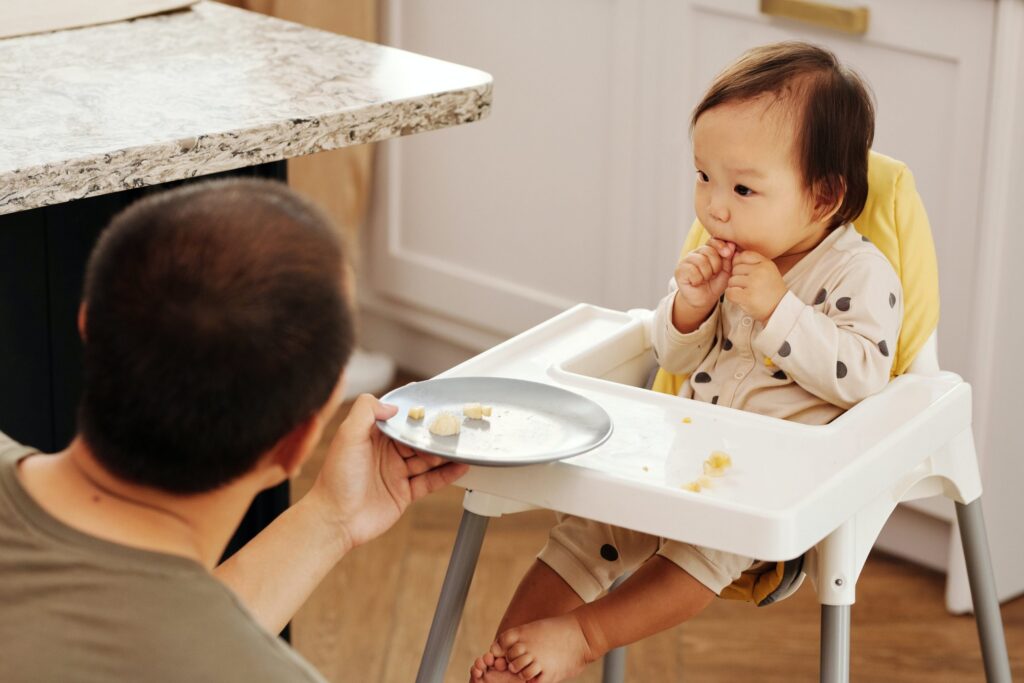
Understanding appropriate age and developmental milestones ensures both safety and functionality. Most manufacturers design their products for children who can sit upright independently, typically around 6 months of age. The ability to sit without assistance indicates sufficient trunk strength and head control necessary for safe highchair use. Starting too early risks slouching that could compromise airways, while waiting too long means missing critical windows for establishing positive mealtime routines.
Pediatricians generally recommend that babies demonstrate three key capabilities before transitioning to any highchair: maintaining an upright sitting position for extended periods, showing interest in solid foods, and exhibiting reliable head control. Some portable models include infant inserts or recline features for younger babies between 4 and 6 months, but these should only be used under close supervision and according to manufacturer guidelines. Never force developmental milestones for convenience, as physical readiness directly impacts feeding safety.
Weight capacity varies significantly across categories and influences product longevity. Hook-on highchairs typically support up to 35–37 pounds due to their cantilevered design. Exceeding this limit risks table damage or clamp failure. Booster seats generally accommodate 30–50 pounds, with some premium designs supporting up to 60 pounds. Freestanding travel highchairs usually fall in the 30–40 pound range. The upper age limit depends on more than just weight; most children transition away from highchairs between ages 3 and 5 as they develop coordination and table manners. However, children with developmental delays may benefit from extended use, with specialized adaptive models supporting up to 75 pounds. Many families use portable highchairs as transitional tools during this period, providing optional support during lengthy meals or when children become tired.
Top Materials and Construction Quality Indicators
The materials used in portable highchair construction directly impact durability