Portable Septic Tank: Essential Guide for Properties and Events
When municipal sewage access is unavailable, a portable septic tank provides a reliable waste management solution. Whether you are managing a construction site, hosting a large outdoor gathering, or maintaining a remote property, understanding how these systems operate can save significant time and money while preventing operational headaches. This comprehensive guide covers everything from capacity calculations and material selection to maintenance routines and regulatory compliance, empowering you to choose the right portable sanitation system for your specific needs.
What Is a Portable Septic Tank and How Does It Work?
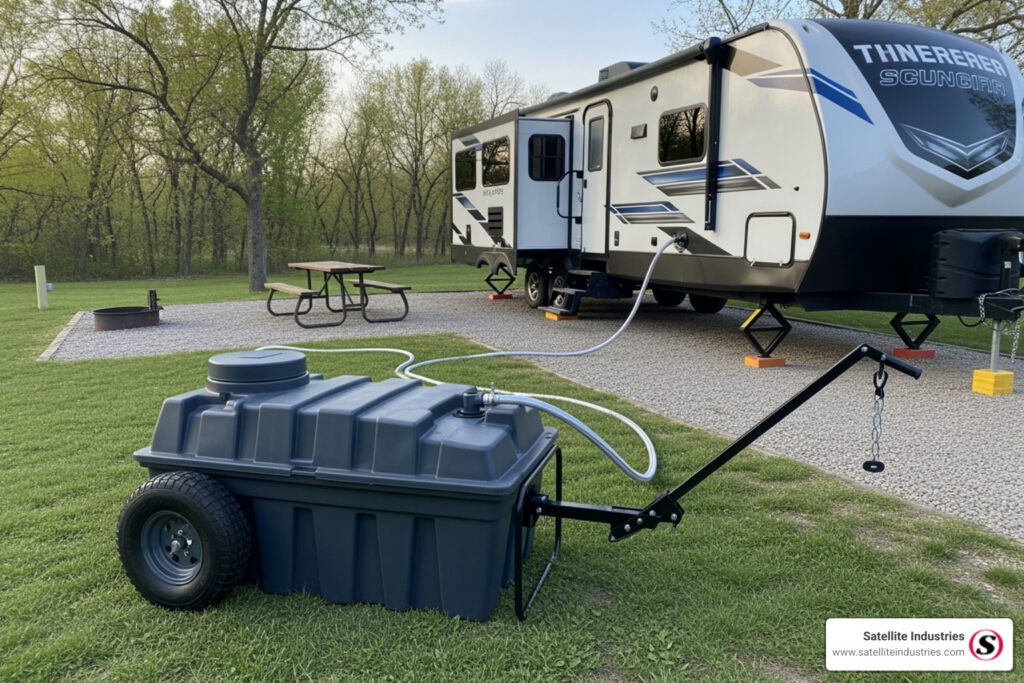
A portable septic tank is a self-contained wastewater treatment system designed for temporary or semi-permanent deployment in areas without traditional sewer infrastructure. Unlike permanent underground systems, these mobile units can be easily transported and installed wherever required. The core component is a watertight container that collects and stores human waste and greywater until scheduled disposal or treatment.
The internal working mechanism relies on natural separation and, in advanced models, biological processing. As waste enters the tank, heavier solids settle at the bottom to form sludge, while lighter oils and grease rise to create a scum layer. The middle section holds clarified effluent. Many modern units incorporate aerobic biological treatment, where beneficial bacteria break down organic matter to reduce odors and extend service intervals. Built-in ventilation systems further minimize unpleasant smells and safely vent potentially hazardous gases like methane.
Market data reflects strong industry growth: the global portable sanitation sector was valued at approximately $18.2 billion in 2023 and is projected to reach $25.6 billion by 2030, highlighting increasing demand for adaptable waste management across residential, commercial, and industrial sectors.
Types of Portable Septic Tanks Available
Standard Holding Tanks
Standard holding tanks are the most basic option, collecting and storing waste without active treatment. They are ideal for short-term projects such as weekend events or temporary job sites. Capacities typically range from 100 to 1,500 gallons, with smaller models suited for residential use and larger units designed for commercial applications. Their primary advantages are simplicity and lower upfront costs, though they require more frequent pumping compared to treatment-equipped models.
Self-Contained Treatment Units
Self-contained treatment units utilize biological or chemical processes to break down waste, significantly reducing volume and odor. Many employ aerobic technology, where oxygen-dependent bacteria rapidly decompose organic matter, producing cleaner effluent that may meet local discharge standards in certain jurisdictions. While initial costs are higher—generally ranging from $3,000 to $15,000 depending on capacity—these systems offer extended service intervals and provide environmental benefits through reduced waste accumulation.
RV and Marine Portable Tanks
Recreational vehicles and marine vessels require specialized designs that accommodate tight spaces and constant movement. These compact units typically hold between 10 and 100 gallons and feature reinforced construction to withstand travel vibrations. Modern RV tanks often include level indicators, quick-dump valves, and odor-control chemicals. Marine-grade models must meet additional corrosion-resistance standards due to saltwater exposure and generally cost 20–30% more than equivalent land-based tanks.
Key Benefits of Using a Portable Septic Tank
The standout advantage of a portable septic tank is operational flexibility. Unlike permanent installations that require extensive excavation, permitting, and prolonged construction, portable units can be delivered and ready for use within hours. This rapid deployment is invaluable for emergency response, temporary work sites, or events lacking existing sanitation infrastructure. The mobility factor also allows you to relocate the system as project phases change or move it to a completely different property.
Cost efficiency is another major benefit. Installing a conventional septic system typically costs between $15,000 and $30,000, covering excavation, the tank itself, drain field installation, and permitting. In contrast, renting a portable unit ranges from $200 to $500 monthly, while purchasing a quality model costs between $2,000 and $10,000. For short-term projects or seasonal properties, portable solutions are financially superior. Maintenance costs are also more predictable, as service providers frequently offer bundled pumping and servicing packages.
Environmental performance has improved significantly with modern designs. Advanced treatment-enabled portable tanks can achieve removal rates of 85–95% for suspended solids and 70–80% for biochemical oxygen demand (BOD), often meeting or exceeding municipal treatment benchmarks. The contained nature of these systems also lowers the risk of groundwater contamination commonly associated with failing conventional septic fields.
Choosing the Right Portable Septic Tank for Your Needs
Calculating Capacity Requirements
Selecting the correct size requires assessing your expected usage patterns. Industry guidelines recommend 50–75 gallons of capacity per person daily for residential applications. For instance, a crew of 10 workers would need a minimum 500–750 gallon tank for comfortable operation. Always account for peak usage periods, as exceeding capacity can cause overflows and trigger expensive emergency services. For commercial events, allocate one connected toilet unit per 50–75 attendees for gatherings lasting 4–8 hours.
Material and Construction Quality
The materials used directly affect durability, maintenance needs, and lifespan. High-density polyethylene (HDPE) dominates the market due to its lightweight nature, corrosion resistance, and exceptional strength. Properly maintained HDPE tanks last 20–30 years and resist rusting common in older steel models. Fiberglass-reinforced plastic (FRP) offers greater structural strength for high-capacity units but costs 30–50% more. Regardless of material, select tanks with UV-resistant coatings for sun exposure and ensure all fittings utilize chemical-resistant seals.
Features and Add-Ons to Consider
Modern systems include upgrades that enhance reliability and user experience. Mechanical floats or electronic level indicators prevent overflows by alerting operators when pumping is necessary, potentially saving thousands in cleanup costs. Ventilation systems equipped with carbon filters drastically reduce odors, allowing placement closer to occupied zones. Some models integrate built-in pumps for easier waste extraction, eliminating the need for external equipment. For cold climates, insulated tanks or heating elements prevent freezing during winter operations, extending usability for hunting camps or seasonal worksites.
Installation and Setup Guidelines
Successful installation begins with proper site preparation. Choose a level area with firm, stable ground capable of supporting the fully loaded weight—water weighs approximately 8.34 pounds per gallon, meaning a 1,000-gallon tank exceeds 8,000 pounds when full. Ensure the location is accessible to vacuum trucks, requiring a clear approach path at least 10 feet wide. Verify local setback requirements from property lines, wells, and surface water, as many jurisdictions mandate 50–100 feet of separation from water sources to prevent contamination.
Construct a stable foundation using compacted gravel or a concrete pad. Gravel bases should be at least 6 inches deep and extend 12 inches beyond the tank footprint on all sides to ensure support and drainage. Carefully level the base; an uneven foundation creates stress points that lead to premature failure. Position the tank so all access ports remain reachable for maintenance. When connecting temporary plumbing, use 3–4 inch waste lines and maintain a consistent slope of 1/4 inch per foot to ensure proper gravity flow.
Secure the installation to prevent shifting, especially in flood-prone or windy regions. Install protective barriers in high-traffic zones to guard against vehicle or equipment damage. For long-term setups, add weather-resistant covers to shield against UV degradation and temperature swings. Establish ventilation immediately after placement to prevent gas accumulation. Most tanks include integral vent pipes that should extend at least 6 inches above the highest point and feature insect screens to maintain airflow.
Maintenance Requirements for Optimal Performance
Regular inspections ensure reliable operation and prevent costly emergencies. Conduct weekly visual checks for leaks, cracks, or exterior damage, focusing on connection points and seals where failures typically originate. Perform monthly fluid level assessments using built-in indicators or dipsticks. Operating levels should stay below 75% capacity to allow adequate settling time and prevent overflow during peak usage. Schedule semi-annual professional inspections by certified technicians, which typically cost $150–$300 but can identify developing issues before they escalate into major repairs.
Pumping frequency is the most critical maintenance factor. Standard holding tanks require pumping every 2–6 weeks depending on capacity and usage intensity, while advanced treatment units may extend intervals to 3–6 months. Delaying service risks health hazards, regulatory violations, and fines ranging from $500 to $5,000. Professional pumping services charge $200–$600 per visit, with pricing influenced by tank size, accessibility, and disposal fees. Establishing a recurring service contract often reduces per-visit costs by 15–25% compared to emergency calls.
Preventive practices significantly extend system lifespan. Never flush non-biodegradable