Best Portable Toilet Seats for Travel, Camping, and Emergency Use in 2025
Understanding Portable Toilet Seats and Why You Need One
A portable toilet seat is a lightweight, collapsible sanitation solution designed for environments where traditional bathroom facilities are unavailable or unsuitable. These versatile products have become essential gear for outdoor enthusiasts, travelers, parents of young children, elderly individuals, and emergency preparedness kits. Unlike bulky portable toilets that include built-in waste containment systems, a portable toilet seat focuses on providing a comfortable, hygienic seating surface that works with disposable bags, existing fixtures, or separate portable waste containers. The market has expanded rapidly, with an estimated 3.2 million units sold annually in North America alone, highlighting the growing demand for practical sanitation solutions in mobile lifestyles.
The utility of these seats extends well beyond camping trips. Medical professionals often recommend them for post-surgery patients who struggle with low toilet heights, while occupational therapists frequently prescribe them for individuals with mobility limitations. The Centers for Disease Control and Prevention (CDC) stresses the importance of proper sanitation to prevent disease transmission, especially during emergencies when conventional plumbing fails.
Modern designs feature antimicrobial materials, ergonomic contouring, and weight capacities exceeding 300 pounds, making them suitable for diverse users. Whether you’re planning a cross-country road trip, preparing for natural disasters, or seeking dignity and comfort in healthcare settings, understanding the features and benefits of portable toilet seats can significantly improve your quality of life during challenging situations.
Types of Portable Toilet Seats Available
Folding Portable Toilet Seats
Folding models represent the most compact and travel-friendly category on the market. These units typically feature hinged construction that collapses into a flat profile, occupying minimal space in backpacks, car trunks, or storage compartments. Premium folding models combine aircraft-grade aluminum frames with reinforced plastic seating surfaces, weighing as little as 1.5 pounds while supporting users up to 350 pounds. The folding mechanism uses spring-loaded locks or snap-fit connectors for deployment in under 10 seconds—a critical advantage during urgent situations. Many designs offer adjustable leg heights ranging from 14 to 18 inches to accommodate different ground conditions and user preferences.
This versatility makes folding seats ideal for camping, festivals, construction sites, and vehicle-based travel. Consumer data shows folding models account for roughly 45% of all portable toilet seat purchases, averaging 4.3 out of 5 stars across major retail platforms. Advanced versions include non-slip rubber feet for stability on uneven terrain and integrated storage pouches for toilet paper, wipes, and disposal bags. Despite their compact size, manufacturers have optimized contoured seating to distribute body weight evenly, minimizing pressure points during extended use. When choosing a folding model, look for a compression ratio that folds to less than 3 inches thick for maximum portability.
Raised Portable Toilet Seats
Raised portable toilet seats address specific accessibility needs for elderly individuals, post-operative patients, and people with mobility impairments. These elevated designs add 3 to 6 inches of height to existing toilet fixtures or function as standalone units with reinforced legs. The American Occupational Therapy Association recommends raised seats for patients recovering from hip replacements, knee arthroscopy, or arthritis-related mobility restrictions. Medical-grade versions feature molded plastic with textured surfaces to prevent slipping, while some models include armrests for added support during sitting and standing transitions. Weight capacities typically range from 250 to 400 pounds, with bariatric options available for higher requirements.
Clinical studies indicate that raised portable toilet seats reduce strain on lower extremity joints by approximately 35% compared to standard-height toilets, significantly lowering fall risk in vulnerable populations. Installation methods vary from simple placement over existing bowls to secure clamp systems that lock the seat firmly in place. Travel-ready raised seats feature detachable, telescoping legs that adjust to different bowl sizes and floor heights.
The healthcare market for these products has grown substantially, with insurance providers increasingly covering portable raised seats as durable medical equipment under Medicare Part B guidelines. When evaluating raised options, prioritize products with antimicrobial coatings, easy-clean surfaces, and certifications from the FDA or International Organization for Standardization (ISO) to ensure safety and quality.
Compact Travel Toilet Seats for Children
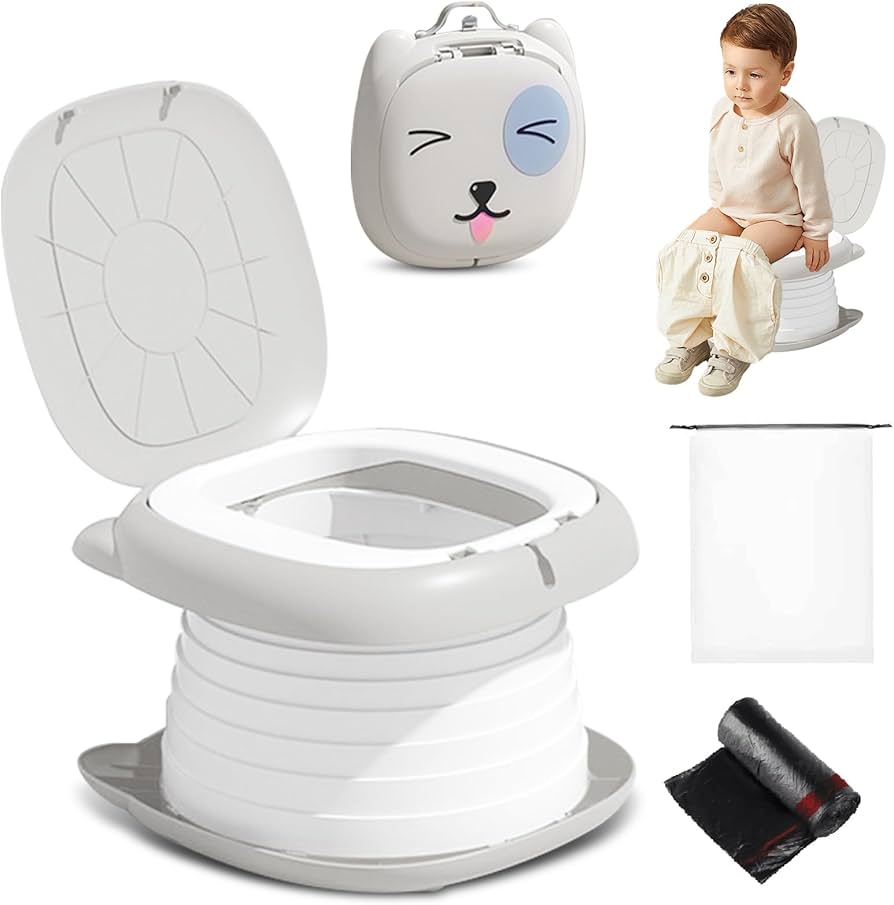
Children’s portable toilet seats solve common public restroom anxiety and hygiene concerns families face while traveling. These specialized designs feature smaller dimensions, typically 8 to 10 inches in diameter, perfectly sized for toddlers and young children aged 18 months to 6 years. The compact format folds easily for carrying in diaper bags, purses, or attaching to stroller handles via integrated loops or carabiner clips. High-quality children’s models include soft cushioning with wipeable vinyl or silicone surfaces for comfort and easy sanitization. Bright colors and character themes help reduce bathroom stress, featuring popular motifs like animals, vehicles, and cartoon characters.
Pediatricians note that familiar portable seats can accelerate potty training success rates by up to 40% while traveling, as children feel more secure using a consistent surface in unfamiliar environments. This portability helps parents maintain consistent bathroom routines, reinforcing positive habits during critical training periods. Safety features include non-slip bottoms that grip various toilet rims, splash guards for boys, and rounded edges to prevent pinching.
Market analysis indicates parents typically purchase 2 to 3 portable seats per child, keeping them in vehicles, daycare bags, and home storage for quick access. When shopping, verify that products meet Consumer Product Safety Commission (CPSC) standards and are free from harmful chemicals like BPA, phthalates, or lead.
Key Features to Consider When Buying a Portable Toilet Seat
Weight Capacity and Durability
Structural integrity directly impacts user safety and product longevity, making weight capacity the primary specification to evaluate. Standard models support 250 to 300 pounds, while heavy-duty versions accommodate users up to 500 pounds through reinforced frames and upgraded materials. Engineering tests reveal that quality seats maintain stability even under dynamic loading conditions that exceed stated capacities by 25%, providing an essential safety margin. Material selection heavily influences durability, ranging from basic polypropylene to commercial-grade ABS polymers and reinforced composites. Frames made from steel alloy or powder-coated aluminum offer superior strength-to-weight ratios compared to hollow plastic alternatives.
Durability extends beyond initial weight support to include fatigue resistance over repeated use cycles. Premium seats undergo rigorous testing simulating 10,000+ sit-and-stand motions to ensure joint integrity and prevent sudden failures. Connection points where legs attach to the seating platform benefit from metal reinforcement brackets or injection-molded ribbing to distribute forces effectively. UV resistance is crucial for outdoor applications, as prolonged sun exposure can degrade plastic components, reducing load-bearing capacity by up to 30% within a single season without proper treatment.
Review manufacturer specifications for weight limits, but also examine user reviews documenting real-world performance across diverse body types. Investing in established brands typically costs 20–40% more than generic alternatives but delivers 3–5 times longer service life through superior engineering and quality control.
Portability and Storage Dimensions
The practical value of a portable toilet seat depends heavily on its collapsed dimensions and weight, determining whether the product enhances mobility or becomes burdensome to transport. Truly portable designs should fold or compress to occupy less than 350 cubic inches—roughly the size of a thick hardcover book—allowing storage in backpack compartments, glove boxes, or under-seat areas. Optimal weight specifications range from 1 to 3 pounds, balancing substantial construction with ease of carrying. Ultralight models using carbon fiber or advanced polymers weigh under 1 pound but often cost over $75, compared to standard models priced between $25–$45.
Storage efficiency involves more than size reduction; deployment and refolding should require minimal effort and complete in under 30 seconds. Complex mechanisms with multiple locking points may promise compact storage but often frustrate users during urgent situations. The best portable seats incorporate intuitive designs that collapse via simple pressing motions or single-button releases, eliminating fumbling with intricate clasps.
Consider your storage environment when selecting products. Units kept in hot vehicle interiors need temperature-resistant materials to prevent warping or brittleness, while those stored in damp conditions require corrosion-resistant hardware. Protective carrying cases add minimal bulk while preventing damage and keeping the seat clean. Measure your intended storage spaces before purchasing to ensure a comfortable fit.
Hygiene and Cleaning Capabilities
Sanitation maintenance is a critical factor, as improper cleaning can create bacterial breeding grounds and unpleasant odors. The most hygienic designs feature seamless construction with minimal crevices, utilizing smooth-surface materials that resist bacterial adhesion. Medical-grade plastics infused with antimicrobial additives containing silver ions or copper compounds actively inhibit bacterial growth by up to 99.9% according to independent lab testing. Removable components facilitate thorough cleaning, allowing users to disassemble seats for deep sanitization after messy incidents or before extended storage. Some advanced models include quick-release mechanisms for complete separation of seating surfaces from frames in seconds.
Cleaning compatibility varies significantly across products.