Best Portable Volleyball Nets: Your Complete Buying Guide for 2025
When summer arrives and the warm weather beckons you outdoors, nothing compares to gathering friends and family for an energetic game of volleyball. Whether you are planning a beach day, organizing a backyard tournament, or setting up recreational activities at your local park, having the right equipment makes all the difference. A portable volleyball net transforms any open space into a fully functional court, offering the flexibility to play wherever and whenever the mood strikes. Unlike permanent installations that require professional setup and significant investment, portable systems provide the freedom to take your game on the road while maintaining competitive standards that serious players demand.
The beauty of modern portable volleyball equipment lies in its remarkable versatility and engineering sophistication. Today’s portable volleyball net systems have evolved far beyond the flimsy recreational sets of the past. They now incorporate weather-resistant materials, adjustable height mechanisms, and stability features that rival permanent installations. These innovations mean you no longer have to choose between portability and performance. The current market offers solutions for every scenario imaginable, from lightweight beach setups that fit in a backpack to professional-grade tournament systems complete with tension adjustments and referee stands. Understanding the landscape of available options empowers you to make an informed decision that aligns perfectly with your playing style, frequency of use, and budgetary considerations.
Understanding Portable Volleyball Net Systems
The fundamental design of a portable volleyball net system consists of several interconnected components that work together to create a stable, regulation-compliant playing surface. At its core, every system includes vertical support poles or posts, a horizontal net suspended between them, and a base or anchoring mechanism to keep everything secure during play. The sophistication of these components varies dramatically across different price points and intended use cases, but the underlying principles remain consistent across all quality systems.
Quality portable volleyball nets distinguish themselves through thoughtful engineering that addresses the unique challenges of temporary installations. Unlike permanent posts set in concrete, portable systems must achieve stability through alternative means, such as weighted bases, ground stakes, tensioned guy-lines, or innovative mechanical solutions. The net itself must be durable enough to withstand repeated impacts from serves and spikes while maintaining proper tension throughout extended play sessions. Premium systems incorporate adjustment mechanisms that allow fine-tuning of net height to accommodate different game formats, from men’s regulation height at 7 feet 11⅝ inches to women’s standard at 7 feet 4⅛ inches, along with recreational variations for younger players or casual games.
The portability factor introduces additional design considerations that permanent installations never face. Every component must balance strength with weight, durability with packability, and performance with ease of assembly. Engineers developing these systems carefully select materials that offer optimal strength-to-weight ratios, often incorporating aerospace-grade aluminum alloys for poles, marine-grade stainless steel for hardware, and advanced polymer composites for base components. The best portable volleyball net designs can be assembled by two people in under ten minutes without requiring specialized tools, yet they provide the rigidity and stability necessary for competitive play. This engineering challenge explains why premium portable systems command significantly higher prices than basic recreational sets, as the materials science and mechanical design required to achieve this balance represents substantial research and development investment.
Types of Portable Volleyball Net Systems
Beach Volleyball Portable Nets
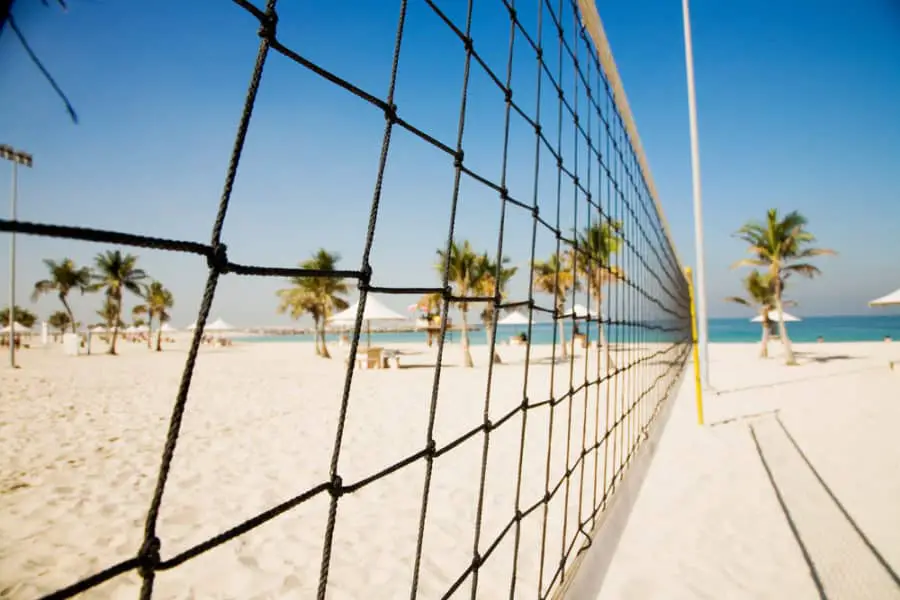
Beach volleyball portable nets represent a specialized category designed specifically for sandy environments where traditional anchoring methods prove impractical. These systems typically feature lightweight aluminum or fiberglass poles that minimize the burden of transportation across soft sand, along with specialized base systems engineered to provide stability without requiring ground penetration. The most common configurations use auger-style anchors that screw into the sand, creating holding power through displaced sand volume rather than mechanical advantage against solid ground. Premium beach systems often include supplementary guy-lines that extend outward from the poles at angles, distributing load across a wider footprint and dramatically improving wind resistance.
The materials used in beach-specific portable volleyball nets must withstand unique environmental challenges that indoor or grass court equipment never encounters. Salt spray, intense UV exposure, abrasive sand particles, and constant moisture create a hostile environment for many materials. Manufacturers address these challenges through careful material selection and protective treatments, using marine-grade stainless steel hardware that resists corrosion, UV-stabilized synthetic net materials that won’t degrade in sunlight, and anodized aluminum components that shed sand and resist oxidation. The net material itself often features slightly larger mesh openings than indoor nets, allowing wind to pass through more easily and reducing the sail effect that can destabilize lighter beach systems during breezy conditions.
Setup considerations for beach volleyball portable nets differ significantly from other environments. The soft, shifting nature of sand means that anchoring depth becomes critical; most systems require augers to penetrate at least 18 to 24 inches below the surface to achieve adequate holding power. Players quickly learn that sand moisture content dramatically affects stability, with damp sand near the waterline providing superior holding power compared to dry, loose sand higher on the beach. Many experienced enthusiasts supplement manufacturer-provided anchors with additional weight, filling bags with sand and securing them to guy-line anchor points to create a hybrid system that maximizes stability even in challenging wind conditions.
Backyard and Grass Court Systems
Backyard portable volleyball nets cater to homeowners seeking the convenience of on-demand volleyball without permanent court installation. These systems generally employ ground stake anchoring mechanisms that penetrate soil to provide stability, making them ideal for lawns, parks, and other natural grass surfaces. The stakes typically feature aggressive threading or barbed designs that resist pullout forces when the net experiences impact during play. Quality backyard systems include multiple stake points, usually four to eight total, that distribute anchoring forces and prevent the wobbling or tipping that plague inferior designs.
The structural engineering of backyard portable volleyball net systems often incorporates telescoping poles that allow height adjustment to accommodate different player skill levels and age groups. These adjustment mechanisms range from simple pin-and-hole systems that offer discrete height settings to more sophisticated collar-based systems that enable infinite adjustment within a specified range. The poles themselves are typically constructed from powder-coated steel or aluminum alloys chosen to provide excellent rigidity while maintaining reasonable weight for one or two-person setup. Premium backyard systems feature poles with built-in tension adjustment systems, often using ratchet mechanisms or turnbuckles, that allow players to achieve and maintain optimal net tension throughout the playing session.
Portability in backyard systems exists on a spectrum. Some designs prioritize ease of setup and takedown for users who store equipment between uses, while others emphasize semi-permanent installation with simplified assembly procedures for seasonal use. The most portable backyard volleyball nets break down into compact carrying cases measuring three to four feet in length and weighing between 25 and 45 pounds complete. These designs sacrifice some structural robustness in exchange for superior portability, making them excellent choices for players who frequently transport equipment to different locations. Conversely, semi-permanent backyard systems may weigh 60 pounds or more and require more substantial storage space, but they offer enhanced stability and typically include features like built-in boundary lines, padding for poles, and professional-grade nets that better serve serious players practicing regularly.
Tournament-Grade Portable Systems
Tournament-grade portable volleyball nets represent the pinnacle of portable volleyball equipment, engineered to meet official competition standards while maintaining the transportability that defines the portable category. These premium systems incorporate heavy-duty construction throughout, with poles often fabricated from 3-inch diameter steel or aluminum tubing that provides the rigidity necessary to maintain consistent net height and tension during aggressive play. The bases typically feature wheeled designs that allow repositioning without disassembly, with each base unit weighing 200 pounds or more when properly ballasted to ensure absolute stability.
The net components in tournament-grade portable volleyball net systems adhere strictly to international competition specifications, featuring precise cable tension systems, padded top tapes, and side-band indicators that mark the boundaries of legal play. Many tournament systems incorporate quick-tension mechanisms that allow officials to make fine adjustments between games, ensuring consistent playing conditions throughout multi-match events. The hardware throughout these systems receives upgrades over recreational equipment, using forged steel components rather than cast alternatives, incorporating corrosion-resistant treatments, and employing mechanical fasteners designed for thousands of assembly cycles rather than dozens.
Transportation and storage considerations for tournament-grade systems reflect their semi-professional nature. While these systems remain technically portable, they typically require vehicle transportation rather than hand-carrying, with complete systems often shipped on wheeled carts or breaking down into multiple heavy cases. The setup time for tournament systems extends beyond simpler recreational alternatives, generally requiring 20 to 30 minutes for experienced crews to properly assemble, tension, and verify measurements. Despite these practical limitations, tournament-grade portable volleyball nets serve an essential niche for organizations that host competitive events across multiple venues, including sports complexes, schools, recreation departments, and volleyball clubs, all of which rely on these systems to bring regulation playing conditions to locations lacking permanent volleyball infrastructure.
Key Features to Consider When Choosing a Portable Volleyball Net
Height Adjustability and Regulation Compliance
Height adjustability stands as one of the most critical features in any portable volleyball net system, directly impacting the equipment’s versatility and long-term value. Volleyball regulations specify different net heights for various categories of play:
- Men’s competition requires nets at 7 feet 11⅝ inches (2.43 meters)