
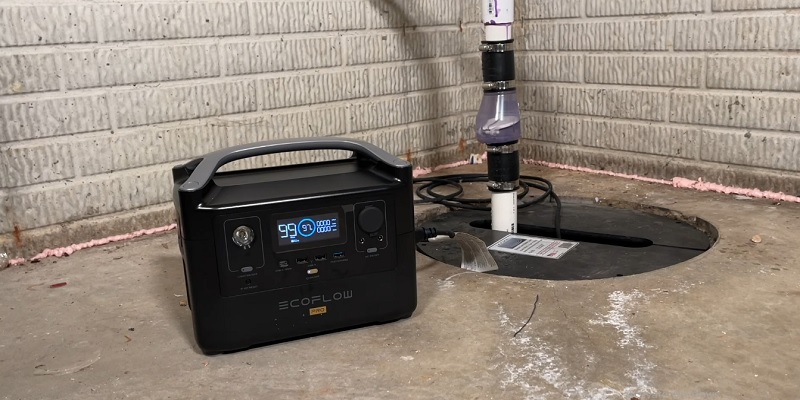
Can a Portable Power Station Run a Refrigerator, Sump Pump, and Wi-Fi During an Outage? The short answer is yes, but only if you size the station for both running power and startup surge. One portable power station can absolutely handle a fridge, Wi-Fi router, and a few lights when the total load stays within the station’s output rating and the battery has enough usable watt-hours. Adding a sump pump changes the math because a pump’s startup surge can be much larger than its running draw. [1]
Before you buy or rely on a unit, check three things: the continuous watts your appliances actually consume, the surge watts they need to start, and the watt-hours you need for the hours you expect to be without grid power.
Break Down the Load First
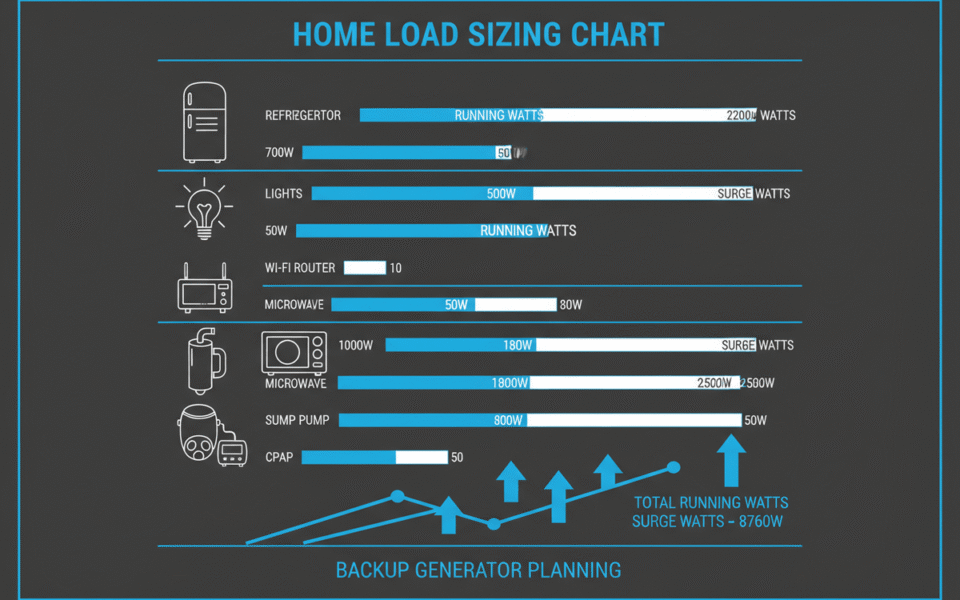
Use these as planning estimates, not as exact numbers for your home. Wi-Fi router: 10 to 20 W. A router is a very small load in the overall picture. Even a day of continuous router power is only around 240 Wh if it draws about 10 W. [3][6]
Refrigerator: A typical home refrigerator compressor draws roughly 100 to 200 W on average, but it can surge to 600 W or above at startup. Startup demand can briefly reach two to three times the fridge’s running watts. That means a fridge labeled at 200 W running might need 400 to 600 W just for the few seconds the compressor kicks on. [3][1]
Sump pump: This is the big variable. A common residential sump pump can run at 800 to 1,200 W, with a startup surge above 3,000 W. One source reports that a small pump may only need around 500 to 600 W of capacity, but that likely refers to a lighter-duty pump. Since pump size, head height, and float switch behavior vary widely, you have to read your own pump’s label and not rely on a generic number. [3][2]
The important takeaway: a Wi-Fi router plus a refrigerator are manageable for many stations, but a sump pump can overwhelm a station that was only sized for typical household essentials.
Why Startup Surge Is the First Filter
Running watts tell you how much power an appliance uses after it is already running. Startup surge tells you how much power it needs in the first moment of operation. If a station has enough running watts but not enough surge, the station may shut off or trip before the compressor or motor gets going. For a refrigerator, the surge can reach 600 W or above, and startup demand can be two to three times the running watts. For a sump pump, the startup surge can be above 3,000 W. That single number matters more than any other specification when you plan to run a sump pump from a portable station. [3][1]
A true 3,000 W portable power station can run almost all everyday essentials at the same time, including refrigerators, freezers, lights, and routers. But “3,000 W” may be a continuous output rating. A sump pump with a startup surge above 3,000 W could still exceed that station’s momentary peak. This is exactly why you need to verify the station’s surge or peak output, not just its running watt rating. [4]
In one published example, a high-capacity station handled a window air conditioner, a French door refrigerator, and a sump pump running simultaneously, with combined startup surge of about 5,805 W, because the station’s peak capacity was much higher than its continuous rating. That kind of headroom is what you need if your sump pump is critical and runs during every heavy rain. [6]
If you are only trying to run a fridge, router, and lights, the surge requirement is much smaller. A station that can handle the refrigerator’s startup surge is usually enough, and the router is negligible by comparison. [1]
Then Size the Battery for Runtime
Surge tells you whether the station can start each appliance. Watt-hours tell you how long the station can keep them running. This is the second filter. For a refrigerator, router, and a few LED lights, one evidence-based planning figure is about 220 Wh per hour for a typical 195 to 200 W combined load, with some margin for conversion loss and battery reserve. For six hours of outage, plan around 1,330 Wh before adding other devices. [1]
A simple three-tier guideline based on published capacity data can help you narrow down your options: [1][2][3][4][5][6]
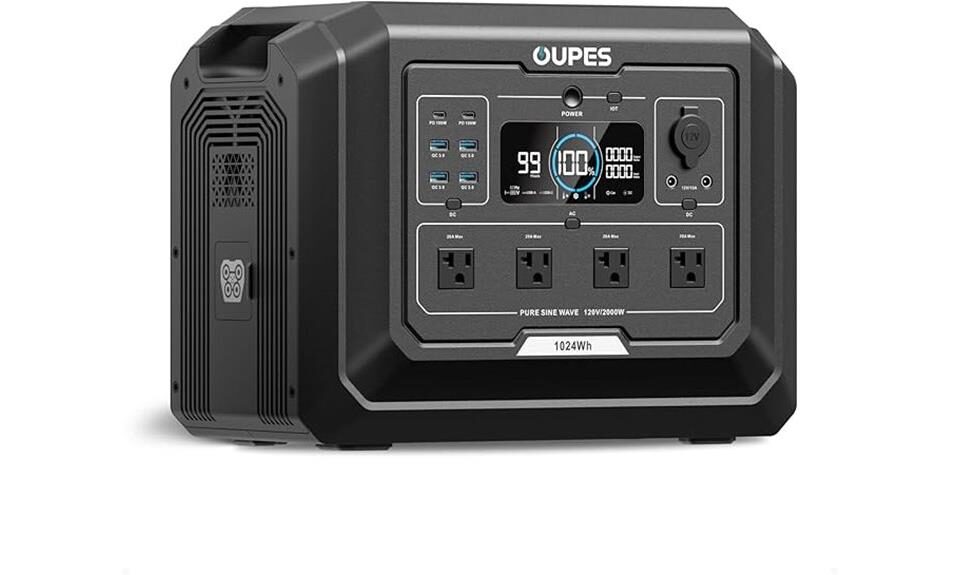
- A 1,024 Wh station running a home refrigerator compressor at an average draw of 200 W delivers roughly 5 hours of runtime. – A 2,048 Wh station extends that to approximately 10 hours. – For outages exceeding 12 hours, a 4,096 Wh unit covers roughly 20 hours of refrigerator power before the battery drains. [3]
For shorter outages involving only essential devices such as smartphones, laptops, LED lights, and a Wi-Fi router, a station between 768 Wh and 1,024 Wh is sufficient. But that is only for essentials, not a sump pump. [3]
If you need a home refrigerator compressor over a full 24-hour outage, 2,048 Wh or more is necessary. Multi-day outages involving sump pumps or medical equipment require 4,096 Wh or a system with battery expansion capability. [3]
This is where the sump pump really changes the budget. In one sample daily energy calculation, a French door refrigerator accounts for roughly 1,872 to 1,987 Wh per day, Wi-Fi router about 240 Wh per day, LED lighting about 300 Wh per day, and phone charging about 90 Wh per day, bringing essentials to roughly 2,500 to 2,600 Wh per day. Add a sump pump at a 50% duty cycle during heavy rain, and the energy budget jumps to roughly 5,500 to 6,500 Wh per day. Add a window air conditioner, and the total can go above 6,500 Wh per day, at which point solar recharging or expandable batteries become mandatory for multi-day outages. [6]
In other words, a fridge and a router can be handled by a modest station for a few hours. A fridge, router, and a sump pump over a multi-day outage usually require a much larger capacity, or a station that can accept additional expansion batteries.
A Practical Daily Budget for Your Home [1][2][3][4][5][6]
Here is a sample plan you can adapt to your own appliances. This is not a guarantee of your runtime; it is a benchmark for planning. | Load | Estimated draw | Energy per day | |——|—————-|—————-| | Wi-Fi router | ~10 W | ~240 Wh | | LED lighting (3–4 rooms) | ~50 W for 6 hours | ~300 Wh | | Phone charging | ~15 W for 3 hours | ~90 Wh | | Refrigerator (French door) | 195–207 W at 40% duty cycle | 1,872–1,987 Wh | | Essentials total | | 2,500–2,600 Wh | | Add sump pump at 50% duty cycle | | 5,500–6,500 Wh | [1][2][3][4][5][6]
If your refrigerator is older, larger, or in a hot room, the real numbers can be higher. The same goes for a sump pump that cycles more often than 50% during a storm. Check your refrigerator label and router adapter because wattage varies by model, age, room temperature, and door openings. [1]
How to Check Your Sump Pump’s Surge Before You Rely on a Station
If your sump pump is critical to keeping water out of your home, do not guess. Look at the pump’s nameplate for running watts or amps. If it lists amps instead of watts, you can multiply amps by the voltage to get a rough running-watt figure. For surge, the manufacturer may list locked rotor amps or a starting watt value. If not, plan for the conservative figure of over 3,000 W startup surge for a standard residential pump. [3]
Then compare that figure to the portable power station’s peak and surge output. Look for both “rated output” and “peak output” on the manufacturer’s specification sheet, not just the marketing name. A station labeled as a 3,000 W unit may have a much higher peak capability, or may not. The only way to know is to read the exact spec from the current listing.
What to Verify Before You Buy [1][2][3][4][5][6]
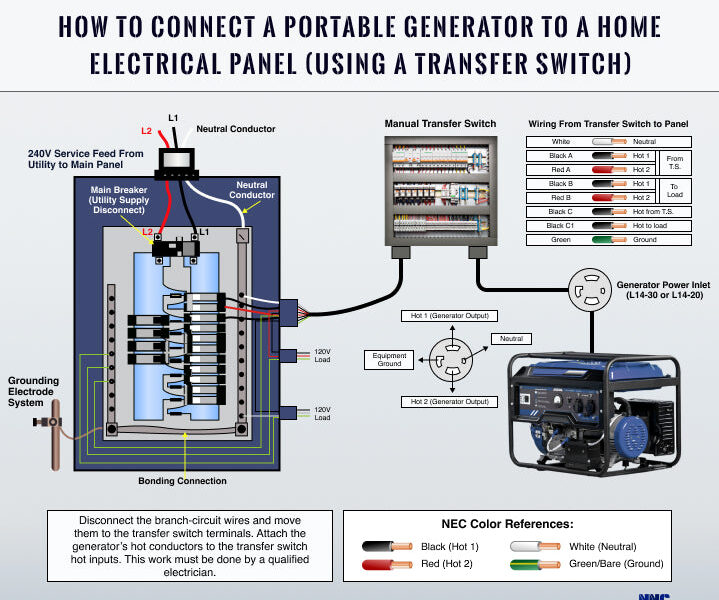
- Continuous output: How many watts can the station deliver continuously? This must cover your largest combined running load. – Surge/peak output: How many watts can the station deliver for a few seconds? This must cover your sump pump’s startup surge. – Battery capacity: How many usable watt-hours does the station have? This determines how long you can run the fridge and pump. – Expansion capability: Can you add extra batteries? For multi-day outages with a sump pump, this is often the practical answer. – Your pump’s wiring and plug: Some sump pumps are hardwired or use a specific plug type. A portable power station with standard AC outlets may not be compatible without the right adapter or a licensed electrician. Check the pump’s plug, voltage, and wiring before assuming it will work. – Refrigerator startup: The station needs enough surge for the fridge compressor too, not just the pump. [3][6]
For pricing, stock, model-year details, and current specifications, always verify the manufacturer or retailer listing. Those details change and are not something a planning article can keep current.
The Bottom Line
You can run a refrigerator, sump pump, and Wi-Fi router from a portable power station during an outage. The Wi-Fi router is easy. The refrigerator is manageable if you respect its startup surge. The sump pump is the deciding factor because its surge can exceed 3,000 W and its energy draw can turn a single-day plan into a multi-day battery requirement. [3]
If you plan for only a few hours of outage and your sump pump is small, a smaller station may be sufficient. If you need to run a standard sump pump alongside a refrigerator through a multi-day outage, plan for at least 4,096 Wh or a system with expansion batteries. And often verify your own appliance wattage and the station’s surge rating before you depend on it when the power goes out. [2][3]
—
Sources
[1] A Portable Power Station for WiFi Router Buyer’s Guide – Anker SOLIX US https://www.ankersolix.com/blogs/portable-power-station/portable-power-station-for-wifi-router
[2] Can a Portable Power Station Run a Sump Pump https://www.bougerv.com/blogs/article/can-a-portable-power-station-run-a-sump-pump
[3] 5 Best Portable Power Stations for Power Outages https://poweroutage.us/home-battery-backup/best-portable-power-stations-for-outages
[4] What Can a 3000W Portable Power Station Run? https://udpwr.com/blogs/portable-power-station-knowledge/what-can-a-3000w-portable-power-station-run
[5] How to Select the Right Size Portable Power Station For Your Needs https://outboundpower.com/blogs/news/how-to-select-the-right-size-portable-power-station-for-your-needs
[6] Best Portable Power Stations for Home Backup (2026): Outage-Ready Picks https://generatorchecker.com/guides/best-power-station-home-backup
This Post Has 8 Comments