
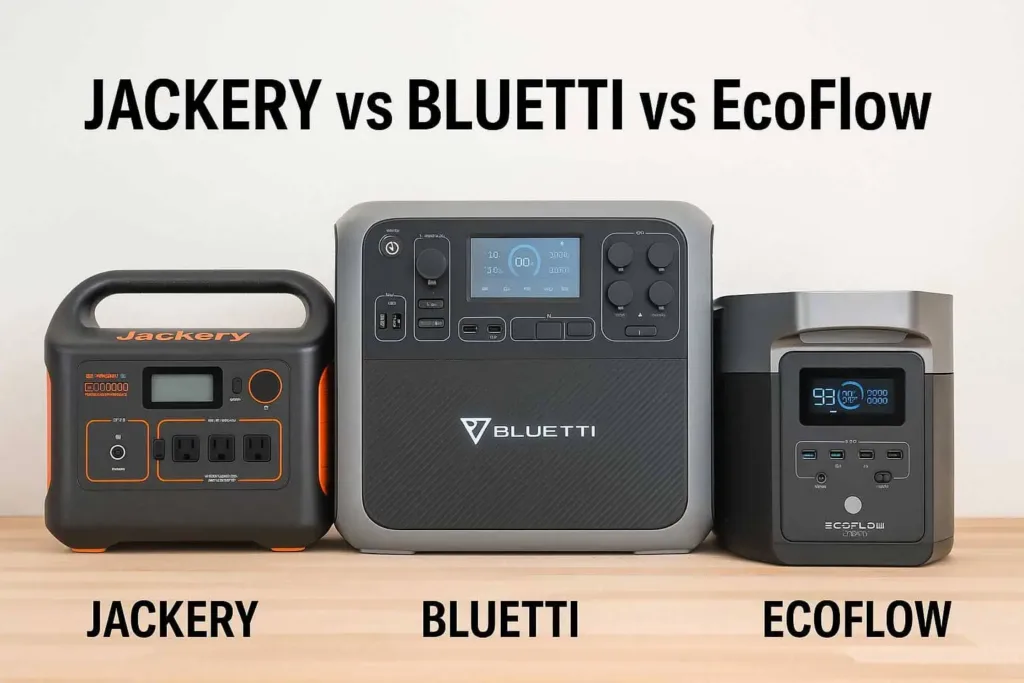
Jackery vs EcoFlow vs Bluetti for Home Backup: How to Choose
Portable power stations have moved from camping gear to serious emergency preparedness. But “home backup” isn’t one problem. A short suburban blackout and a six-day ice storm like Winter Storm Fern demand very different amounts of stored energy. PowerOutage.us monitors outages across 950+ utilities serving over 200 million U.S. customers, which is why the first question isn’t “Which brand is best?” It’s “How long do my outages actually last?” [1]
Independent comparisons split the three brands into distinct roles: EcoFlow leads on AC recharge speed, Jackery leads on portability and simplicity, and Bluetti delivers the most watt-hours per dollar in the mid-to-high range. That doesn’t mean one is universally better. It means you should match the brand to your specific outage scenario. [1]
The three brands split the market
EcoFlow: speed and features
EcoFlow recharges much faster, has a stronger app and smart-home ecosystem, offers more ports, and has 240V flagship models. Its DELTA Pro 3 outputs 120/240V and pairs with transfer-switch kits, which makes it a leading choice among these three for whole-home backup with larger loads. [3]
If your local grid tends to blink back on for only 30 minutes to 2 hours, EcoFlow’s faster recharge can be the deciding factor. A brief grid window is enough time to catch some energy if your station can charge quickly; it’s not enough time if you’re waiting hours. [1][4]
Jackery: simple, portable, and beginner-friendly
Jackery is quieter, simpler to use out of the box, and pairs with the easiest matched solar panels, which makes it friendlier for beginners. It’s also the brand to look at if you need mobility for an RV, job site, or events, or if you rent your home and want fewer permitting hurdles. [3][2]
One important caveat: not every Jackery is the same battery chemistry. The current Explorer line, including the Explorer 1000 v2, uses LiFePO4 cells, and the v2 carries a 4,000-plus cycle rating. Earlier Jackery models used NMC chemistry with shorter cycle ratings of 500 to 800 cycles. If you’re buying new, check the exact model’s spec sheet for “LiFePO4.” Don’t assume all Jackery units are the same. [1]
One retailer that stocked all four brands stopped stocking Jackery, citing older NMC chemistry and faster degradation under real outage use. That report conflicts with the current Explorer line information above, but it’s a useful reminder to verify the exact model before you order. [4][1]
Bluetti: capacity per dollar and expandability
Bluetti wins on watt-hours per dollar at the mid-range tier and delivers the strongest watt-hours-per-dollar ratio in the mid-to-high price band. It focuses on larger, expandable battery systems and strong home backup and off-grid options. [1][6]
Bluetti’s Apex 300 is a good example of that expansion flexibility. In one side-by-side review, the system could use a transfer cart that holds the main unit and two expansion batteries for a total mobile capacity of 8.3 kWh. The trade-off is physical size: larger Bluetti units can be heavy, and expandable systems may be more than a casual user needs. [5][6]
What matters most for home backup
Chemistry and cycle life
EcoFlow and Bluetti current lines use LiFePO4 cells with 3,000-plus cycle ratings and 5-year warranties. LiFePO4 chemistry is generally the safer long-term bet for backup because it degrades more slowly than older NMC cells. [1]
In one retailer’s 18-month field report, the EcoFlow DELTA 3 Max Plus was cited with LFP chemistry and a 3,500+ cycle rating, and the source projected around 9+ years of real-world use at one full cycle per day before dropping to 80% of original capacity. That’s a useful horizon to think about, not a may help. [4]
If you’re weighing an older Jackery, check whether it’s NMC or LiFePO4. NMC units have shorter cycle ratings, which matters if you plan to cycle the battery monthly or during every storm season. [1]
Recharge speed
EcoFlow’s X-Stream technology charges the DELTA 3 Max Plus from empty to 80% in roughly 50 minutes on AC input. In the same retail comparison, that’s contrasted with 2+ hours for Jackery or Bluetti. [4]
That difference becomes critical during multi-day outages when the grid comes back on briefly. A 50-minute charge window versus 2+ hours is the difference between catching a grid restoration and missing it. For home backup where cycling grid windows are brief, faster recharging is a practical advantage, not just a spec-sheet talking point. [4][1]
If you plan to recharge from solar, keep in mind that AC recharge speed and solar recharge speed are different. Check the manufacturer’s MPPT input limits and panel compatibility for your exact model before assuming a full recharge time.
Representative pricing from one 2026 benchmarking report shows how the three brands compare on cost per usable kilowatt-hour: [2]
| Brand/model | Usable capacity | Inverter power | Chemistry | Approx. price | Cost per usable kWh | |—|—|—|—|—|—| | Jackery 2000-class | 2.0 kWh | 2.2 kW | LiFePO4 | $899–$949 | $800/kWh | | EcoFlow DELTA 2 Max | 2.4 kWh | 2.4 kW | LiFePO4 | $949–$1,299 | $708/kWh | | Bluetti 3.0 kWh stackable | 3.0 kWh | 3.0 kW | LiFePO4 | $2,100 | $700/kWh | [2]
These prices are from a single representative dataset. Prices, stock, and discounts change constantly, so verify current retailer pricing before you buy. [2]
That cost-per-kWh table helps explain why Bluetti tends to win for bigger setups and why Jackery can look expensive for the capacity offered in some classes. [2][3]
Which one fits your situation?
Short, frequent outages: EcoFlow
If your power blinks out often but comes back in minutes to a couple of hours, EcoFlow’s fast AC recharge is the most useful feature in this comparison. For whole-home backup with 240V loads, the DELTA Pro 3 is the model to look at among these three. [1][4]
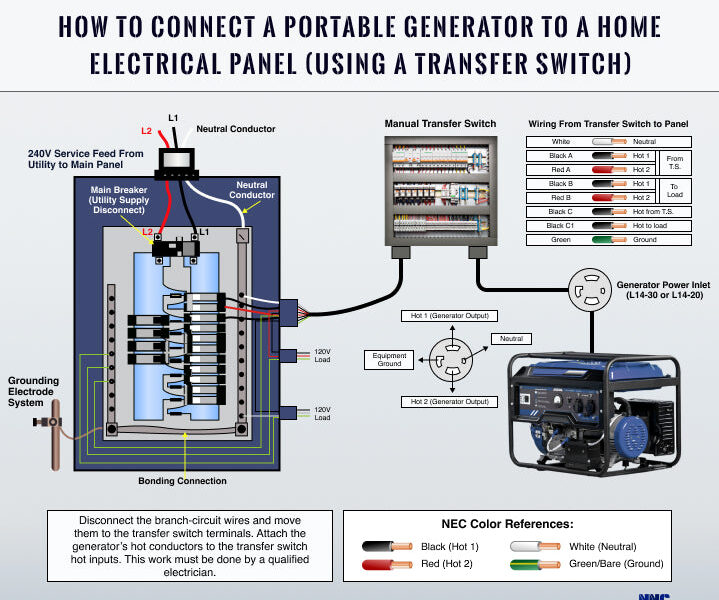
Before wiring anything into your home, verify the transfer-switch kit compatibility with your electrical panel. That’s a step you need to confirm with a licensed electrician, not assume from the product listing.
Apartment, renter, or mobile use: Jackery (or a compact EcoFlow)
If you rent your home or need to move your power station from room to room, portable systems offer flexibility with fewer permitting hurdles. Jackery is the easiest to use out of the box and pairs with simple matched solar panels. [2][3]
If you still want smart-app features and more ports, a compact EcoFlow unit can be simpler for an apartment or renter who only needs to run essentials. Either way, you’re unlikely to wire anything into a panel, so portability and ease of use matter more than raw expansion capacity. [3]
Largest capacity per dollar, off-grid, or cabin use: Bluetti [5]
If you need many watt-hours per dollar or you’re building an off-grid setup, Bluetti earns its spot. The expandable systems let you add battery capacity as your needs grow, and the Apex 300’s transfer cart makes a large mobile system easier to move. [1][3]
Be ready for the weight. Larger Bluetti units are heavy, and the expandable systems may be more than a casual user needs. [6]
A caveat before you buy portable
If you own your home and your top priority is whole-home backup or bill optimization, a fixed battery paired with rooftop PV can deliver a lower lifetime cost per kWh than a portable unit. For renters or people who value mobility, portable systems are more flexible and require fewer permitting hurdles. Don’t assume portable is automatically cheaper for every homeowner. [2]
Practical limitations to verify before ordering
Prices, stock, discounts, shipping, availability, package contents, accessories, compatibility, and model-year details all change. often verify the current manufacturer or retailer listing before you buy.
Fan noise and placement
In PCMag’s side-by-side testing, maximum-rate charging produced the highest fan noise, and owners notice it almost immediately after bringing a unit home. Expect a 50 to 55dB blower noise at about an arm’s length away for some systems. That same review found the Jackery HomePower 3600 Plus and Bluetti Apex 300 were barely noticeable until heavily loaded. If you plan to use a unit near a bedroom or home office, plan the placement before you buy. [5]
Beyond the spec sheet
Battery capacity, inverter output, and charging speed aren’t the whole story. Solar performance, standby power draw, app quality, fan noise, surge handling, and ecosystem support often impact the ownership experience more than the headline numbers. Read recent independent reviews that look at those details, not just marketing claims. [5]
Conflicting reviews are normal
Some sources favor Bluetti’s expansion flexibility and Jackery’s simplicity. Another retailer’s field data favors EcoFlow over Jackery and Bluetti for homesteads in hurricane and winter-storm zones. That conflict doesn’t mean one review is worthless. It means you need to start with your own outage pattern and then verify the exact model’s chemistry, charge speed, and expansion compatibility. Don’t pick a brand based on popularity alone. [3][5]
Bottom line
There is no single winner for home backup, because “home backup” means different things. [3]
- Choose EcoFlow for fast AC recharge, smart features, and whole-home 240V backup. – Choose Jackery for a simple, quiet, portable unit that’s easy to set up out of the box. – Choose Bluetti for the most capacity per dollar, expandable systems, and off-grid or cold-climate use. Before you order, verify the exact model’s battery chemistry, AC recharge time, expansion compatibility, and current manufacturer price. Those details change, and they’re what actually determine whether the unit will serve you through the next real outage. [1][5]
https://poweroutage.us/home-battery-backup/ecoflow-vs-jackery-vs-bluetti-power-station https://energy-solutions.co/articles/sub/portable-solar-generators-jackery-ecoflow-bluetti https://entropysurvival.com/blogs/news-views/ecoflow-vs-jackery-vs-bluetti-vs-anker-the-definitive-2026-comparison https://entropysurvival.com/blogs/news-views/ecoflow-vs-jackery-vs-bluetti-vs-anker-2026-comparison https://www.pcmag.com/explainers/ive-tested-power-stations-from-anker-bluetti-ecoflow-and-jackery-here-are https://solarplay.net/blogs/blog/i-compared-ecoflow-jackery-bluetti-and-solarplay-heres-my-honest-opinion [1][2][3][4][5][6]
This Post Has 8 Comments