
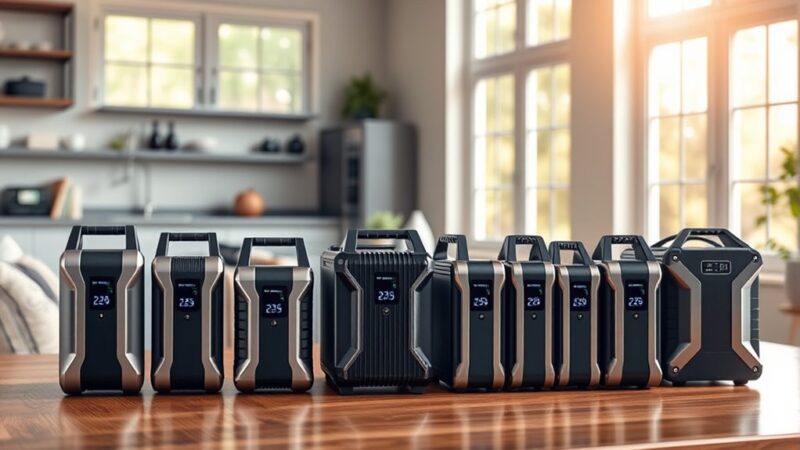
The Best Portable Power Stations for Home Backup (and How to Pick One)
When the power goes out, a portable power station can keep your fridge cold, your router online, a CPAP running, and lights on without the noise or carbon monoxide risk of a generator. But “portable” and “home backup” aren’t the same thing. A camping unit that runs your weekend cooler might not survive a three-day outage with a chest freezer.
The right pick comes down to battery capacity, continuous wattage, surge handling, chemistry, and whether you can expand the system later. Prices, stock, model-year changes, and bundled accessories move frequently, so treat every number below as a starting point and verify it against the current manufacturer or retailer listing before you buy.
What to verify before you commit
Battery chemistry and cycle life. Many modern stations use LiFePO4, which is often rated for thousands of cycles. Some models still use NCM cells, which are roughly 30% lighter for the same watt-hours but have a much shorter cycle life — one reviewer rates NCM at about two years of daily use, versus a decade or more for LiFePO4. If you’re buying for long-term outage duty, ask for LiFePO4 and confirm the rated cycle count. Don’t assume a premium price guarantees LFP chemistry; retailers and reviewers have pointed out high-end models that still lack it. [5][1]
Capacity vs. output. Capacity is the reservoir; output is the flow rate. A 2,048Wh station with 2,400W output can run a refrigerator and lights, but if you have a motor-driven appliance that needs 3,000W to start, check the surge rating. Use a plug-in watt meter to measure your actual appliances — never guess from the mouth of the fridge. [2]
Charging and solar. Check maximum solar input and grid-charge speed. Some units can recharge from the wall in under 90 minutes, which matters if the grid only blinks on briefly. Others will need hours. This affects how useful a station is over a multi-day outage. [1][2]
Expansion and transfer time. If you plan to add batteries later, confirm compatibility and how many you can connect. Some units accept two to four expansion packs; most have a hard limit. If you want sensitive electronics to stay on during a grid flicker, look for a UPS-style transfer time — for example, one value-oriented model is rated at 10 milliseconds or less. [4][2]
Weight and placement. A 40lb unit is movable. A 135lb unit is not — even if it has wheels, you won’t want to carry it upstairs. Decide ahead of time whether the station will live in your utility room, basement, or hallway. [2][3]
Best overall for a first home backup setup: EcoFlow DELTA 3 Max Plus
The EcoFlow DELTA 3 Max Plus is a strong first home-backup station for households that don’t want to piece together modules. It packs 2,048Wh of LiFePO4 capacity and 2,400W of continuous AC output. That’s enough to run a refrigerator, freezer, lighting, communications, and a CPAP for an estimated 24 to 36 hours on a single charge, with longer runtime if you add solar input. [1]
Its LiFePO4 cells are rated for 3,500+ cycles to 80% capacity, which means the unit can stay useful for a decade or more of regular outage events. X-Stream charging can refill it from the grid in under 90 minutes, a feature you’ll appreciate when the power briefly returns in the middle of a long outage. The pure sine wave inverter is also a plus if you plan to plug in laptops or other sensitive electronics. [1]
This isn’t meant to be moved around on a camping trip; it’s sized to live permanently in a utility room or basement. Before you buy, confirm the current capacity, output, and whether the model name has changed for the latest year. [1]
Best expandable emergency backup: Bluetti AC200Max with B300 expansion batteries
The Bluetti AC200Max is a common pick for emergency home backup because you can start small and grow into it. It delivers 2,200W of output and weighs 62lbs, so one person can move it. Base capacity is 2,048Wh, and adding expansion batteries takes it to 8,192Wh. Each B300 adds 3,072Wh; each B230 adds 2,048Wh. Depending on the unit and battery combos, you can connect between two and four expansion packs, so check compatibility carefully. [4]
If you need even more reserve, the same source points to the Bluetti AC300, which is expandable up to 12,288Wh. The AC200Max also comes with a TT-30 RV plug, making it useful for trailers and RVs alongside home backup. Bluetti’s LiFePO4 chemistry is rated for 10+ years of daily use, and you can fully discharge it to 0% without issue, according to one reviewer. [4][5]
One caveat: the AC200Max is still a portable station, not a permanently installed whole-home battery. It can run essential circuits and small household appliances, but you should check the startup wattage of anything with a motor before plugging it in. [2][4]
Best value for heavier loads: UDPOWER S2400
UDPOWER’s S2400 is a value-focused alternative for homes that want LiFePO4 battery life, high output, and fast charging without paying big-brand prices. The spec sheet includes 2,083Wh capacity, 2,400W continuous pure sine wave output, a 3,000W startup surge, six AC outlets, 400W maximum solar input, and a weight of 40.8 pounds. It’s rated for UPS transfer time of 10 milliseconds or less, which is useful if you want to keep a router or modem running through brief grid flickers. [2]
The source makes an important distinction: a U.S. warehouse and U.S. customer support are not the same as American-made manufacturing. If “Made in USA” matters to you, verify the manufacturing location directly instead of assuming from the brand’s national presence. [2]
The S2400 can handle many 120V household appliances, but the manufacturer warns it should not be confused with a permanently installed whole-home battery system. Use it as a portable backup unit that powers essential loads, not as a replacement for a hardwired battery. Always check continuous wattage, startup wattage, voltage, and plug type before connecting any appliance. [2]
If your loads are lighter, UDPOWER recommends the S1200 as the better all-around value for portability, battery life, and charging speed. No specs were given for the S1200 in the source, so confirm them on the manufacturer page. Prices and bundled accessories change frequently, so verify the current listing. [2]
Best all-in-one whole-home backup: EcoFlow Delta Pro 3
Popular Mechanics names the EcoFlow Delta Pro 3 the best whole-home backup portable power station. Testers like its high power capacity and multiple outlet types, and they note it’s still portable enough to power an RV. The main con is that it only has four AC outlets, so you’ll likely need a power strip or a transfer switch if you want to connect more than four devices. [3]
This unit is part of a larger ecosystem: EcoFlow’s Delta Pro Whole Home Kit is intended for indoor operation, with none of the risks or hassles of a generator — no dangerous carbon monoxide from exhaust fumes, no fuel, and no oil to manage. That makes it the most appliance-like option on this list, but it’s still a portable station at heart. Prices and kit contents vary. The review listed $2,699 on Amazon after a 27% discount from $3,699, but that pricing is not guaranteed — check the current manufacturer and retailer listing before you commit. [3]
Most customizable: Bluetti Apex 300
If you’re not sure whether you want a portable unit or a dedicated home backup system, the Bluetti Apex 300 is worth a look. Popular Mechanics calls it the most customizable option, saying it delivers a great amount of power for portable use while laying the groundwork for building a more dedicated system later. That flexibility makes it a good “start small and expand” choice, but the source does not list its full specs, so verify capacity, output, expansion options, and connector types on the official product page. [3]
Best mid-size with serious output: Anker F3800 Plus
The Anker F3800 Plus is a mid-size unit that still has enough power to handle bigger household loads. Its key specs include 3,840Wh capacity, 2,400W continuous output on 120V AC, 6,000W on 240V, and a weight of 135.6 pounds. Reviewers note that it has an upright wheeled design, so rolling it around is easier than lifting it; the heavy weight makes lifting very difficult. [3]
The Solar Lab calls its 6,000W inverter one of the top performers in its class and says the unit can grow to 53.8kWh of storage with Anker BP3800 expansion batteries. It also works with the Anker SOLIX Home Power Panel, making it one of the more complete 240V power station solutions on the market. The same source notes idle consumption around 40W, so if you plan to leave it running continuously, factor that draw into your runtime math. [6]
This is a practical option for RV use, home-backup, and serious emergency prep, as long as it’s going to stay in one place. That’s the key trade-off: it’s powerful and expandable, but you won’t want to carry it. The price is another variable — one review cited around $2,400 while another listed a $1,800 sale price, and both include different bundle assumptions. Verify the current price, included accessories, and whether expansion batteries are part of the package. [6][3]
Heavy-duty off-grid: EcoFlow DELTA Pro Ultra
If you’re thinking about serious whole-home or off-grid backup, the EcoFlow DELTA Pro Ultra sits in a different class. It has a 6,000Wh base battery capacity and a 7,200W inverter, and it can expand to 90kWh. The Solar Lab says it previously named this unit the best power station for home backup, and it retained a high position on their list. This is for people who are managing large loads or building a system around solar, not for carrying on trips. Confirm whether the base package includes the battery and inverter or if they’re sold separately, and check whether you’ll need a transfer switch or manual interlock. [6]
Other names you’ll see in 2026 reviews
If you’re browsing around, Popular Mechanics also highlights three other models: the Bluetti Elite 200 V2 as best overall, the Jackery Explorer 1000 V2 as best value, and the EcoFlow River 3 Plus as best compact. These are excellent lightweight portable stations, but they’re geared more toward camping, travel, and short outages. For extended home backup, focus on the expandable and higher-capacity units above, then verify specs against your actual appliance list. [3]
What to check before you buy
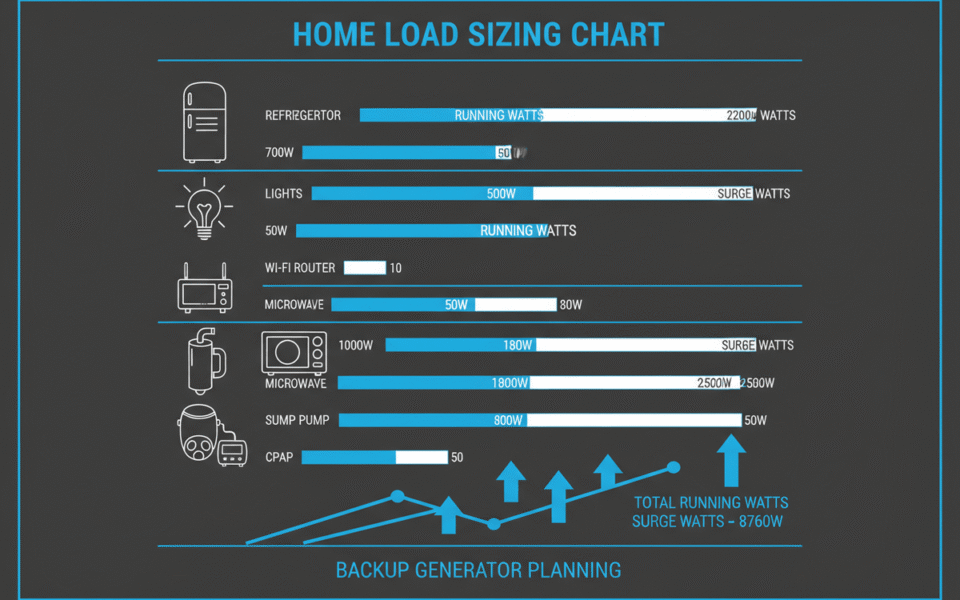
- Measure the real load. Use a watt meter to record the continuous and startup watts of your refrigerator, freezer, CPAP, and sump pump. Startup surge often matters more than capacity.
- Confirm the chemistry. If you want a decade-long service life, buy LiFePO4 and check the cycle rating. Don’t assume a premium brand means LFP.
- Ask about expansion capacity. Verify how many expansion batteries you can add, the maximum total watt-hours, and whether the batteries are compatible with your specific unit.
- Plan the placement. A 40lb unit can move from room to room. A 135lb unit with wheels should stay on a clear floor path. Choose accordingly.
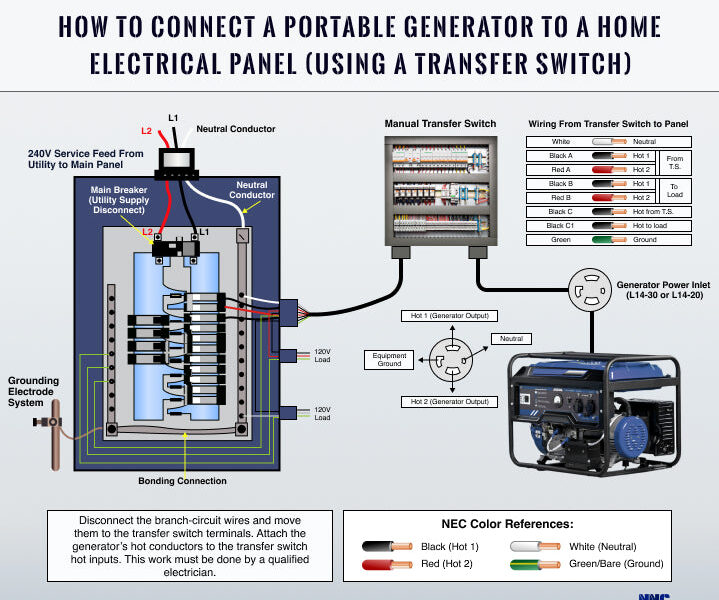
- Don’t confuse portable backup with a whole-home battery. Even a 2,400W station is not a substitute for a permanently installed whole-home energy system. If you want to hardwire a transfer switch, get a qualified electrician and verify that the specific unit is certified for that use.
- Recheck the listing. Prices, discounts, stock, model-year updates, and package contents change constantly. The figures cited in reviews are snapshots, not guarantees. [2][1]
That’s the honest bottom line: all these units can keep your fridge cold and your devices charged, but the right one for your house depends on what you need to run, how long you’re likely to be without grid power, and whether you want to grow the system later.
Sources
1. Entropy Survival — Best Portable Power Station for Home Backup 2. UDPOWER — Best American-Made Portable Power Stations in 2026 3. Popular Mechanics — The 8 Best Portable Power Stations for Outages and Outings 4. Practical Self Reliance — Best (and Worst) Portable Power Stations 5. Best (and Worst) Portable Power Stations — Alternative publication version 6. The Solar Lab — Best Big Power Stations of 2026
*Affiliate Disclosure: This roundup is not sponsored and no brand paid for inclusion. Links to retailer listings are for reference only, and order through your preferred retailer.*
This Post Has 8 Comments